Dans le monde en évolution rapide du commerce électronique, une présentation visuelle forte n'est plus facultative, elle est essentielle. Parmi tous les éléments qui façonnent la manière dont un produit est présenté, éclairage pour photographie de produit a le plus d'impact direct sur la façon dont les consommateurs perçoivent et retiennent un produit.
Un bon éclairage fait plus que simplement rendre un produit plus lumineux. Il crée une séparation avec l'arrière-plan, définit la forme et révèle les détails des matériaux qui aident les clients à comprendre clairement ce qu'ils achètent. Qu'il s'agisse du grain subtil du bois, de la douceur d'un tissu ou de la précision d'un bord métallique, un éclairage soigneusement conçu transforme des images plates en visuels qui paraissent dimensionnels, réalistes et dignes de confiance. Pour cette raison, l'éclairage n'est plus une simple décision technique, il est devenu un élément fondamental du langage visuel d'une marque.
1. Pourquoi l'éclairage est au cœur du succès commercial
En photographie professionnelle, il existe une compréhension bien connue : l'appareil photo enregistre l'image, mais l'éclairage la définit. Dans les environnements commerciaux, éclairage pour photographie de produit joue un rôle direct dans la façon dont un produit est perçu — et s'il se convertit.
Un éclairage bien exécuté soutient trois résultats commerciaux essentiels :
Précision des couleurs
Les sources lumineuses de haute qualité avec un IRC (Indice de Rendu des Couleurs) élevé garantissent que les couleurs sont rendues avec précision. Lorsque les clients voient des couleurs fidèles à la réalité, les attentes correspondent à la réalité, ce qui entraîne moins de retours et une confiance accrue dans la marque.
Valeur perçue
La lumière contrôle l'humeur et la hiérarchie. Des rehauts et des ombres soigneusement placés peuvent sublimer même un produit simple, lui donnant une apparence raffinée et haut de gamme. La perception compte, et c'est souvent l'éclairage qui sépare le “bon marché” du “haut de gamme”.”
Cohérence visuelle
Contrairement à la lumière naturelle, qui varie au cours de la journée, l'éclairage artificiel crée un environnement stable et reproductible. Cette constance est essentielle pour maintenir une apparence cohérente sur l'ensemble d'un catalogue de produits.
2. Équipement essentiel pour la photographie de produits professionnelle Éclairage
L'éclairage de photographie de produit efficace commence par des outils conçus à cet effet. Les lampes ménagères manquent de puissance, de précision des couleurs et de contrôle nécessaires pour des résultats professionnels.
Sources de lumière artificielle : Stroboscopes ou LED continues
Stroboscopes de studio (Flash) : Toujours la référence de l'industrie pour la photographie de produits haute résolution. Leur puissance et leur courte durée d'éclair gèlent le mouvement et offrent une netteté exceptionnelle.
Lumières LED continues : Idéal pour les flux de travail hybrides où les marques produisent à la fois des vidéos et des images fixes. Une véritable configuration WYSIWYG permet aux photographes de prévisualiser l'éclairage en temps réel. Pour une utilisation professionnelle, les LED devraient offrir un CRI 95+ et un TLCI 96+ pour maintenir des couleurs nettes et précises.
Modificateurs de lumière : Façonner l'image
La lumière non modifiée est incontrôlée. Les modificateurs permettent aux photographes de sculpter et de diriger la lumière avec précision.
- Boîtes à lumière : Créez un éclairage doux et uniforme, idéal pour les surfaces lisses et les transitions flatteuses.
- Boîtes strip Produire de longs reflets contrôlés, couramment utilisés pour les bouteilles et les bords réfléchissants.
- Grilles en nid d'abeille : Réduisez l'angle du faisceau pour éviter la dispersion et attirer l'attention sur des détails spécifiques.
- Chutes et diffuseurs : Essentiel pour gérer les reflets sur le métal, le verre et les bijoux.
3. Comprendre la qualité de la lumière : Lumière dure vs Lumière douce
La qualité de l'éclairage de la photographie de produit est déterminée par la taille de la source lumineuse par rapport au produit.
Lumière douce provient de grandes sources lumineuses placées près du sujet. Il produit des transitions douces entre la lumière et l'ombre, minimisant les imperfections de surface.
Lumière dure est créé par des sources plus petites et plus concentrées. Il produit des ombres définies et un contraste plus élevé et est de plus en plus utilisé dans la photographie de produits de luxe et de style éditorial.
4. Techniques d'éclairage éprouvées pour le commerce électronique
La configuration “héroïque” en trois points
Cette configuration de base est largement utilisée dans les prises de vue de produits commerciaux :
- Lumière principale : La source principale qui définit la forme du produit.
- Lumière de remplissage : Équilibre le contraste et révèle les détails des ombres.
- Rétro-éclairage (Rim Light) : Sépare le produit de l'arrière-plan et ajoute de la profondeur.
Éclairage de produits réfléchissants et transparents
Lorsque l'on photographie du verre ou du métal poli, le but n'est pas d'éclairer l'objet lui-même, mais ce qu'il reflète. Les grandes surfaces diffusantes – telles que les panneaux en mousse ou les tentes souples – créent des reflets nets et contrôlés qui définissent la forme sans éblouissement gênant.
5. Aligner les réglages de l'appareil photo sur l'éclairage
La performance de l'éclairage n'est efficace que si les réglages de l'appareil photo la soutiennent.
- ISO 100 : Maintient une qualité d'image et une profondeur de couleur maximales.
- Ouverture f/8-f/11 : Assure la netteté et une profondeur de champ suffisante.
- Mise au point manuelle : Élimine l'incohérence de la mise au point dans des environnements de studio contrôlés.
6. Flux de travail avancé : Compositage et empilement de mises au point
Pour les produits haut de gamme tels que les montres ou l'électronique, une seule exposition est rarement suffisante. Les flux de travail professionnels impliquent souvent plusieurs images, chacune éclairée pour un composant spécifique, puis compositées en post-production.
Ce niveau de précision dépend d'un éclairage de studio stable et reproductible, une autre raison pour laquelle un éclairage contrôlé pour la photographie de produits est essentiel au niveau professionnel.
7. Mise en forme avant l'éclairage
La lumière ne peut compenser une mauvaise préparation. Avant que les lumières ne soient allumées :
- Retirer la poussière à l'aide de chiffons en microfibre et d'air comprimé
- Portez des gants pour éviter les empreintes digitales
- Vapeur ou presser les tissus en profondeur
Quelques minutes de coiffage soigné peuvent faire gagner un temps considérable lors des retouches ultérieures.
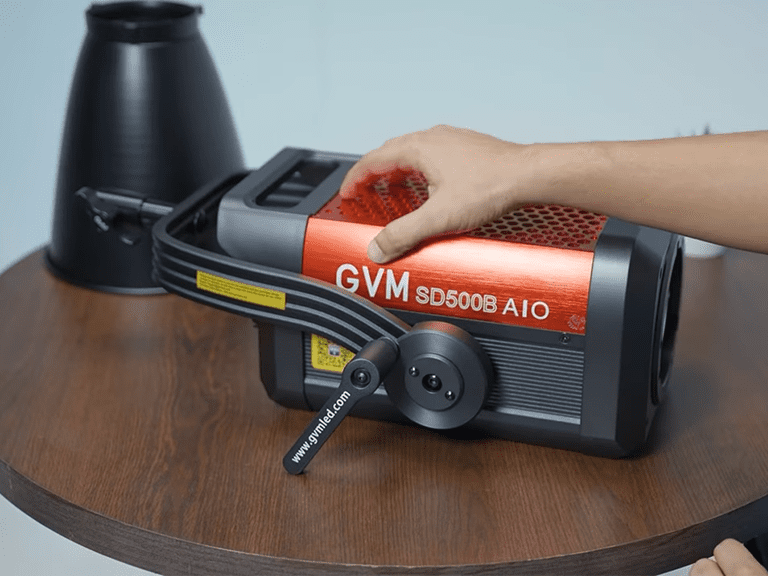
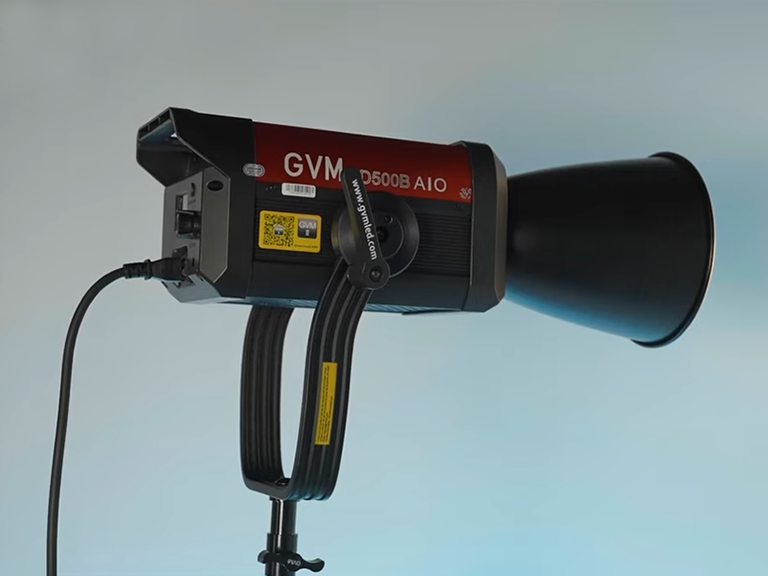
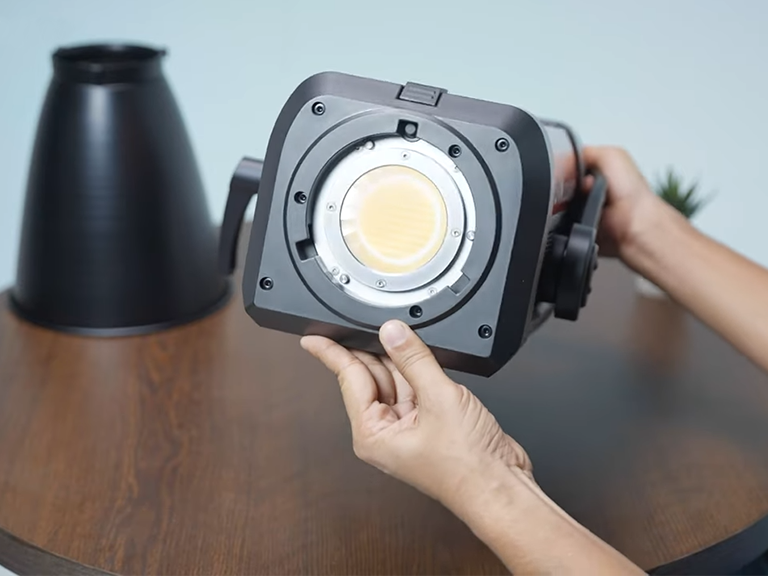
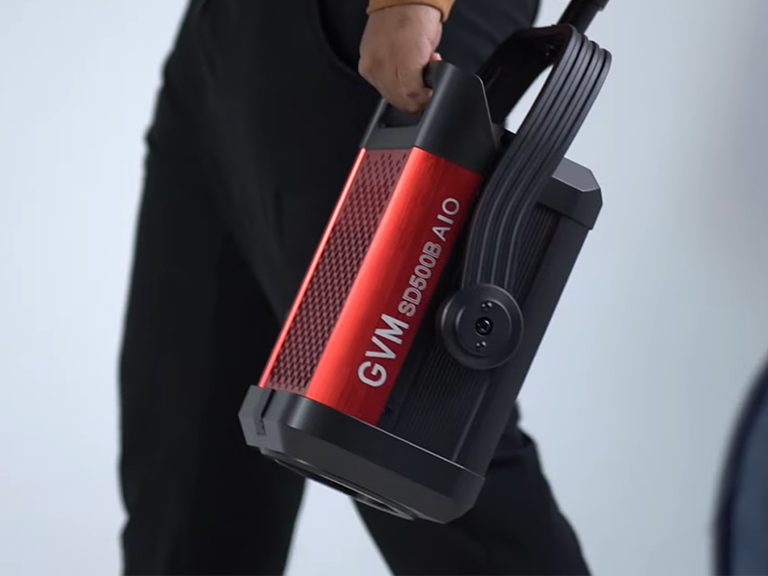
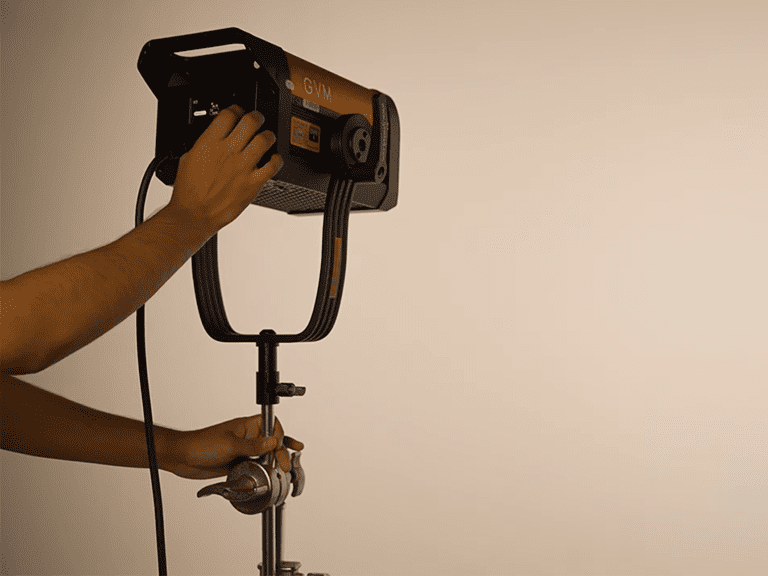
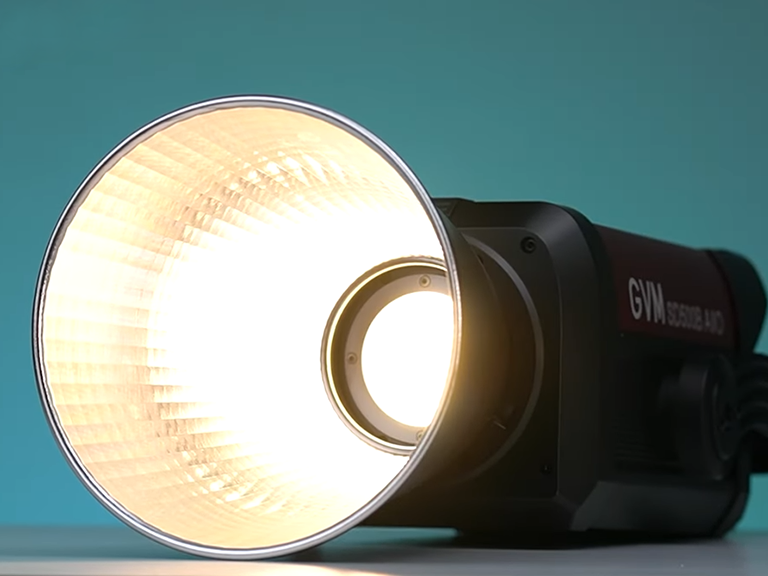
8. Installation d'éclairage professionnel avec GVM SD500B AIO et YF4060H
Cette configuration est conçue pour offrir des résultats commerciaux haut de gamme en utilisant le polyvalent GVM SD500B AIO et la précision de la Boîte à lumière douce carrée GVM-YF4060H (15,74 pouces*23,62 pouces).
Le fond clair
Commencez par placer une plaque acrylique blanche verticale à 100 cm derrière votre surface de prise de vue réfléchissante. Positionnez un GVM SD500B AIO équipé de la Boîte à lumière carrée GVM-YF4060H juste derrière cette plaque verticale.
- Le résultat : La boîte à lumière de 40 x 60 cm diffuse une lumière contrôlée et homogène. Sa forme rectangulaire garantit un arrière-plan net et parfaitement éclairé, créant ainsi un effet de halo professionnel autour de votre produit. (Intensité recommandée : 80-90%).
Éclairage global aérien
Monter un second GVM SD500B AIO avec le GVM-YF4060H approximativement 70 cm directement au-dessus de l'objet.
- Le résultat : Contrairement aux boîtes à lumière circulaires, le modèle YF4060H produit des reflets nets et linéaires sur les surfaces réfléchissantes (comme le verre ou les appareils électroniques). Cet éclairage zénithal réduit le contraste global de la scène et garantit la préservation des détails tant dans les zones claires que dans les zones sombres. (Intensité recommandée : 30-40%).
Sculpter avec une lumière latérale
Pour ajouter de la dimension et du “pop”, placez un troisième GVM SD500B AIO avec le GVM-YF4060H à un angle de 35 degrés, à environ 90 cm du côté de l'objet.
- Le résultat : Cet éclairage directionnel met en valeur la texture et la forme du produit. Le modèle YF4060H est idéal pour cette application, car il diffuse une lumière douce mais intense qui souligne la silhouette de l'objet et lui confère un aspect tridimensionnel. (Intensité recommandée : 60-70%).
Le Finisseur : Contrôle du Contraste
De l'autre côté de votre lumière latérale, utilisez une carte simple pour affiner les ombres :
- Carte blanche Utilisez ceci pour les objets sombres ou brillants afin de renvoyer la lumière douce dans les ombres.
- Carte noire : Utilisez ceci pour les objets brillants ou à faible contraste afin de créer un “remplissage négatif”, absorbant la lumière et affûtant les bords du produit pour un look plus spectaculaire.
9. Développement de l'éclairage de style de vie
Bien que des images épurées en haute lumière soient essentielles pour les annonces, l'éclairage lifestyle aide les produits à établir une connexion émotionnelle.
Lumière du soleil simulée : L'utilisation de gobos pour projeter des ombres semblables à des fenêtres ajoute du réalisme et de la profondeur.
Contrôle de la température de couleur : Les gels CTO peuvent introduire de la chaleur et créer une atmosphère naturelle et accueillante, souvent associée à la lumière de "l'heure dorée".
Conclusion : l'éclairage en tant qu'investissement à long terme
En photographie commerciale, l'éclairage est plus qu'une exigence technique, c'est un outil stratégique. Maîtriser l'éclairage de photographie de produits permet aux marques d'améliorer la qualité visuelle, de renforcer la perception et de soutenir la croissance à long terme.
En tant que marque axée sur l'éclairage, nous croyons que l'équipement n'est que le point de départ. Le véritable impact vient de la compréhension de la façon de modeler la lumière intentionnellement, transformant de simples images en récits visuels convaincants.