Outdoor photography offers a world of breathtaking backdrops, from the golden hues of a sunset to the vibrant greens of a forest. However, for many novices, the sun is a temperamental partner. Unlike a controlled studio environment, the outdoors requires a deep understanding of how light behaves and how to manipulate your camera to capture it.
To transition from a hobbyist to a professional-level creator, you must master two things: the technical outdoor photography settings and a reliable outdoor photography lighting setup for beginners. This guide will walk you through everything you need to know to harness the sun and take stunning images in any environment.
Best Outdoor Photography Settings: The Technical Foundation
Before you can master lighting, you must understand how your camera interprets the brightness of the sun. The “Exposure Triangle”—ISO, Shutter Speed, and Aperture—works differently under the open sky than it does indoors.
1. ISO: The Rule of Lows
In outdoor photography, your primary goal is image clarity. Since the sun provides an abundance of light, you should keep your ISO as low as possible—typically ISO 100 or 200. This minimizes digital noise and ensures the cleanest possible file for post-processing.
2. Shutter Speed: Managing the Brightness
In broad daylight, your shutter speed will likely be very fast. If you are shooting at a wide aperture, you might find yourself at 1/2000s or even 1/4000s. High shutter speeds are also essential for freezing motion, such as a bird in flight or a child running through a park.
3. Aperture: Balancing Depth and Light
Your aperture choice defines the “look” of your photo:
- f/8 to f/11: Ideal for landscapes where you want everything from the foreground to the horizon to be sharp.
- f/2.8 to f/5.6: Ideal for portraits or macro shots where you want to isolate the subject from the background.
4. Shooting in RAW
If there is one setting you must never ignore, it is the file format. Always shoot in RAW. Outdoor lighting often involves high contrast—bright skies and deep shadows. RAW files retain significantly more data, allowing you to recover “blown-out” highlights or “crushed” shadows during editing.
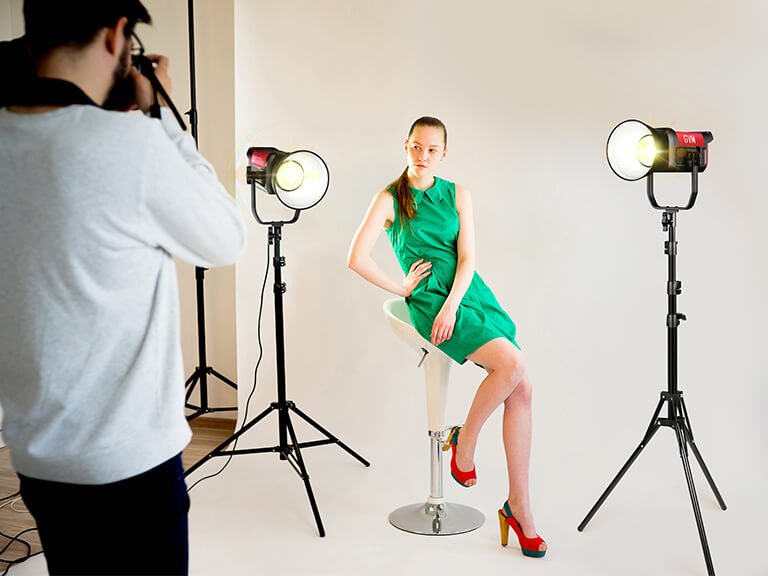
Outdoor Portrait Photography Settings: Making People Pop
When your subject is a person, your outdoor photography settings need to shift focus toward skin tones and background separation.
The Magic of Wide Apertures
For professional-looking outdoor portraits, use a wide aperture (low f-number like f/1.8 or f/2.8). This creates a shallow depth of field, blurring the trees or city streets behind your subject into a beautiful “bokeh.” This effect naturally draws the viewer’s eye to the person’s face.
Mastering White Balance
The color of sunlight changes throughout the day. Direct midday sun is neutral, while “Open Shade” (the shadow of a building) can make skin look unnaturally blue. Don’t rely solely on Auto White Balance (AWB). If your subject looks too “cool,” switch to the “Cloudy” or “Shade” preset to add warmth back into the skin tones.
Eye-Autofocus (Eye-AF)
Most modern mirrorless cameras have Eye-AF. Enable this! In outdoor settings where wind might move hair or the subject might be walking, ensuring the eyes are pin-sharp is the difference between a keeper and a throwaway shot.
Basic Photography Lighting Setup: Understanding the Sun
Lighting isn’t just about equipment; it’s about direction and quality. A basic photography lighting setup in the outdoors involves positioning your subject relative to the sun.
- Front Lighting (The Safest Bet): The sun is behind the photographer, shining directly on the subject. This provides even illumination but can cause the subject to squint.
- Side Lighting (The Dramatic Choice): The sun hits the subject from the side. This creates shadows that reveal texture and depth, perfect for moody, artistic portraits.
- Backlighting (The Professional Look): The sun is behind the subject. This creates a “rim light” or “halo effect” around the hair. However, this often leaves the face too dark, which is where your lighting equipment comes into play.
Outdoor Photography Lighting Setup for Beginners: Essential Tools
While the sun is your “Main Light,” it can often be unpredictable or too harsh. To achieve professional results, you need a reliable outdoor photography lighting setup for beginners to balance the exposure. Here are the most effective tools to upgrade your gear kit.
1. The Power of the 5-in-1 Reflector
The reflector is a fundamental tool for any beginner. It doesn’t require batteries and uses the existing sunlight to fill in shadows.
- White Side: Bounces soft, natural light into shadows—perfect for backlit portraits.
- Silver Side: Provides a stronger, more specular reflection for overcast days.
- Gold Side: Adds a warm, bronzed glow that complements the “Golden Hour.”
2. Using a Diffuser for Midday Sun
Harsh midday light often creates “raccoon eyes” (deep shadows under the eyes). A diffuser—a semi-transparent screen held between the sun and your subject—softens the light instantly, turning a high-contrast nightmare into flattering, studio-quality illumination.
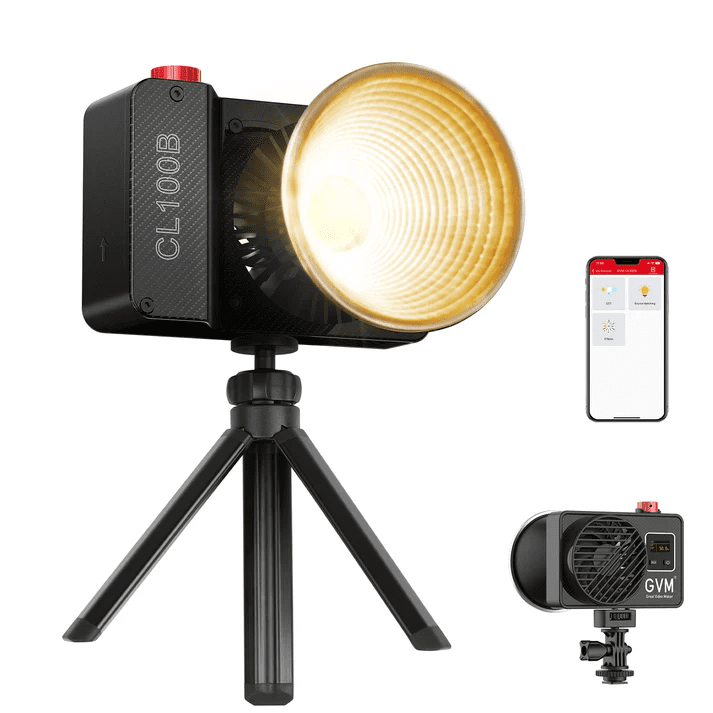
3. The Modern Solution: Portable Continuous LED Light (GVM CL100B)
For beginners, traditional flashes (Speedlights) can be difficult to master because you can’t see the effect until after the shutter clicks. A portable COB LED light like the GVM CL100B is a game-changer for outdoor creators.
- Pocket-Sized Power: Despite weighing only 0.36kg, the GVM CL100B packs a 100W punch. It is ultra-portable, making it easy to carry on long outdoor treks.
- See What You Shoot: Unlike a flash, this continuous light allows you to see exactly where the shadows fall in real-time. With a CRI/TLCI of 97+, it ensures the skin tones in your portraits are vibrant and accurate.
- Match the Sun: Its bi-color range (2700K-6800K) allows you to perfectly match the warmth of a sunset or the coolness of the shade.
- Outdoor Versatility: A major challenge of outdoor shoots is power. The CL100B solves this with Triple Power Options, supporting NP-F batteries and Type-C PD fast charging, ensuring your creative flow isn’t interrupted by a dead battery.
- Contrôle intelligent : You can adjust brightness and color temperature via the Smart APP/Bluetooth Mesh, which is incredibly helpful when the light is mounted on a high stand.
Putting It All Together: A Step-by-Step Workflow
To ensure you get the best results with your outdoor photography settings, follow this professional workflow:
- Pick Your Time: Aim for the “Golden Hour” (the hour after sunrise or before sunset). If you must shoot at noon, use a diffuser or find “open shade.”
- Set Your Camera Base: Start with your outdoor photography settings at ISO 100 and a wide aperture (like f/2.8) to blur the background. Adjust your shutter speed until the background looks perfectly exposed.
- Introduce Your Fill Light: If your subject’s face is too dark (common in backlighting), use your GVM CL100B or a reflector to “fill” the shadows. If using the CL100B, adjust the color temperature to match the ambient sunlight.
- Check Your Histogram: Don’t trust the LCD screen in bright sunlight. Check the histogram to ensure you aren’t “clipping” your highlights (losing detail in the bright sky).
- Refine with Accessories: Utilisez la Monture Bowens on your CL100B to attach a softbox or the included reflector to control exactly where the light hits your subject.
Conclusion
Maîtrise outdoor photography settings is about more than just memorizing numbers; it’s about learning to see light as a tangible element you can shape. By combining the right technical foundation with a versatile outdoor photography lighting setup for beginners—whether it’s a simple 5-in-1 reflector or the powerful, portable GVM CL100B LED light—you can overcome the challenges of the natural environment.
Stop waiting for the “perfect” light to happen by accident. Grab your gear, set your ISO to 100, and head outside. The more you practice manipulating the sun with modern tools, the faster you will develop the “photographic eye” that turns a simple snapshot into a professional masterpiece.