A 300W video light is one of the sweet spots in modern production lighting. It’s bright enough to fight daylight outdoors, tame shadows in mid-size interview setups, and still feels manageable on a single C-stand. But “300W” on the spec sheet doesn’t tell the whole story — beam quality, color accuracy, and accessory ecosystem decide whether the light actually works on set. I’ve been testing GVM’s 300W lineup over the past few months, and the differences between the three flagships surprised me.
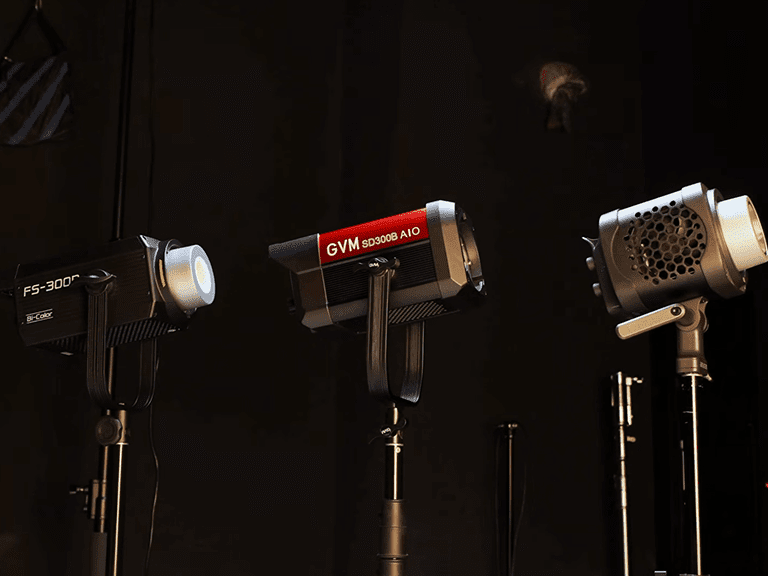
Here’s a clean breakdown of the best 300 watt video light options worth your money in 2026, plus what to look for before you spend.
Table des matières
What Is the Best Type of Light for Video?
The “best type of light for video” comes down to three choices: hard vs soft, LED vs tungsten, and panel vs monolight. Each one changes how your footage looks.
Hard vs soft light. Hard light (a bare COB or fresnel) creates sharp shadows and high contrast — cinematic, dramatic, but unforgiving on skin. Soft light (a panel, a softbox on a COB) wraps around faces, hides blemishes, and is the workhorse for interviews and talking-head content. Most video workflows use a mix: a hard key from one side, a soft fill from the other.
LED vs tungsten. Tungsten has gorgeous color but burns hot, eats power, and requires heavy stands. LED runs cool, dims cleanly, and is friendlier to small crews and home studios. Modern bi-color LEDs cover 2700K–6800K in a single head, so one light handles both “golden hour” and “noon office” looks. CRI 95+ LEDs now match tungsten’s color rendering for broadcast work.
Panel vs monolight. A panel spreads light evenly across a wide area — great for filling a softbox or lighting a group. A monolight (COB-based) throws harder and further, takes Bowens-mount modifiers, and is more versatile for cinematic shaping. For a 300 watt video light, monolights usually win on output-per-dollar; panels win on softness-per-watt.
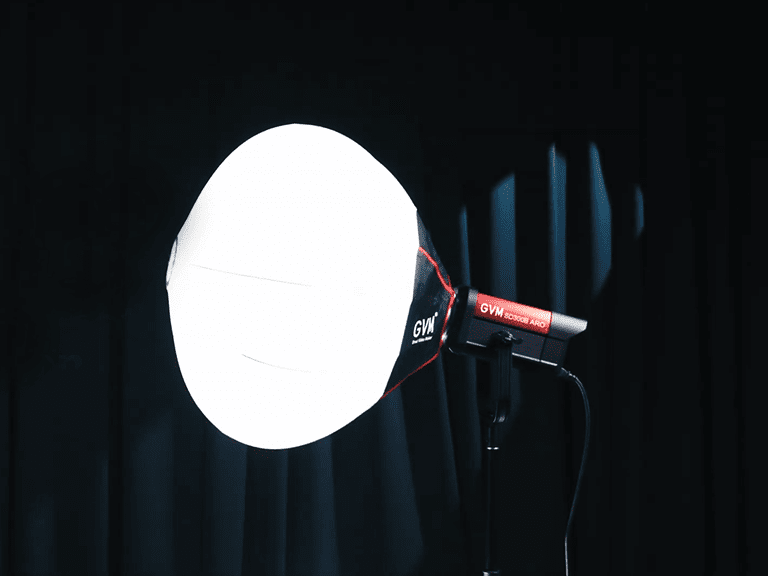
300W Video Light: Why Wattage Matters (and When It Doesn’t)
Wattage is a proxy for output, not a guarantee of quality. A 300W light with a poor optical design can lose half its lumens to a wide beam; a well-engineered 300W can out-throw a cheap 500W.
What actually matters:
- Lux @ 1m with reflector — the real brightness number. Anything under 30,000 lux @ 1m is a soft panel; 60,000+ is a serious monolight.
- CRI / TLCI 95+ — color rendering. Below 95 you’ll fight the white balance in post.
- Color temperature range — Bi-Color (2700K–6800K) covers 90% of video work. RGB (2000K–10000K) adds creative effects.
- Mount ecosystem — Bowens mount opens up softboxes, reflectors, projection attachments. A proprietary mount locks you in.
- Power options — AC + V-mount battery support is the difference between “studio light” and “field light.”
Where 300W hits the sweet spot:
- Indoor interviews and podcasts (2–4m subject distance)
- Mid-size narrative sets (key + fill from 3–5m)
- Outdoor shaded fill on overcast days
- Live streaming with cinematic depth-of-field
- Run-and-gun documentary where you need one light that does everything
Where 300W is too much (or too little):
- Compact desktop vlogging: 60–100W is plenty
- Single-subject livestream with a webcam: 150W is enough
- Stadium-scale event lighting: 600W–1200W territory
- Tiny home studios: heat and spill become a problem
The GVM 300W lineup covers three distinct flavors of “300W done right”: the SD300B-AIO for maximum brightness, the PRO SD300B for professional fieldwork, and the PRO SD300C for creators who need RGB.
300W Video Light for Filmmakers: Best Picks for Serious Shoots
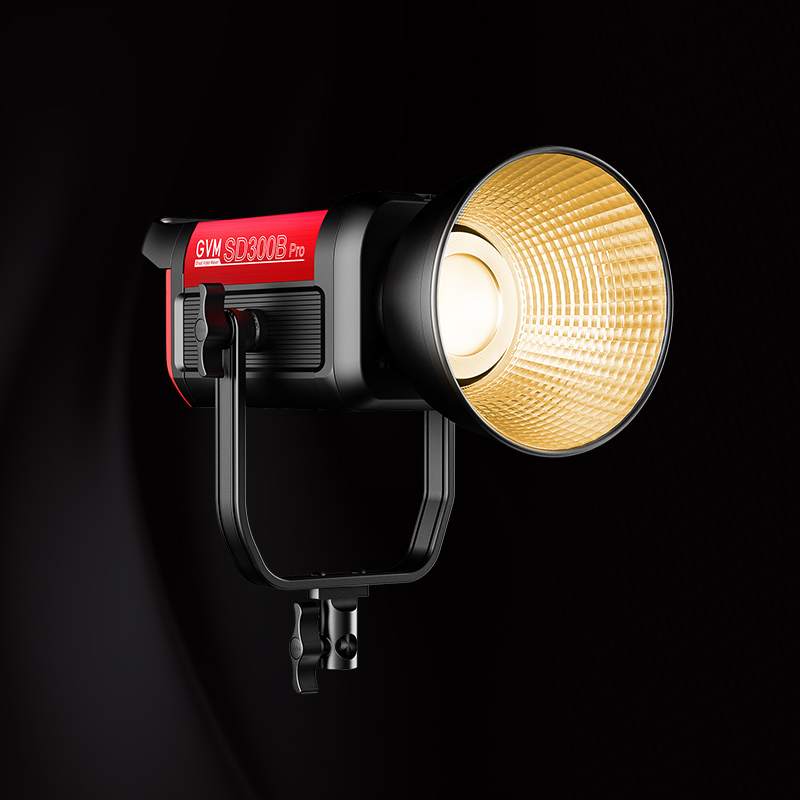
If you’re running narrative work, documentary, or commercial shoots, the GVM PRO SD300B is the 300 watt video light I’d grab first.
Why filmmakers like it:
- 65,700 lux @ 1m (with reflector) — serious throw for outdoor key light or large interiors
- Bi-Color 2700K–6800K — matches daylight and tungsten without gels
- CRI/TLCI 97 — broadcast-grade color, no green spikes
- V-mount battery plate — runs off two 99Wh V-mounts for true cordless operation
- IP54 weather resistance — survives light rain, dust, and location rough treatment
- Mesh Bluetooth app control — adjust 50+ lights from your phone, no DMX board needed
- 1/1000 stepless dimming — precise exposure control for time-lapse and slow-shutter work
- Silent fan mode — under 25dB at full power, safe for dialogue-heavy scenes
The PRO SD300B also supports DMX and a physical control panel, so it slots into a gaffer’s existing workflow. The Bowens mount accepts the full Godox / Aputure / GVM modifier ecosystem — softboxes, fresnel lenses, projection attachments.
Best for: narrative DP, documentary teams, event videographers who shoot in mixed weather.
Best Budget Video Light: Maximum Output Under $300
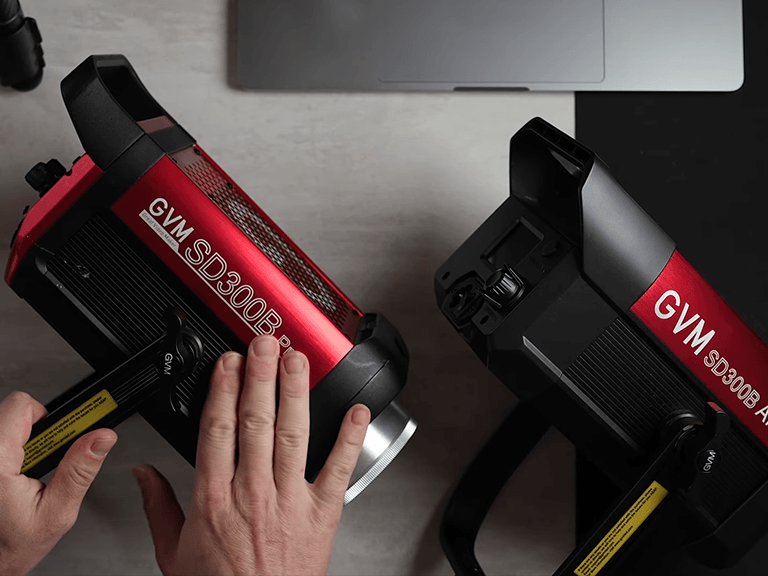
For solo creators and small studios chasing raw brightness per dollar, the GVM SD300B-AIO is the standout. It packs 300W into a single all-in-one head with output that punches way above its price tier.
What makes it the best budget 300 watt video light:
- 221,950 lux @ 1m — yes, over three times the PRO SD300B’s output at 1m. The AIO is built around a higher-output COB and tighter reflector.
- All-in-one body — no separate head and ballast, no cable management headaches
- 12 effets lumineux intégrés — lightning, candle, fire, TV, paparazzi, etc., for narrative B-roll
- APP + Bluetooth control — wireless adjustment from your phone
- IRC 97 — same color accuracy as the PRO line
- Active cooling with silent mode — quiet enough for indoor interview work
The AIO is the right pick when the brief is “I need daylight-balanced brute force, and I need it now.” YouTube creators running DIY studios, real-estate videographers lighting mid-size rooms, and indie filmmakers doing interior scenes all benefit from this kind of output.
Best for: budget-conscious creators, high-key YouTube studios, indie narrative interiors.
Best Light for Content Creators: RGB Flexibility
For creators who live on TikTok, Instagram Reels, YouTube Shorts, and Twitch, the GVM PRO SD300C is the 300W video light that does what bi-color can’t: full RGB color, wide 2000K–10000K range, and creative lighting effects baked in.
What the SD300C unlocks for content creators:
- Full RGBWW color wheel — millions of saturated colors, plus 2000K–10000K white light
- 48,200 lux @ 1m — bright enough to overpower most room lighting
- HSI / RGBW / Gel modes — match neon signs, set brand colors, recreate cinematic looks
- 12 lighting effects — including cop car, fireworks, and party modes for short-form content
- 1/1000 stepless dimming — flicker-free for high-frame-rate capture
- App and on-board control — pre-program looks, save presets, recall in one tap
- Monture Bowens — drop in a softbox for a softer wrap when you need it
The SD300C shines when your content identity depends on color. Beauty creators who match backdrop to skin tone, streamers with branded overlay colors, and short-form video creators chasing trending color palettes — all benefit from RGB at 300W.
Best for: YouTube creators, TikTok/Reels creators, streamers, brand-driven content.
300W Video Light: Quick Comparison
| Modèle | Puissance | Lux @ 1m | Color | CRI/TLCI | Signature Feature | Meilleur pour |
|---|---|---|---|---|---|---|
| GVM PRO SD300B | 300W | 65,700 lux | 2700K–6800K Bi-Color | 97+ | V-mount + IP54 + Mesh | Pro field shoots |
| GVM SD300B-AIO | 300W | 221,950 lux | Bi-Color | 97+ | All-in-one + 12 effects | Budget max-brightness |
| GVM PRO SD300C | 300W | 48,200 lux | 2000K–10000K + RGB | 97+ | Full RGB + HSI | Creators who use color |

300W Video Light FAQ
Is 300W bright enough for outdoor video? Yes, when paired with a reflector or fresnel. A 300W COB monolight throws 50,000+ lux @ 1m, which beats overcast daylight at typical subject distances. For direct noon sun, expect to flag diffusion or use a tighter optic.
What’s the difference between 300W Bi-Color and RGB? Bi-Color covers warm-to-cool white light (2700K–6800K). RGB adds saturated colors and wider color temperature (often 2000K–10000K) for creative effects. If you shoot talking-head content, Bi-Color is enough. If you shoot branded or stylized content, RGB pays for itself.
Can a 300W video light run on V-mount battery? Models with a V-mount plate (like the GVM PRO SD300B) can run on two 99Wh or 150Wh V-mount batteries. Expect 20–45 minutes of full-power runtime per pair, longer if you dim down. Pure AC-only 300W lights need a power outlet or a large battery generator.
How far can a 300W video light throw? With a 55° reflector, useful throw is 5–8 meters for a soft key. With a 30° fresnel or projection attachment, useful throw extends to 12–15 meters. Bare COB throws shortest — typically 2–4 meters for soft wrap.
Is 300W too much for YouTube or streaming? For single-subject webcam setups, 300W is overkill — a 100W panel at 1m does the job. For two-person podcasts, product reviews, or any setup with depth-of-field and background separation, 300W gives you the headroom to stop down and get that cinematic blur.
What CRI rating do I need for video? CRI 95+ is the modern baseline for broadcast and YouTube work. CRI 97+ (like all three GVM 300W options) is broadcast-grade. Below CRI 90 you’ll see color shifts, especially in skin tones and saturated reds — not ideal for talking-head content.
Final Verdict: Which 300W Video Light Should You Buy?
- Pick the GVM PRO SD300B if you’re a working filmmaker or DP who shoots in real locations, needs V-mount battery power, and wants IP-rated weather protection.
- Pick the GVM SD300B-AIO if you’re a budget-conscious creator who just wants maximum brightness in a simple, all-in-one package.
- Pick the GVM PRO SD300C if you’re a content creator or streamer whose work depends on color — branded palettes, RGB effects, and creative lighting.
A 300 watt video light is a serious tool. Pick the one that matches your actual workflow, not just the spec sheet. And if you want a deeper dive into the GVM 300W lineup, check the full specs and current pricing at the GVM shop.