Professional studio lighting is often treated like a locked door for anyone new to photography or video — expensive, technical, and intimidating to set up. In reality, the modern LED panel has made studio-grade lighting more approachable than ever.
A single well-chosen light can replace a bag full of reflectors, gels, and guesswork, giving a beginner the same control over color and brightness that pros rely on every day.
Table des matières
Why a Beginner Needs a Dedicated Light Panel
Relying on window light or ceiling fixtures only works until the sun moves or the shoot runs past sunset. A dedicated LED panel solves that problem by giving consistent, repeatable output on demand, regardless of time of day or location. It also removes the biggest hurdle beginners face: matching color temperature. Mixing daylight from a window with warm indoor bulbs creates color casts that are hard to fix in post, while a bi-color panel lets you dial in a consistent temperature that matches — or intentionally contrasts with — the room.
Beyond color, a panel adds creative range. Adjustable brightness means the same light can act as a soft key for portraits one day and a punchy background accent the next, without buying multiple fixtures.
What Makes a Studio Panel Beginner-Friendly
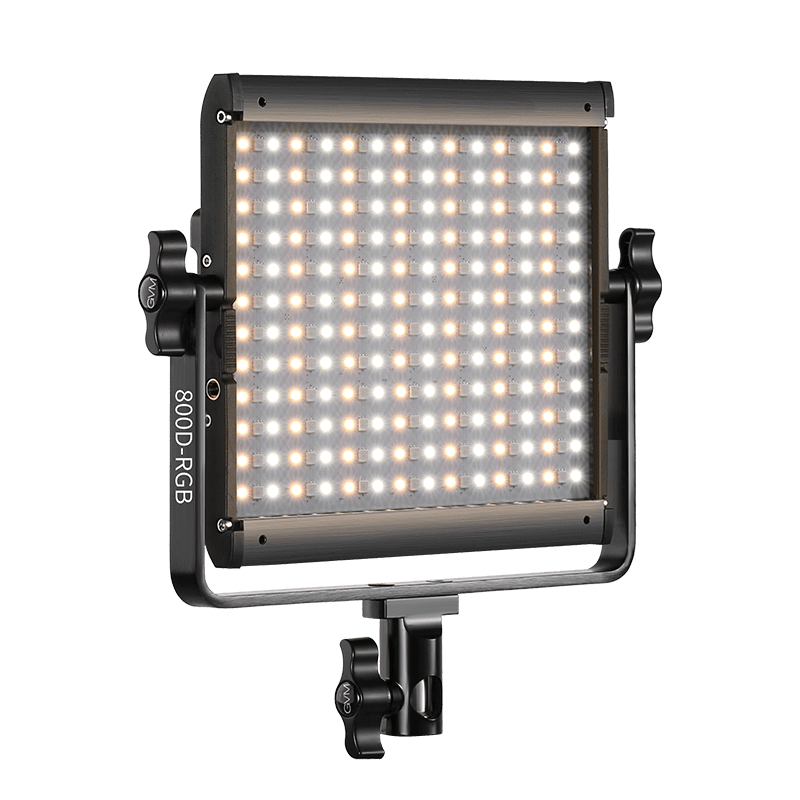
Not every LED panel is a good starting point. The best options for someone new to lighting share a few traits:
- Simple on-board controls that don’t require reading a manual to operate
- A wide color temperature range so one light covers multiple scenarios
- Dual power options (AC and battery) for both studio and on-location use
- Built-in effects or presets that add production value without extra gear
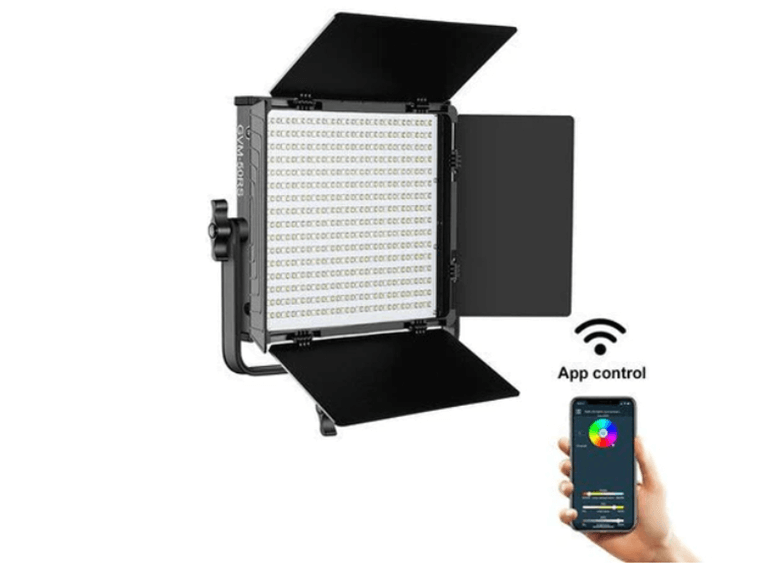
- Wireless app control for adjusting settings without walking back to the light
A panel that checks these boxes lets a beginner focus on composition and subject rather than fighting the equipment.
Product Spotlight: GVM-800D-II 2-Light Kit
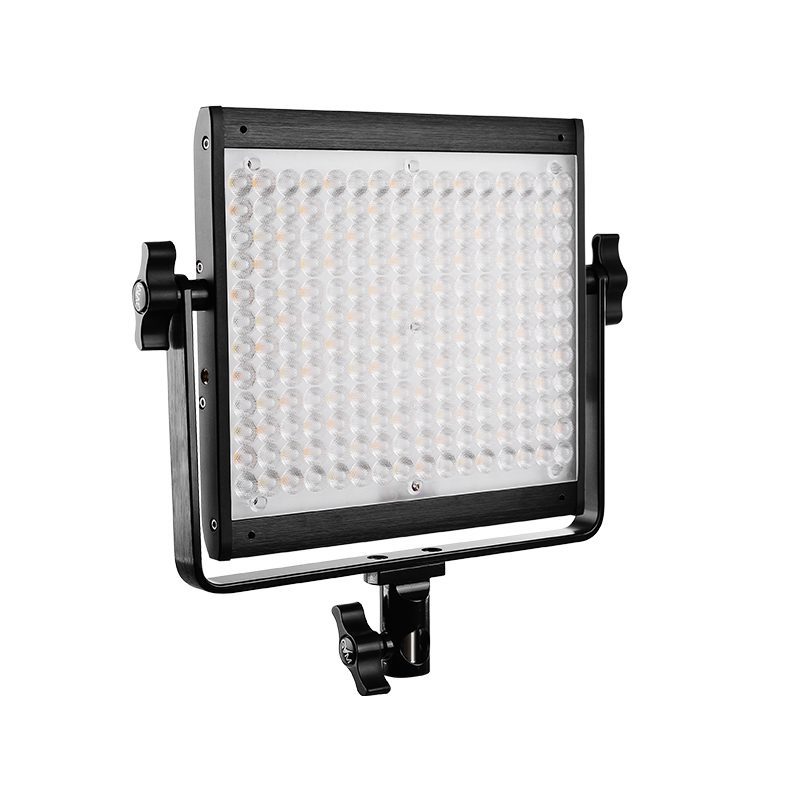
One panel that fits squarely into this beginner-friendly category is the GVM-800D-II, sold as a 40W bi-color and RGB video panel kit with two lights included — ideal for setting up a basic two-point lighting setup right out of the box.
The 800D-II runs in two modes: a standard color temperature mode adjustable between 3200K and 5600K, and a full RGB hue/saturation mode for creative color work. Both are controlled through onboard knobs or the companion smartphone app, and the panel supports master-slave control so a beginner can adjust both lights in a two-light kit from a single master unit.
For anyone building confidence with lighting scenarios, the 18 built-in scene effects — including Fire, Lightning, TV, and Police Car — offer a fast way to add production value without renting extra gear or learning compositing.
| Fonctionnalité | Specification / Benefit |
|---|---|
| Puissance de sortie | 40W per panel |
| Plage de température de couleur | 3200K–5600K (Bi-Color) |
| Color Rendering Index | ≥97 CRI |
| RGB Mode | Full hue 0°–360°, saturation 0–100% |
| Illuminance | 1305 lux @ 1m / 4990 lux @ 0.5m |
| Gradation | Sans palier |
| Angle du faisceau | 120° |
| Contrôle | Knob, Bluetooth app, wireless master-slave |
| Alimentation électrique | AC 100–240V or Sony NP-F750/970 battery |
| Poids | 1kg per panel |
| Scene Effects | 18 built-in presets |
| Price | $189.00 (2-light kit, regular $249.00) |
At under $200 for a two-light kit, the GVM-800D-II lowers the barrier to entry considerably compared to single studio-grade monolights that often cost several times as much for just one head. The lightweight 1kg build and dual AC/battery power also mean the same kit works equally well in a home studio or on a quick outdoor shoot.
Setting Up Your First Two-Point Lighting Kit
With two panels in hand, a beginner-friendly starting setup looks like this: place one light as the key, angled roughly 45 degrees from the subject and slightly above eye level, and set the second as a fill on the opposite side at a lower intensity to soften shadows. Because both panels adjust from 3200K to 5600K, they can be matched to daylight, tungsten, or anywhere in between depending on the room.
The four-way barndoors help narrow the beam spread when more directional control is needed, while the wide 120° default beam angle works well for broader, softer fill across a small set.
Best Photography Light Panel: Final Recommendation
For someone stepping into professional studio lighting for the first time, the priority isn’t the highest lux number on a spec sheet — it’s ease of use, flexibility, and not overspending before knowing what kind of shooting they’ll actually do. The GVM-800D-II checks those boxes: simple controls, a genuinely useful CCT and RGB range, dual power options, and a two-light kit price that undercuts most single-panel competitors at the same wattage class.
Conclusion
Studio lighting stops being intimidating once the right tools are in hand. The GVM-800D-II 2-Light Kit combines beginner-friendly controls, strong color accuracy, and flexible power options at a price built for someone just starting out. For anyone ready to move past window light and start shooting on their own schedule, this kit is a practical, affordable way to begin building professional studio lighting skills.