Product photography lighting determines far more than how bright a photo looks — it determines whether a shopper trusts what they’re seeing enough to click “buy.” Customers can’t touch or inspect a product before ordering it online, so the photo carries the entire weight of that decision. A shirt that photographs a shade too dark, a piece of jewelry with distracting glare, or a product that looks noticeably different in person than it did online all quietly damage conversion rates and drive up returns.
Below is a practical breakdown of what a beginner-friendly product photography kit should include, how to structure a proper lighting setup, why LED lighting has become the standard over natural light for this kind of work, which equipment delivers the color accuracy product photography depends on, and how to build a reliable setup without overspending.
Meilleur kit d'éclairage de photographie pour débutants
Beginners starting product photography don’t need a large, complicated lighting rig — they need a small number of reliable, well-understood tools that produce consistent results.
A solid beginner kit typically includes one or two adjustable LED lights with bi-color temperature control, a basic diffusion tool such as a light tent or softbox, a couple of simple reflectors, and a stable surface or small tabletop studio setup. The goal at this stage isn’t creative complexity — it’s learning how light behaves around different product shapes and materials before adding more fixtures or modifiers.
Choosing a single strong, high-CRI light over several cheaper, lower-quality fixtures tends to produce better early results. It’s far easier to learn lighting fundamentals with one light you can position and adjust confidently than to manage multiple mismatched sources that behave unpredictably together.
As beginners become more comfortable, a second light for fill or background separation is usually the next logical addition — but starting simple avoids the common trap of over-lighting a scene before understanding how a single source shapes shadow and color.
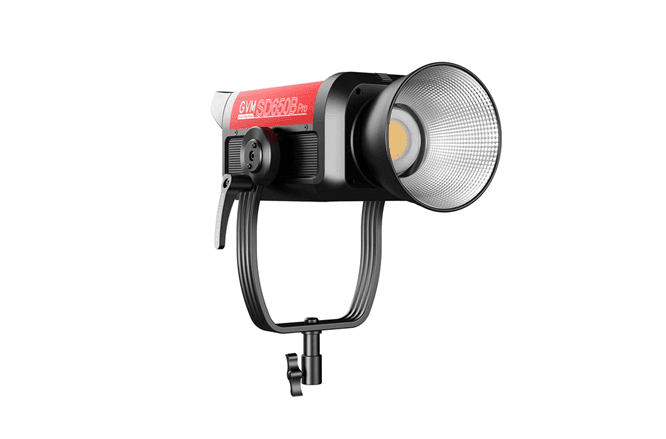
Installation d'éclairage pour la photographie de produits
A dependable product photography setup follows a fairly standardized structure, since repeatability matters more here than creative variation.
Lumière principale provides the primary illumination, typically positioned at roughly 45 degrees to the product to establish the main brightness and color temperature of the shot.
Lumière d'appoint, often placed on the opposite side of the key light at a lower intensity, softens shadows on the side of the product facing away from the key light so detail stays visible on both sides.
Background or backlight separates the product from its backdrop — especially important for the clean white backgrounds required by most marketplaces and storefronts.
Diffusion, through softboxes, light tents, or diffusion panels, softens light before it reaches the product, cutting down on harsh reflections and hot spots on glossy or reflective items.
A fixed camera and product position between shots keeps lighting consistent across an entire product line or catalog rather than varying from image to image.
Because modern LED panels run cool and don’t require the clearance older tungsten setups demanded, a full setup can now fit comfortably into a small studio space or even a spare room.
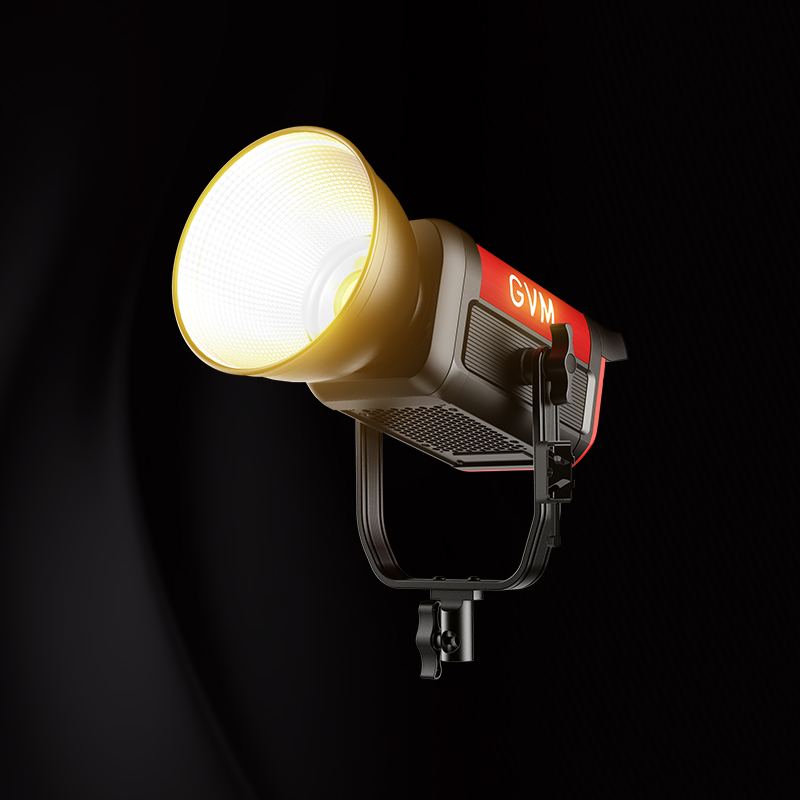
Natural Light vs. LED Light for Product Photography
Natural light remains a popular entry point for product photography since it’s free and, under the right conditions, genuinely attractive. But it comes with real limitations once photography needs to scale or stay consistent.
Daylight shifts constantly throughout the day — a product photographed at 10 a.m. can look noticeably different from the same product shot at 4 p.m., which is a minor issue for a single hero image and a serious one for a catalog that needs visual consistency across dozens of listings. Photographers relying on window light are also restricted to specific hours and are at the mercy of cloud cover, making it difficult to maintain a predictable shooting schedule.
LED lighting removes both variables. A quality LED light delivers fixed, repeatable brightness and color temperature regardless of the time of day or weather outside, so a product shot on a Monday morning matches one shot on a Friday afternoon. Bi-color LED panels also let photographers fine-tune color temperature precisely, rather than working around whatever the sun happens to be doing.
For a single occasional product shot, natural light is still a reasonable option. But for any photographer or business shooting product photography regularly, LED lighting offers a level of control natural light simply can’t replicate.
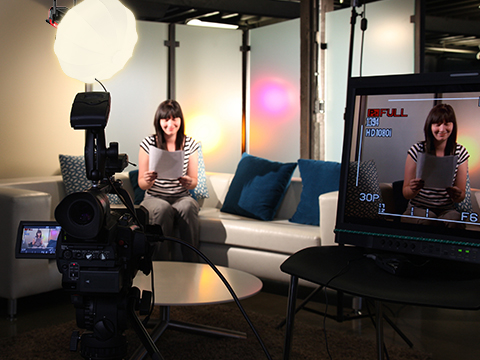
Best Lighting Equipment for Product Photography
Because product photography depends so heavily on color fidelity, the most important spec to prioritize is CRI (Color Rendering Index) — ideally 95 or above — paired with precise, reliable dimming control.
Le GVM PRO SD200B is well suited to this kind of work. With CRI and TLCI both rated at 97+, it renders product colors accurately and consistently, avoiding the slightly off or flattened look that lower-CRI lights can produce, especially on fabrics, metals, and printed packaging where color precision matters most.
Its 45,400 lux output at 1 meter gives photographers plenty of headroom to shoot through softboxes or diffusion without losing usable brightness, while its 0–100% dimming with 1/1000-step precision allows fine control over exposure and shadow detail — useful when shooting reflective or glossy products that are sensitive to even small changes in light intensity. The SD200B’s 2700K–6800K bi-color range also lets photographers match warmer tones for materials like wood or leather, or cooler tones for tech and metallic products, all from a single fixture.
| Fonctionnalité | Specification / Benefit |
|---|---|
| Modèle | GVM PRO SD200B |
| Luminosité | 45 400 lux @ 1 m |
| Température de couleur | 2700K–6800K bi-color |
| CRI/TLCI | 97+ for accurate product color reproduction |
| Gradation | 0–100%, 1/1000-step precision |
| Contrôle | Onboard knobs, GVM app, 5-Pin DMX |
| Caractéristiques spéciales | 12 lighting effects, 12 light source presets |
| Meilleur pour | Product photography, e-commerce shoots, studio and catalog work |
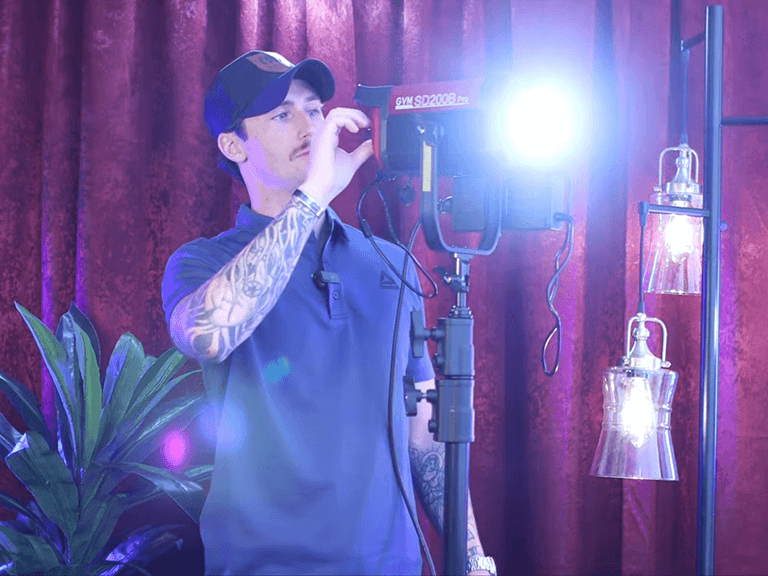
Product Photography Lighting on a Budget
A capable product photography setup doesn’t require a full matched lighting kit from day one. Starting with a single high-CRI light and a basic diffusion panel or light tent can already produce clean, sellable results for smaller products.
A few practical ways to keep costs down without sacrificing image quality:
Prioritize CRI over raw brightness when budgets are tight. A less powerful light with excellent color rendering will produce more accurate, sellable images than a brighter light with poor CRI performance.
Use reflectors before adding a second powered light. White foam boards can bounce light back onto a product’s shadow side, reducing or eliminating the need for a second fill light in a basic setup.
Invest in diffusion before investing in more lights. A simple light tent or diffusion panel often improves image quality on reflective products more noticeably than a second light would.
Choose a single adjustable light over multiple fixed-temperature fixtures. A bi-color light like the SD200B covers the color range most product categories need, avoiding the added cost of buying separate warm and cool lights.
As shooting volume grows, additional lights and modifiers can be added incrementally — but a single high-CRI LED light remains a strong, cost-conscious foundation for consistent product photography from day one.
Conclusion
Lighting shapes product photography in ways that go well beyond aesthetics — it directly affects whether customers trust a listing enough to buy, and whether the product they receive matches what they saw online. A properly structured key-fill-background setup produces clean, professional results, but the deciding factor remains color accuracy and consistency. With its 97+ CRI, precise dimming, and wide bi-color range, the GVM PRO SD200B gives photographers a color-accurate foundation that reliable product photography depends on, whether you’re just starting out or shooting a full catalog.
Ready to improve your product photography? Explorer le GVM PRO SD200B to bring accurate, consistent lighting to your next product shoot.