Choosing the right lighting equipment is one of the most important decisions in video production. A good camera can capture detail, but lighting determines how that detail appears. It shapes skin tones, defines textures, and establishes the mood of a scene.
For a long time, creators who wanted both powerful output and flexible color control often needed several different fixtures. One light handled the key illumination, another added color to the background, and additional equipment helped match the lighting to the environment.
Modern LED technology has made this process more flexible. A Full-Color LED Video Light can combine conventional white light with a wide range of colors, giving filmmakers more control without requiring a separate fixture for every creative task.
Whether you are filming interviews, producing commercial videos, or building a small studio, understanding how color, brightness, and lighting control work together will help you make better equipment decisions.
Table des matières
Why Full-Color LED Video Lights Matter in Modern Production?
Traditional white-light fixtures remain essential for professional filmmaking. They provide the clean, consistent illumination needed for interviews, product photography, and commercial work. However, some scenes require more than natural-looking white light.
A music video may need saturated colors across the background. A product shoot might benefit from a subtle blue edge light. Even a simple talking-head video can look more polished when the background has some separation from the subject.
RGB lighting makes these adjustments possible without relying entirely on colored gels or multiple dedicated fixtures. Modern full-color lights also combine RGB output with adjustable white-light color temperature, allowing users to move between practical illumination and creative effects.
The important distinction is that color flexibility should complement good lighting technique, not replace it. Before adding dramatic colors, establish the subject’s exposure, shadow direction, and skin-tone accuracy.
What Should You Look For in a Full-Color LED Video Light?
Not every RGB light is suitable for every production. Brightness, color quality, adjustment range, and control options all affect how useful a fixture will be on set.
Light Output and Brightness
Output determines how much flexibility you have when positioning a light and choosing accessories. A stronger source can be diffused through a large softbox, bounced off a reflector, or positioned farther from the subject while still delivering useful illumination.
Wattage alone does not tell the whole story. Actual illuminance, measured in lux at a stated distance, provides a more useful indication of how much light reaches the subject. Beam angle and modifiers also affect the final result.
For a small streaming setup, modest output may be sufficient. Commercial work and larger scenes often benefit from a more powerful fixture that can accommodate different lighting arrangements.
Précision des couleurs
Color accuracy matters whenever skin tones, clothing, or product details need to look natural. A light with a high Color Rendering Index (CRI) and Television Lighting Consistency Index (TLCI) can help preserve the appearance of colors under controlled lighting conditions.
CRI and TLCI are useful reference points, but they do not describe every aspect of color performance. They should be considered alongside actual output, color consistency, and the requirements of the shoot.
For professional work, CRI and TLCI ratings of 95 or higher are generally a useful benchmark.
Adjustable Color Temperature
Color temperature, measured in Kelvin (K), describes the appearance of white light from warm to cool. Warm light can create an intimate atmosphere, while cooler light may help match daylight or establish a more neutral look.
A broad adjustment range makes it easier to match existing fixtures and windows without relying on gels. It can also help maintain consistency when moving between different locations.
When choosing a light, look for a range that supports both your everyday lighting needs and the visual styles you expect to produce.
Options de contrôle
Lighting becomes more complicated as the number of fixtures increases. Adjusting one light directly is straightforward, but coordinating several fixtures during a commercial shoot can take time.
Onboard controls are useful for quick adjustments. Smartphone apps offer convenient wireless operation, while Bluetooth Mesh networking can simplify coordination between compatible fixtures. For more complex productions, DMX and RDM provide additional integration with professional lighting control systems.
The right control system depends on the workflow. A solo creator may prioritize convenience, while a lighting technician working on a multi-light set may need centralized control and more precise adjustments.
1. Best All-Around Full-Color LED Video Light for Professional Production
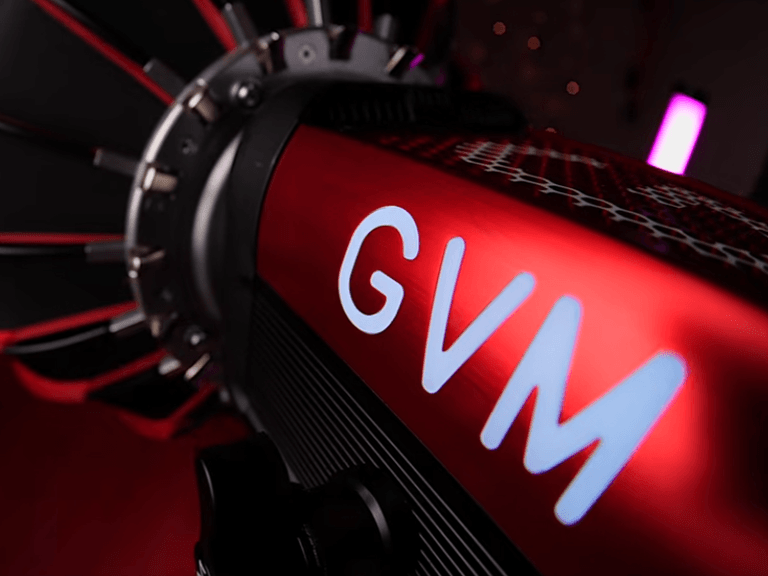
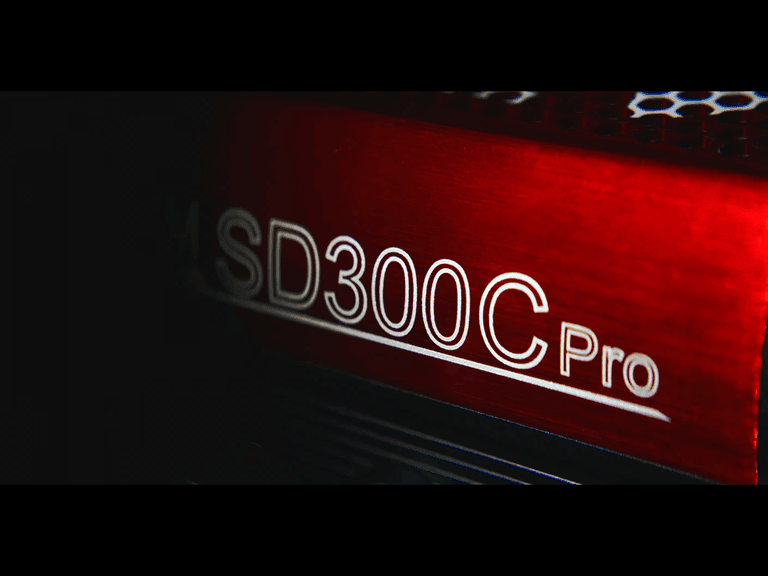
Product spotlight: GVM PRO SD300C
For creators who need substantial output alongside flexible color control, the GVM PRO SD300C brings several important lighting capabilities into one fixture. Its 300W output, full RGB functionality, and adjustable white-light color temperature make it suitable for a range of studio and video production tasks.
Rather than treating color effects as its only purpose, the SD300C can serve as a primary light source for conventional shooting and a creative tool when the scene calls for something more distinctive.
300W Output With RGB and Bi-Color Lighting
The SD300C combines a 300W COB LED engine with full RGB output and a 2000K–10000K color-temperature range. With the included standard reflector, its specified illuminance reaches 48,200 lux at one meter.
That combination is useful because white-light output and colored light serve different purposes. A neutral or warm-white setting can illuminate a face, while RGB output can add color to a background or create separation around the subject.
Having both capabilities in one fixture makes it easier to change the visual direction of a scene without rebuilding the entire lighting setup.
One Light, More Creative Possibilities
A full-color fixture becomes more useful when paired with the right modifier. The SD300C uses a Bowens mount, giving users access to compatible accessories for shaping its output.
A softbox can produce softer illumination for interviews and portraits. A Fresnel attachment can help control the beam, while a projection attachment can create more defined patterns and directional effects. A lantern-style modifier can spread light more broadly through a small space.
These tools solve different problems. The aim is not to use every accessory, but to choose the one that produces the right light for the subject.
The SD300C also includes multiple lighting modes and 12 light-source matching presets, including Tungsten, Daylight, Halogen, and HMI. These options help users match a scene’s existing illumination or build a more stylized look.
Professional Lighting Control Without Unnecessary Complexity
The SD300C supports app control, Bluetooth Mesh networking, and wired DMX control with RDM support. Each option serves a different production need.
App control is convenient when adjusting a fixture from the camera position. Bluetooth Mesh can help coordinate compatible lights across a setup. DMX offers a more structured approach to controlling fixtures in professional studio, broadcast, and multi-light environments, while RDM supports compatible equipment discovery and remote configuration.
The fixture also offers fine brightness adjustment in 0.1% increments, giving users greater precision when balancing a key light against fill or background illumination.
Key specifications
| Fonctionnalité | Spécifications |
| Puissance | 300W |
| Light engine | COB LED, RGB and bi-color |
| Température de couleur | 2000K–10000K |
| Illuminance | 48,200 lux at 1 m with standard reflector |
| Précision des couleurs | CRI 97+, TLCI 97+ |
| Gradation | 0–100% in 0.1% increments |
| Montage | Bowens |
| Contrôle | Onboard, app, Bluetooth Mesh, DMX/RDM |
Conclusion
Choosing a Full-Color LED Video Light involves more than finding a fixture that produces a wide range of colors. Brightness, color accuracy, light-shaping accessories, and control options all influence what you can achieve on set.
The GVM PRO SD300C brings these elements together in a 300W COB fixture with full RGB output, a 2000K–10000K color-temperature range, Bowens-mount compatibility, and multiple control methods. It can support straightforward white-light setups as well as more involved creative lighting arrangements.
For creators who want to build a flexible lighting workflow, the most useful approach is to start with the fundamentals: establish the key light, shape the shadows, and introduce color with a clear purpose. Once those decisions are in place, the right equipment gives you more room to refine the image.