Continuous lighting for video has become the preferred choice for filmmakers, YouTubers, and studio creators in 2026. Unlike flash systems, continuous lights let you see exactly how shadows, highlights, and color temperature will appear on camera before you record.
Modern LED continuous lights now deliver high output, excellent color accuracy (CRI/TLCI 97+), quiet operation, and flexible power options that work both in the studio and on location.
Strobe vs Continuous Light
Strobe (flash) lighting fires a brief, intense burst of light and is traditionally favored for still photography because of its high peak power and ability to freeze motion. Continuous lighting stays on the entire time, giving real-time visual feedback.
For video, continuous light is almost always the better choice. You can judge exposure, skin tones, and shadow placement instantly. High-quality LED continuous lights are now flicker-free even at high frame rates, run cooler than older tungsten fixtures, and offer precise dimming and color control. While strobes still excel for pure stills work, continuous lighting for video provides the consistency and preview capability that modern production demands.
Aputure Continuous Light vs GVM Continuous Light
Both Aputure and GVM produce strong continuous lighting options, but they target slightly different priorities.
Aputure is known for refined color science, wide CCT ranges, weather resistance (IP65 on many models), and a mature ecosystem of modifiers and control apps (Sidus Link). Their fixtures often emphasize premium build and advanced spectral performance.
GVM focuses on high output, competitive pricing, true all-in-one designs, and practical features such as silent or near-silent cooling and straightforward app/mesh control. Many GVM lights integrate the power supply into the head, reducing setup time and cable clutter.
In practice, Aputure often appeals to users who prioritize color precision and outdoor durability, while GVM frequently wins on raw power-to-price ratio and faster studio deployment. Both brands support professional workflows; the better choice depends on whether color range and weather sealing or high output and simplicity matter more for your projects.
Battery Powered Continuous Light
Battery-powered continuous lights are essential for location work, interviews in vehicles, outdoor documentaries, and any situation without reliable AC power. Modern options support V-Mount, NP-F, or USB-C PD batteries and still deliver usable output.
Key advantages include mobility, silent or very quiet operation (especially passive-cooled mats), and the ability to place lights in tight or remote spaces. When choosing a battery-powered continuous light, look for efficient power draw, high CRI, and the ability to run at useful brightness levels without rapid battery drain. Flexible LED mats and compact monolights currently lead this category.
Best Continuous Light for Video – Top 3 in 2026
Here are three standout continuous lights that cover studio power, portable battery use, and complete multi-light kits.
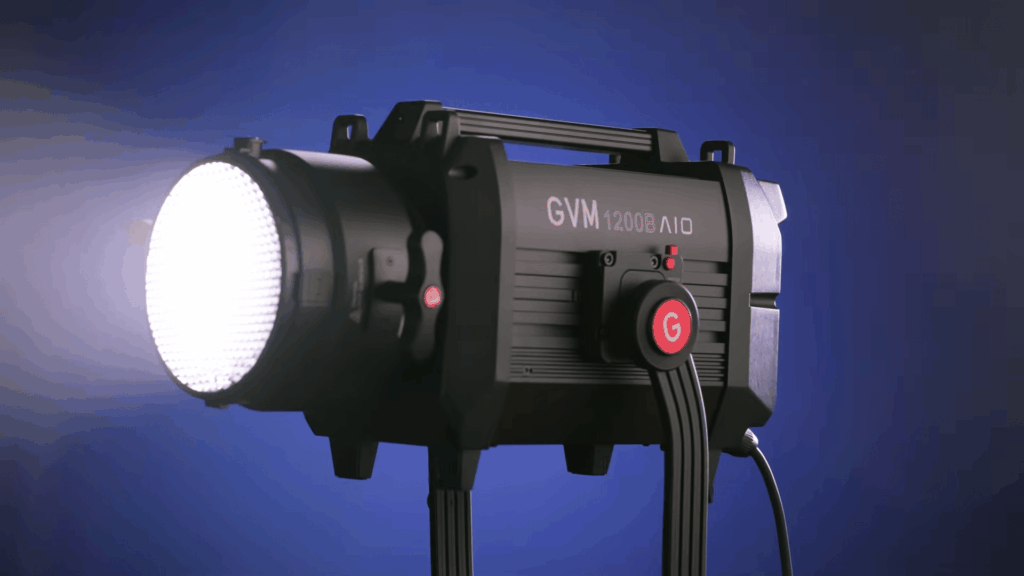
1. GVM 1200B AIO – Best High-Power Studio Continuous Light
The GVM 1200B AIO is a 1200W bi-color all-in-one monolight that delivers up to 42,800 lux at 3 meters with a standard reflector. It offers CRI/TLCI 97+, a 2700K–6800K range, and ultra-precise 0.01% stepless dimming. The true all-in-one design integrates the power supply and controls into the head (approximately 12.5 kg with yoke), so you simply plug in AC power and start shooting. It is ideal for large soft sources, sunlight simulation through windows, and high-speed video work that demands rock-solid output and flicker-free performance.
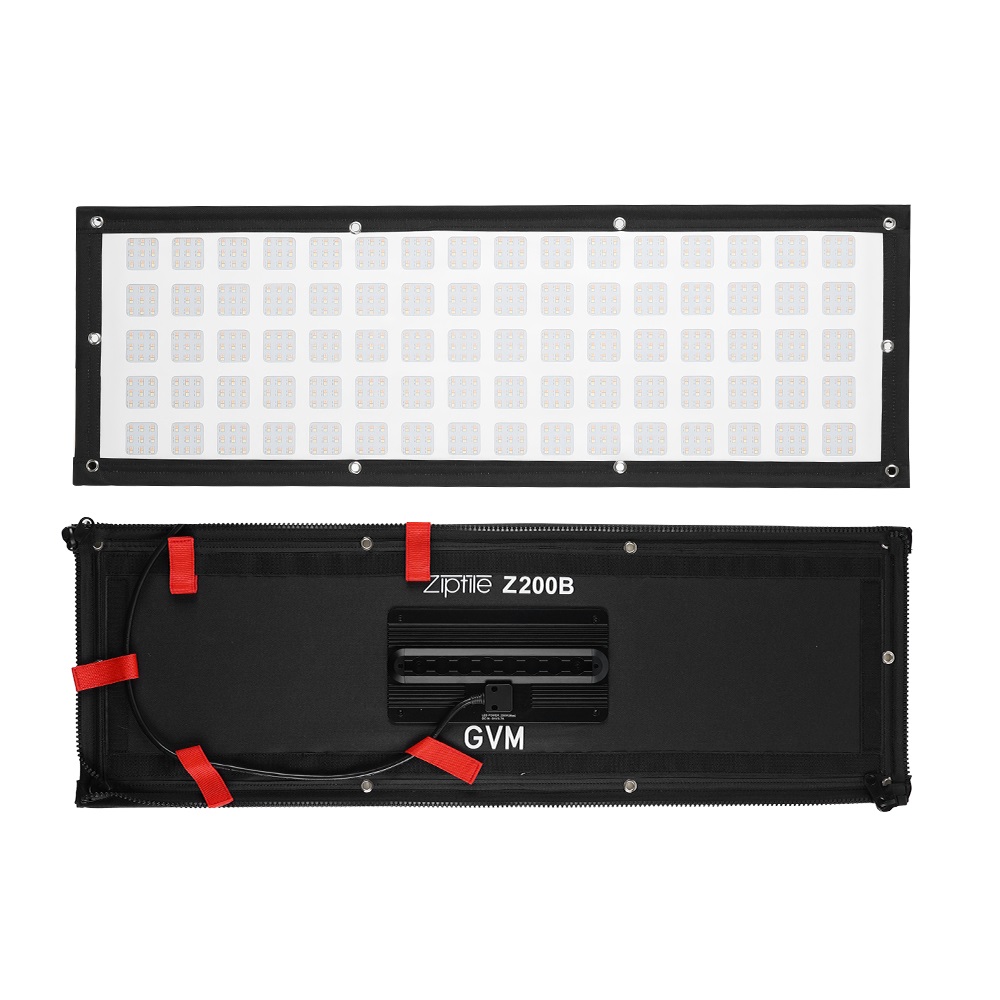
2. GVM ZipTile Z200B – Best Battery-Powered Portable Continuous Light
The GVM ZipTile Z200B is a 200W bi-color flexible LED mat that weighs only 1.97 kg and measures just 26 mm thick. It provides CRI ≥95, 2700K–6800K, and passive cooling for completely silent operation. Dual power support (AC + V-Mount battery) makes it perfect for location interviews, car interiors, tight spaces, and any dialogue-heavy scene where fan noise is unacceptable. The ultra-slim profile allows mounting in places traditional lights cannot go.
3. Aputure STORM 80c 3-Light Kit – Best Multi-Light Travel Kit
The Aputure STORM 80c 3-Light Kit packs three 80W full-color lamps (BLAIR-CG engine) into a rolling hard case. Each light offers an extremely wide 1,800K–20,000K range, CRI 97 / TLCI 99, IP65 weather resistance, and silent mode (0 dBA). Power options include AC, V-Mount battery, and USB-C. This kit is designed for documentary crews and travel videographers who need a complete, weather-ready 3-point continuous lighting system that travels as one unit.
Comparison Table: Best Continuous Lighting for Video 2026
| Modèle | Marque | Power / CCT | Power Method | Key Advantage | Best Use Case |
|---|---|---|---|---|---|
| GVM 1200B AIO | GVM | 1200W / 2700–6800K | AC (all-in-one) | 42,800 lux @ 3m, no external ballast | Large studio key, sunlight simulation |
| GVM ZipTile Z200B | GVM | 200W / 2700–6800K | AC + V-Mount battery | Zero fan noise, ultra-slim, portable | Location interviews, tight spaces |
| Aputure STORM 80c 3-Light | Aputure | 3×80W / 1800–20000K | AC + V-Mount + USB-C | IP65, full-color, complete travel kit | Documentaries, outdoor 3-point setups |
FAQ
Is continuous lighting better than strobe for video?
Yes. Continuous light provides real-time preview of exposure, shadows, and color, which is essential for video production.
Do I need battery-powered continuous lights?
If you shoot on location or in spaces without easy AC access, yes. Battery-powered options such as the ZipTile Z200B give genuine mobility.
How important is CRI/TLCI for continuous lighting for video?
Very important. Aim for 95+ (ideally 97+) so skin tones and product colors remain accurate without heavy correction.
Can one high-power continuous light replace multiple smaller lights?
In many studio situations a single powerful fixture like the 1200B AIO used with large diffusion can serve as the main key light, but multi-light kits still offer more creative control for interviews and narrative work.
Which continuous light is best for beginners?
A portable, quiet option such as the ZipTile Z200B or a compact kit is easier to start with. High-power all-in-one lights become valuable once you need greater output and working distance.
In 2026 the best continuous lighting for video balances output, color accuracy, quiet operation, and practical power options. The GVM 1200B AIO leads for pure studio power and simplicity, the ZipTile Z200B excels for silent battery-powered location work. Choosing the right continuous light according to your primary shooting environment will immediately improve the consistency and professionalism of your video production.