Choisir le bon camera lighting equipment can make or break the visual quality of your videos and photos, regardless of how good your camera body is. Whether you’re setting up a home studio, filming YouTube content, or shooting live events, the right light shapes color, mood, and professionalism in every frame.
This guide breaks down what to look for and highlights standout options for 2026.
Table des matières
What Is the Best Type of Light for Video?
For video work specifically, continuous LED lighting is almost always the better choice over flash. You can see your exposure and color temperature in real time, which matters enormously when recording motion rather than freezing a single moment. The best video lights combine a wide bi-color range (roughly 2700K–6800K), high CRI/TLCI ratings above 95, and flicker-free output for clean footage at any frame rate.
Beyond raw specs, control flexibility separates good lights from great ones. Look for on-board knob control, app connectivity, and DMX compatibility so the fixture adapts to solo shoots and full studio productions alike.
Meilleurs éclairages vidéo pour la vidéographie
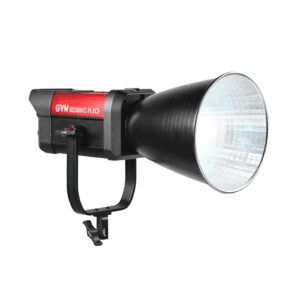
The best video lights for videography share three traits: high output per watt, accurate color science, and built-in creative tools. Modern COB LED engines have made it possible to get cinema-grade brightness from compact, integrated fixtures — no bulky external ballast required.
Built-in lighting effects (fire, lightning, TV flicker, and similar presets) have also become standard on higher-end videography lights, letting creators add production value without extra gels or post-production tricks. Bluetooth mesh control for syncing multiple lights across a set is another feature that’s moved from luxury to expectation.
Battery Powered Video Lights
Battery powered video lights are essential for anyone shooting outside a fixed studio — interviews on location, run-and-gun documentary work, or events where AC outlets aren’t guaranteed. The best fixtures in this category run on V-mount or NP-F style batteries and clearly display remaining charge, so you’re never caught off guard mid-shoot.
Battery efficiency matters as much as capacity. A well-engineered light delivers strong output at half power draw, meaning a single battery can realistically last through several hours of interview or event coverage instead of just one demanding scene.
Best Camera Lighting Equipment Reviews
When comparing today’s top camera lighting equipment, the GVM PRO aio300B consistently stands out for its balance of raw output, color accuracy, and price. At 65,700 lux @ 1 meter straight out of the box, it delivers studio-grade brightness without requiring add-on modifiers just to compete.
| Fonctionnalité | GVM aio SD300B | Aputure LS 300x |
|---|---|---|
| Light Output (1m) | 65,700 lux (native) | 5,100–7,500 lux bare bulb; up to 56,000+ lux only with Fresnel 2X modifier |
| Température de couleur | 2700K–6800K Bi-color | 2700K–6500K Vari-White |
| CRI/TLCI | ≥97 | ≥96 |
| Gradation | 0–100% Stepless | Stepless with CCT wheel |
| Méthodes de contrôle | On-board, App, DMX 5-pin, Bluetooth Mesh | RF Remote, Sidus Link App, DMX512 |
| Built-in Effects | 12 Cinematic Effects | 9 Built-in FX |
| Light Source Simulations | 12 presets (Halogen, HMI, Daylight, etc.) | Not included |
| Refroidissement | Silent Cooling | Active Cooling |
| Conception | All-in-one integrated head | Separate light head + control box |
The gap in native output is the key differentiator here — the GVM AIO SD300B hits 65,700 lux directly from its COB engine, while the Aputure LS 300x needs an additional Fresnel 2X modifier purchase just to approach similar brightness levels. Combined with 12 built-in light source simulations that the LS 300x doesn’t offer, the GVM AIO SD300B delivers more usable features at a noticeably more accessible price point, making it the stronger value pick for creators who want cinema-grade output without a cinema-grade budget.
Matériel d'éclairage photographique pour débutants
Here’s a real scenario many beginners face: it’s 9 PM, the only light in the room is an overhead fixture, everything looks yellow-tinted, shadows fall in random directions, and even the metal keyboard on the desk looks dull and gray. Picking up a camera under these conditions almost always produces flat, unflattering footage — no matter how good the gear is.
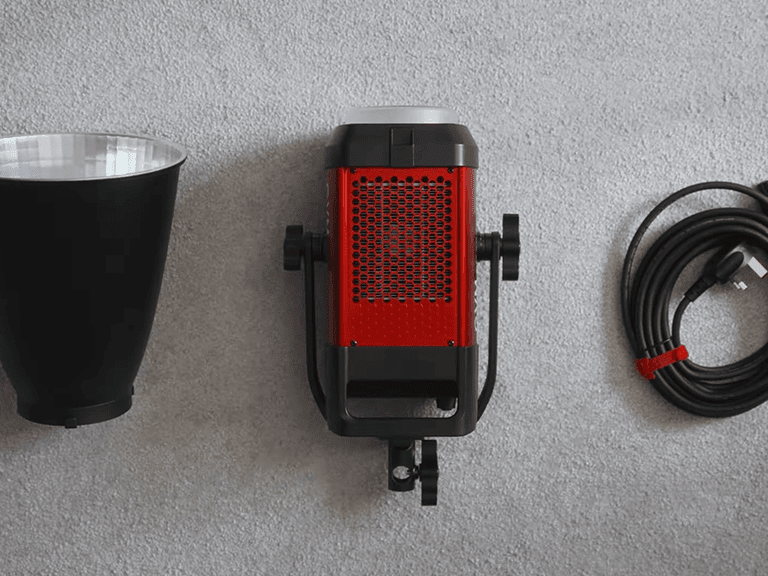
The fix starts with a single, well-placed key light. Positioning the GVM aio SD300B as the main key light immediately corrects the color cast, since its 2700K–6800K range lets you neutralize that yellow overhead lighting instead of fighting it. Angling the light slightly above and to the side of the subject also fixes the messy shadow problem, replacing scattered ambient shadow with one clean, directional falloff.
Within minutes, the same setup — same room, same camera — looks dramatically more professional. The keyboard’s metal surface picks up proper highlight detail instead of reading flat and gray, and skin tones shift from sickly yellow to natural and balanced. This is the core lesson for beginners: one capable key light solves more problems than any camera upgrade ever will.
Conclusion
The best camera lighting equipment isn’t necessarily the most expensive — it’s the gear that gives you accurate color, strong native output, and flexible control without unnecessary add-ons. The GVM aio SD300B checks every one of these boxes, delivering higher out-of-the-box brightness and more built-in creative tools than comparable options at a fraction of the investment. If your footage still looks flat under mixed indoor lighting, a single well-chosen key light like this one is the upgrade that actually moves the needle.