Many photographers reach a point where they’re stuck choosing between continuous light and flash, unsure which one will actually make their images look better. That confusion sits at the center of most questions about photography illumination today, and it’s usually the first fork in the road when someone starts building a lighting kit. Continuous sources let you see the effect in real time, while flash delivers a short, powerful burst that freezes motion.
Both approaches can produce professional results, but they solve different problems, and the right pick depends heavily on the kind of subjects you shoot and how you like to work.
Table des matières
Continuous Light vs Flash Photography
Flash units generate a brief, intense pulse of light, which makes them a favorite for freezing fast movement and for shooters who need to overpower bright ambient conditions. The trade-off is that you’re working somewhat blind — you don’t see the final lighting effect until after the shutter fires, and adjusting a multi-light flash setup usually means several test shots.
Continuous lighting stays on the whole time, so what you see through the viewfinder is close to what ends up in the final frame. That makes it far easier to fine-tune shadows, catchlights, and color balance before you ever press the shutter. It’s also the only practical option for video, live streaming, and any hybrid photo/video workflow, since flash obviously can’t illuminate a moving clip.
Neither format is strictly “better.” Studio photographers shooting high-speed action or working in bright daylight often still reach for flash. But for portraiture, product photography, newborn sessions, and anyone producing video alongside stills, continuous light has become the more practical default — partly because modern LED fixtures have closed the brightness gap that used to favor flash.
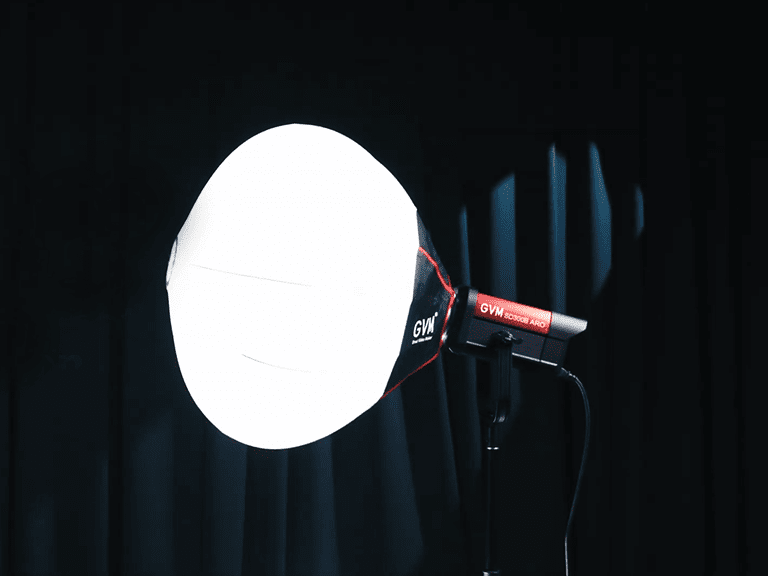
What Is a Continuous Light in Photography?
A continuous light is any illumination source that stays on at a steady output, as opposed to firing a single burst. In practice, this almost always means LED panels or LED monolights today, since older continuous options like tungsten or fluorescent tubes run hot, consume far more power, and offer little control over color temperature.
Modern LED continuous lights are built around a few core specs worth understanding before you buy:
- Color temperature range — bi-color fixtures typically adjust between roughly 2700K and 6800K, covering everything from warm tungsten-style tones to daylight-balanced output.
- CRI/TLCI rating — this measures how accurately the light renders color compared to natural daylight. Anything above CRI 95 is considered suitable for professional photo and video work.
- Lux output — brightness measured at a set distance, usually one meter, with a standard reflector attached.
- Mount type — Bowens mount is the current industry standard, giving access to a wide ecosystem of softboxes, grids, and modifiers.
- Dimming and control — stepless dimming plus app or DMX control lets you fine-tune brightness and color without touching the fixture.
Because the light is always visible, continuous sources also tend to be more forgiving for beginners, since there’s no guesswork about how a modifier or bounce card will change the final shot.
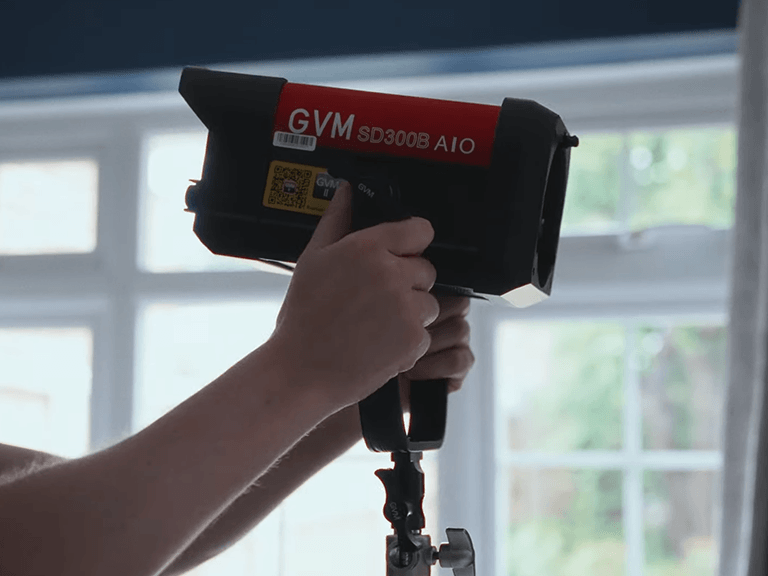
Best Continuous Light for Newborn Photography
Newborn sessions come with constraints that rule out a lot of otherwise capable lighting gear. Babies startle at sudden noise and bright flashes, sessions often run long, and parents are usually in the room, so a fixture needs to run quiet, stay cool, and hold a consistent, soft output for extended periods.
That points toward a few priorities specific to this genre: low fan noise (or a silent mode), gentle dimming so brightness can be lowered gradually rather than snapped on, warm color temperature options that flatter newborn skin tones, and a light body that’s easy to reposition without heavy stands or bulky rigging. A compact all-in-one COB monolight with a large, diffused modifier — rather than a bare panel — is generally the safer choice, since it spreads light more evenly and avoids harsh shadows across delicate features.
Best Continuous Light for Photography
For photographers weighing options across genres — portrait, product, and hybrid video work — the GVM SD300B AIO stands out as one of the strongest picks entering 2026. It’s a 300W bi-color LED monolight built for creators who need studio-grade output without studio-grade bulk.
| Paramètres | Spécifications |
|---|---|
| Puissance | 300W |
| Luminosité | 221,950 Lux @ 1m (with standard reflector) |
| Température de couleur | 2700K–6800K, bi-color |
| Rendu des couleurs | IRC ≥ 97, TLCI ≥ 97 |
| Gradation | Sans palier |
| Effets | 12 effets lumineux intégrés |
| Contrôle | App remote, multi-light linking |
| Montage | Bowens |
Against comparable bi-color monoliths on the market, such as the Godox Litemons LE300Bi (320W, 58,900 lux at 3.3′, CRI/TLCI 98/98, priced at $239–299), the value comparison comes down to four practical dimensions photographers actually shop by:
- Price at equivalent wattage: The SD300B AIO comes in lower-priced within its 300W class, making it the more accessible entry point for photographers building out a multi-light kit.
- Cost-per-performance: With CRI/TLCI both at 97, color accuracy sits essentially on par with pricier alternatives, so buyers aren’t sacrificing image quality to save money.
- Brightness output: At 221,950 lux measured at 1 meter, the SD300B AIO delivers substantially more usable light on subject than fixtures rated at shorter test distances, which matters directly for shooting through diffusion or bouncing light.
- Deployment speed: As an all-in-one unit with app control and multi-light linking, it sets up and syncs faster on location than modular systems that need separate power supplies or receivers.
Taken together, these factors make the GVM SD300B AIO the most cost-effective choice for photographers who want professional color accuracy and strong brightness without paying a premium for it.

FAQ
Is continuous light as good as flash for portrait photography?
Yes, for most portrait work. Continuous LED output now reaches brightness levels that rival flash for typical studio distances, while giving you the added benefit of seeing your lighting setup in real time.
What CRI rating should I look for in a photography light?
Aim for CRI 95 or higher for professional photo and video work. A rating of 97+ means colors and skin tones render very close to how they appear under natural daylight.
Can one bi-color LED light replace multiple fixtures?
A single high-output bi-color monolight can often replace a warm and cool fixture pair, since it covers the full 2700K–6800K range in one unit — useful for photographers working with limited space or gear.
Is 300W enough for studio photography?
For most portrait, product, and small-studio setups, 300W with high lux output at one meter is more than sufficient, especially when paired with a softbox or diffusion modifier to spread the light evenly.
What mount type should I choose for accessories?
Bowens mount is the current standard and gives access to the widest range of softboxes, grids, and modifiers across brands, making it the safer long-term choice for building out a kit.