Quick answer: The best portable photography light depends on how you shoot. The GVM FA300B AIO ($299) is the best ultra-thin, high-output portable light. The GVM ZipTile Z100B ($349) is the best lightweight flexible panel for tight spaces. The Aputure MC Pro is the best pocket-sized magnetic light for accents and fill.
Portable lighting has come a long way. Not long ago, a powerful light meant a heavy head, a separate ballast box, and a tangle of cables. Today, all-in-one fixtures, roll-up panels, and pocket-sized lights deliver professional color quality in a fraction of the weight. For solo photographers, hybrid shooters, and run-and-gun video crews, that shift means faster setups and lighter bags.
This guide compares three portable lights that each solve a different problem: one for power, one for tight spaces, and one for pocket-sized flexibility. Below you’ll find specs, real-world use cases, honest trade-offs, and a practical kit built to fit in a single backpack.
What to Look for in a Portable Photography Light
Before the picks, here are the five factors that matter most when you shop for a portable light.
Weight and packed size. A light you leave at home is useless. Consider not just weight but shape: a flat fixture packs better than a bulky one of the same weight.
Output. Lux at one meter is the most useful comparison figure. Higher output lets you shoot outdoors, use modifiers, and keep ISO low. Small lights trade power for size, so match output to the job.
Power options. Check whether a light needs a wall outlet, accepts V-mount batteries, or has a built-in battery. This decides where you can actually shoot.
Color quality. Look for CRI of 95 or higher, and TLCI where listed. Accurate color keeps skin tones natural and saves time in editing.
Mounting. Standard mounts such as Bowens, 5/8″ stand receivers, and 1/4″ threads keep you compatible with existing modifiers and stands. Magnets, hot shoes, and adhesive-friendly bodies open up placements a stand can’t reach.
At a Glance
| GVM FA300B AIO | GVM ZipTile Z100B | Aputure MC Pro | |
|---|---|---|---|
| Meilleur pour | Main light on location | Cars, hallways, wall mounting | Accent and fill on the go |
| Price | $299.00 | $349.00 | $1,899.00 (8-light charging kit); single lights sold separately |
| Type | Flat COB spotlight | Flexible zipper mat light | Magnetic RGBWW pocket light |
| Puissance | 300W | 100W | 5W output |
| Output | 17,000 lux @ 1m (bare) | 2,560 lux @ 1m | 563 lm |
| Poids | 2.69 kg (5.93 lbs) | 0.8 kg | 247 g (0.54 lbs) |
| Color temp | 2700K–6800K | 2700K–6800K | 2000K–10,000K (full color) |
| CRI | ≥97 (TLCI 98+) | ≥95 | 96 (TLCI 96, SSI 84 @ D5600) |
| Power source | AC, no ballast box | AC or V-mount battery | Built-in battery (120 min) or USB-C |
| Mounting | Bowens mount, 5/8″ | Velcro, tape, clamps, zipper joining | Magnet, hot shoe, 1/4″ thread |
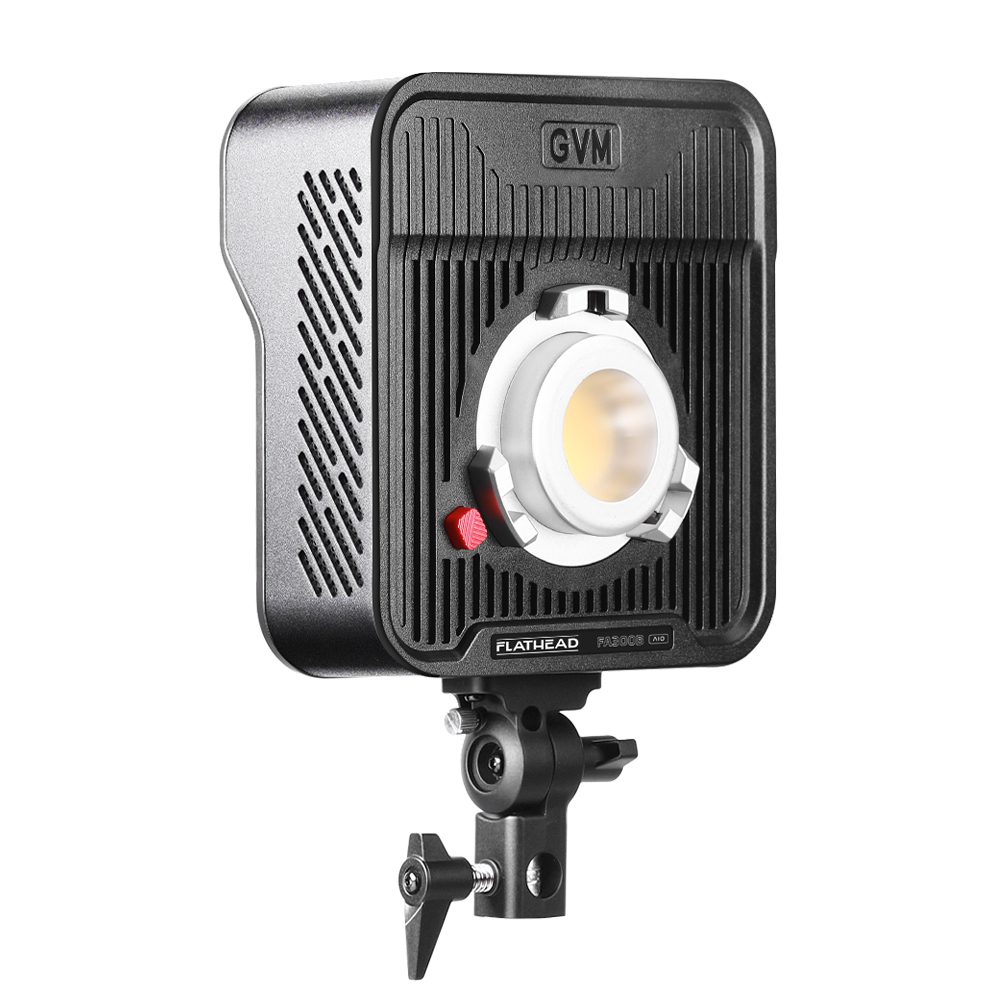
1. GVM FA300B AIO: Best Ultra-Thin Portable Main Light
In one line: A 300W bi-color COB light with no external power box, thin enough to slip into a standard camera bag.
Key specs
- 300W all-in-one flat-head COB spotlight
- 2700K–6800K bi-color, CRI ≥97 / TLCI 98+
- 17,000 lux @ 1m bare, 3,360 lux @ 1m with a softbox
- 2.69 kg (5.93 lbs), 312.5 × 198 × 104 mm
- Bowens mount, NFC connection to the mobile app
Why it’s portable: At just 4.1 inches thick, the flat profile packs far more easily than a traditional monolight. The power supply and control circuitry are inside the head, so there is no ballast box to hang or cable to run. Setup takes about a minute: plug in, mount, and shoot. The Bowens mount means you can use the softboxes, reflectors, and lantern modifiers you may already own.
Real-world scenarios: Outdoor portraits where you need to compete with daylight, location interviews in offices or homes, and product shoots that need a strong, clean key light. Because the app connects with a tap through NFC, adjusting brightness and color temperature between shots is quick.
The trade-off: At 2.69 kg it is the heaviest of the three, and based on the listed specs it runs on AC power, so plan for an outlet or a portable power source on remote shoots.
2. GVM ZipTile Z100B: Best Lightweight Flexible Panel
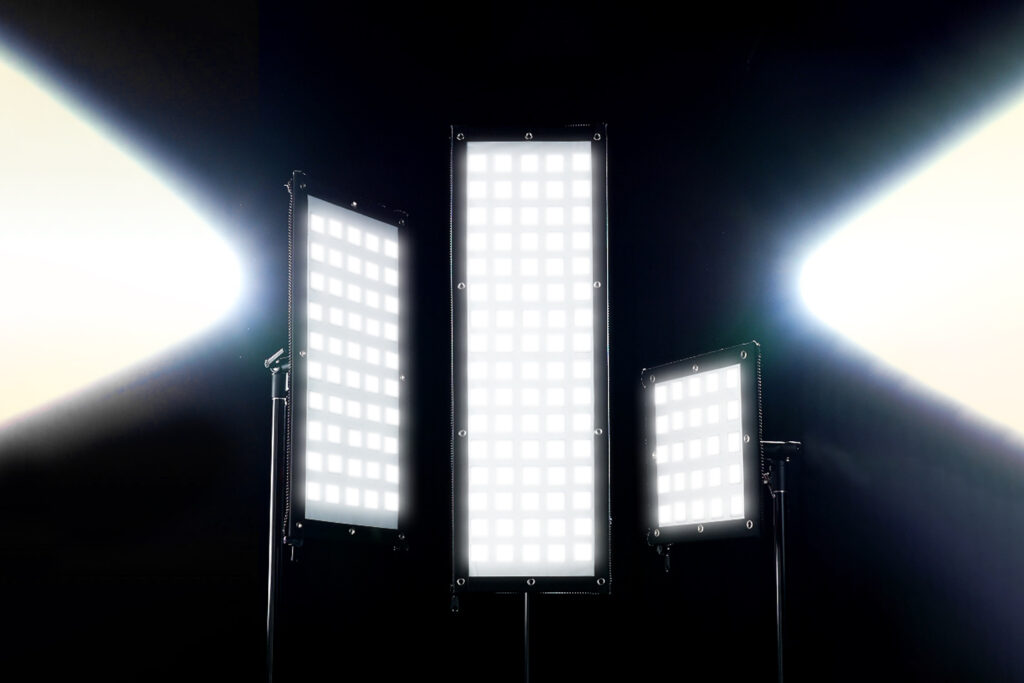
In one line: A 0.8 kg roll-up light you can stick to a wall, door frame, or car ceiling, and expand by zipping panels together.
Key specs
- 100W flexible zipper-joined mat light
- 2700K–6800K bi-color, CRI ≥95
- 2,560 lux @ 1m bare
- 0.8 kg
- AC or V-mount battery power
Why it’s portable: It rolls or folds into a bag’s side pocket and weighs less than a kilogram. Its tool-free zipper system lets you join multiple panels into a larger light source when you need more coverage, then split them back down for travel. Because it needs no stand, it takes up no floor space. Velcro, tape, or small clamps hold it to walls, doorframes, or a vehicle interior. V-mount battery support keeps you shooting where there are no outlets.
Real-world scenarios: Car shoots, narrow hallways, small apartments, and mobile interviews where a softbox simply won’t fit. Mounted flat against a surface, it produces a broad, soft wash that flatters faces and fills shadows.
The trade-off: With 2,560 lux at one meter, it is a soft fill and close-range key rather than a light for overpowering the sun. Think of it as the problem-solver for confined spaces, not the workhorse for bright outdoor light.
3. Aputure MC Pro: Best Pocket-Sized Magnetic Light
In one line: A 247 g full-color pocket light with a strong magnet, a Micro-Lens for longer throw, and an IP65 rating.
Key specs
- RGBWW, 2000K–10,000K
- CRI 96 / TLCI 96 / SSI 84 (D5600)
- 5W output (7W draw), 563 lm
- 247 g (0.54 lbs), 10.8 × 7.0 × 2.5 cm
- Built-in battery (120 min) or USB-C, IP65 rated
Why it’s portable: It fits in a pocket, sits on a camera hot shoe, or hides in the scene. A neodymium magnet on the back grips metal poles, car bodies, and light stands. The Micro-Lens focuses the beam for greater throw distance than a bare small panel. It also supports the Sidus Link app, CRMX wireless control, and 16-bit DMX, so it slots into professional workflows.
Real-world scenarios: Practical accents in a room, background color, in-car fill, hair or rim light, and camera-top fill in changing weather. Its IP65 rating means light rain and dust are not a problem.
The trade-off: At 5W it is not a key light. Its value is placement freedom and color range, and it works best beside a stronger main light.
Build a One-Backpack Three-Point Kit
These lights are designed for different jobs, which is why they work well together:
- Key light: FA300B AIO on a compact stand, either bare for punch or with a softbox for softer light.
- Fill or wall wash: ZipTile Z100B stuck to a wall or door to open up shadows without needing another stand.
- Accent or hair light: One MC Pro magnetically attached to a stand or metal object for separation, or set to a color for mood.
Set the FA300B and ZipTile to the same color temperature (5600K for daylight balance, for example) so skin tones stay consistent, then use the MC Pro’s wide range for creative accents. Total weight for all three lights is roughly 3.7 kg (about 8.2 lbs), which leaves plenty of room in the bag for a camera and lenses.
Which Portable Light Should You Buy?
Choose the FA300B AIO if you need real power in a portable form. It suits portrait photographers, location shooters, and anyone who wants one dependable key light with standard modifiers.
Choose the ZipTile Z100B if you regularly work in tight or unconventional spaces: cars, hallways, small rooms, or setups with no floor space for stands.
Choose the MC Pro if you already have a main light and want a tiny, weatherproof, creative light for accents, color, and quick fill.
Building a kit from scratch? Start with the FA300B AIO as your foundation, then add the ZipTile or MC Pro depending on whether your work leans toward tight interiors or creative accents.

FAQ
What is the best portable photography light overall?
For most photographers, the GVM FA300B AIO offers the best balance of output, color quality, and packability, with 17,000 lux at one meter in a 4.1-inch-thick body. If your priority is size, the Aputure MC Pro is the smallest at 247 g.
How do all-in-one (AIO) lights save time on run-and-gun shoots?
AIO lights build the power supply and controller into the fixture, so there is no separate ballast to hang or cable to run. With the FA300B AIO, you plug in, mount it, and start shooting in about a minute.
Can flexible mat lights replace softboxes in tight spaces?
Often, yes. A panel like the ZipTile Z100B produces a broad, soft source without stands or a modifier’s bulk. It can be mounted flat against a wall or ceiling, which makes it useful in cars and small rooms. For very large or highly directional soft light, a softbox on a stronger fixture still has the edge.
Why do IP65 and magnetic mounting matter for mini pocket lights?
Small lights end up in rain, dust, and awkward spots. IP65 protection makes them reliable outdoors, and a strong magnet lets you attach them to metal surfaces where a clamp or stand won’t fit, as with the Aputure MC Pro.
What CRI should a portable photography light have?
Aim for CRI 95 or higher. All three lights here meet that mark, and the FA300B AIO reaches 97 or above with TLCI 98+, which helps keep skin tones accurate for both stills and video.
Verdict final
- Best main light for travel: GVM FA300B AIO
- Best for tight spaces and vehicles: GVM ZipTile Z100B
Each light solves a different portability problem. Pick the one that matches your most common shoot, or combine all three for a complete lighting setup that fits in one backpack.