When people talk about cinematic footage, they often start with cameras. Resolution, codecs, frame rates—those specifications dominate most buying guides. Yet experienced filmmakers tend to begin somewhere else.
They start with light.
A carefully lit scene shapes mood before the audience notices the lens. It adds depth to a portrait, separates a subject from the background, and gives color the confidence to breathe. The difference between an ordinary frame and a memorable one often comes down to lighting rather than camera settings.
So what defines good lights for videographytoday? More importantly, how do you choose one that continues to perform as your productions become more ambitious?
Let’s examine the characteristics that matter, then see how the GVM PRO-SD650Bmeets those demands.
Table des matières
A Good Video Light Does More Than Produce Brightness
Brightness is important, but it is only one piece of the equation.
Professional lighting should remain consistent throughout an entire production day. It should adapt quickly to changing environments and allow precise adjustments without interrupting the creative process.
Whether you’re filming a commercial, a documentary interview, or a branded social campaign, the light becomes part of the storytelling language. Soft transitions suggest intimacy. Hard shadows create tension. A subtle shift in color temperature can transform the emotional tone of a scene.
The best fixtures make these creative decisions feel effortless.
Five Qualities Every Videographer Should Look For
1. Sufficient Output for Real Productions
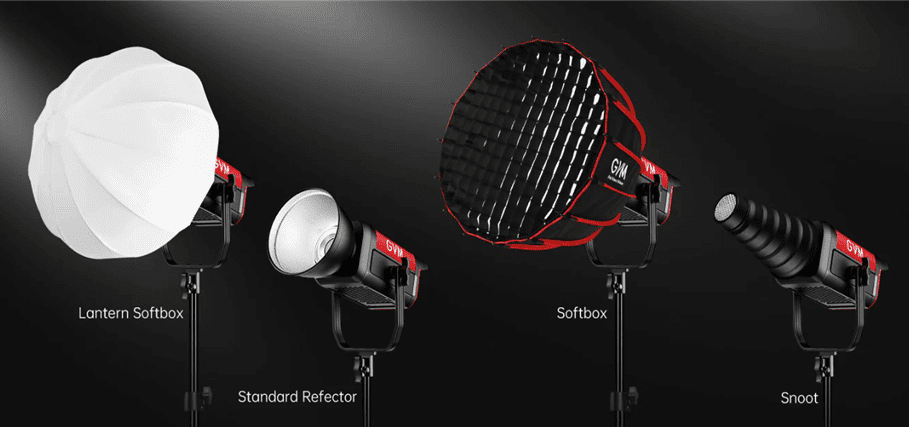
Many compact fixtures perform well in controlled environments but struggle once diffusion or large modifiers are introduced.
High-output lighting gives filmmakers greater flexibility. It allows you to soften light without sacrificing exposure and makes it possible to compete with daylight entering through windows.
For productions using large softboxes, power quickly becomes an advantage rather than a luxury.
2. Accurate Color Rendering
Color correction should refine footage—not repair lighting problems.
Professional LED fixtures should deliver consistent skin tones and dependable color reproduction across different cameras.
A CRI and TLCI rating of 97 or higherhelps ensure that fabrics, products, and complexions appear natural throughout the shoot.
3. Flexible Color Temperature
Every location presents a different lighting environment.
One day may involve balancing warm practical lamps inside a restaurant. The next may require matching cool daylight inside an office.
A wide bi-color range reduces setup time and eliminates the need for correction gels in many situations.
4. Precise Brightness Control
Lighting rarely changes in large steps.
Sometimes reducing intensity by only a few percentage points creates the perfect balance between the subject and the background.
Professional dimming systems allow these small adjustments while maintaining stable color output.
5. Reliable Control Options
Modern productions often involve multiple fixtures positioned across a studio or location.
App control simplifies solo productions.
DMX remains the standard for larger sets.
Wireless networking helps synchronize multiple fixtures quickly, allowing crews to focus on framing instead of walking from stand to stand.
Meet the GVM PRO-SD650B
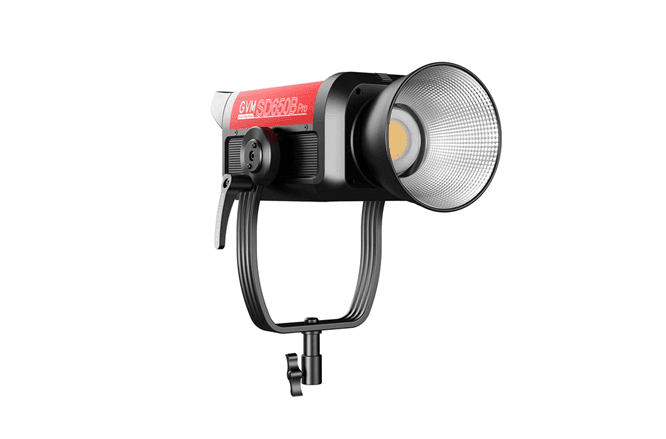
Designed for demanding productions, the GVM PRO-SD650Bcombines high-output performance with refined control and dependable color accuracy.
At its core is a 650W bi-color COB light enginecapable of producing up to 81,300 lux at one meter with the standard reflector. The fixture supports an adjustable color temperature range of 2700K–6800K, making it equally comfortable in daylight scenes and warm interior environments.
Rather than simply producing more light, the PRO-SD650B gives creators more creative freedom.
| Fonctionnalité | GVM PRO-SD650B (Bi-Color COB) |
| Meilleur pour | Professional Filmmaking, Commercial Production, Broadcast, Studio & Outdoor Shooting |
| Puissance de sortie | 650W High-Output COB LED |
| Luminosité | Up to 81,300 lux @1m (with Standard Reflector) |
| Température de couleur | 2,700K – 6,800K |
| Précision des couleurs | CRI 97+ / TLCI 97+ |
| Lighting Modes | CCT Mode + 12 Built-in Light Source Presets + FX Modes (App) |
| Gradation | 0–100% Flicker-Free Dimming (0.1% Precision / 1,000-Step Control) |
| Type de commande | On-board Control, GVM Mobile App, Bluetooth Mesh, 5-Pin DMX/RDM |
| Système de refroidissement | Intelligent Active Cooling, Silent Mode, High-Speed Mode & Passive Cooling |
| Weather Protection | Rugged Waterproof Housing (IP56) |
| Accessory Mount | Monture Bowens standard |
| Source d'énergie | AC Power & Dual V-Mount Battery Support |
| Build | Aluminum Alloy Body with Separate Controller & Ballast |
Lighting Techniques That Make Any Fixture Perform Better
Even excellent equipment benefits from thoughtful placement.
A few practical habits can dramatically improve image quality:
·Position your key light approximately 45 degrees from the subject for natural facial modeling.
·Add diffusion before increasing brightness.
·Separate the subject from the background using a rim or edge light.
·Use grids to control spill when working in smaller spaces.
·Match color temperature before adjusting exposure.
Small refinements often produce the most noticeable improvements.
Réflexions finales
Lighting is often described as a technical requirement. In practice, it is something far more expressive.
Every beam defines shape. Every shadow creates atmosphere. Every adjustment influences how viewers experience a story.
Choosing good lights for videographyis therefore less about chasing specifications and more about selecting tools that respond naturally to creative intent.
Le GVM PRO-SD650Bis designed with that philosophy in mind. It delivers the output required for demanding productions while offering the precision, flexibility, and reliability that modern filmmakers expect—quietly supporting the story, one frame at a time.
Explore the full range of GVM professional lighting solutions(https://gvmled.com/)today.