Let’s be honest: the days of dragging heavy, temperamental strobes to every shoot are over. As more creators switch to the efficiency of Photographie par panneau LED, the demand for high-performance illumination is at an all-time high. Even with camera sensors becoming more sensitive in 2026, the ultimate quality of your image still depends on the light you control. However, with gear evolving so fast, is it still worth investing in dedicated setups for Photographie par panneau LED? Here is what you actually need to know about professional-grade lighting in the modern era.
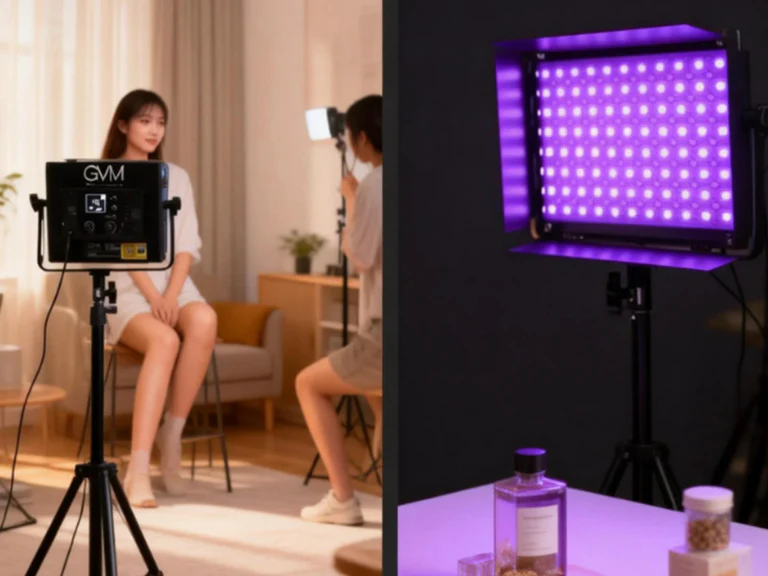
Table des matières
What is an LED Panel for Photography?
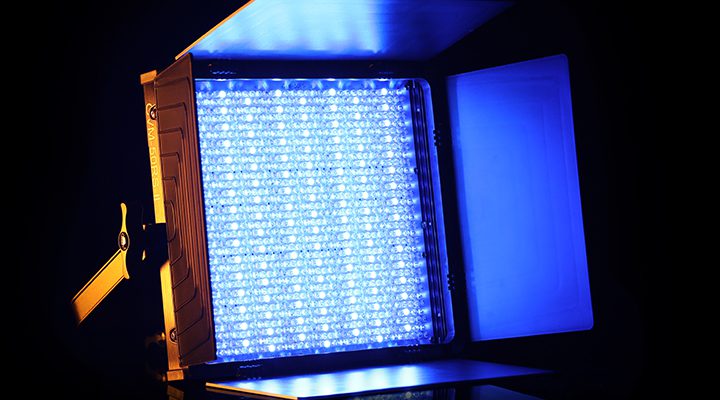
At its core, an LED panel is a light source consisting of hundreds—sometimes thousands—of small Light Emitting Diodes (LEDs) arranged on a flat, rectangular board. Unlike traditional point-source bulbs, led panel photography utilizes a large surface area to emit light, which fundamentally changes how light interacts with your subject.
But what makes it a “must-have” in a modern 2026 studio? It comes down to three defining characteristics:
Continuous “What You See Is What You Get” Lighting
The biggest distinction between an LED panel and a traditional strobe (flash) is that LED is a continuous light source.
- The Benefit: For photographers, this means no more “test shots.” You can see exactly where the shadows fall, how the catchlights look in the eyes, and how the colors blend in real-time. This makes it an invaluable tool for beginners learning light shaping and for professionals working on high-pressure sets.
The “Surface Light” Quality
Because an LED panel emits light from a broad plane rather than a single point, it creates a naturally softer, more diffused light.
- Technical Breakdown: Panels like the GVM-1200D utilize a high-density array of 928 premium beads. This massive count ensures that the light wraps around the subject, reducing the harsh, high-contrast shadows often produced by smaller light sources.
Hybrid Versatility for the Modern Creator
In the era of social media, photography is rarely just about “stills.” Most professional photographers are now “hybrid creators” who also produce video content for YouTube, TikTok, or Instagram Reels.
- Why LED wins: You cannot use a flash for video. An LED panel allows you to switch from capturing a 50MP portrait to filming a 4K cinematic sequence without changing your lighting setup. It is the ultimate “one-light-does-all” solution for the modern visual storyteller.
Types of LED Panels for Photography and Video
Not all LED panels are created equal. In 2026, the technology has evolved beyond simple “on-off” boards. Depending on your shooting style—whether it’s high-end fashion, product cinematography, or tight-space vlogging—you need a specific type of led panel photography gear. Understanding these innovative categories will help you build a lighting ecosystem that scales with your creative vision.
Bi-Color LED Panels (The Professional Workhorse)
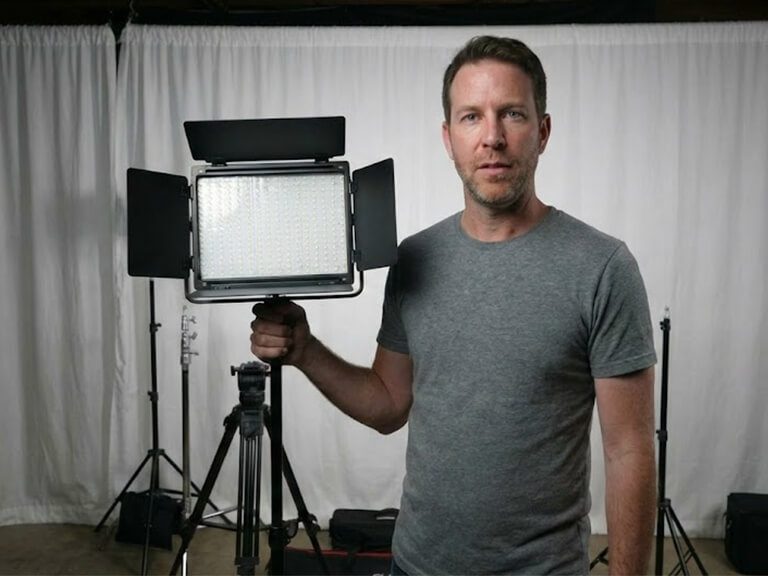
Bi-color panels remain the standard for natural light simulation. Modern high-end models, such as the GVM ZipTile Series, have expanded the traditional range to a fully tunable 2,700K–6,800K spectrum.
- Why it matters: This wider range allows you to match everything from the warm glow of a candle to the crisp blue of high noon with perfect CRI/TLCI 97+ accuracy.
- Best for: Corporate interviews, traditional portraiture, and matching complex window light environments.
RGB & Full-Color Panels (The Creative Powerhouse)
RGB panels, like the GVM-1200D and the B200C Flexible series, represent the cutting edge of led panel photography. They offer a full 360° color spectrum (HSI mode) without the need for physical plastic gels.
- The Advantage: You can generate bold, vibrant colors or delicate, nuanced tones instantly via App control. Whether you are shaping the mood of a music video or matching a brand’s corporate identity, these panels offer limitless stylistic effects.
- Best for: Music videos, artistic fashion photography, and cinematic background washes.
Modular & Scalable Panels (Next-Gen Scalability)
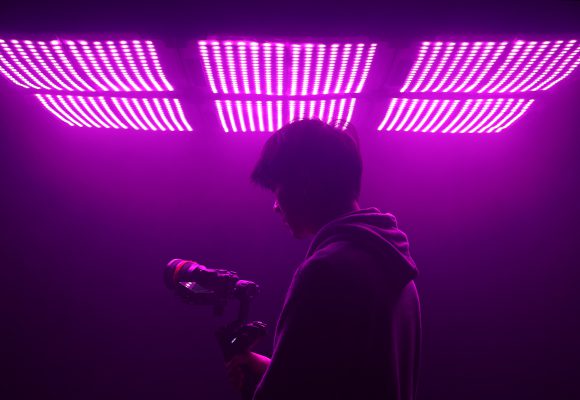
A new category redefined by the GVM ZipTile Series, modular panels feature a “zipper-link” system. This allows you to connect multiple 100W, 150W, or 200W panels to create a massive, uniform light source.
- The “Grid” Solution: These are perfect for overhead ceiling mounts. By zipping panels together, you can build a large-scale lighting grid that provides soft, even illumination over a wide area—ideal for professional film sets and virtual studios.
- Best for: Large-scale commercial productions and permanent studio installations.
Flexible & Bendable LED Lights (The Tight Space Solution)
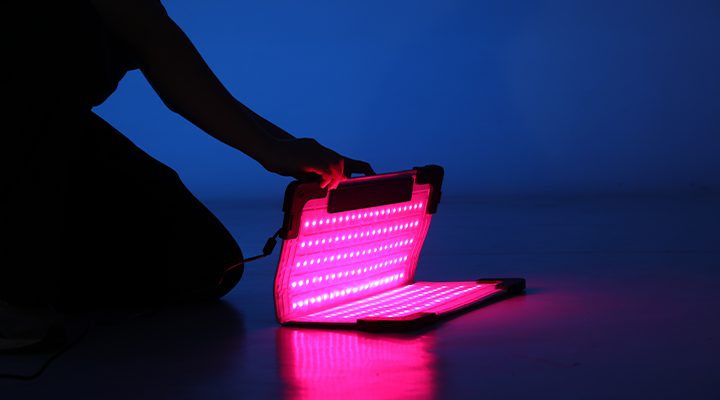
Innovations like the GVM B100C and B200C have surpassed traditional rigid fixtures. These are lightweight, bendable panels that can be shaped to control the light beam.
- Extreme Versatility: At only a few millimeters thick, these flexible lights are the ultimate solution for confined spaces. You can tape them to low ceilings, rig them inside a car, or hide them in corners where traditional panels simply won’t fit.
- Best for: On-location shoots, car interiors, and travel vloggers who need high output (up to 200W) in a foldable, portable form.
Soft Panels vs. Hard Panels
- Soft Panels (Diffused): These use an integrated diffusion layer or an inflatable softbox (as seen in the ZipTile series) to eliminate hot spots. They are essential for flattering skin tones and creating dimensionality.
- Hard Panels (Clear Bead): These offer a longer “throw” and punchier shadows. They are best used when you need to project light from a distance or when using a honeycomb grid to reduce light spill.
How to Choose the Right LED Panel for Your Studio?
Selecting an LED panel isn’t just about finding the brightest light; it’s about finding the right quality of light. As a professional, I look for four non-negotiable pillars when evaluating led panel photography gear:
Color Accuracy: The CRI 97+ Standard
In commercial photography, color is your reputation. If your light source has a low Color Rendering Index (CRI), your subject’s skin will look “muddy” or “sickly” in post-production. You should never settle for anything less than IRC 97.
- The GVM Advantage: Le GVM-1200D is engineered with advanced American LED chips that maintain a CRI et TLCI de 97. This ensures that the subtle red undertones in skin and the vibrant hues of a product are captured exactly as they appear in real life, saving you hours of color correction in Lightroom.
Shadow Management: Acrylic Diffusion vs. Bare Beads
A common technical pitfall in led panel photography is the “multiple shadow” effect caused by hundreds of tiny LED beads.
- What to look for: Seek panels with a high-quality, built-in diffusion layer. The GVM-1200D features an advanced acrylic diffusion panel that blends the output of its 928 beads into a single, cohesive soft light source. This produces a gentle, natural shadow fall-off that mimics a professional softbox without the added bulk.
Real Output: Understanding Lux vs. Wattage
One of the most common “spec traps” in led panel photography is the over-reliance on wattage. Many beginners assume that a 100W light is automatically twice as bright as a 50W light. In reality, Puissance only measures how much power the light consumes, while Lux measures how much light actually hits your subject.
To a professional photographer, Wattage is a utility bill, but Lux is your exposure. Here is why the distinction matters:
- Optical Efficiency: Not all LEDs are designed equal. A poorly designed 100W light can actually be dimmer than a high-efficiency 50W light if it lacks proper focusing.
- The GVM-1200D Performance: Le GVM-1200D utilizes 50W of power, but it maximizes that energy through a high-density array of 928 premium beads and a specialized 60° convex lens design.
- Le résultat : This optical engineering allows the 1200D to deliver a massive 22,100 lux at 0.5m. Despite its energy-efficient 50W footprint, the “Real Output” provides the punch needed for high-shutter-speed photography and deep-depth-of-field shots, rivaling much larger and more expensive units.
When evaluating gear for led panel photography, stop looking at the power draw and start looking at the Lux ratings. It’s the difference between a light that just “glows” and a light that truly “illuminates” your creative vision.
The Control Ecosystem: App vs. Manual
When you are in the middle of a shoot, the last thing you want to do is keep walking over to your lights to adjust brightness.
LED Panels vs. COB Lights: Which is Better for You?
One of the most frequent questions in led panel photography is: “Should I buy a flat panel or a COB (Chip on Board) light with a softbox?” Both have their place, but for many creators, the LED panel is the smarter choice.
- Footprint and Space: A COB light requires a deep softbox (often 2-3 feet deep) to produce soft light. In a small home studio or office, this can feel incredibly cramped. LED panels like the GVM-1200D are ultra-slim, providing beautiful soft light while sitting just inches from a wall.
- Ease of Setup: COB lights involve mounting speedrings, rods, and diffusion cloths. An LED panel is ready in seconds. For “run-and-gun” photography or solo creators, this time-saving is priceless.
- Light Quality: COB lights are great for a long “throw” (lighting a subject from across a room). However, for led panel photography—such as headshots, product photography, and interviews—the wrap-around, soft quality of a high-density panel is much more flattering and easier to control.
- The Verdict: Choose a COB light if you need to light a massive stage. Choose an LED panel kit if you want professional results in a compact, efficient, and versatile setup.
Recommendations: The Best LED Panel Photography Lighting for 2026
If you are looking for the perfect balance of professional-grade power, expansive creative color, and unbeatable ROI, the clear winner for 2026 is the GVM-1200D RGB Video Light Kit.
While high-end flexible lights like the amaran F22c offer great versatility at a premium price ($899), the GVM-1200D stands out as the most “intelligent” investment for photographers who demand studio-grade intensity and durability.
Why the GVM-1200D is our Top Pick for LED Panel Photography:
- Unrivaled Light Intensity: Despite its energy-efficient 50W footprint, the GVM-1200D delivers a massive 22,100 lux @ 0.5m. Remarkably, this outperforms several 200W competitors (such as the amaran F22c at 18,040 lux @ 0.5m) in raw close-range punch, ensuring you have the “stop-action” power needed for high-shutter-speed photography.
- Superior Color Fidelity (CRI 97+): Dans le monde de led panel photography, color is everything. The GVM-1200D maintains an ultra-high CRI/TLCI of 97+, surpassing the amaran F22c’s CRI 95. This leads to more natural skin tones and vibrant product textures, significantly reducing your color-correction time in post-production.
- Professional RGB & HSI Control: Unlike standard panels, you get a full 360° RGB spectrum with 0-100% saturation control. Whether you are matching complex ambient light or creating dramatic “stylized” shots, the 1200D handles it all via the GVM Intelligent App—giving you a digital color gel library in the palm of your hand.
- Built for Longevity: While fabric lights are lightweight, the Aluminum Alloy housing of the GVM-1200D offers superior heat dissipation and structural rigidity. It is designed to survive the rigors of daily studio use and high-pressure location shoots, ensuring a lifespan of over 100,000 hours.
- Complete Studio Solution (The Kit Advantage): For the cost of a single high-end flexible mat, you can secure a GVM 3-light kit that includes softboxes, professional stands, and a dedicated carrying case. This allows you to master “Three-Point Lighting” instantly—the gold standard for professional led panel photography.
Final Thoughts: Is It Still a Smart Investment?
So, is it worth buying an LED panel for photography? Absolutely.
As the industry shifts toward hybrid content (photo + video), having a light source that can do both is no longer a luxury—it’s a necessity. Photographie par panneau LED provides the color accuracy professionals demand with the ease of use that modern creators need.
Le GVM-1200D represents a smart investment for 2026. It combines professional-grade specs (97+ CRI, App control, high lux) with a price point that offers incredible ROI for small businesses and independent photographers. Backed by a 2-year warranty and a 30-day free return policy, it is a risk-free way to take your visual content to the next level.