Instagram lighting can make or break how your content performs, and in 2026 creators are expected to look polished on every Reel, Story, and live stream. Viewers scroll fast, and dim or uneven lighting is often the first reason they keep moving instead of watching.
Good instagram lighting isn’t about buying the biggest studio setup — it’s about matching the right light to the right scene, whether that’s a quick selfie Reel, a full-body dance video, or a two-hour live stream.
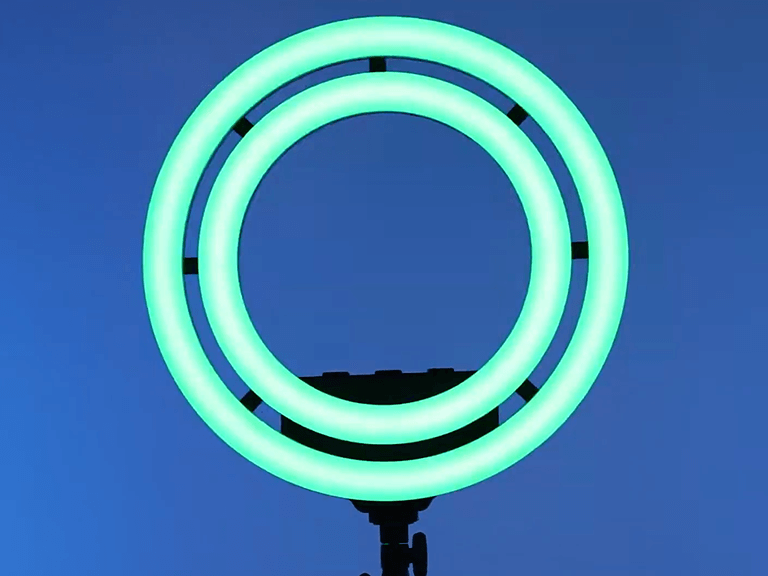
Ins Lighting: Why It’s Trending in 2026
“Ins lighting” — the shorthand creators use for Instagram-ready lighting — has become its own category of gear. Instead of one-size-fits-all setups, creators now build small kits: one light for talking-head Reels, one for full-body shots, and one for live streaming. This shift is why compact, multi-mode LED lights have overtaken bulky studio strobes as the go-to Instagram lighting tools.
Instagram Lighting Basics
Before picking gear, it helps to know what actually makes lighting look good on Instagram. Three things matter most: color temperature accuracy, brightness control, and shadow softness. A light with a wide, tunable color temperature range lets you match window light, indoor bulbs, or golden-hour tones without buying multiple fixtures. High CRI (color rendering index) ratings, ideally 95 or above, keep skin tones looking natural instead of washed out or greenish.
Brightness control matters just as much as color accuracy. A light that only offers a handful of preset intensities forces you to compromise on exposure, while stepless 0–100% brightness adjustment lets you fine-tune output for any room, time of day, or camera setting. Finally, shadow softness comes down to the size and diffusion of the light source — larger panels and ring lights naturally wrap light more evenly around a face than small, direct point sources, which is why most professional Instagram setups favor panels and rings over single bulbs.
How to Get Good Lighting for Instagram?
Getting good lighting for Instagram comes down to three habits: face your light source directly, keep brightness slightly above ambient room light, and diffuse harsh sources so shadows stay soft. Positioning two lights at slight angles on either side of the camera eliminates single-source shadows, while a single ring light works well for close-up selfie-style content. Whichever setup you choose, matching color temperature to your background light keeps footage looking consistent from clip to clip.
Today, we’re highlighting three of GVM’s most popular LED lights among Instagram creators—essential tools for achieving professional-looking content.
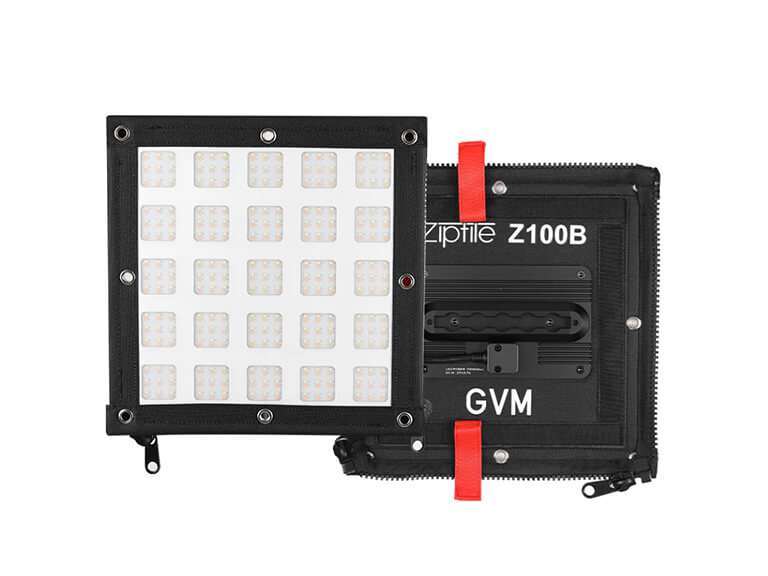
1. GVM Z100B Bi-Color LED Panel Light
The Z100B is a 100W bi-color panel built around a tool-free zipper connection, letting creators link multiple panels together to expand coverage as their setup grows. It’s aimed at creators who want scalable, studio-quality Instagram lighting without a permanent studio build.
Pour :
- Zipper-connect design lets you combine panels for larger, softer light with no tools or extra hardware
- Wide 2700K–6800K tunable range covers everything from warm interiors to daylight
- 12 built-in lighting presets (Tungsten, Daylight, Sunset, Candlelight, and more) recreate real-world lighting in one tap
- Ultra-slim, integrated control box keeps the setup clean with no dangling cables
- Powerful output for its size, good for filling larger rooms or full-body Reels
Cons :
- AC-powered, so it’s less convenient for outdoor or on-location shoots without a power source
- Best results require buying more than one panel, which adds to the total cost
- No RGB or scene-effect modes, so it’s less suited to colorful, stylized content
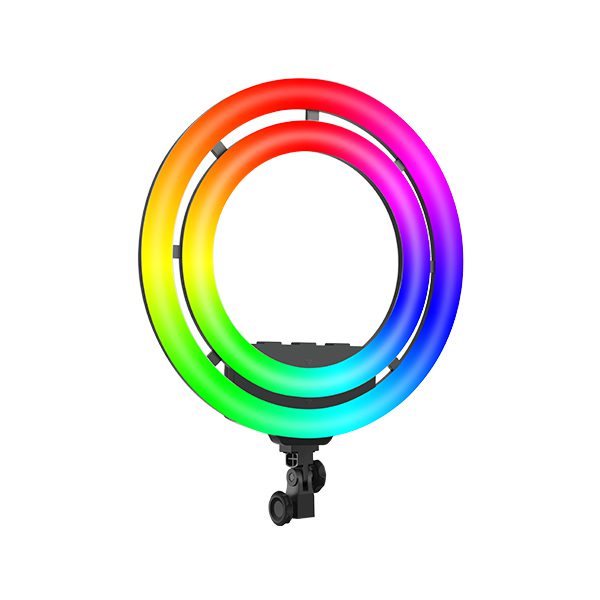
2. GVM-Ring18 50W Bi-Color & RGB Ring Light Kit
The Ring18 is an 18-inch ring light built specifically for selfie-style Reels, makeup tutorials, and portrait video. Its circular design wraps light evenly around the face and is the most beginner-friendly setup of the three.
Pour :
- Even, shadowless light that’s ideal for close-up talking-head Reels and makeup content
- High CRI of 97+ keeps skin tones accurate and natural
- App and Bluetooth remote control for quick brightness and color adjustments
- 8 built-in scene effects (candlelight, disco, police lights, and more) add variety for creative content
- Comes as a full kit with tripod, diffuser, phone holder, and carrying bag, so it’s ready to use out of the box
Cons :
- Narrower color temperature range (3200K–5600K) than the other two lights
- Ring-shaped catchlight can reflect distractingly in glasses
- Battery is sold separately, so DC power alone limits true portability
- Less effective for full-body or wide-scene lighting compared to panel or stick lights
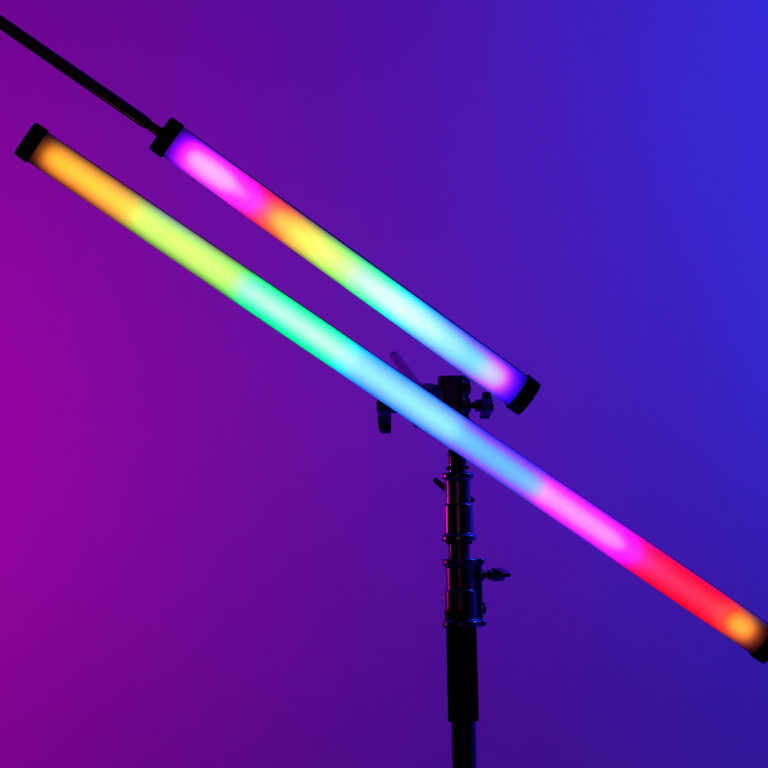
3. GVM-PRO-BD45R Stick Light
The BD45R is a 1200mm stick light designed for creators who need broad coverage beyond a single face, making it the strongest option for streaming and full-body content.
Pour :
- Long, slim form factor evenly lights full-body shots, interviews, and wide streaming backdrops
- Exceptionally wide 2700K–10000K CCT range plus RGB, HSI, and Pixel FX modes for dynamic visuals
- Music-reactive mode syncs lighting to audio, great for gaming streams and party content
- DMX compatibility allows integration with professional lighting consoles
- Splicing accessories let multiple units link together for larger, custom setups
Cons :
- Larger footprint makes it less practical for small desks or tight recording spaces
- More lighting modes mean a steeper learning curve for casual creators
- Best value is realized when using multiple units, similar to the Z100B, which raises the entry cost
- Overkill for creators who only need simple, single-subject Instagram lighting
| Fonctionnalité | GVM Z100B | GVM-Ring18 | GVM-PRO-BD45R |
|---|---|---|---|
| Form Factor | 100W bi-color panel | 18″ bi-color/RGB ring light | 1200mm stick light |
| Température de couleur | 2700K–6800K | 3200 K–5600 K | 2700K–10000K |
| CRI | High color accuracy | ≥97 | High color fidelity |
| Modes | 12 lighting presets | CCT, RGB, 8 scene effects | CCT, HSI, RGB, Effect, Pixel FX |
| Contrôle | Integrated control box | App + Bluetooth remote | App, Bluetooth, DMX |
| Meilleur pour | Scalable panel lighting, studio-style Reels | Selfie video, makeup, portraits | Streaming, full-body shots, dynamic effects |
| Puissance | AC | DC input & battery | AC/battery compatible |

Conclusion
Streaming Light: The GVM-PRO-BD45R
For creators who stream as well as post Reels, a stick-style light like the GVM-PRO-BD45R covers far more ground than a single panel. Its 1200mm body spreads light evenly across a full-body frame, which matters for streaming setups where the camera captures more than just a face. It supports CCT from 2700K to 10000K, plus RGB, HSI, and pixel-level effects, so the same fixture handles talking-head streams and colorful, animated backdrops alike.
It also includes a music-reactive mode that syncs brightness and color shifts to audio in real time, which is a popular touch for gaming streams, party content, and music-focused Reels. DMX compatibility means it can plug into a larger professional lighting console if a creator’s setup grows beyond a single fixture, while splicing accessories let multiple BD45R units link together for wider backdrops or set pieces.
Instagram Video Light: The GVM Z100B and GVM-Ring18
For Reels and short-form video specifically, two lights stand out. The GVM Z100B is a 100W bi-color panel with a tool-free zipper connection, letting creators link multiple panels for larger, softer coverage as their setup grows. The GVM-Ring18 takes a different approach: an 18-inch bi-color and RGB ring light with app and Bluetooth control, ideal for selfie-style Reels, makeup content, and portrait video where a soft, shadowless catchlight is the goal.
The best Instagram lighting setup depends on the kind of content you make most. The GVM-Ring18 is the easiest entry point for selfie-style Reels, the GVM Z100B scales up for creators who need broader, softer coverage, and the GVM-PRO-BD45R rounds things out for streaming and full-body shots. Together, these three lights cover nearly every Instagram lighting scenario you’ll face in 2026 — pick the one that matches your next shoot and start filming with confidence.