In the modern digital landscape, a high-quality Podcast-Licht is no longer a luxury—it is a necessity. As audiences transition from audio-only platforms to video-centric ones like YouTube and Spotify, the visual presentation of your show dictates your professional authority. An LED podcast light provides the consistent, flicker-free illumination required to capture clear skin tones and create a professional atmosphere that keeps viewers engaged.
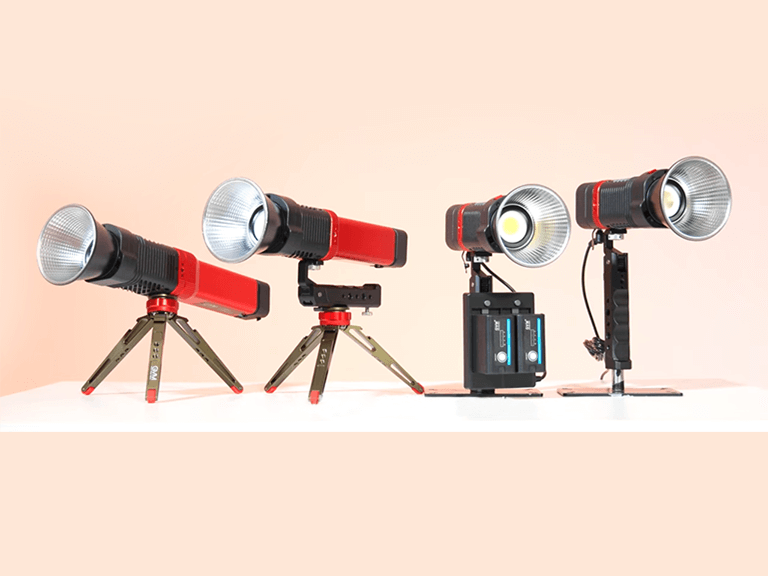
Whether you are building a home studio or a professional broadcasting suite, choosing the right lights for podcast production involves understanding how to balance soft light, shadow control, and background aesthetics.
Inhaltsverzeichnis
What is LED podcast light?
An LED podcast light is a continuous light source specifically engineered for video recording. Unlike traditional bulbs that generate immense heat or photography flashes that burst for a millisecond, LED panels and monolights stay on indefinitely while remaining cool to the touch.
For podcasters, LED technology is superior because:
- Adjustable Color Temperature (CCT): You can match the light to your room’s windows or warm interior lamps.
- Low Heat: You won’t sweat under the lights during long recording sessions.
- High Color Fidelity: Modern lights, like the GVM series, offer high CRI (Color Rendering Index) ratings, ensuring you don’t look “washed out” or green on camera.
Lights for Podcast: Creating the Professional Look
When setting up lights for podcasting, most creators look for a balance between “Key,” “Fill,” and “Back” lighting. While many beginners start by looking for a Godox podcast light or generic ring lights, professional creators are moving toward modular systems that offer more control over light spill and color accuracy.
To achieve the best lighting for a video podcast, you need a setup that highlights the subject while maintaining depth in the background. Below, we break down a professional-grade lighting configuration using GVM’s flagship podcasting gear.
Top-Rated LED Podcast Lighting Equipment
To help you choose the right gear, here is a comparison of two essential tools for any video podcast setup: the GVM-PL60C for versatility and the Zip Tile Z200B for high-output soft light.
| Merkmal | GVM-PL60C RGB Monolight | Zip Tile Z200B LED Mat |
| Primary Use | Portable Fill / RGB FX | Powerful Key Light / Soft Source |
| Leistung | 60W | 200W |
| CRI / TLCI | 97+ / 98+ | 96+ |
| Farbtemperatur | 2700K~6800K | 2700K~6800K |
| Unique Feature | 60 Digital Gels & G/M Shift | Modular Zipper Link Design |
| Kühlung | Active (Silent Mode available) | Passive (100% Silent) |
| Gewicht | 0.8 kg (Ultra-lightweight) | 1.97 kg (Ultra-slim) |
Best Lighting for a Video Podcast: A Pro Setup Guide
To achieve a cinematic, “high-end” broadcast look, we recommend a two-light setup combined with practical background elements. This configuration ensures your face is perfectly illuminated while the room maintains a cozy, professional depth.
1. The Key Light (Left Side): Zip Tile Z200B 200W LED Light Mat
For your primary light source, the Zip Tile Z200B is an industry-leading choice.
- The Setup: Place the Z200B on the left side of the host.
- The Modifier: Use a softbox equipped with a honeycomb grid.
- The Result: The grid is essential for podcasting; it prevents light from scattering across the entire room. Instead, it focuses the 200W of soft light precisely on the subject, preventing the background from becoming overexposed and keeping the focus on the speaker.
2. The Fill Light (Right Side): GVM-PL60C with Lantern Softbox
To balance the shadows created by the key light and achieve a symmetrical visual effect, a second light is needed on the right.
- The Setup: Use the GVM-PL60C, a portable 60W monolight.
- The Modifier: Pair it with the GVM Lantern Globe Softbox (26″).
- The Result: The Lantern softbox provides a 270-degree beam spread. This fills the shadows gently, ensuring the host looks three-dimensional rather than flat, while the compact size of the PL60C keeps the studio footprint small.
3. Background Elements: Practical Lights
To complete the “Podcast” aesthetic, place two decorative lamps with warm tungsten bulbs in the background. These are known as “Practical Lights.” They serve two purposes:
- They act as a “Rim Light” to separate the subject’s hair/shoulders from the background.
- They create a warm, inviting atmosphere that makes the space feel like a professional studio rather than an empty room.
Deep Dive: GVM-PL60C RGB Pocket LED Monolight
Die GVM-PL60C is widely considered one of the best additions to a Podcast-Licht kit because of its six lighting modes. Beyond simple white light (CCT), it offers HSI und RGB modes, allowing you to splash your brand colors onto the walls behind you.
One standout feature for podcasters is the Precise Green/Magenta (G/M) Shift. If your room has cheap overhead office lights that make the camera look “tinted,” you can adjust the PL60C to perfectly counteract those tones, ensuring your skin looks natural and vibrant.
GVM-PL60C Technical Specifications
- Außergewöhnliche Farbe: CRI 97+ and TLCI 98+.
- Integrated Gel Emulation: 60 digital gel presets (CP-L & CP-R Series) to change moods instantly.
- 16 Dynamic Effects: Includes “TV,” “Paparazzi,” and “Lightning” for creative segments.
- App Control: Use the GVM App and Bluetooth Mesh to adjust brightness without leaving your microphone.
Deep Dive: Zip Tile Z200B 200W LED Light Mat
Wenn Sie nach dem best lighting for a video podcast where space is a concern, the Z200B is revolutionary. Its ultra-slim 26mm profile allows it to be tucked into corners where traditional “box” lights won’t fit.
Zip Tile Z200B Highlights:
- Silent Performance: Because it uses passive heat dissipation, it makes zero noise—a critical requirement for high-fidelity audio recording.
- Modular Expansion: The “Zipper Link” system allows you to connect multiple mats to create a massive wall of light if you have multiple guests.
- Präzisionssteuerung: Four professional dimming curves (Linear, Exponential, Logarithmic, S-Curve) allow for smooth fades if you are filming an intro or outro.
Conclusion: Investing in Your Podcast’s Future
When comparing a standard Godox podcast light to the advanced ecosystem of GVM, the choice comes down to control and silence. The combination of the Zip Tile Z200B (for powerful, silent key lighting) and the GVM-PL60C (for versatile fill and color effects) provides a comprehensive solution for any creator.
By utilizing a honeycomb grid to control spill and a Lantern softbox for omnidirectional fill, you can transform a simple bedroom or office into a world-class video podcast studio. Remember, your audience “hears” with their eyes first—make sure your Podcast-Licht is telling the right story.