Photography lighting equipment is one of the highest-impact upgrades a beginner can make. After years of helping new photographers and content creators move from frustrating, flat images to clean, professional-looking results, one pattern is clear: light quality matters more than camera brand for most everyday work. Without controlled light there is no usable image, and the direction, softness, and color of that light decide mood, depth, and skin tones.
This guide combines practical experience with clear technical advice. You will learn why lighting is critical, how different types of light affect your photos, and which three continuous lights currently offer the best balance of performance, ease of use, and value for beginners in 2026.
Subscribe for more field-tested shooting tips and lighting tutorials.
Inhaltsverzeichnis
Why Lighting Matters More Than Most Beginners Realize
Lighting controls clarity, contrast, emotion, and dimension. Hard light creates strong shadows and emphasizes texture—useful for dramatic portraits or product detail, but unforgiving on skin. Soft light wraps around the subject, reduces harsh shadows, and produces a more flattering, commercial look. Front light minimizes texture, backlight creates separation or silhouettes, and classic patterns such as loop, butterfly, Rembrandt, and split lighting shape the face in predictable, professional ways.
Natural light is free and beautiful, especially during golden hour, but it changes constantly and cannot be scheduled. Artificial continuous LED lights solve this problem. You see the exact result on camera before you shoot, you can work at any time of day, and you gain repeatable control. For beginners, this real-time feedback is one of the fastest ways to improve.
Understanding Light Types (Practical Overview)
- Natürliches Licht – Best near sunrise/sunset or on overcast days. Midday sun is hard and often needs a reflector to fill shadows under the eyes.
- Sanftes Licht – Diffused by softboxes, clouds, or bounce surfaces. Ideal for most portraits and beauty work.
- Hartlicht – Direct and undiffused. Creates contrast and texture.
- Portrait patterns – Loop (small nose shadow, very flattering), Butterfly (glamour), Rembrandt (triangle of light under the eye), Split (dramatic half-and-half).
No single style works for every face or concept. The skill is matching light quality and direction to the subject and mood you want.
Best Photography Lighting Equipment – Top 3 Tested for Beginners
These three continuous lights have been evaluated for real beginner needs: portability, color accuracy, simple controls, and the ability to grow with the user. All offer high CRI, continuous preview, and Bowens mount compatibility so you can add softboxes later.
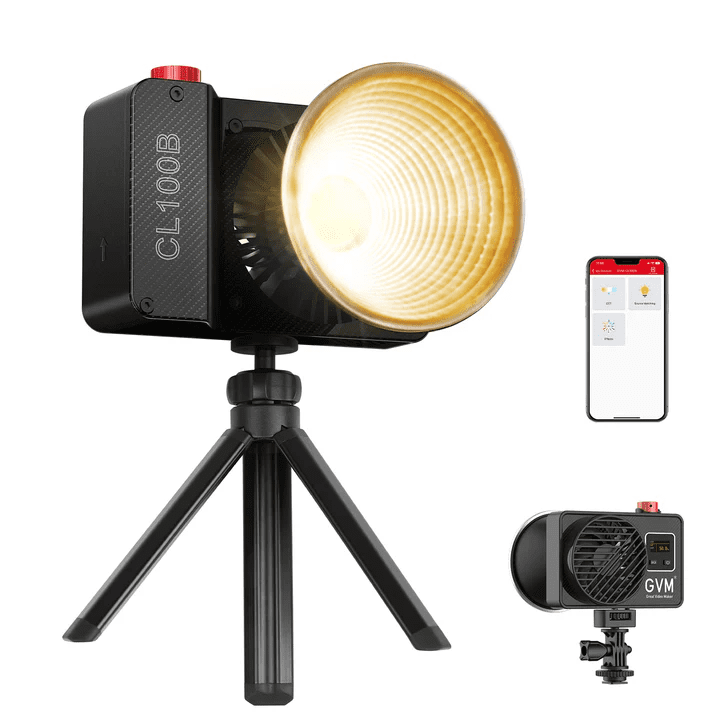
1. GVM CL100B – Best Ultra-Portable Bi-Color Option
Die GVM CL100B is a 100W bi-color COB light that weighs only 0.36 kg. It delivers CRI/TLCI 97+, a 2700K–6800K range, 12 light-source simulations, and app/Bluetooth Mesh control. Triple power options (DC adapter, NP-F batteries, USB-C PD) make it practical for vlogging, live streaming, outdoor work, and small studio fill. It ships with a reflector, soft mask, and desktop tripod.
Vorteile: Extremely lightweight, accurate color, flexible power, quiet cooling, ready-to-use accessories.
Nachteile: Best for closer working distances; lower maximum output than larger fixtures.
Am besten für: Creators who travel often or shoot in tight spaces and need reliable bi-color light without bulk.
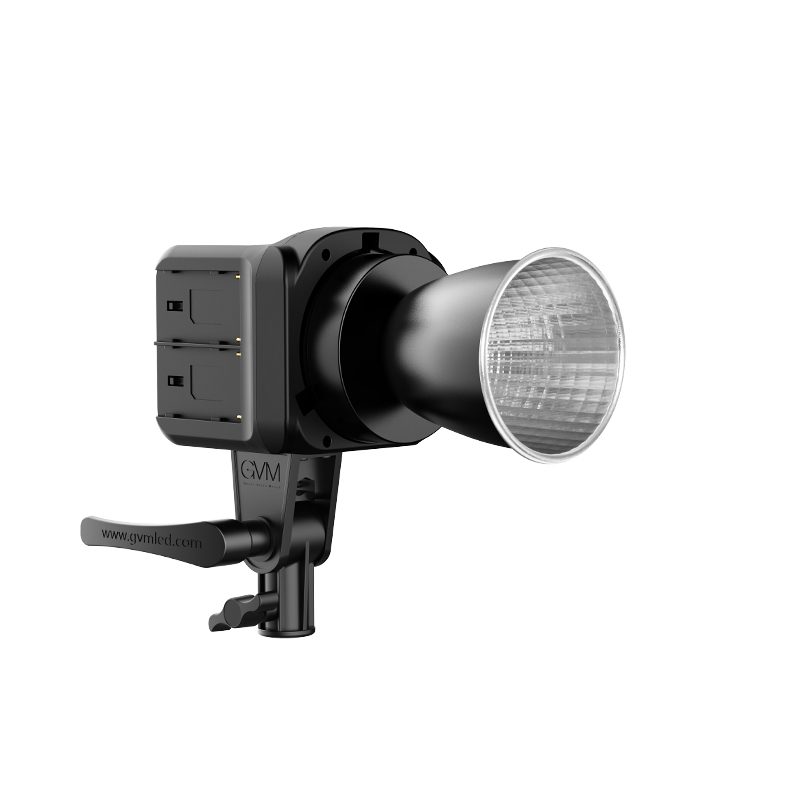
2. GVM-SD80S – Best Simple Daylight Light
The GVM-SD80S provides clean 5600K daylight with CRI 97+, stepless dimming, Bluetooth mesh grouping, 12 preset effects, and an included soft lampshade. Dual power (adapter or NP-F batteries) and ultra-quiet cooling (fan stays around 30 dB) make it suitable for interviews, streams, and quiet indoor environments. Bowens mount support allows future expansion.
Vorteile: Accurate daylight color, very quiet operation, straightforward controls, built-in effects, soft shade included.
Nachteile: Fixed 5600K only—no bi-color adjustment.
Am besten für: Beginners who mainly shoot talking-head videos or portraits and prefer simple, consistent daylight.
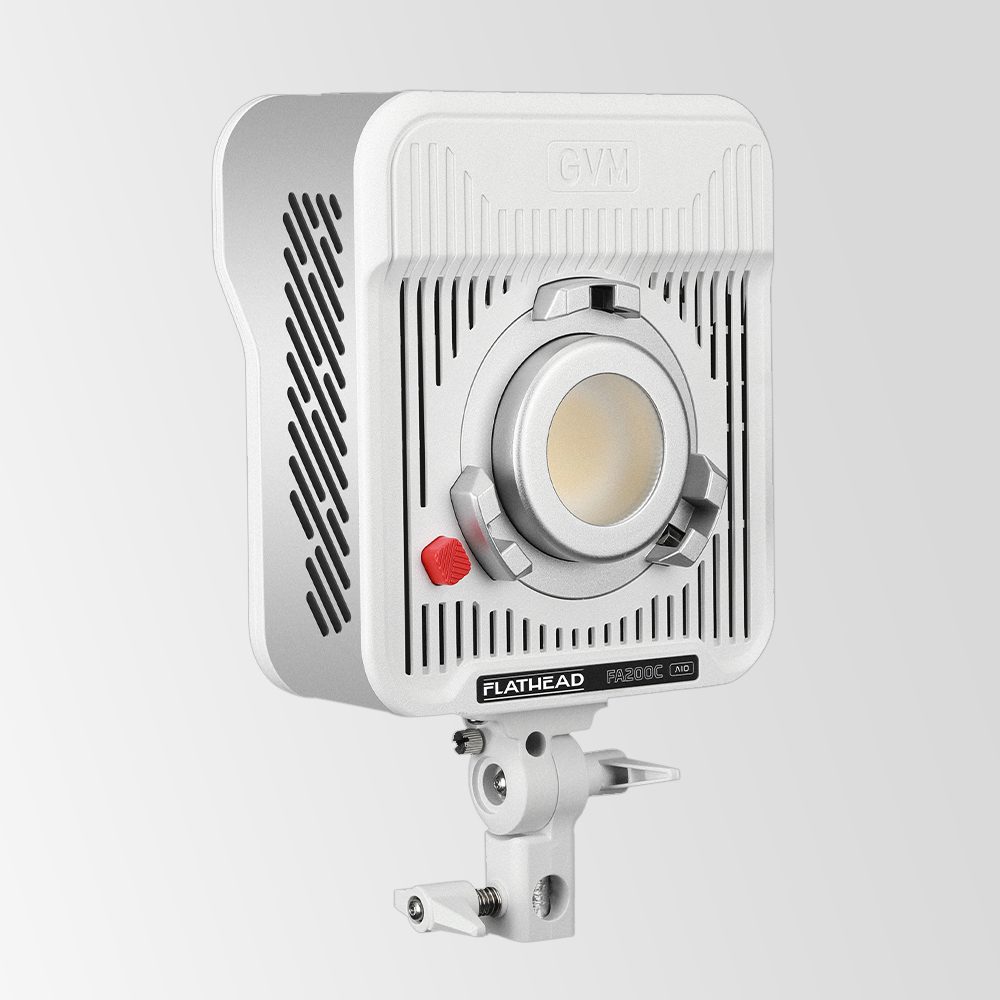
3. GVM FA200C AIO – Best Full-Color Growth Option
The GVM FA200C AIO is a compact all-in-one RGB monolight with a slim panel-style design. It offers full RGB, HSI, CCT (2000K–10000K), and gel modes, strong output (up to 41,300 lux at 1 m with reflector), 16 built-in FX effects, mesh Bluetooth control, and a Bowens mount. The integrated design keeps setup clean and portable.
Vorteile: Full creative color range, solid output for its size, true all-in-one convenience, useful effects library.
Nachteile: Slightly more features than absolute beginners may need in the first few months.
Am besten für: Creators who want accurate white light today and the ability to add creative color later without buying a second light.
Product Comparison Table
| Merkmal | GVM CL100B | GVM-SD80S | GVM FA200C AIO |
|---|---|---|---|
| Energie | 100W | Compact daylight COB | High-output RGB monolight |
| Color | 2700K–6800K bi-color | Fixed 5600K | 2000K–10000K + Full RGB |
| CRI | 97+ | 97+ | Professional grade |
| Tragbarkeit | 0.36 kg (ultra-light) | Lightweight + soft shade | Compact all-in-one |
| Energieoptionen | DC / NP-F / USB-C PD | Adapter / NP-F | Integrated |
| Besondere Merkmale | 12 sources, Mesh control | 12 effects, ultra-quiet | 16 FX, RGB/HSI/GEL |
| Berg | Bowens | Bowens | Bowens |
| Am besten für | Travel & vlogging | Simple daylight interviews | Creative color + long-term growth |
Best Light for Content Creators – Clear Recommendation
- Start with the GVM CL100B if portability and flexible bi-color power are your top priorities.
- Choose the GVM-SD80S if you want the simplest accurate daylight solution with quiet operation.
- Select the GVM FA200C AIO if you expect to need RGB effects and wider creative control within the next year.
All three provide the core advantages beginners need: high color accuracy, continuous feedback, and the ability to add modifiers later. Pair any of them with a basic understanding of soft vs hard light and simple portrait patterns (loop or Rembrandt) and you will see immediate improvement.
Good photography lighting equipment removes the biggest technical barrier. These three options have proven reliable for new creators who need consistent results without complexity or excessive cost.

FAQ
What is the single most important feature in beginner photography lighting equipment?
High CRI (97+) combined with continuous output so you can see the exact result before you shoot.
Do I need RGB as a complete beginner?
Not immediately. Accurate bi-color or daylight is enough for most natural-looking work. RGB becomes valuable when you want creative effects.
Can these lights be used for both still photography and YouTube video?
Yes. Continuous lights work equally well for photos and video because the preview matches the final result.
Is a Bowens mount worth having as a beginner?
Yes. It lets you add affordable softboxes and other modifiers later without replacing the light itself.
Mastering light is one of the highest-leverage skills in photography. The three continuous lights above give beginners trustworthy, practical photography lighting equipment that supports both learning classic techniques and creating modern content in 2026.