Good lighting does more than make a subject visible. It shapes depth, controls contrast, and guides the viewer’s attention. For photographers and filmmakers working outside a traditional studio, the challenge is finding a setup that delivers consistent results without adding unnecessary weight to their gear.
This is where four zone LED lighting becomes a useful concept. By dividing a scene into four lighting areas, creators can approach illumination more systematically, even when working in a small room, a temporary location, or outdoors.
You do not need four separate fixtures to achieve this. Understanding how each lighting zone works can help you make better use of a single light, especially when working with compact COB LED lights designed for mobile production.
Inhaltsverzeichnis
What Is Four Zone LED Lighting?
Four zone LED lighting is a practical way to think about how light is distributed across a scene. Rather than treating the entire frame as one evenly illuminated space, divide it into four functional areas:
1. Key Light Zone
The key light establishes the primary direction and character of the lighting. It reveals facial features, defines the subject’s shape, and determines where the main shadows fall. For interviews and portraits, positioning the key light slightly to one side often creates more depth than placing it directly in front of the subject.
2. Fill Light Zone
The fill zone controls shadow density. It can be created with a second light, a reflector, or light bounced off a nearby wall. The goal is not necessarily to eliminate every shadow. Maintaining some contrast helps the subject look dimensional rather than flat.
3. Background Zone
The background zone separates the subject from the surrounding environment. A little additional illumination can reveal texture, highlight architectural details, or prevent a dark background from disappearing completely. In smaller spaces, careful positioning is often more effective than adding another powerful fixture.
4. Accent and Separation Zone
This zone adds a subtle highlight to the subject’s hair, shoulders, or outline. It is particularly useful when the subject’s clothing and background have similar tones. Even a small amount of directional light can improve separation.
These four zones are a planning framework, not a requirement to use four fixtures. In a compact production setup, one adjustable light and a reflector may be enough to establish the key light, while ambient light and careful positioning help shape the remaining areas.
Why Portable LED Lighting Matters for Location Shoots
Studio lighting is relatively straightforward when power outlets, stands, and modifiers are always available. Location work is different.
A creator filming a travel interview may have only a few minutes to prepare. A product photographer working at a client’s office might need to fit the entire setup into a small bag. Outdoor shoots introduce additional challenges, including changing daylight, limited power access, and restrictions on equipment placement.
Portable LED lighting addresses these practical problems. It allows creators to bring controlled illumination into environments that were never designed for filming.
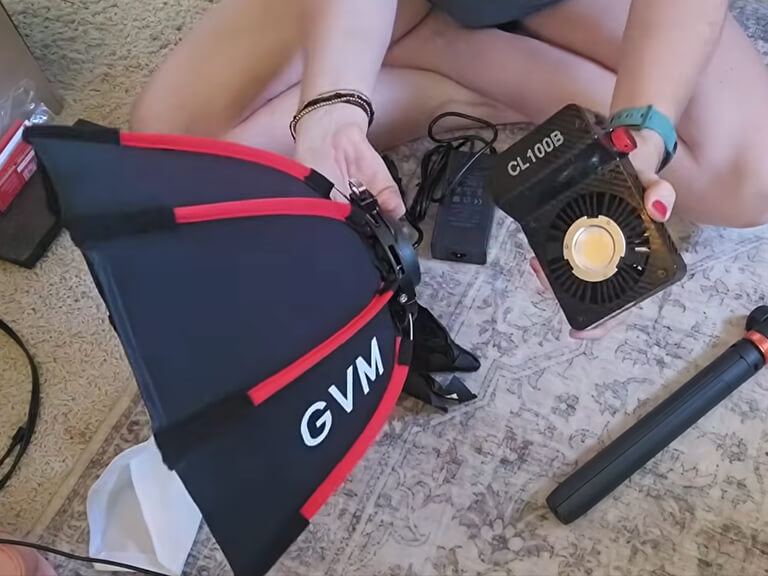
COB LED lights are particularly useful because they concentrate light into a compact source. With a compatible reflector, the beam can provide strong illumination. Adding an appropriate softbox or diffuser changes its character, producing softer light for faces and close-up subjects.
The important consideration is not simply how small a light is. Its output, color accuracy, power options, and mounting flexibility determine whether it can handle the demands of an actual shoot.
Best Ultra-Portable COB LED Light for Professional Mobile Production
For creators who need dependable output without carrying a full studio lighting kit, the GVM CL100B is a practical option. This 100W bi-color COB LED light weighs approximately 0.36 kg and measures just 138 × 101 × 62.5 mm.
Its compact size makes it suitable for travel videos, interviews, product demonstrations, and small production environments where equipment needs to remain easy to transport.
Professional Output in a Compact Body
A small fixture does not automatically mean limited performance. The CL100B delivers up to 17,160 lux at 1 meter with its standard reflector, according to GVM’s published specifications.
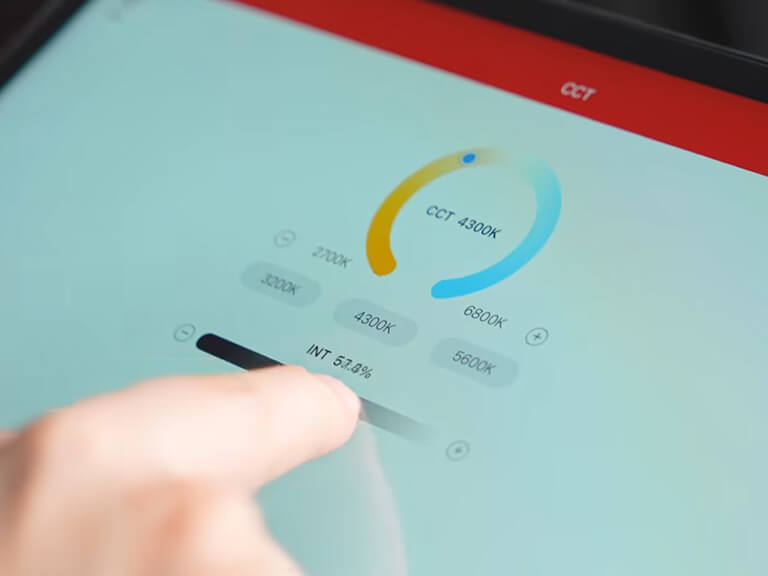
Its 2700K–6800K color temperature range provides flexibility when matching different environments. A CRI rating of 97 or higher also supports natural-looking color reproduction, which is important when the footage includes people or products.
The advantage is straightforward: creators can carry a light weighing less than half a kilogram without giving up the directional lighting capabilities of a COB source.
Three Power Options for Different Shooting Environments
Power availability can determine whether a lighting plan is practical. The CL100B supports three power approaches:
- DC adapter: Suitable for studio work, livestreaming, and stationary setups.
- NP-F750 or NP-F970 batteries: Useful for mobile production where a wall outlet is unavailable.
- USB-C PD: Supports compatible power sources using the specified 9V, 12V, 15V, or 20V profiles.
These options give creators more freedom to work across different locations. Actual battery runtime and USB-C power compatibility depend on the power source and operating conditions.
A Practical Choice for Moving Between Locations
Die CL100B is particularly useful when the shooting environment changes throughout the day. A creator might begin with an indoor interview, move to a nearby office for product footage, and finish with a short outdoor sequence.
Rather than carrying a larger fixture for every setup, the creator can reposition the same light and adjust its color temperature to suit each environment.
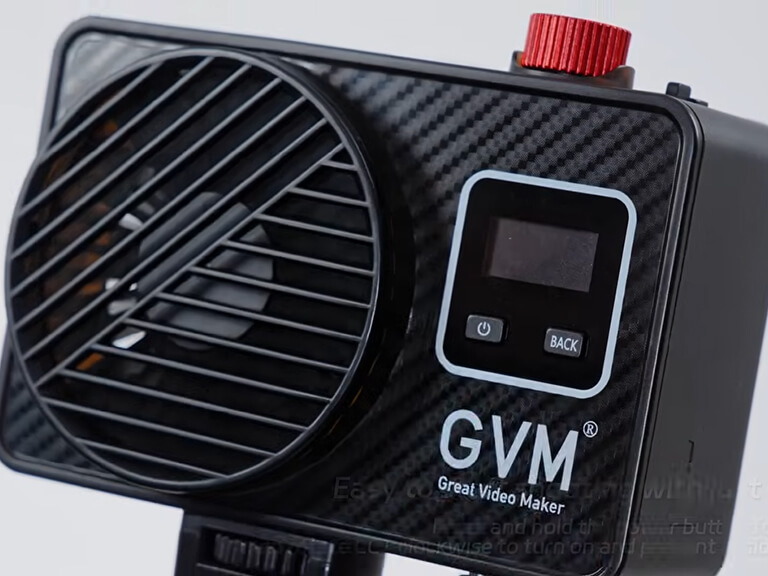
Its onboard controls and Bluetooth app control also make adjustments convenient. With compatible accessories, the light can be used on a tabletop tripod or light stand, making it adaptable to different camera positions and working distances.
Designed for Lightweight Camera Setups
A portable lighting kit should complement the camera equipment, not overwhelm it. The CL100B’s small footprint makes it easier to pair with mirrorless cameras, compact tripods, and lightweight stands.
Its Mini GVM mount and 1/4″-20 thread provide mounting options, while compatible modifiers help shape the output for different subjects.
For creators working alone, this combination can make a noticeable difference. Less time spent moving heavy equipment means more time to refine framing, exposure, and composition.
Feature | Specification / Benefit
| Merkmal | Specification / Benefit |
| Ausgangsleistung | 100W COB LED |
| Gewicht | Approximately 0.36 kg |
| Farbtemperatur | 2700K–6800K |
| Farbgenauigkeit | CRI 97+ |
| Beleuchtungsstärke | 17,160 lux at 1 m with standard reflector |
| Energieoptionen | DC adapter, compatible NP-F batteries, USB-C PD |
| Steuerung | Onboard controls and Bluetooth app |
| Am besten für | Travel videos, interviews, product shoots, mobile studios |
How to Build a Lightweight Lighting Kit Without Sacrificing Quality
A portable lighting kit works best when each item has a specific job. Carrying extra equipment without a clear purpose increases setup time and makes location work more complicated.
Start With One Versatile COB Light
A compact COB fixture can serve as the key light for interviews, portraits, product demonstrations, and other small productions. A compatible reflector provides a more concentrated beam, while diffusion can soften the light when a more flattering appearance is needed.
The GVM CL100B is one option for this type of setup because it combines 100W output with a lightweight body and multiple power choices.
Choose Modifiers Based on the Subject
A reflector is useful when you need a more directional beam. Diffusion is often preferable for faces, while smaller modifiers may work well for close-up product shots.
The right choice depends on the subject’s size, the available space, and the distance between the light and the subject. Larger apparent light sources generally produce softer shadows when positioned at comparable distances.
Keep the Power System Simple
Choose the power source before arriving at the location. If AC power is available, an adapter may be the simplest solution. For remote shoots, compatible batteries or USB-C PD power sources can reduce dependence on outlets.
Always verify power requirements and battery compatibility before filming. A flexible power system is only useful when it can reliably support the planned setup.
Test the Setup Before Recording
Take a few minutes to inspect the shadows, background exposure, and skin tones. Check the framing after moving the light, since even a small change in position can alter the entire image.
For video work, also listen for fan noise during a test recording. Ambient sound, microphone placement, and the light’s operating mode can all affect the final audio.
Schlussfolgerung
Four zone LED lighting offers a useful way to plan more deliberate lighting, whether you are working in a studio or filming on location. By thinking separately about the key light, fill, background, and subject separation, you can create more controlled images without automatically adding more fixtures.
The equipment you choose should support that process. A portable COB light with reliable output, accurate color, flexible power options, and adaptable mounting can handle a wide range of everyday production tasks.
The GVM CL100B brings these qualities together in a compact 100W design. For travel filmmakers, solo creators, and photographers using lightweight camera systems, it offers a practical way to bring controlled lighting into more shooting environments.
The best lighting setup is not necessarily the one with the most equipment. It is the one that gives you enough control to make the image you intended, wherever the shoot takes you.