What defines the best lights for filmmaking in 2026? For professional cinematographers and DPs, it’s no longer just about power—it’s about precision, control, and the ability to paint a narrative with light.
While the landscape of film lighting equipment is changing rapidly, the goal remains the same: creating a masterpiece. This masterclass is designed for pro studios that need to know which tools actually deliver a professional edge. We’ll dive into the essential best lights for filmmaking that offer the color accuracy and modularity required for today’s high-stakes productions.
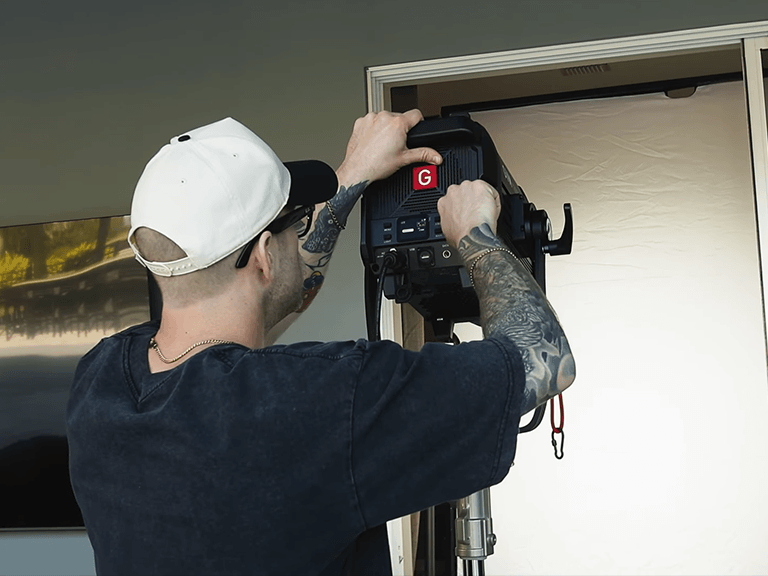
1. The Standards of Modern Cinema Lighting: CRI, TLCI, and Color Consistency
In a professional studio environment, “good enough” is the enemy of excellence. When we talk about high-end cinema lighting, the first thing we must discuss is the fidelity of the light spectrum.
Why CRI and TLCI 97+ is Non-Negotiable
For years, the Color Rendering Index (CRI) was the gold standard. However, for film professionals, the Television Lighting Consistency Index (TLCI) is often more critical as it measures how a camera sensor—rather than the human eye—interprets color.
In 2026, any professional film lighting equipment must boast a CRI and TLCI of 97 or higher. Why? Because skin tones are the most unforgiving element in the frame. A green or magenta spike in a low-quality light source can add hours to your post-production color grading or, worse, ruin the organic texture of the talent’s skin.
Consistency Across the Dimming Curve
A common pitfall in cheaper movie lights is color shift. When you dim a light from 100% to 10%, the color temperature should remain rock-solid. Pro-grade cinema lighting fixtures utilize advanced constant-current driving technology to ensure that 5600K stays 5600K, regardless of intensity. This consistency is vital when matching multiple sources on a complex set.
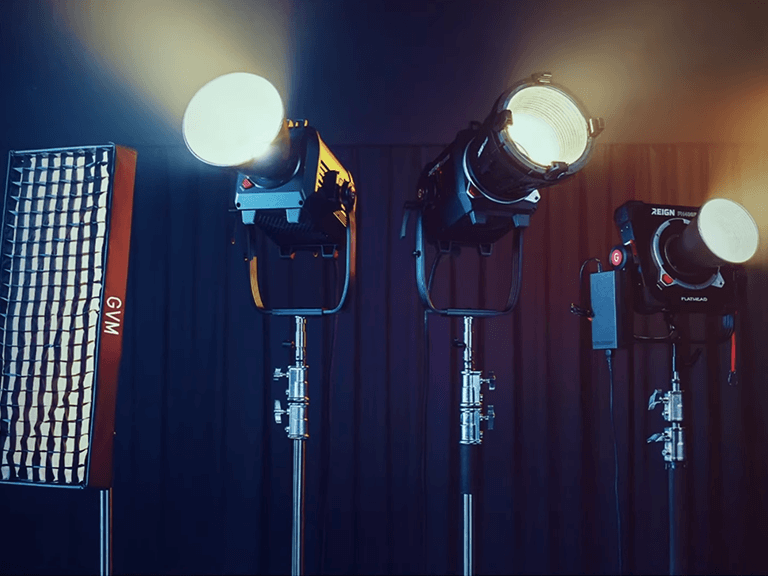
2. Organizing Your Professional Film Lighting Equipment Kit
A professional studio kit is a symphony of different tools, each serving a specific physiological and emotional purpose in the frame. To build an industry-standard kit, you need to categorize your film lighting equipment by output and application.
The Powerhouse: High-Wattage Point Sources
Every pro studio needs a “sun.” High-output movie lights (COB LEDs) are the backbone of any kit. These are your primary keys, your sources for punching through heavy diffusion, or your tools for creating hard, dramatic shadows that mimic direct sunlight.
The Versatiles: Panel Lights and Soft Sources
While point sources offer directionality, LED panels provide the “wrap” needed for high-fashion or commercial looks. These are essential Filmleuchten for filling shadows and creating a soft, flattering base exposure without the footprint of a large softbox.
The Grip Essentials: Modifiers and Support
You cannot master cinema lighting without controlling the “spill.” A professional kit must include:
- C-Stands and Combo Stands: The heavy-duty bones of the set.
- Scrims and Flags: To cut light where it isn’t wanted.
- Softboxes and Snapgrids: To shape the beam angle and quality.
3. The Shift to High-Performance LED Film Lights and LED Movie Lights
The era of the “hot set” is over. The industry has decisively shifted from traditional HMI and Tungsten fixtures to high-performance led film lights. The advantages are not just in energy efficiency, but in the total creative control they offer.
Digital Control vs. Analog Limitations
Traditional movie lighting equipment required gels to change color temperature or hue. Modern led movie lights allow for full RGBWW control, enabling DPs to dial in any hue in the REC.709 or Rec.2020 color space instantly.
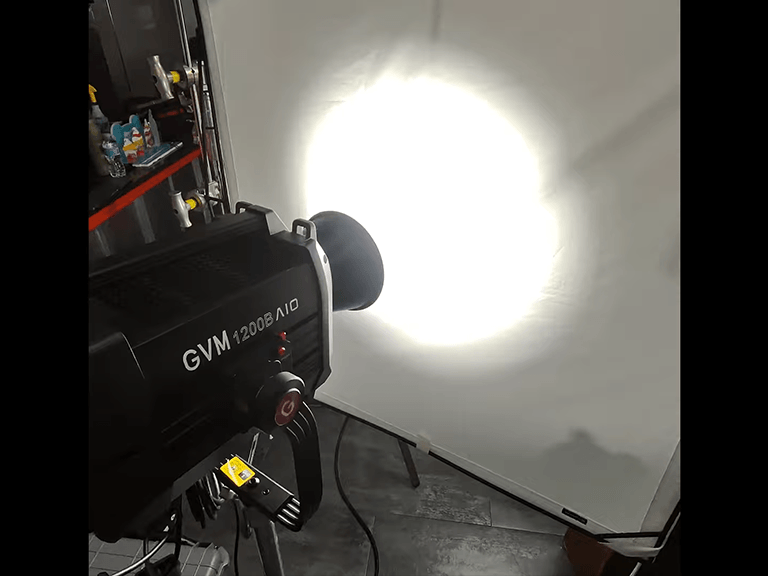
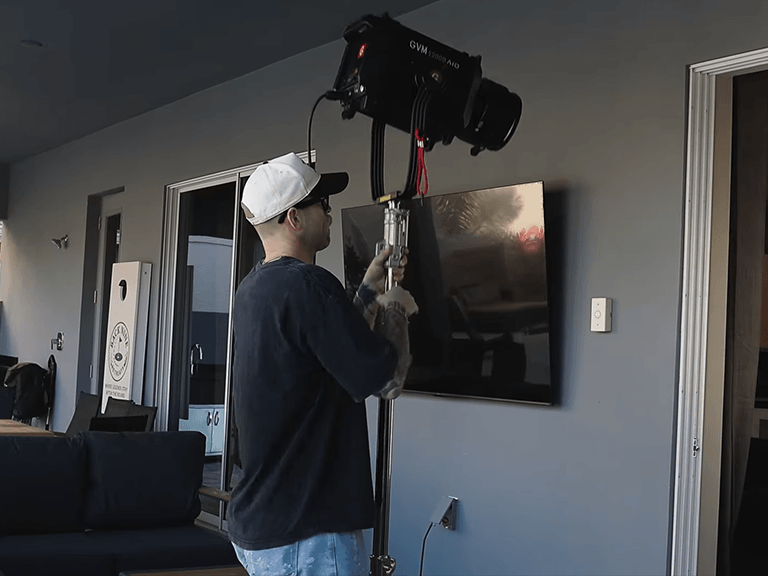
Spotlight on Innovation: The GVM 1200B AIO
For pro studios where space efficiency and setup speed are paramount, the GVM 1200B AIO represents the pinnacle of modern led film lights.
The “AIO” (All-in-One) design is a game-changer for the following reasons:
- Integrated Power System: No more heavy, external ballast boxes cluttering the floor. This streamlines the workflow for fast-paced productions.
- Superior Heat Management: In a closed studio, heat is the enemy of both equipment and talent. The GVM 1200B AIO utilizes advanced cooling to maintain high output without the fan noise that ruins delicate audio takes.
- Bi-Color Precision: With a wide CCT range and high output, it serves as a versatile workhorse that can mimic anything from the “golden hour” to high-noon daylight.
Choosing the right Filmleuchten means looking for gear that solves logistical problems while enhancing visual possibilities.
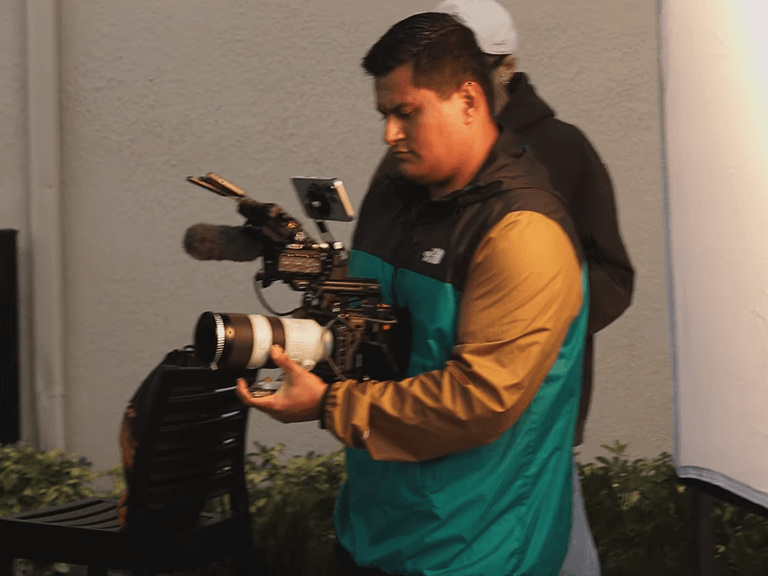
4. Advanced Control: Why DMX and APP Integration are Best Lights for Filmmaking Essentials
In a professional workflow, time is the most expensive line item on the budget. Walking over to a light to manually adjust a dial is no longer acceptable on a pro set. This is where the distinction of the best lights for filmmaking becomes clear.
The Power of DMX512 and CRMX
For large-scale lighting for filmmaking, DMX512 remains the industry standard. It allows a lighting board operator or gaffer to control dozens of fixtures from a single console. Whether it’s a complex chase sequence or a subtle dim-up, DMX provides the frame-accurate synchronization required for high-end cinema.
Intelligent App Ecosystems
For smaller crews or “run-and-gun” commercial sets, Bluetooth and Mesh-app control are essential. The best lights for filmmaking today come with robust apps that allow for grouping, scene saving, and instantaneous color matching. Being able to adjust your cinema lighting from behind the monitor allows the DP to see the results in real-time, drastically reducing the “tweak time.”
5. Creating Atmosphere: Replicating a Movie Theater Light Ambience in Studio
Cinematography is often about recreating reality in a controlled environment. One of the most common requests for commercial and narrative sets is to replicate the specific “glow” of a cinema environment—the movie theater light.
Achieving the “Silver Screen” Glow
To replicate movie theater light oder movie theatre lights in a studio, you need to master the art of reflected light.
- Projected Sources: Use a high-output LED source to bounce light off a white or silver surface, mimicking the flicker of a projector.
- Color Contrast: True movie theater light often involves a high-contrast ratio—cool blues in the shadows (the ambient theater) contrasted with the shifting, vibrant colors of the “screen” reflecting on the talent’s face.
- Atmospheric Haze: To make the beams of your cinema lighting visible and give them that tactile, cinematic texture, a light layer of haze is essential.
Conclusion: Investing in the Future of Your Vision
Mastering cinema lighting is a lifelong journey of balancing technical precision with artistic intuition. By investing in high-quality film lighting equipment—from color-accurate led film lights like the GVM 1200B AIO to robust DMX control systems—you are not just buying gear; you are buying the ability to tell better stories.
For the modern DP and Gaffer, the best lights for filmmaking are the ones that disappear into the workflow, allowing the focus to remain where it belongs: on the frame, the story, and the light.