Movie lighting is one of the most important skills a new filmmaker can develop. Good lighting does far more than make the image visible—it shapes mood, guides the viewer’s eye, creates depth, and gives a film its professional, cinematic quality.
Poor lighting can make even an expensive camera look amateur, while thoughtful movie lighting can elevate simple footage into something that feels intentional and polished. For beginners, mastering lighting is often the fastest way to improve overall production value.
What Is the Best Type of Light for Video?
The best light for video and movie lighting should deliver several key qualities:
- High color accuracy (CRI 97+ / TLCI 97+) so skin tones and production design look natural
- Continuous output so you can see the exact result before recording
- Precise, flicker-free dimming
- Flexible color temperature or full RGB control
- Quiet or silent operation for dialogue scenes
- Enough output for your typical working distance and modifiers
- Practical mounting and control options (Bowens, app, DMX, etc.)
Continuous LED lights currently meet these needs better than traditional tungsten or pure strobe systems for most modern productions because they offer real-time feedback, lower heat, and excellent color performance.
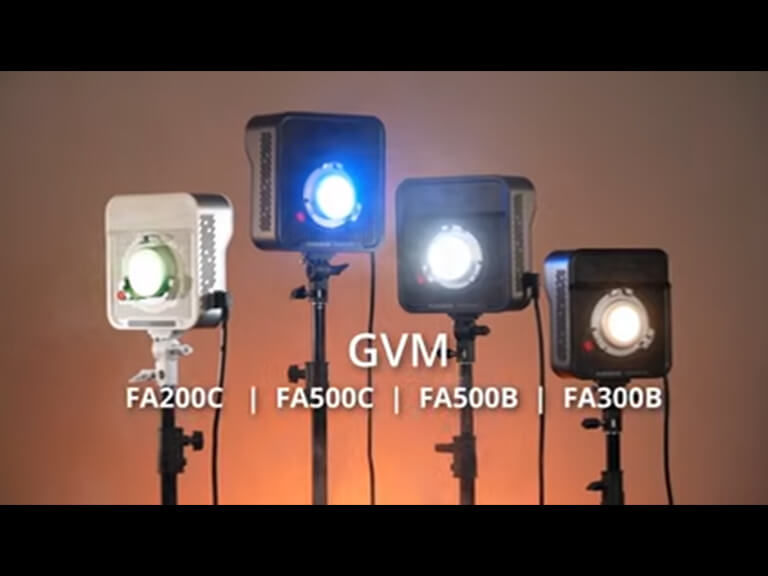
Arten von filmischem Licht
Common types of cinematic lighting include:
- COB Monolights – High-output point sources ideal as key lights with softboxes or optical modifiers
- LED-Panels – Soft, even light for fill or key in smaller setups
- RGB / Full-color lights – Creative color and atmospheric effects
- Fresnel and optical attachments – Beam control and intensity boost
- Softboxes, grids, and intensifiers – Shape and quality of light
Each type serves different roles in a lighting plan. For a detailed breakdown of every major category, see our full guide: Studio Lighting Types 2026 [blocked].
Best Movie Lighting Top 3 in 2026
Here are three of the most popular and practical continuous lights for movie lighting in 2026.
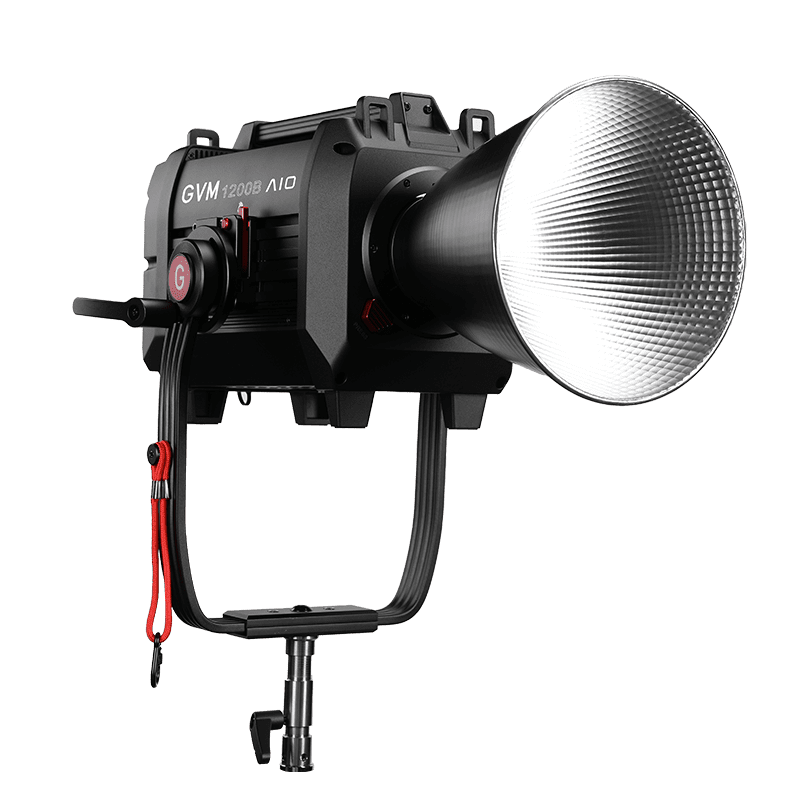
1. GVM 1200B AIO – Best High-Power Movie Light
The GVM 1200B AIO is a 1200W all-in-one bi-color COB spotlight designed for professional filmmaking and high-end video. It delivers up to 42,800 lux at 3 meters with a standard reflector, offers a 2700K–6800K range, and maintains CRI/TLCI 97+. The true all-in-one design integrates the power supply into the head—no external ballast required. Features include ultra-precise 0.01% stepless dimming, 12 lighting effects, 12 light-source presets, app control, and support for CRMX, DMX, RDM, and Art-Net. Intelligent cooling provides Auto, Low, and complete Off modes. The Bowens mount and detachable U-yoke make modifier changes fast. Weight is approximately 10–12.5 kg.
Vorteile: Extremely high output, excellent color accuracy, true all-in-one convenience, professional control protocols, silent modes.
Nachteile: Heavier than smaller lights; best suited for studio or controlled location work.
Am besten für: Primary key light on film sets, commercials, and any production that needs serious power and reliability.
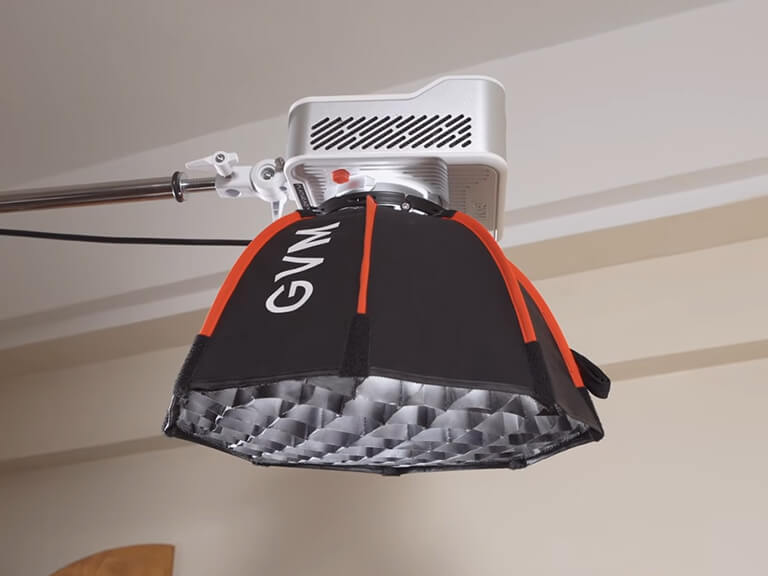
2. GVM FA200C AIO – Best Compact RGB Movie Light
The GVM FA200C AIO is a compact all-in-one RGB LED monolight with a modern panel-style design. It combines the light head, controls, and power supply in one body. It supports full RGB, HSI, CCT (2000K–10,000K), and GEL modes, delivers up to 41,300 lux at 1 m with a reflector, and includes 16 built-in FX effects. Mesh Bluetooth control and a Bowens mount add flexibility. Quiet active cooling supports longer shoots.
Vorteile: Wide color range, true all-in-one design, strong output for its size, useful effects library, Bowens compatibility.
Nachteile: Slightly more complex than pure bi-color lights; may offer more features than absolute beginners need.
Am besten für: Filmmakers who want both natural-looking interview light and creative colored lighting in one portable fixture.
3. GVM Z200B – Best Portable Slim Movie Light
The GVM Z200B is an ultra-slim bi-color LED panel that combines high performance with excellent portability. It offers a 2700K–6800K range, 12 cinematic lighting effects, 12 professional light-source presets, and integrated app control. Dual power (AC + V-mount battery) and a lightweight, slim body make it ideal for location work. The control box mounts directly on the back for a clean setup.
Vorteile: Extremely portable, dual power options, useful presets and effects, clean integrated design.
Nachteile: Lower total output than high-power COB monolights; best for closer distances or fill/accent roles.
Am besten für: Run-and-gun filmmaking, location interviews, and situations where size and battery operation matter most.
Product Comparison Table
| Modell | Power / Type | Farbbereich | Key Strength | Am besten für | Tragbarkeit |
|---|---|---|---|---|---|
| GVM 1200B AIO | 1200W Bi-color COB | 2700–6800K | Extreme output + all-in-one | Main movie key light | Good |
| GVM FA200C AIO | Compact RGB Monolight | 2000–10,000K + Full RGB | Creative color + strong output | Interviews + creative looks | Very good |
| GVM Z200B | Slim Bi-color Panel | 2700–6800K | Portability + dual power | Location & run-and-gun | Ausgezeichnet |
Movie Lighting Settings – Practical Starting Points
A reliable starting setup for most interview or narrative scenes:
- Key light: Place at 45° to the subject and slightly above eye level. Use a softbox for flattering results or an optical intensifier for harder, more dramatic light.
- Color temperature: Match existing ambient light or set 5600K for daylight look / 3200K for warmer interiors.
- Fill: Use a reflector or a second light at lower intensity (often 50% or less of the key).
- Back / rim light: Optional, placed behind the subject for separation.
- Exposure: Keep the face the brightest element in the frame and avoid clipping highlights.
These basic movie lighting settings work with any of the three lights above and can be refined as you gain experience.
Real-World Case Study
In a recent documentary-style shoot, a filmmaker used the GVM 1200B AIO as the main key light paired with a softbox for interviews, then switched to the 3X Optical Intensifier for stronger, more directional daylight simulation through a window. The FA200C AIO provided creative colored accents and practical effects, while the Z200B served as a portable fill and battery-powered location light. The combination allowed fast changes between soft interview lighting and more cinematic hard-light looks without a large lighting package.

Best Continuous Lighting for Video – Conclusion
Das Beste movie lighting in 2026 balances output, color accuracy, control, and practicality.
- Choose the GVM 1200B AIO when you need maximum power and a true cinema-grade key light.
- Choose the GVM FA200C AIO when you want creative RGB flexibility in a compact all-in-one package.
- Choose the GVM Z200B when portability and battery operation are the top priorities.
All three deliver the core qualities that modern continuous lighting for video demands. Start with the light that matches your most common shooting scenarios, master basic three-point principles and the settings above, and expand your movie lighting kit as your projects grow.
FAQ
What is the most important quality in movie lighting?
Accurate color (high CRI/TLCI) and the ability to control softness and direction matter more than raw wattage alone.
Do I need RGB lights for movie work?
Not always. High-quality bi-color lights handle most naturalistic scenes. RGB becomes valuable for creative accents and stylized looks.
Can one light be enough for beginners?
Yes. A single strong key light (especially the 1200B AIO or FA200C AIO) plus a reflector can produce professional results while you learn.
Which light is best for location filming?
The GVM Z200B offers the best balance of portability and battery power for run-and-gun work.