Fragen Sie jeden erfahrenen Filmemacher, was Amateuraufnahmen von professioneller Arbeit unterscheidet, und Sie erhalten die gleiche Antwort: die Beleuchtung. Der Kamerakörper spielt eine Rolle, das Objektiv spielt eine Rolle, aber Licht ist der Rohstoff, aus dem jedes Bild aufgebaut ist. 500Kamera mit großartiger Beleuchtung wird übertreffen5.000 Kameras mit schlechter Beleuchtung – jedes Mal.
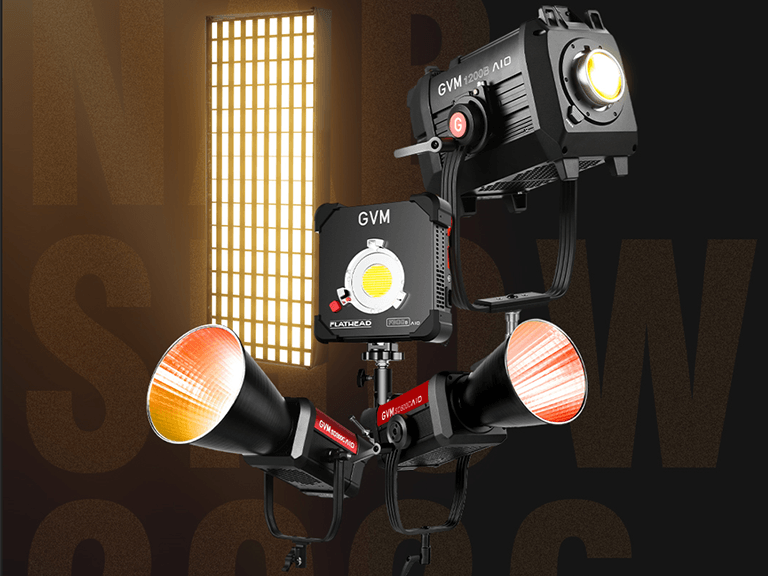
Was ist also die beste Art von Licht für Videos? Das hängt davon ab, was Sie filmen, wo Sie filmen und wie viel Kontrolle Sie benötigen. Dieser Leitfaden stellt die Kernarten der Videobeleuchtung vor, führt Sie durch Produktempfehlungen für jedes Budget und jeden Anwendungsfall und gibt Ihnen einen praktischen Rahmen für die Auswahl des richtigen Lichts für Ihre spezielle Situation.
Beste Videoleuchten für Videografie
Wenn Sie cineastische Inhalte produzieren – Kurzfilme, Werbespots, Musikvideos, narrative Arbeiten – benötigen Sie Lichter, die drei Anforderungen erfüllen: Ausgangsleistung, Farbgenauigkeit und Flexibilität bei der Lichtformung. Hier dominieren COB (Chip on Board) LED-Scheinwerfer. Sie erzeugen eine konzentrierte, gerichtete Abgabe, die Sie mit Modifikatoren wie Softboxen, Fresnels und Projektionsvorsätzen formen können.
Was macht ein großartiges Kino-Licht aus?
- Hohe Lux-Leistung in der Ferne — Filmsets erfordern oft eine Beleuchtung von Motiven aus über 3 Metern Entfernung. Man braucht echtes "Throw", nicht nur Helligkeit nahe an der Quelle.
- CRI/TLCI 97+ — Alles unter 96 führt zu Farbverschiebungen, die Ihre Postproduktion verlängern. Hauttöne leiden zuerst.
- Bowens-Mount — Der Industriestandard für Lichtformer. Wenn Ihr Licht es nicht hat, schrumpfen Ihre kreativen Möglichkeiten dramatisch.
- Stille Kühlung — Tonaufnahmen am Set fangen alles ein. Ein lauter Ventilator ruiniert Takes.
- DMX/CRMX-Steuerung — Für Mehrlicht-Setups sind drahtlose und kabelgebundene Steuerprotokolle keine Option; sie sind die Grundlage für effizientes Arbeiten.
GVM REIGN R1200B – Das Flaggschiff für die Großproduktion
Die GVM REIGN R1200B wurde für Aufnahmen entwickelt, bei denen kein Kompromiss eingegangen werden darf. Mit 1200 W und 9.360 Lux bei 3 Metern (bares Licht) liefert er die Art von Fernwirkung, die bisher HMI-Leuchten erforderte – und das bei einem Bruchteil der Wärme- und Stromaufnahme.
Was es auszeichnet, ist die G7-Bajonett, kompatibel mit ARRI G7-Standards, was Lichtverluste durch Modifikatoren minimiert. Kombinieren Sie es mit dem mitgelieferten Standardreflektor und Sie erhalten bei gleicher Entfernung fast die dreifache Leistung von konkurrierenden Leuchten. Die abnehmbare optische Konvexlinse lässt sich für erhöhte Helligkeit direkt auf den Lichtmotor schrauben, wenn Sie maximale Leistung benötigen.
Für die Konnektivität verfügt er über den vollständigen professionellen Stack: RDM, DMX-512, Dual-Ethernet (Art-Net und sACN), Bluetooth und LumenRadio CRMX. Er ist zudem IP-geschützt gegen Staub und Wasser, was ihn zu einem der wenigen Lichter dieser Leistungsklasse macht, denen Sie bei Außenaufnahmen bei Nacht vertrauen können.
Hauptmerkmale: 1200W | 9.360 Lux @ 3m | Bi-Color 2700K–6800K | CRI 97+ | G7 Mount | Wasserdicht | 12 FX + 12 Quell-Presets
GVM PRO SD650B – Das Arbeitstier für professionelle Sets
Die GVM PRO SD650B trifft einen Nerv, den Arbeitende DPs lieben: 81.300 Lux auf 1 Meter, V-Mount-Akkukompatibilität für Außenaufnahmen und ein wasserdichtes Gehäuse, das Regen und Feuchtigkeit trotzt. Die 1/1000-stufige Dimmung mit vier Dimmkurven bietet Ihnen die Präzision, die wichtig ist, wenn Sie mehrere Lichtquellen an einem beleuchteten Set ausbalancieren.
Hauptmerkmale: 650W | 81.300 Lux @ 1m | Bi-Color 2700K–6800K | CRI/TLCI 97+ | V-Mount | Wasserdicht | Bowens-Mount
GVM PRO SD650C – Wenn Sie volle RGB-Kreativkontrolle benötigen
Für Musikvideos, stilisierte Werbespots und jedes Projekt, bei dem Farbe Teil des Storytellings ist, GVM PRO SD650C bietet 360°-Farbsteuerung über 16 Millionen Farben. Die integrierte Bibliothek von 60 branchenüblichen Farbfolien bedeutet, dass Sie Looks crewübergreifend ohne physische Farbfolien abgleichen können. Sie liefert 95.530 Lux bei 1 Meter – ernsthafte Leistung selbst im Voll-RGB-Modus.
Hauptmerkmale: 650W | 95.530 Lux @ 1m | RGBWW 2000K–10.000K | 16M+ Farben | 60 Gel-Voreinstellungen | CRI/TLCI 97+ | Wasserdicht
GVM 1200B AIO – Maximale Leistung, minimaler Aufbau
Die GVM 1200B AIO nimmt die 1200W-Klasse und macht sie zugänglich. Kein externes Vorschaltgerät, kein Kabelsalat – einfach einstecken und in unter 60 Sekunden betriebsbereit. Sie liefert 42.800 Lux bei 3 Metern mit dem Standardreflektor, und die Bowens-Halterung mit einer 3x-Fokussierlinse ermöglicht es Ihnen, die fokussierte Leistung zu verdreifachen und gleichzeitig Hotspots zu eliminieren.
Hauptmerkmale: 1200W | 42.800 Lux bei 3m | Bi-Color 2700K–6800K | CRI/TLCI 97+ | 60-Sekunden-Setup | Bowens-Anschluss
So wählen Sie innerhalb dieser Kategorie aus
| Ihre Situation | Empfohlene Auswahl |
|---|---|
| Groß angelegte Film-/Werbeproduktion mit Crew | REIGN R1200B |
| Außenaufnahmen im Laufschritt, Benötige Akku + Wetterschutz | PRO SD650B |
| Kreative RGB-Arbeit, Musikvideos, stilisierte Inhalte | PRO SD650C |
| Alleinbetreiber, der 1200W ohne Komplexität benötigt | 1200B AIO |
Akkubetriebene Videoleuchten
Netzstrom ist bei vielen Dreharbeiten ein Luxus. Dokumentarfilme, Outdoor-Events, Immobilienbesichtigungen, Reise-Vlogs – diese Szenarien erfordern Akku-betriebene Kameras. Die Schlüsselfaktoren hier sind Akkulaufzeit, Leistung im Akkubetrieb und Transportfähigkeit.
Worauf bei batteriebetriebenen Videoleuchten zu achten ist
- V-Mount oder NP-F-Kompatibilität — V-Mount ist der professionelle Standard. Er bietet Ihnen eine längere Laufzeit bei höherem Stromverbrauch und integriert sich in vorhandene Rig-Elemente.
- Doppelte Stromversorgung — Die besten Akkulichter können auch über Wechselstrom betrieben werden, sodass Sie nicht an einen Modus gebunden sind.
- Gewicht und Formfaktor – Wenn Sie Scheinwerfer zum Drehort transportieren, zählt jedes Pfund. All-in-One-Designs ohne separate Vorschaltgeräte sparen erheblich Gewicht.
- Tatsächliche Ausgabe per Akku — Manche Lichter drosseln die Leistung erheblich, wenn sie im Akkubetrieb laufen. Prüfen Sie die technischen Daten, nicht das Marketing.
GVM PRO SD300B – Das batteriebetriebene Studioleuchtmittel
Die GVM PRO SD300B läuft mit V-Mount-Akkus und liefert 65.700 Lux auf 1 Meter. Das ist eine ernsthafte Lichtmenge für ein Gerät, das Sie überall mit Strom versorgen können. Die integrierten Steuerungsoptionen, die App-Steuerung und die DMX-Steuerung bedeuten, dass Sie es auf einem Stativ aufstellen, die Pegel von Ihrem Telefon aus einstellen und den ganzen Tag drehen können, ohne das Gerät zu berühren.
Mit 12 integrierten Lichteffekten und 12 Lichtquellenvoreinstellungen ist es nicht nur ein Key Light – es ist ein komplettes kreatives Werkzeug, das auch mit Akkubetrieb funktioniert.
Hauptmerkmale: 300W | 65.700 Lux @ 1 m | Bi-Color 2700K–6800K | CRI/TLCI 97+ | V-Mount | Bluetooth Mesh | Bowens-Anschluss
GVM PRO SD500B – Mehr Leistung, Freiheit mit der gleichen Batterie
Wenn 300W nicht ausreichen, ist das GVM PRO SD500B Bis zu 500W bei 61.600 Lux auf 1 Meter – immer noch mit V-Mount-Akkus betrieben. Es ist wasserdicht, was es zu einer echten Option für Außenaufnahmen in unvorhersehbarem Wetter macht. Die 1/1000-stufige Dimmung mit fortschrittlicher Kurvendimmung gibt Kameraleuten die Präzision, die sie für filmische Belichtungsübergänge benötigen.
Hauptmerkmale: 500W | 61.600 Lux @ 1m | Bi-Color 2700K–6800K | CRI/TLCI 97+ | V-Mount | Wasserdicht | Bowens Mount
GVM ZipTile Serie – batteriebetriebene Panel-Leuchten mit dem gewissen Etwas
Die GVM Z200B und GVM Z150B Bieten Sie etwas Einzigartiges: ultraflache LED-Panels, die sowohl mit Netzstrom als auch mit V-Mount-Akkus betrieben werden können, mit einem Reißverschluss-Verbindungssystem, das es Ihnen ermöglicht, mehrere Panels für eine größere Lichtabdeckung physikalisch miteinander zu verbinden – ganz ohne Werkzeug.
Der Z200B liefert 200 W Bi-Color-Leistung in einem Panel, das dünn genug ist, um in einen Rucksack zu passen. Hängt man zwei oder drei davon zusammen, erhält man eine große, weiche Lichtquelle, die normalerweise eine wesentlich sperrigere Leuchte erfordern würde. Der Z150B bietet dasselbe Konzept mit 150 W.
Dieser modulare Ansatz ist wirklich nützlich für Dokumentar- und Feldproduktionen, wo man leicht reisen möchte, aber dennoch die Option eines großen, weichen Key-Lights haben will.
| Modell | Energie | Batterie | Erweiterbarer Reißverschluss | Hauptvorteil |
|---|---|---|---|---|
| PRO SD300B | 300W | V-Mount | Nein | Höchste Leistung bei Akkubetrieb zu diesem Preis |
| PRO SD500B | 500W | V-Mount | Nein | Wasserdicht + hohe Leistung |
| Z200B | 200W | V-Mount | Ja | Modulares, ultraflaches Panel |
| Z150B | 150W | V-Mount | Ja | Leichteste erweiterbare Platte |
Beste Beleuchtung für Content Creator
Content-Ersteller haben andere Bedürfnisse als Filmteams. Sie arbeiten oft allein, im Heimstudio oder auf kleinem Raum, und Sie benötigen Lichter, die einfach einzurichten, intuitiv zu steuern und vielseitig genug, um alles von Talk-Head-Videos über Produktaufnahmen bis hin zu Live-Streams zu bewältigen.
Was Content Creators wirklich brauchen
- Schnelle Einrichtung Wenn es 20 Minuten dauert, dein Licht aufzubauen, wirst du es nicht für tägliche Inhalte verwenden.
- All-in-One-Design — Separate Vorschaltgeräte und externe Steuerungen bedeuten unnötige Komplexität.
- App-Steuerung — Die Möglichkeit, Helligkeit und Farbtemperatur vom Handy aus anzupassen, während man vor der Kamera sitzt, ist ein echter Gamechanger.
- Gute Lichtqualität auf kurze Distanz — Der Großteil der Creator-Inhalte wird aus 1–2 Metern Entfernung aufgenommen. Sie brauchen keine 100.000 Lux; Sie brauchen schönes, gleichmäßiges und präzises Licht.
GVM FA300B AIO – Der beste Freund des Content Creators
Die GVM FA300B AIO wurde mit einer Philosophie entwickelt: professionelle Ergebnisse ohne professionelle Komplexität. Es handelt sich um eine All-in-One-Flächenleuchte mit LED, die den gesamten Prozess vereinfacht. Kein externer Controller, kein separates Netzteil – einfach montieren, einstecken und mit der Erstellung beginnen.
Das Flachkopfdesign nimmt weniger vertikalen Platz ein als herkömmliche FLUX-Strahler, was in Heimstudios mit niedrigen Decken wichtig ist. Mit 300 W und einem CRI/TLCI von 97+ liefert es Licht in Broadcast-Qualität in einem Paket, das keine filmmakersche Ausbildung zur Bedienung erfordert.
Hauptmerkmale: 300W | Flaches Design | All-in-One | CRI/TLCI 97+ | Entwickelt für Content Creators
GVM F300B AIO – Tragbare Energie für vielseitige Kreative
Die GVM F300B AIO ist eine weitere All-in-One-Option mit 300 W, jedoch mit einem traditionelleren COB-Formfaktor und Bowens-Mount-Kompatibilität. Dies gibt Content Creators das Beste aus beiden Welten: die Einfachheit eines integrierten Designs mit der kreativen Flexibilität des Bowens-Modifier-Ökosystems.
Mit nur 2,6 kg (5,73 lbs) inklusive einer Tragetasche ist er leicht genug, um ihn zwischen Räumen zu bewegen oder mit zu anderen Orten zu nehmen. Die vier Dimmkurven (Linear, Log, Exp, S) sind besonders nützlich für Kreative, die cinematische Fade-Effekte erzielen möchten, ohne sich mit der Programmierung von DMX auseinandersetzen zu müssen.
Hauptmerkmale: 300W | 12.200 Lux @ 1m | Bi-Color 2700K–6800K | CRI/TLCI 97+ | 2,6 kg | Bowens-Mount | 12 FX + 12 Presets
GVM Z100B – Das erweiterbare Panel für wachsende Kanäle
Die GVM Z100B ist der Einstieg in GVMs innovatives ZipTile-System. Mit 100W ist es ein leistungsstarkes Einzelbeleuchtungselement für Nahaufnahmen – Talking Heads, Produktdemos, Schreibtisch-Setups. Aber das Reißverschluss-Verbindungssystem ermöglicht es Ihnen, mit einem zu beginnen und weitere Panels hinzuzufügen, wenn Ihr Kanal wächst, um schließlich eine große, weiche Lichtwand zu schaffen, die viel teureren Leuchten Konkurrenz macht.
Der integrierte Steuerkasten hält Ihr Setup sauber, und das ultraflache Profil bedeutet, dass es flach verstaut werden kann, wenn es nicht in Gebrauch ist – ein praktisches Detail, das in kleinen Studioräumen wichtig ist.
Hauptmerkmale: 100W | Bi-Color 2700K–6800K | Reißverschluss-erweiterbar | Integrierte Steuerbox | Ultraschlank
GVM PF100B – Für Kreative, die filmische Schärfe wünschen
Die GVM PF100B ist etwas anders: ein kompakter, fokussierbarer LED-Spotlight mit integrierter optischer Fresnel-Linse. Mit dem 15°-45° Einstellbereich des Abstrahlwinkels können Sie von einem breiten Streulicht zu einem fokussierten Spot wechseln, ohne Zubehörteile austauschen zu müssen – etwas, das Content-Ersteller normalerweise nicht können, ohne einen separaten Fresnel-Aufsatz zu kaufen.
Er liefert einen weicheren Abfall als herkömmliche COB-Scheinwerfer, was zu besseren Hauttönen und natürlicher wirkendem Licht führt. Wenn Sie ein Kreativer sind, der Wert auf den filmischen Look legt – dramatische Hauptlicht mit sanftem Abfall in den Schatten –, ist dies eine überraschend erschwingliche Möglichkeit, dorthin zu gelangen.
Hauptmerkmale: 100W | Bi-Color 2700K–6800K | Hoher CRI | 15°–45° Fresnel | Kompaktes, fokussierbares Design
Schneller Vergleich für Content-Ersteller
| Wenn Sie brauchen… | Geh mit | Warum |
|---|---|---|
| Maximale Einfachheit, einfach einstecken und loslegen | FA300B AIO | Flacher Kopf, unkomplizierter Vorgang |
| Bowens-Mount-Flexibilität in einem tragbaren Paket | F300B AIO | Bestes Gleichgewicht zwischen Leistung und Portabilität |
| Ein Lichtsystem, das mit Ihnen wächst | Z100B | Fange mit eins an, später weitere anhängen |
| Kinoreife Looks mit integrierter Fokussierung | PF100B | Fresnel ohne das zusätzliche Getriebe |
Beste Budget-Videoleuchten-Bewertungen
Sie müssen keine vierstelligen Beträge ausgeben, um professionelle Videobeleuchtung zu erhalten. Die Budget-Klasse ist bemerkenswert gut geworden, und mehrere GVM-Leuchten bieten Kernfunktionen für Profis – CRI 97+, Bowens-Anschluss, App-Steuerung – zu Preisen, die für Freiberufler, kleine Studios und gerade erst beginnende Kreative Sinn ergeben.
Was Sie auf jeder Budgetstufe erwarten können
- Unter $200 — Da finden Sie einfache LED-Paneele und kleine Aufstecklichter. Die Farbgenauigkeit variiert. Sie können mit einem CRI von 90–95 rechnen. Gut für Aufhelllicht und Vlogging, nicht für professionelle Hauptlichtarbeit.
- 200–200–500 — Hier wird es interessant. Man findet 100W–200W COB-Leuchten mit CRI 97+, Bowens-Anschluss und App-Steuerung. Das sind legitime Profi-Werkzeuge.
- 500–500–1,000 — Der Sweet Spot für Berufstätige. Hier kommen 300W+ Leistung, V-Mount-Akkus, DMX-Steuerung und wasserdichte Konstruktion zum Einsatz.
- $1,000+ — Kino-taugliche Leuchten mit einer Leistung von 500 W+, fortschrittlichen Steuerprotokollen und einer Qualität, die für den täglichen professionellen Einsatz geeignet ist.
GVM PRO SD200B – Der beste preiswerte Einstieg in professionelles Licht
Die GVM PRO SD200B Übertrifft seine Gewichtsklasse bei weitem. Mit 200W bei 45.400 Lux auf 1 Meter, CRI/TLCI 97+ und Bowens-Mount-Kompatibilität bietet es alle für professionelle Arbeit wichtigen Funktionen. Die Dimmung in 1/1000-Schritten ist flüssig und flimmerfrei. Das Bluetooth-Mesh-Netzwerk ermöglicht die Steuerung mehrerer Einheiten von Ihrem Handy aus.
Das ist das Licht, das ich jedem empfehlen würde, der es mit Videos ernst meint, aber auf sein Budget achtet. Es bietet die gleiche Farbgenauigkeit und dasselbe Ökosystem an Lichtformern wie Leuchten, die doppelt so viel kosten – man bekommt nur weniger rohe Leistung. Für Interview-Setups, Produktaufnahmen und Studioarbeiten im Nahbereich sind 200W wirklich ausreichend.
Hauptmerkmale: 200W | 45.400 Lux @ 1m | Bi-Color 2700K–6800K | CRI/TLCI 97+ | Bowens Mount | Bluetooth Mesh | 12 FX + 12 Voreinstellungen
GVM Z100B – preisgünstige Schwenkeuchte mit Wachstumspotenzial
Wir haben das GVM Z100B Im Bereich der Content Creator verdient sie aber eine weitere Erwähnung. Mit 100 W ist sie eine der günstigsten Einstiegsmöglichkeiten in professionelle LED-Beleuchtung. Der Clou: Sie ist nicht zum Wegwerfen. Wenn Ihre Bedürfnisse wachsen, fügen Sie weitere Panels hinzu. Das ist eine intelligentere Budgetstrategie, als ein billiges Licht zu kaufen, das Sie schnell übersteigen und ersetzen werden.
GVM PF100B – Budget-Filmfokus
Die GVM PF100B bietet Ihnen eine Funktion – integrierte Fresnel-Fokussierung –, für die Sie normalerweise ein Licht UND einen separaten Fresnel-Aufsatz kaufen müssen (was allein schon kosten kann 150–300). Beides in einem kompakten Gerät zu diesem Preis zu bekommen, ist ein echter Mehrwert.
Budget-Tier Schneller Vergleich
| Modell | Energie | Schlüsselmerkmal | Am besten für |
|---|---|---|---|
| PRO SD200B | 200W | Voller Funktionsumfang für Profis zum Einstiegspreis | Beste Allround-Budget-Wahl |
| Z100B | 100W | Erweiterbares Plattensystem | Schöpfer, die wachsen wollen |
| PF100B | 100W | Integrierte Fresnel-Fokussierung | Kinoreife Looks zum Schnäppchenpreis |
So wählen Sie das richtige Videolicht: Ein praktischer Leitfaden
Stellen Sie sich statt “Was ist das beste Licht?” diese fünf Fragen:
- Was schieße ich? — Schnelle Inhalte erfordern Kameras mit schneller Einrichtung. Kinoreife Erzählungen erfordern COB-Leuchten mit hoher Leistung und flexiblen Modifikatoren.
- Wo schieße ich? Studioarbeit bevorzugt netzbetriebene Leuchten mit Bowens-Anschluss. Ortsgebundene Arbeit erfordert Akkubetrieb und Wetterbeständigkeit.
- Wie weit ist mein Motiv entfernt? — Nahbereich (1–2 m) erfordert 100–300 W. Mittlere Distanz (3–5 m) erfordert 500 W+. Große Sets erfordern 1000 W+.
- Benötige ich eine Farbkontrolle über Bi-Color hinaus? Wenn Sie kreative, stilisierte oder Effekte-Arbeiten durchführen, bietet Ihnen ein RGB-Licht wie der SD650C Optionen, die ein Bi-Color-Licht einfach nicht bieten kann.
- Was ist mein tatsächliches Budget? — Kaufen Sie die beste CRI, die Sie sich leisten können. Leistung können Sie später mit mehr Einheiten hinzufügen; Farbtreue ist an die Leuchte gebunden.
Das Fazit
Die beste Art von Licht für Videos ist diejenige, die Ihrer Produktionsrealität entspricht. Ein YouTuber, der in einem Gästezimmer filmt, hat andere Bedürfnisse als ein Kameramann, der eine Nachtaufnahme im Freien ausleuchtet. Aber in jedem Szenario sind die nicht verhandelbaren Punkte gleich: Farbgenauigkeit (CRI 97+), zuverlässige Leistung und die Möglichkeit, das Licht zu formen und zu steuern. Alles andere ist eine Funktionsentscheidung, die auf Ihrem spezifischen Workflow basiert.
Die Produktpalette von GVM deckt das gesamte Spektrum ab – vom 100W Z100B für Kreative, die gerade erst anfangen, über die 300–650W PRO-Serie für Berufstätige bis hin zum 1200W REIGN R1200B für die Produktion in Kinoqualität. Wählen Sie die Stufe, die Ihren aktuellen Bedürfnissen entspricht, und investieren Sie in ein System (Bowens-Anschluss, App-Steuerung, erweiterbare Panels), das mit Ihnen wächst.
Häufig gestellte Fragen
Welche Farbtemperatur ist am besten für Videos?
Für die meisten Videoarbeiten ist 5600K (Tageslicht) der Standard, um natürliches Licht und Fensterlicht abzugleichen. 3200K (Wolfram) wird für warme Innenraumszenen verwendet. Bi-Color-Leuchten, die 2700K–6800K abdecken, bieten Ihnen die Flexibilität, jede Umgebung ohne Gelatinefolien anzupassen. Die Bi-Color-Leuchten von GVM decken diesen vollen Bereich ab.
Ist CRI 97 für Videos wirklich notwendig?
Es hängt von Ihren Ansprüchen ab. CRI 95 ist für viele Anwendungen akzeptabel, aber wenn Sie Personen filmen – besonders Nahaufnahmen –, eliminiert CRI 97+ die subtilen Farbverschiebungen, die Hauttöne unnatürlich aussehen lassen. Außerdem spart es erheblich Zeit bei der Farbkorrektur. Für professionelle Arbeiten ist 97+ die Investition wert.
Wie viele Watt benötige ich für Videobeleuchtung?
- 100–200W Nahaufnahmen (1–2m), Interviews, Vlogging, Produktaufnahmen
- 300–500W — Mittlere Distanz (2–4 m), kleine bis mittlere Sets, Key Light für 2–3 Personen Szenen
- 650W+ — Große Sets, Außenaufnahmen, Motive in 4+ Metern Entfernung
- 1200W — Kino-Qualitätsproduktion, großangelegte kommerzielle oder Weitwurf-Szenarien
Kann ich Videoleuchten für die Fotografie verwenden?
Absolut. Die gleichen Merkmale, die ein gutes Videolicht ausmachen – hoher CRI, einstellbare Farbtemperatur, Bowens-Mount-Kompatibilität – sind genau das, was Fotografen brauchen. Der Hauptunterschied besteht darin, dass Fotografen manchmal noch kürzere Blitzdauern benötigen, die kontinuierliche LED-Leuchten nicht bieten können. Aber für Porträt-, Produkt- und Studioaufnahmen sind Videoleuchten hervorragend für die Fotografie geeignet.
Was ist der Unterschied zwischen COB- und LED-Panel-Leuchten?
COB (Chip on Board) Lichter erzeugen eine konzentrierte Punktlichtquelle, die sich ideal mit Modifikatoren – Softboxen, Fresnels, Projektionsaufsätzen – formen lässt. Sie geben Ihnen gerichtete Kontrolle und einen dramatischen Lichtabfall. LED-Paneele Sie liefern direkt eine breitere, weichere Ausgabe, ohne Modifikatoren. Sie sind schneller einzurichten, bieten aber weniger kreative Kontrolle. Für professionelle Arbeiten ist COB der Standard. Für schnelles, weiches Licht sind Panels praktisch.
Benötige ich DMX-Steuerung für Videobeleuchtung?
Wenn Sie 1–3 Leuchten in einem festen Aufbau betreiben, ist die App-Steuerung oder eine direkte Einstellung am Gerät in der Regel ausreichend. DMX wird unerlässlich, wenn Sie 4 oder mehr Leuchten verwalten, komplexe Abläufe steuern oder in eine professionelle Lichtkonsole integrieren. CRMX (drahtloses DMX) ist der moderne professionelle Standard – es eliminiert Kabelverbindungen und sorgt gleichzeitig für eine zuverlässige Steuerung.