Die richtige Wahl Key Light for Videography is essential for achieving professional results. In professional video production, lighting power is often the first specification people look at.
A higher wattage number usually suggests stronger output, greater flexibility, and more possibilities on set. However, wattage alone does not determine whether a light is truly useful in real production environments.
A powerful fixture needs to perform well in real shooting conditions. It should be easy to shape the light, quick to position and adjust, powerful enough to work with different modifiers, and reliable enough to maintain consistent color and quality throughout the entire shoot.
For many creators, the ideal key light for videography is not simply the brightest fixture available. It is a light that balances output, control, workflow, and cost.
This balance has become increasingly important as filmmaking continues to move beyond traditional studios. Independent filmmakers, commercial creators, and small production teams often need professional-level performance without carrying oversized lighting systems.
Inhaltsverzeichnis
Understanding the Real Value Behind High-Output LED Lights
A common misunderstanding in lighting is that more power automatically means better performance.
In reality, the final result depends on how effectively the light source delivers usable illumination.
A 700W fixture with efficient optical design and precise control can sometimes provide a more practical shooting experience than a larger but complicated system.
The reason is simple: production environments are rarely perfect.
A filmmaker may need to quickly change from an interview setup to a product shot. A small crew may need to move between locations within minutes. A commercial shoot may require multiple lighting adjustments throughout the day.
In these situations, the ability to create the right lighting quickly becomes just as important as raw output.
A good lighting system should not slow down the creative process. It should become a natural extension of it.
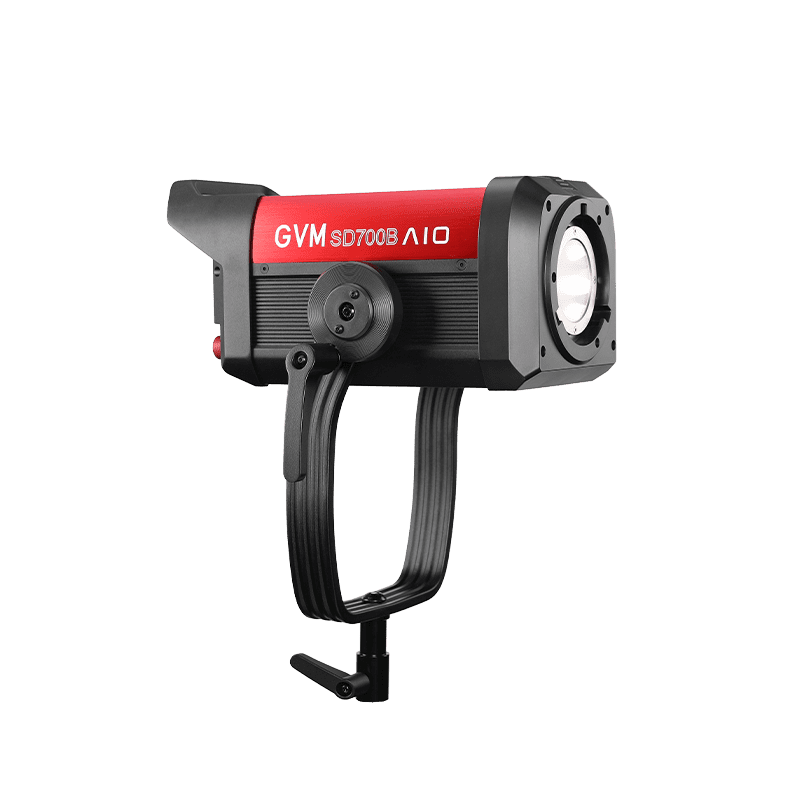
Why All-In-One Lighting Design Changes Production Efficiency?
Traditional high-power lighting systems often separate the lamp head, power supply, and control unit into multiple components.
This design can provide advantages in certain professional environments, but it also increases setup time and transportation requirements.
For smaller crews, every additional piece of equipment creates another step:
More cables.
More connections.
More preparation.
An all-in-one lighting design takes a different approach.
By integrating the power system and control components directly into the fixture, creators can reduce setup complexity while keeping professional-level output.
This does not mean sacrificing performance.
Instead, the goal is to remove unnecessary obstacles between the creative idea and the final image.
Testing Lighting Performance Beyond Specifications
When evaluating a professional LED fixture, brightness is only one part of the equation.
A practical test should consider several real-world factors:
Output With Different Modifiers
A light is rarely used completely bare.
Softboxes, lanterns, reflectors, and other modifiers are essential tools for shaping cinematic images.
A fixture with strong output gives creators more flexibility because it allows them to use larger modifiers while maintaining sufficient brightness.
This becomes especially important for interviews, commercial productions, and narrative scenes where soft but controlled lighting is required.
Color Accuracy and Consistency
Brightness creates visibility, but color creates realism.
For professional video production, inconsistent color can become a problem during editing and post-production.
High color accuracy allows skin tones, products, and environments to appear more natural without excessive correction.
Workflow Efficiency
A lighting system should support the production process rather than interrupt it.
Fast adjustment, simple operation, and reliable performance often determine whether a light becomes a favorite tool on set.
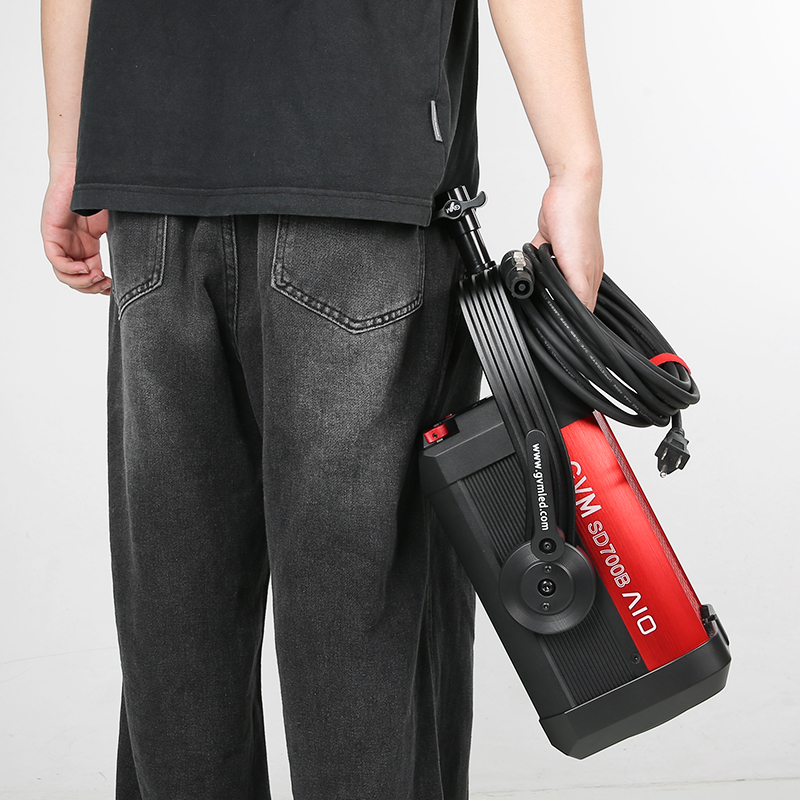
GVM SD700B AIO: A Practical Example of Balanced Lighting Design
Die GVM SD700B AIO represents this approach by combining high output, integrated design, and professional features in a single fixture.
As a 700W bi-color LED light, the SD700B AIO delivers powerful illumination while maintaining a compact all-in-one structure. It provides up to 26,200 lux at 3 meters with the standard reflector, along with a 2700K–6800K color temperature range and CRI/TLCI 97+ color accuracy.
One of its biggest advantages is the balance between performance and cost.
Compared with many lights in the same wattage category, the SD700B AIO offers a more accessible price point while maintaining professional-level output, making it a strong choice for creators looking for high value rather than simply chasing specifications.
For filmmakers building a studio, upgrading a production kit, or creating commercial content, this balance can make a significant difference.
A powerful light is valuable. A powerful light that is affordable and easy to use is even more practical.
| Merkmal | GVM SD700B AIO (Bi-Color) |
| Am besten für | Film Production, Broadcast, Commercial & Professional Studio |
| Leistung | 700W High-Output COB LED |
| Color Temp | 2,700K – 6,800K |
| Color Modes | CCT + Source Matching + Lighting Effects |
| CRI / TLCI | 97+ / 97+ |
| Spezialeffekte | Built-in Cinematic Lighting Effects |
| Helligkeit | Up to 28,900 Lux @1m (Open Face) |
| Tragbarkeit | All-In-One Integrated Design with Built-in Controller |
| Steuerungstyp | APP + Bluetooth + On-Board Control + DMX/RDM Support |
| Dimmen | 0–100% Stepless Flicker-Free Dimming |
| Typ montieren | Bowens-Montage |
| Stromquelle | AC Power (100–240V) |
Faster Setup Means More Time for Creativity
On real production sets, time is always limited.
A lighting adjustment that takes several minutes may seem insignificant, but repeated throughout a full shooting day, those small delays add up.
The integrated design of the GVM SD700B AIO helps simplify this process.
Without a separate control box or complicated setup procedure, creators can position the fixture, adjust brightness, and shape the scene more efficiently.
This makes it a great choice for projects where time and flexibility matter, from interviews and commercial videos to studio content, independent films, and on-location shoots.
The most useful lighting gear is not always the one with the most advanced features. Sometimes, the best tool is the one that works so naturally that creators can spend less time thinking about the equipment and more time focusing on the story they want to tell.
Final Thoughts: The Future of Professional Lighting Is About Balance
Modern filmmaking is changing.
Large productions will always require advanced lighting systems, but many creators today need something different: professional performance combined with practical operation.
The future of LED lighting is not only about creating more power. It is about making that power easier to control, easier to transport, and easier to integrate into real workflows.
A successful key light for videography should provide enough output to shape the scene, enough flexibility to adapt, and enough simplicity to keep creativity moving.