Lighting is one of the first things to consider when building a video setup.A camera can record a sharp image, but it cannot decide how a subject should look. The direction, intensity, color, and quality of light all influence the final result. This becomes especially important when shooting interviews, product videos, portraits, or content in small spaces.
For creators who work in different locations, a portable LED panel light can be particularly useful. Compared with larger studio fixtures, panel lights are easier to position and transport while still providing enough control for everyday production.
But portability alone is not enough. A useful lighting fixture should also adapt to different shooting situations.
So, what should you look for when choosing a portable LED panel light?
Inhaltsverzeichnis
What Makes a Good Portable LED Panel Light?
Choosing a light is not just about looking at the power rating or picking the one with the most features. What really matters is how well it fits the way you shoot. A good light should give you enough control without making the setup unnecessarily complicated.
1. Adjustable Color Temperature
Lighting conditions can change from one location to another. Daylight from a window may be relatively cool, while a room filled with warm practical lights can create a completely different look.
This is where adjustable color temperature becomes useful. You can match the light to the environment or use a warmer or cooler setting to shape the mood of the shot.
For everyday video work, a bi-color light is a practical choice. It gives you room to adjust without having to carry several different fixtures.
2. Enough Output for Real Shooting Conditions
A light may look powerful on paper, but what matters is how it performs once you actually put it to work.
The shooting distance, room size, diffusion, and modifiers can all affect the amount of light that reaches your subject. A fixture that works perfectly in a small room may feel underpowered when the subject is several feet away.
That is why wattage should not be the only thing you look at. Having some extra output gives you more breathing room—you can always turn a powerful light down, but you cannot push a weak light much further.
3. Color Accuracy Matters
More brightness does not automatically mean better images.
When shooting people, especially interviews, portraits, or commercial content, natural-looking skin tones are important. High CRI and TLCI ratings can give you a useful reference when comparing lights, but consistency across different brightness levels matters too.
Ideally, the light should make the camera’s job easier, not leave you fixing color problems later.
4. Easy to Set Up and Carry
This is easy to overlook when choosing equipment.
A light may perform well, but once you add a stand, cables, power supply, modifiers, and other accessories, the setup can become surprisingly bulky. If you regularly shoot in different locations, carrying all of that around gets old quickly.
A compact, easy-to-manage design can make a real difference. You spend less time putting equipment together and more time thinking about the shot itself. For mobile creators, that convenience is not a small detail—it can shape the entire workflow.
One Light Can Cover More Situations Than You Expect
A common beginner approach is to buy different lights for different purposes.
One light for interviews. Another for portraits. Something else for product photography.
That can work in a large studio, but it is not always practical for creators working with limited space or traveling between locations.
A more flexible approach is to choose a fixture that can adapt to several roles.
For example, a single light can serve as a key light for an interview, a soft source for a talking-head video, or a stronger directional source for product work. The setup changes, but the basic fixture remains the same.
This is where versatility becomes important.
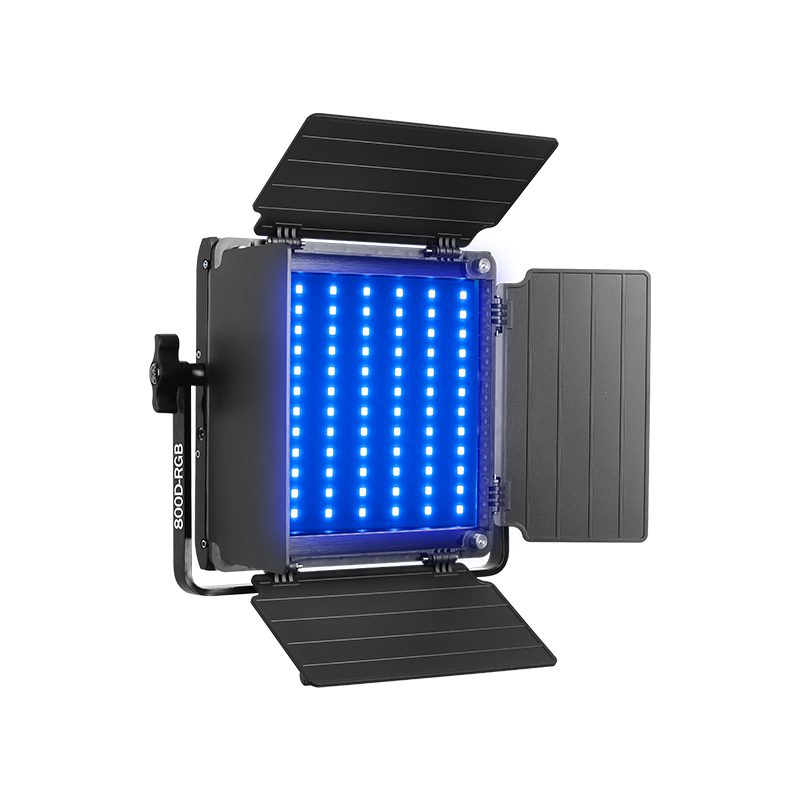
GVM 800D III: A More Flexible Approach to Panel Lighting
Die GVM 800D III is designed around this idea.
As a compact lighting solution, it combines Bi-Color adjustment, RGB lighting, high color rendering, and wireless smart control in one fixture. Instead of being limited to one specific type of production, it can adapt to different creative environments.
Its biggest advantage can be understood through three words: versatile, professional, and portable.
The Most Versatile
The 800D III is built to handle more than one lighting task.
Its Bi-Color function allows creators to adjust the light according to different ambient conditions, while RGB capability adds another layer of creative control when a more stylized look is required.
That means the same fixture can move between practical lighting and creative lighting without changing the entire setup.
For example, a neutral setting may be appropriate for an interview, while RGB can be introduced as an accent light behind the subject. The difference does not have to come from a complicated lighting system. Sometimes one additional color is enough to change the atmosphere of a scene.
The Most Professional
Professional lighting is not simply about producing more brightness.
Consistency, color quality, control, and repeatability are equally important.
The 800D III combines high color rendering with wireless smart control, giving creators more precise control over the lighting process. This becomes useful when the light needs to be adjusted repeatedly during a shoot.
A professional setup should make changes predictable. Once the lighting is dialed in, you should be able to reproduce the look rather than rebuild it from scratch.
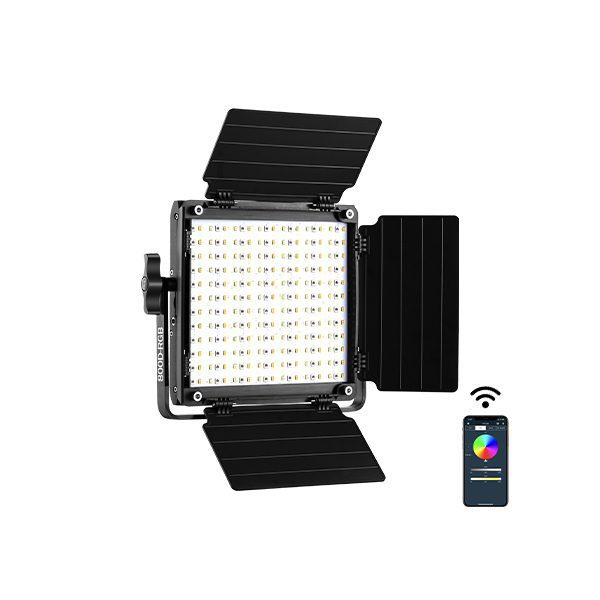
The Most Portable
Portability becomes especially important outside a permanent studio.
A lighting fixture may perform perfectly in a controlled environment, but if it is difficult to transport, assemble, or reposition, its practical value decreases.
The 800D III takes a more compact approach, making it easier to integrate into mobile production setups. It can be used in smaller spaces where a larger fixture may be unnecessary or difficult to position.
For creators who move between home studios, offices, client locations, and outdoor environments, this kind of flexibility can make the lighting workflow considerably simpler.
| Merkmal | GVM 800D III |
| Am besten für | YouTube, Portraits & Video Production |
| Leistung | 40W |
| Color Temp | 3,200K – 5,600K |
| Color Modes | Bi-Color + RGB |
| CRI / TLCI | 97+ / 97+ |
| Helligkeit | Up to 2,930 Lux @ 1m |
| Spezialeffekte | 20 Built-in Lighting Effects |
| Color Control | 360° HSI + 0–100% Saturation |
| Tragbarkeit | Compact Design, 10.6″ × 10.3″ × 1.5″ |
| Steuerungstyp | APP + Master-Slave Control |
| Stromquelle | AC / NP-F Battery |
How to Position a Portable LED Panel Light
Once you have the right fixture, placement becomes the next challenge.
The easiest starting point is usually to place the main light slightly to one side of the subject and above eye level.
This creates direction without making the face appear completely flat.
If the light is positioned directly in front of the subject, the result can look clean but relatively flat. Move it too far to the side, however, and the contrast may become too strong.
There is no single correct position. The important part is to watch how the light falls across the face.
For interviews, a moderate angle often works well. For product photography, the light may need to move higher or farther to reveal shape and surface texture.
Small changes in distance can also make a noticeable difference.
Moving a light closer generally increases its intensity on the subject and can make the source appear larger relative to the subject. Moving it farther away produces a different balance between coverage and intensity.
Learning to control these relationships is often more valuable than simply adding more equipment.
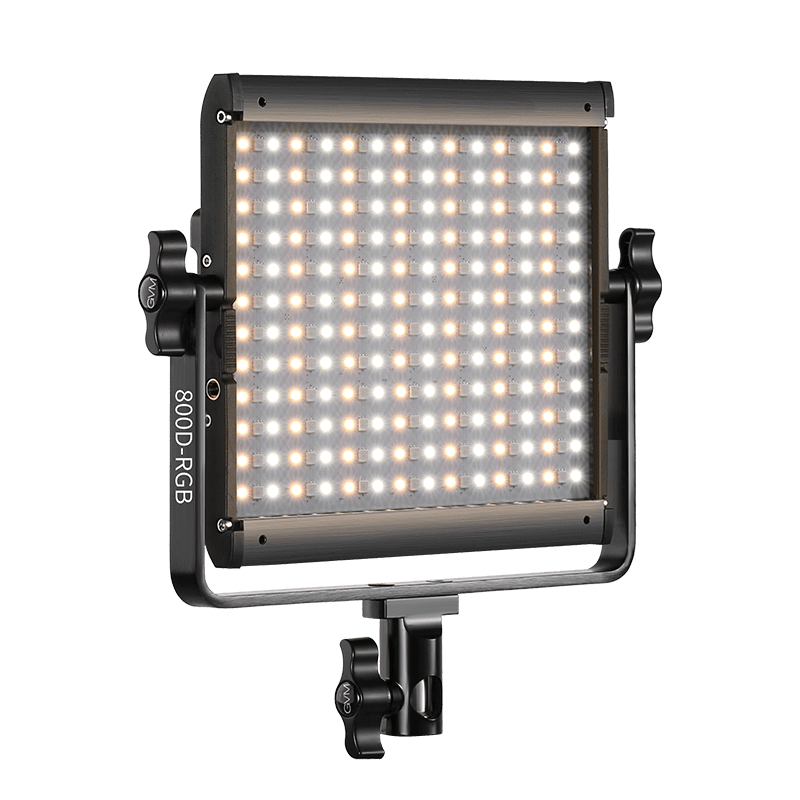
Use the Existing Environment Instead of Fighting It
Another useful technique is to observe the available light before turning on your fixture.
A window, ceiling lamp, practical light, or even a bright wall can influence the final image.
Instead of trying to overpower everything in the room, consider using the existing light as part of the composition.
For example, a portable LED panel light can act as the key light while a window provides background separation. In another situation, the existing room light can remain visible while the LED panel adds controlled illumination to the subject.
This approach usually creates a more natural result and reduces the amount of equipment required.
A Simple Lighting Setup for Video Creators
You do not always need a complicated three-point lighting system.
For many talking-head videos, interviews, and online content, one well-positioned key light can already establish the basic structure of the image.
Start with the subject.
Then decide where the viewer’s attention should go.
Place the main light accordingly and adjust its height, angle, distance, and intensity. If the background feels too flat, a small amount of RGB light can introduce separation without requiring another large fixture.
The goal is not to make the lighting complicated.
The goal is to make the image intentional.
Abschließende Gedanken
Choosing a lighting fixture is ultimately about finding the right balance between performance, control, and practicality.
A powerful light is useful, but power alone does not solve every production problem. Color flexibility, accurate rendering, portability, and easy control can be just as important when working in real shooting environments.
For creators who need one fixture that can move between different types of production, the GVM 800D III offers a practical combination of these qualities. Its Bi-Color and RGB capabilities provide creative flexibility, while its compact design makes it suitable for mobile setups.
The best lighting equipment is not necessarily the largest fixture in the room.
Sometimes, it is the one that can quietly adapt to whatever the next shot requires.