A professionelle Studiobeleuchtungseinrichtung is the foundation of every high-quality photo or video production, but for photographers just starting out, the idea of “professional lighting” can feel overwhelming. Terms like bi-color, CRI, DMX, and monolight get thrown around constantly, leaving beginners unsure of where to even begin.
The good news is that building a professional-grade lighting setup doesn’t require years of experience or an unlimited budget. With the right foundational knowledge and a few key pieces of equipment, any beginner can create studio-quality lighting for portraits, product photography, or video work. Today breaks down exactly what a professional setup means, what gear you need, and how to put it all together.
Inhaltsverzeichnis
What Is a Professional Studio Lighting Setup?
At its core, a professional studio lighting setup refers to a combination of light sources, modifiers, and control systems that let a photographer or videographer shape light with precision. This typically includes a key light, fill light, and sometimes a background or rim light, along with modifiers like softboxes or umbrellas to control how harsh or soft the light appears.
What separates a “professional” setup from a basic one isn’t necessarily the number of lights — it’s the level of control. Professional-grade lights offer precise color temperature adjustment, high color accuracy (CRI/TLCI ratings of 95 or higher), and stepless dimming, so photographers can fine-tune every detail of a shot rather than settling for whatever a fixed-output light provides.
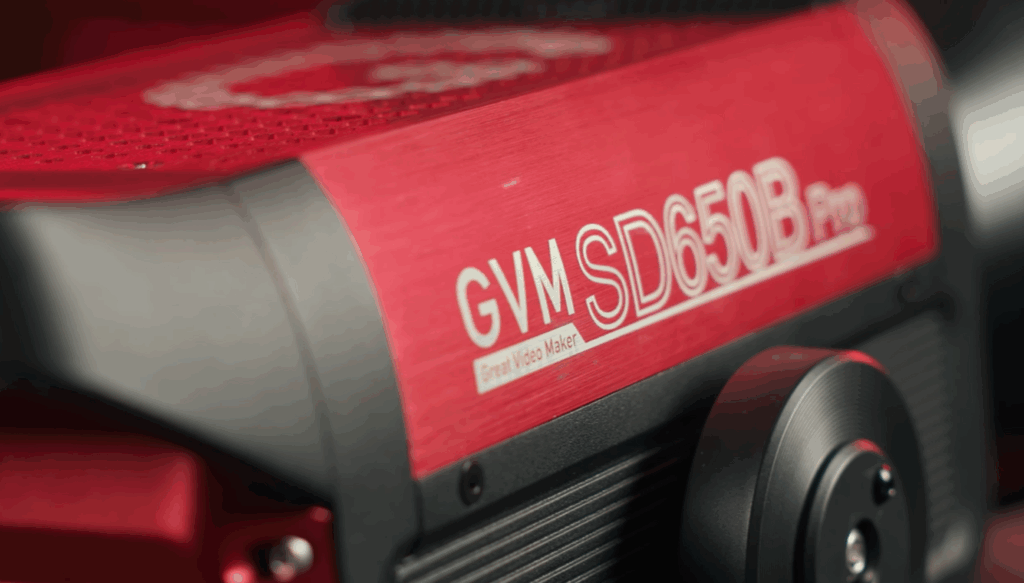
Professional Studio Lighting Setup for Beginners: Where to Start
For beginners, the most common mistake is trying to buy too much gear too soon. A professional studio lighting setup for beginners should start small and build outward as skills and needs grow. Here’s a practical starting sequence:
- One key light with adjustable color temperature (bi-color, roughly 2700K–6800K) to handle both warm and cool lighting scenarios.
- A softbox or diffusion modifier to soften harsh direct light for flattering portraits.
- A light stand and basic mount (Bowens mount is an industry standard for compatibility with accessories).
- A second light or reflector once budget allows, to fill in shadows and add depth.
Beginners should prioritize color accuracy and dimming precision over raw wattage at first. A lower-wattage light with excellent CRI and smooth 1/1000-step dimming will produce far better results than a high-power light with inconsistent color rendering.
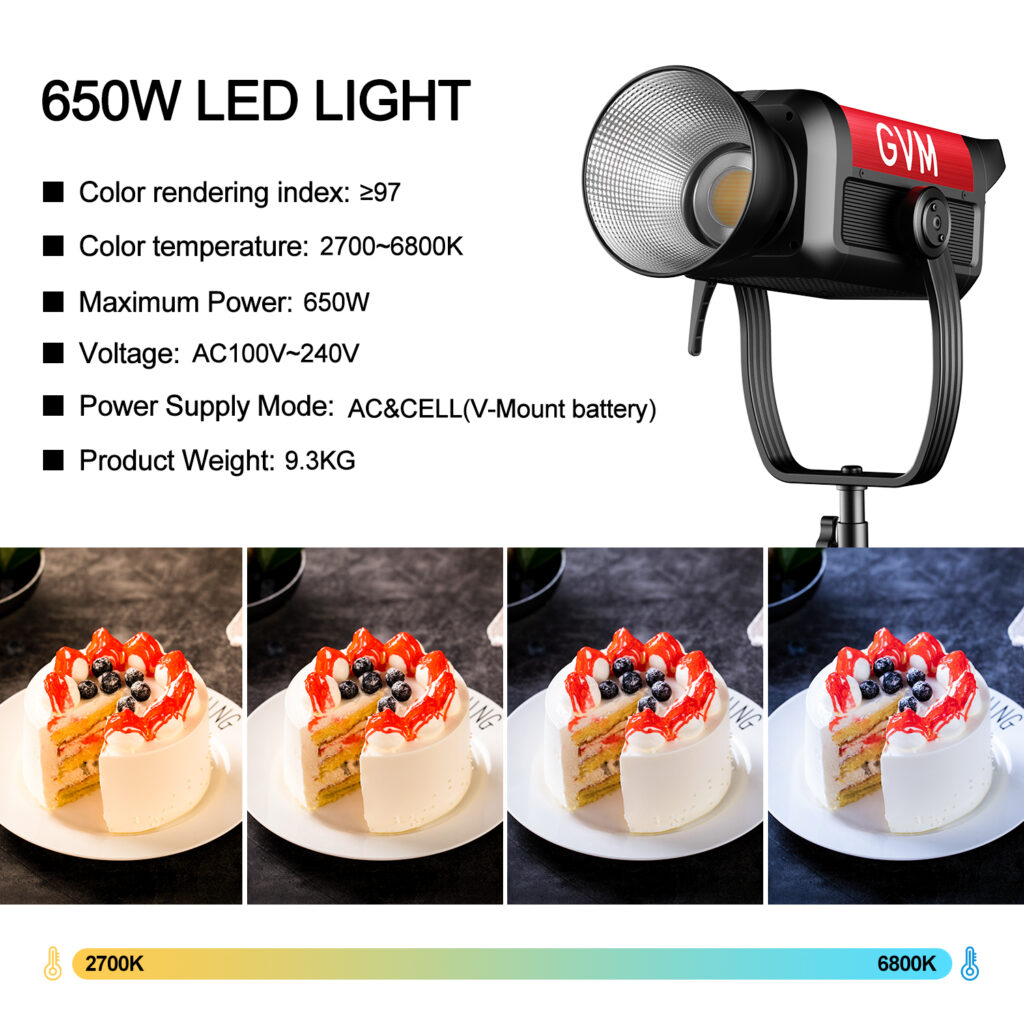
Professional Studio Lighting Kit: GVM PRO-SD650B
Once a beginner is ready to invest in a serious Professionelles Studiobeleuchtungsset, the GVM PRO-SD650B is a standout option. This 650W waterproof bi-color monolight is designed to give creators studio-grade output with the flexibility to move between indoor and outdoor shoots.
The PRO-SD650B delivers up to 81,300 lux at 1 meter, paired with CRI and TLCI ratings of 97+ for true-to-life color accuracy across its full 2700K–6800K bi-color range. Its 1/1000-step dimming precision, combined with four advanced dimming curves, gives beginners room to grow into more advanced lighting techniques without needing to upgrade equipment right away.
Control flexibility is another major advantage for beginners still learning their workflow. The light can be adjusted directly on the ballast, through the GVM mobile app, or via 5-pin DMX — meaning a photographer can start with simple onboard controls and graduate to app-based or DMX control as their setup grows more complex.
On-location example: during a recent studio interview shoot, a small crew needed to reposition their key light quickly between takes without losing color consistency. Using the app control on a PRO-SD650B-style monolight, they adjusted brightness and color temperature in seconds from across the room — avoiding the disruption of physically handling the light between setups.
| Merkmal | Specification / Benefit |
|---|---|
| Energie | 650 W |
| Light Output | 81,300 lux at 1m (standard reflector) |
| Farbtemperatur | 2700K–6800K, Bi-Color |
| Farbgenauigkeit | CRI 97+ / TLCI 97+ |
| Dimmen | 1/1000-step precision, 4 dimming curves |
| Lichteffekte | 12 built-in cinematic effects (Lightning, Fire, TV, Paparazzi, etc.) |
| Light Presets | 12 built-in presets (Candlelight, Daylight, HMI, etc.) |
| Steuerungsoptionen | Onboard ballast, mobile app, 5-pin DMX, Bluetooth mesh |
| Kühlung | Intelligent, high-speed, whisper-quiet |
| Gestaltung | Waterproof, V-mount battery compatible, Bowens mount |
| Am besten für | Studio productions, product photography, livestream, on-location work |
For beginners planning to shoot outdoors occasionally, the waterproof housing is a meaningful advantage — a light rain or humid environment won’t derail a scheduled shoot the way it would with non-weatherproof gear.
Professional Studio Light Box: Choosing the Right Softbox
A light source alone isn’t enough — modifiers shape how that light interacts with your subject. A Professionelle Studio-Lichtbox (softbox) is one of the most important accessories a beginner can add to their kit, since it softens and spreads light for flattering, even illumination.
Common softbox options to consider include:
- Quick Deploy Softboxes — fast setup and breakdown, ideal for beginners who want efficiency without sacrificing quality.
- Lantern-style softboxes — produce a wraparound, diffused light great for portraits and product photography.
- Standard rectangular or octagonal softboxes — versatile for both key and fill lighting roles.
When paired with a Bowens-mount monolight, softboxes and other modifiers like barndoors or projection attachments can be swapped quickly, letting beginners experiment with different lighting looks without buying multiple lights.
Professionelle Studiobeleuchtung für Produktfotografie
Product photography has its own specific lighting demands, since accurate color reproduction directly affects how a product appears to potential customers. A Professionelle Studiobeleuchtung für Produktfotografie typically uses two to three lights: a key light with a softbox for even illumination, a fill light or reflector to reduce shadows, and sometimes a background light to separate the product from its backdrop.
Using a high-CRI monolight like the PRO-SD650B ensures product colors — fabric tones, packaging colors, material finishes — render accurately, which is critical for e-commerce and catalog photography. The precise dimming control also allows photographers to fine-tune brightness levels between multiple lights, avoiding blown-out highlights or muddy shadows on reflective or textured products.

Häufig gestellte Fragen
What equipment do I need for a basic professional studio lighting setup?
At minimum, you’ll need one adjustable bi-color light, a softbox or diffuser, and a light stand. As your setup grows, add a second light and reflectors for more control over shadows and depth.
Is a 650W monolight too powerful for beginners?
Not necessarily. Higher wattage simply gives you more headroom and precise dimming allows you to scale output down easily, so a powerful light can still work well for beginner setups while leaving room to grow into more demanding projects.
What’s the difference between onboard, app, and DMX control?
Onboard control uses physical knobs on the light itself, app control lets you adjust settings remotely from a smartphone, and DMX control allows multiple lights to be synchronized for professional, multi-light setups.
Do I need a waterproof light for studio work?
Not for pure studio work, but a waterproof design adds valuable flexibility if you ever shoot outdoors or in humid environments without needing separate gear.
Schlussfolgerung
Building a professional studio lighting setup doesn’t have to be complicated or expensive when you start with the right fundamentals: accurate color, precise dimming, and the flexibility to add modifiers as your skills grow. A capable bi-color monolight like the GVM PRO-SD650B, paired with the right softbox, gives beginners a genuine professional-grade foundation — one that scales from portrait work to demanding product photography without needing constant upgrades. Start with the essentials, master your light, and expand your kit as your creative needs evolve.