video lighting has become the single most important factor in determining production value. In 2026, the industry has transitioned away from simply “adding more light” toward “crafting the right light.” Whether you are a solo content creator or a professional cinematographer, the best video lighting is no longer defined by raw brightness alone, but by color accuracy, ultra-high CRI ratings, and the ability to control output with surgical precision.
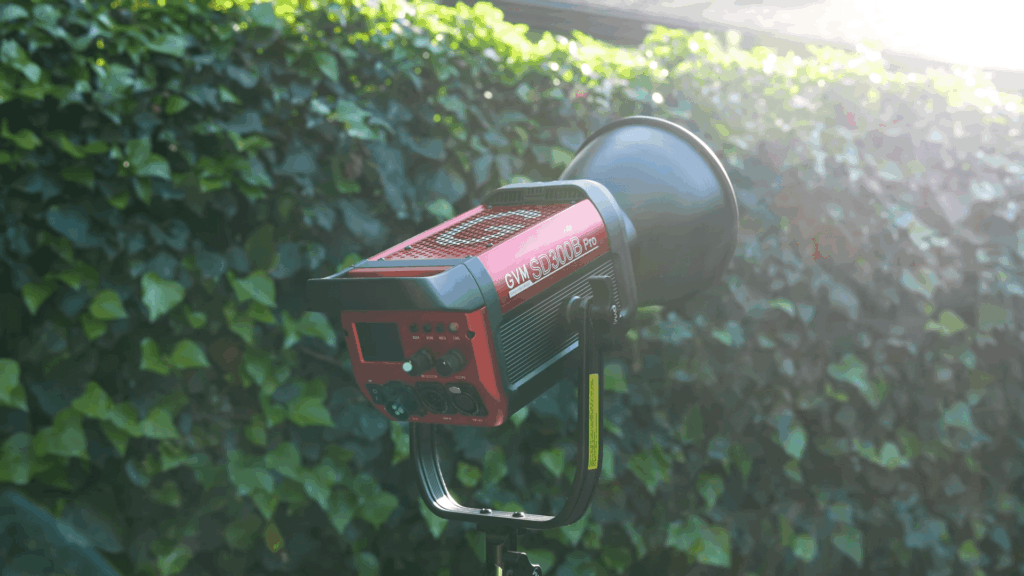
This guide explores the essential categories of lighting equipment, helping you identify the specific tools required to elevate your visual storytelling to world-class standards.
Professional Video Lighting Kits: Precision and Performance
For high-end commercial productions and dedicated studio environments, professional video lighting kits must meet rigorous technical benchmarks. In 2026, the professional standard is defined by high-fidelity color rendering and advanced thermal management.
The Standard for Professional Color Accuracy
In 2026, professional-grade video lighting is defined by its ability to render colors with absolute fidelity. While a CRI (Color Rendering Index) and TLCI (Television Lighting Consistency Index) of 97 or higher are now the industry baseline, the focus has shifted toward the precision of the light engine itself.
Utilizing advanced RGBWW light engine technology, these professional fixtures ensure that skin tones remain natural and vibrant, drastically reducing the time required for complex color grading in post-production. With the ability to deliver massive outputs—reaching up to 65,700 lux at 1 meter—while maintaining 360-degree hue control and over 16 million possible colors, modern lighting provides the consistent, high-fidelity results required for high-end studio sets and cinematic narratives. This level of accuracy ensures that “what you see” on set is exactly what you get in the final edit.
Advanced Control Systems
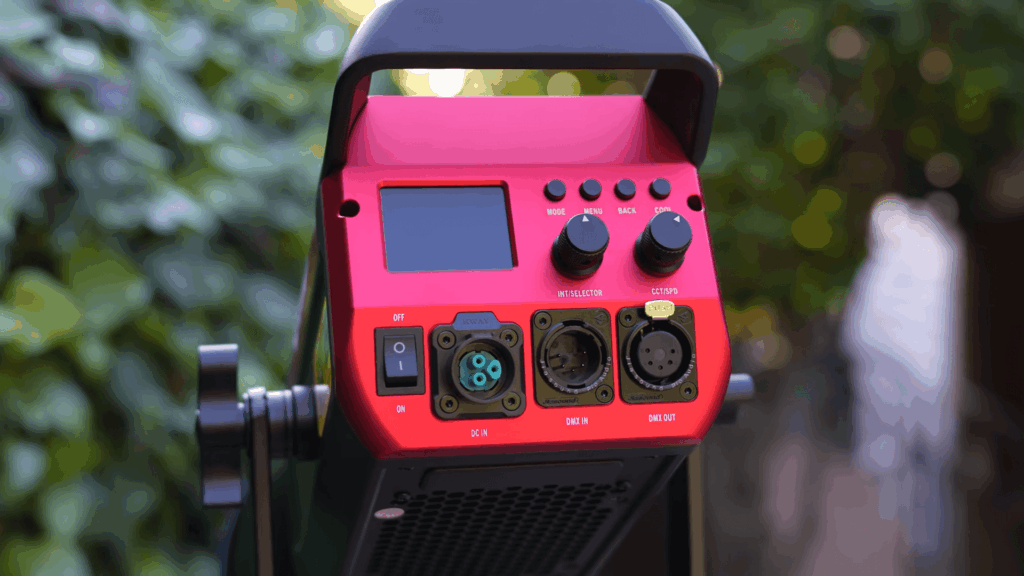
Modern professional video lighting kits often feature high-precision internal circuitry that allows for thousand-step dimming ( 0.1% to 100%). This level of granularity is essential for high-frame-rate cinematography, ensuring that the light remains flicker-free even when dimmed to extremely low levels. Furthermore, professional kits utilize aluminum alloy heat dissipation systems, ensuring that high-output panels can run for hours without thermal throttling or color shifts.
- When building a top-tier kit, prioritize high-performance panels ranging from 45W to 75W that utilize advanced RGBWW light engines. These professional fixtures unlock endless creativity by offering a full 360-degree color spectrum. This gives filmmakers surgical control over specific hue values, saturation, and output intensity—providing over 16 million possible colors to bring any creative vision to life. For maximum efficiency on set, ensure your selection includes integrated wireless App control for seamless multi-light synchronization.
Video Lighting for Photography: The Hybrid Evolution
The line between cinematography and still photography has blurred. Today, video lighting for photography—specifically continuous LED lighting—is often preferred over traditional strobes, especially for e-commerce and portraiture.
The WYSIWYG Advantage
The primary benefit of using video lighting for still photography is the “What You See Is What You Get” (WYSIWYG) workflow. Photographers can see exactly where shadows fall and how reflections behave on a product’s surface in real-time. This is particularly critical in macro photography or when shooting reflective subjects like jewelry or glassware.
Soft Light and Directionality
When choosing video lighting for photography, the ability to diffuse the source is paramount. Large LED panels create a soft, wrap-around light that mimics the quality of a north-facing window. By using a three-point lighting setup (Key, Fill, and Backlight), photographers can create a cinematic depth in their stills that was previously difficult to achieve with continuous sources.
- Profi-Tipp: Use high-accuracy LED panels to ensure that the “color memory” of the product remains consistent between the video teaser and the high-resolution catalog photos.
Video Lighting for Beginners: Simplicity Without Sacrifice
For those just starting, the world of video lighting can seem overwhelming. However, in 2026, “beginner-friendly” no longer means “low-quality.” Modern entry-level video lighting for beginners focuses on ease of use and versatility.
The Three-Point Lighting Foundation
The best way for a beginner to start is with a dedicated 3-light kit. This usually includes:
- The Key Light: The primary source that illuminates the subject.
- The Fill Light: A secondary source used to soften shadows created by the key light.
- The Backlight (Rim Light): Positioned behind the subject to separate them from the background.
Why Remastered Technology Matters
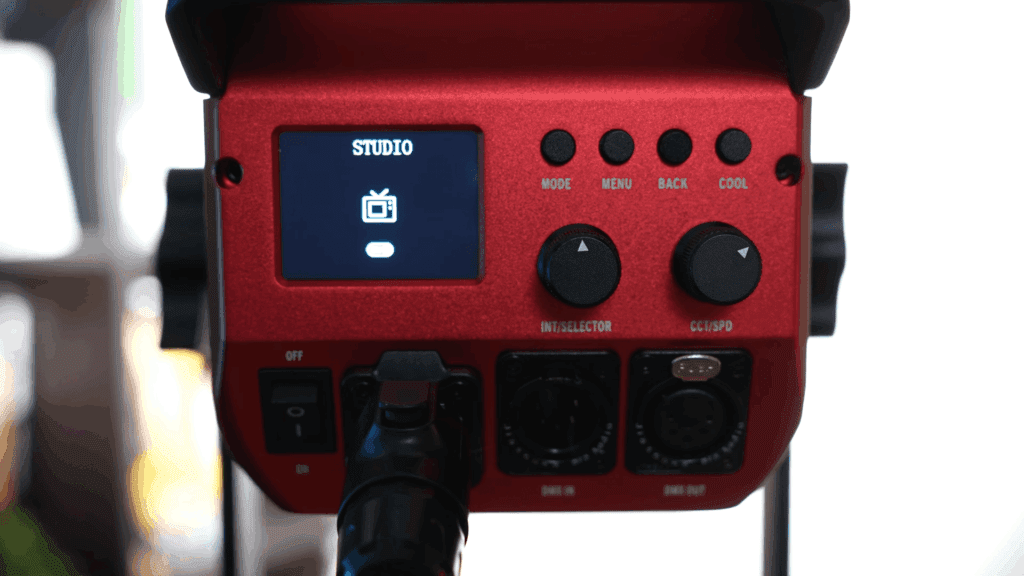
For those entering the industry, the best video lighting solutions now leverage advanced 3rd-generation LED technology to provide massive output in a compact form. Modern bi-color light engines, such as the GVM PRO SD300B, deliver an incredible 65,700 lux at 1 meter, offering professional-grade intensity that significantly flattens the learning curve.
With a versatile color range from 2700K to 6800K and high-fidelity CRI/TLCI ratings of 97+, these lights ensure consistent, true-to-life results for any project. Beyond raw power, beginners benefit from features like silent cooling und ultra-fine dimming for smooth, flicker-free performance. Additionally, the integration of App control and Bluetooth mesh networking allows new creators to manage complex multi-light setups with ease, making professional-grade film, studio, and livestream production more accessible than ever.
Best Portable Light for Video: Power on the Move
As location shoots become more common, the demand for the best portable light for video has skyrocketed. A portable solution must balance high output with a compact footprint and reliable battery performance.
Battery Versatility and Output
Die best portable light for video in 2026 must support dual power options. For indoor use, an AC adapter is standard, but for “run-and-gun” videography, support for V-mount or NP-F series batteries is non-negotiable. Leading portable panels are now optimized to deliver $100\%$ output even when running on battery power, ensuring that you don’t lose intensity when you step away from a wall outlet.
Rugged Build for Outdoor Environments
When considering an led video panel outdoor, the build quality must be industrial-grade. Lightweight aluminum housings not only provide durability but also act as a heat sink, allowing the light to operate in high ambient temperatures. Portable lights should also be slim enough to fit into standard padded carrying cases, making them the ideal choice for documentaries, wedding videography, and travel vlogging.
Final Verdict: Which Video Lighting is Right for You?
Choosing the best video lighting depends on the specific demands of your production environment:
- For Commercial Studios: Invest in professional video lighting kits that offer ( 0.1% to 100%) dimming precision and high $SSI$ scores for absolute color fidelity.
- For Product & Portrait Hybrid Work: Continuous video lighting for photography provides the most efficient workflow for real-time visualization.
- For New Creators: Start with video lighting for beginners that offers a 3-light setup and remastered LED technology for maximum versatility.
- For Location Shoots: Prioritize the best portable light for video with V-mount support and a high “Lux-to-weight” ratio.
In 2026, the quality of your lighting is the direct signature of your professionalism. By selecting equipment that offers high color accuracy and robust control, you ensure that your video content remains competitive and visually stunning for years to come.