A portable photography light used to mean a compromise — smaller output, fewer features, something you settled for when a proper studio setup wasn’t an option. That trade-off has mostly disappeared. Modern compact LED fixtures now pack the color accuracy, dimming precision, and creative controls that used to be exclusive to full-sized studio lights into bodies small enough to slip into a camera bag, which has quietly changed how a lot of photographers approach shoots that don’t happen in a fixed studio space.
Below is a look at why portability has become a real priority rather than an afterthought for working photographers, how a portable LED light stacks up against a strobe for mobile shooting, what it actually takes to keep a light powered when there’s no wall outlet nearby, and a specific fixture worth considering for photographers who shoot in more than one place.
Why Portable Lighting Is Replacing Bulky Studio Setups
The shift toward portable lighting isn’t just a preference for smaller gear — it reflects a real change in where and how photography actually happens now.
Fewer photographers work out of a single fixed studio. Home-based photographers, mobile portrait sessions, pop-up shoots, and content created across multiple locations in a single day have become far more common than the traditional model of clients coming to one studio address. A bulky, AC-dependent light simply doesn’t fit that workflow anymore.
Compact lights no longer mean compact performance. Advances in LED chip density and thermal management mean a modern portable fixture can output meaningfully more light per gram than equipment from just a few years ago, closing the gap that used to force photographers to choose between portability and usable brightness.
Setup time has become a real cost. A photographer booking back-to-back sessions in different locations loses real time — and often real money — to a light that requires a stand, a separate power box, and several minutes of assembly at each stop. A portable light that’s ready in seconds directly protects a tighter schedule.
Clients increasingly expect location flexibility. Outdoor engagement shoots, in-home portrait sessions, and on-location product photography have become standard requests, not exceptions — and a photographer whose lighting can’t follow them there is turning away a growing share of the market.
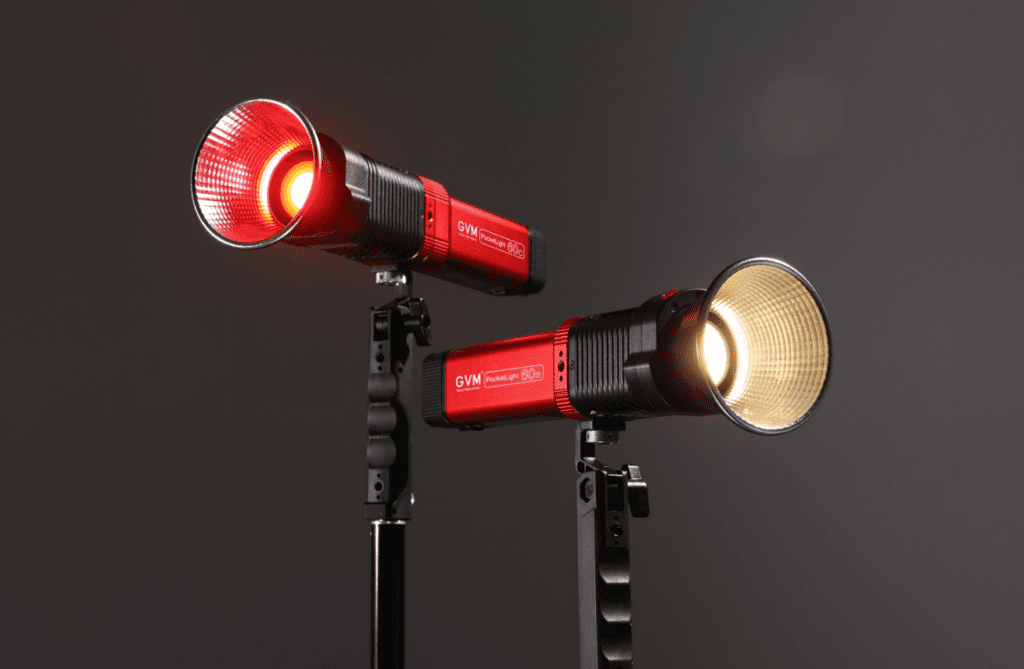
Portable Photography Light vs. Strobe: Which Suits Mobile Shooters
This comparison comes down less to which tool is “better” and more to which working style each one actually supports.
Strobes deliver a short, powerful burst of light, which makes them excellent for freezing motion and achieving very high output in a single instant — useful for fast-paced shoots or situations where overpowering bright ambient light matters more than anything else. But that burst-only nature means you can’t see your final lighting result until after the shot is taken, and strobes typically require more setup — light stands, modifiers, and often a separate trigger system — that works against genuine portability.
Continuous portable LED lights let you see exactly what you’re getting in real time, which matters enormously for mobile shooters who often don’t have the luxury of test shots and immediate review between setups. What you see through the viewfinder is close to what you’ll get in the final image, reducing the guesswork that comes with flash exposure.
Portable LEDs also double as video lights, which strobes fundamentally cannot. For photographers who increasingly need to deliver both stills and short video content from the same session — a common request now across portrait, product, and event photography — a continuous portable light does both jobs with one piece of gear instead of two separate systems.
Strobes still hold an output advantage in direct sun. For outdoor shoots that need to overpower harsh midday light specifically, a strobe’s burst power generally outperforms a continuous LED at equivalent size and weight. Mobile shooters working primarily outdoors in bright conditions may still want a strobe as their primary tool.
For most mobile photographers working a mix of indoor, outdoor, and hybrid photo-and-video sessions, a portable continuous LED light offers more day-to-day versatility, while strobes remain the stronger specialist tool for pure outdoor stills work in direct sunlight.
Powering a Portable Light Without Walls or Outlets
The single biggest practical challenge with location shooting isn’t the light itself — it’s keeping it running once you’re away from a reliable power source.
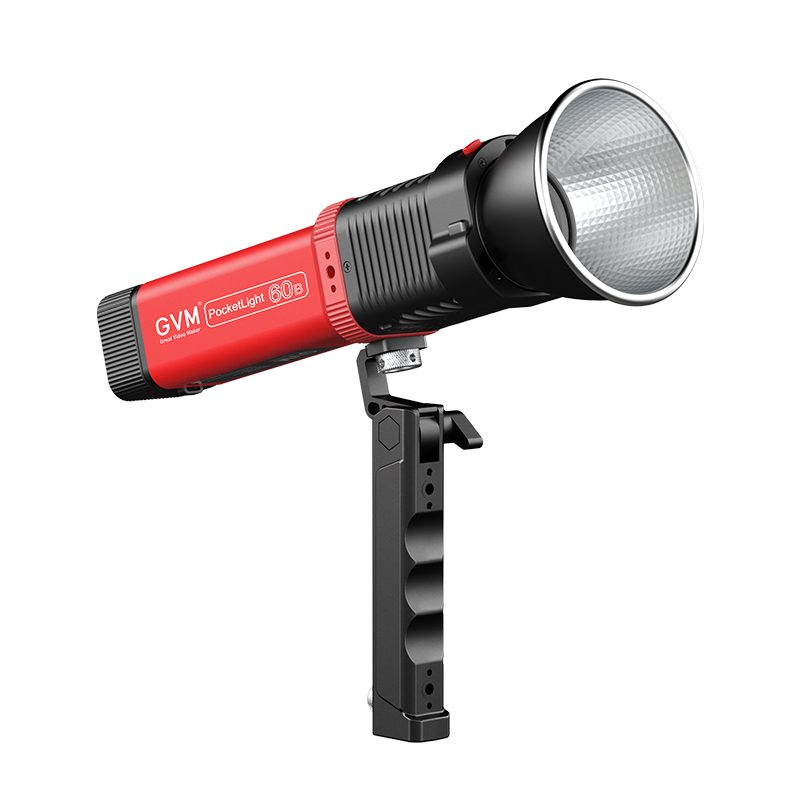
Built-in batteries remove the most common point of failure. A light with an internal battery doesn’t depend on remembering to pack a separate battery pack or cable, which matters on shoots where you’re already juggling camera gear, lenses, and client logistics.
USB-C charging changes what “backup power” actually means. A light that charges via USB-C PD can draw from the same portable power banks photographers already carry for their phones and laptops, rather than requiring a dedicated, proprietary charging accessory that’s one more thing to remember and one more thing to lose.
Runtime matters more than peak output for location work. A light that’s extremely bright but drains its battery in twenty minutes is less useful on a real shoot than one with moderate output and enough runtime to cover an entire session without a mid-shoot recharge scramble.
A light that can also charge other devices adds genuine practical value. On longer location days, a fixture that can top off a phone or camera battery in a pinch — rather than only consuming power — turns a single piece of gear into a small but useful part of your overall power management for the day.
Best Portable Photography Light for Photographers on the Move
For photographers who need genuine flexibility between location, indoor, and hybrid photo-video work, the GVM-PD60C is built specifically around the power and portability challenges described above.
It delivers a robust, consistent 60W of output — enough for close-up work through wide scene coverage — while also functioning as a 60W Type-C power bank, letting it charge a phone, camera battery, or other USB-C device between shots rather than sitting idle as a single-purpose tool. That dual functionality directly addresses the runway problem mobile photographers face: one compact fixture doing double duty as both a light source and a backup power source for the rest of your kit.
Color control goes well beyond basic bi-color adjustment. The PD60C integrates CCT, HSI, and RGBCW professional modes, supporting 2700K–6800K stepless color temperature adjustment alongside a full 360° hue spectrum and independent control over red, green, blue, cool white, and warm white channels — precision that’s typically reserved for larger studio fixtures. It also includes 60 digital gel filter presets inspired by classic cinematic color palettes, letting photographers recreate traditional gel looks with a tap rather than carrying physical gel sheets.
Power flexibility rounds out the design: a high-capacity built-in battery, USB-C PD fast charging, and compatibility with external PD power banks or V-mount batteries mean the PD60C adapts to whatever power situation a location actually presents, rather than requiring a single specific setup to function.
| Merkmal | Specification / Benefit |
|---|---|
| Modell | GVM-PD60C |
| Energie | 60W RGB LED |
| Farbtemperatur | 2700K–6800K stepless CCT |
| Color Modes | CCT, HSI, RGBCW independent channel control |
| Digital Gels | 60 built-in cinematic gel presets |
| Energieoptionen | Built-in battery, USB-C PD, external power bank or V-mount |
| Extra Function | Doubles as a 60W Type-C power bank |
| Berg | Standard 1/4″ screw, compatible with stands, clamps, rigs |
| Am besten für | Location photography, hybrid photo/video work, mobile shooters |
Schlussfolgerung
Portable photography lighting has stopped being a compromise and started being a genuine strategic advantage for photographers who work across multiple locations, mix stills with video, or simply can’t count on a wall outlet being nearby when a shoot demands one. Continuous LED lights offer real-time preview and dual photo-video functionality that strobes can’t match, while flexible power options remove the single biggest risk to a location shoot running smoothly. The GVM-PD60C brings professional-level color control and genuine power independence into a form factor built for photographers who need their lighting to keep up with wherever the work actually happens.
Ready to lighten your kit without losing capability? Erkunden Sie die GVM-PD60C to bring professional color control wherever your next shoot takes you.