The market for professional lighting equipment is enormous, and that’s part of the problem. Fixtures range from small 40W panel lights all the way up to monolights pushing well over a thousand watts, and they come in almost every form factor imaginable — flat panels, COB spotlights, flathead monolights, and integrated all-in-one units. For photographers and videographers building a kit on a budget, the sheer variety makes it hard to know where to even start.
Choosing budget professional lighting equipment
Before comparing specific fixtures, it helps to know which specs actually matter. A few parameters make the biggest difference in real-world use:
- CRI/TLCI rating — anything below 95 will show noticeably inaccurate skin tones and colors on camera.
- Color temperature range — bi-color fixtures (roughly 2700K–6800K) let you match daylight or tungsten sources without gels.
- Lux output at a set distance — compare lights using the same measurement distance, since manufacturers often quote different distances.
- Dimming type — stepless dimming avoids flicker and color shifts as brightness changes.
- Control options — app control, DMX, and Bluetooth mesh all matter more once you’re running more than one light.
How to adjust budget professional lighting equipment
Most modern panel and monolight fixtures share a similar workflow: color temperature and brightness are adjusted independently, either through onboard dials and an LCD screen or through a companion smartphone app. Many budget-friendly fixtures also include preset lighting effects (candle, TV flicker, lightning, and similar), which can be triggered instantly instead of being built manually with gels and manual dimming. For multi-light setups, master-slave or mesh control lets one fixture control several others at once, which keeps larger sets fast to adjust between shots.
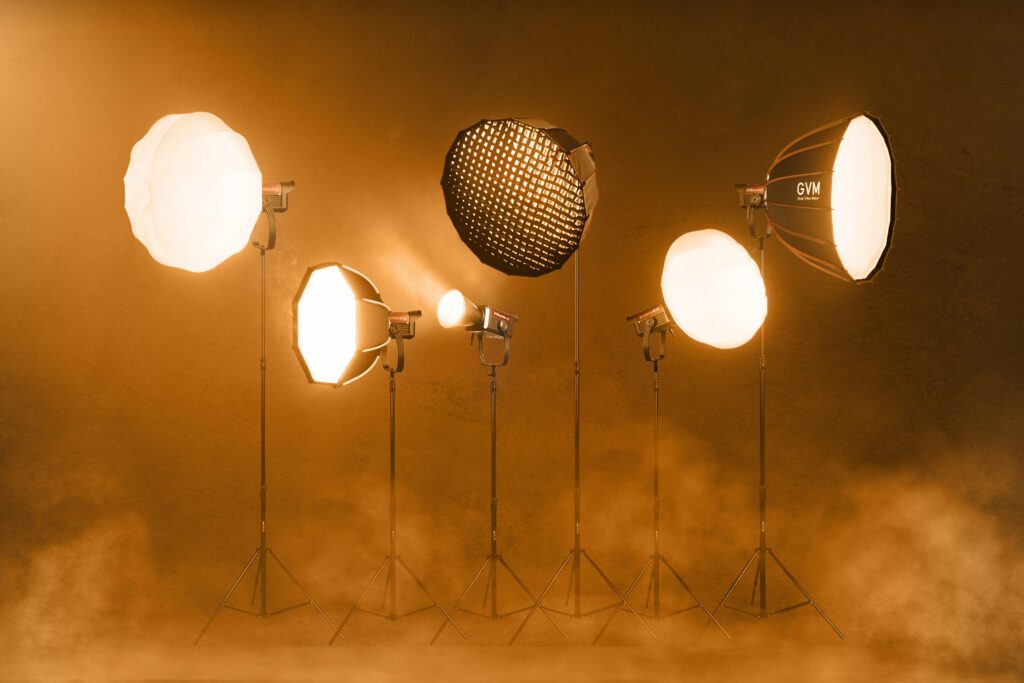
Panel lights for photography
Panel lights remain one of the most practical entry points into professional lighting equipment because of their slim profile and even beam spread. The GVM-800D is a strong budget example, offering both color temperature and full RGB hue/saturation control in a single 40W unit.
| Merkmal | Specification / Benefit |
|---|---|
| Energie | 40W |
| Farbtemperatur | 3200K – 5600K |
| CRI | ≥97 |
| HUE / Saturation | RGB 0°–360° / 0%–100% |
| Beleuchtungsstärke | 1,305 lux @ 1m / 4,990 lux @ 0.5m |
| Steuerung | Knob, Bluetooth app, master-slave |
| Effects | 18 scene lighting effects |
| Netzteil | AC/DC + battery operation |
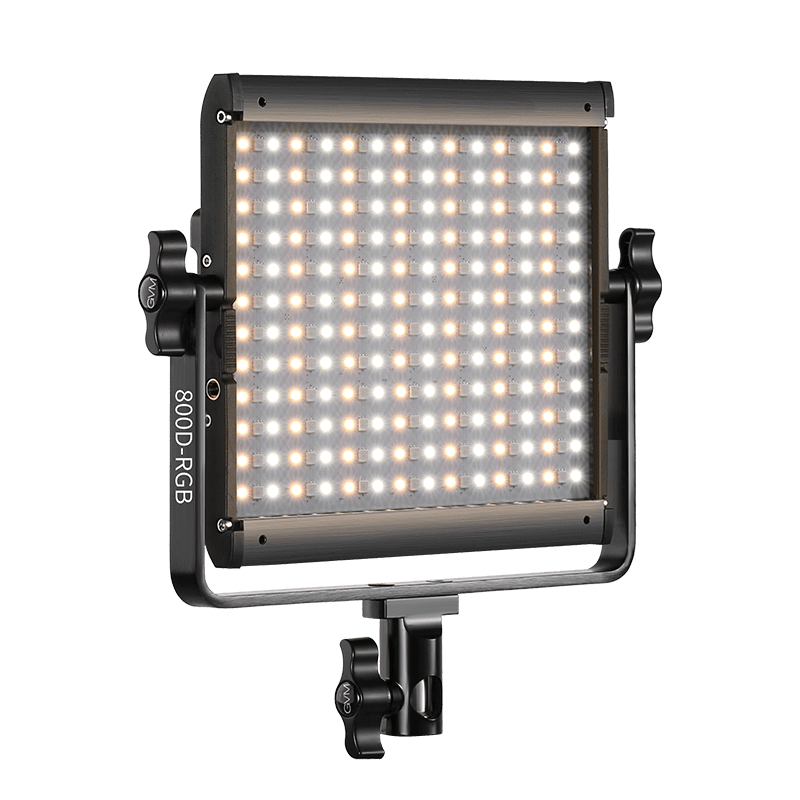
At $189, the 800D- covers most needs for live streaming, YouTube production, and studio or outdoor photography, with enough color flexibility for creative RGB looks alongside standard bi-color output.
Movie studio lights
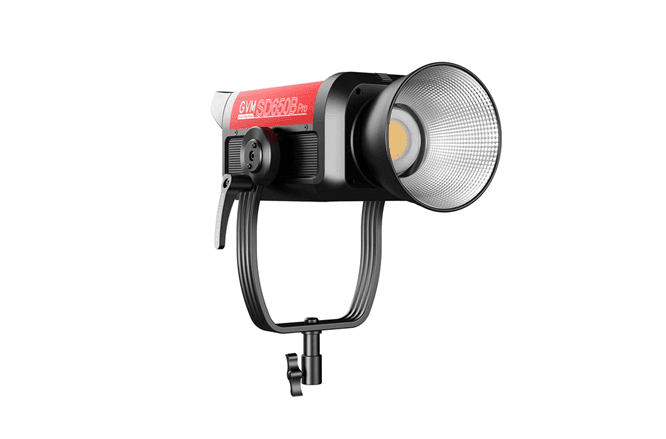
For larger productions that need real throw and consistent color across a whole scene, an integrated spotlight like the GVM SD700B AIO is a more appropriate step up. Its 700W bi-color LED engine delivers 97+ CRI/TLCI and up to 29,100 lux, with stepless dimming from 0.1% to 100% and 12 built-in cinematic effects.
| Merkmal | Specification / Benefit |
|---|---|
| Energie | 700W Bi-Color |
| Max Output | 26,200 lux @ 3m / 29,100 lux |
| Farbtemperatur | 2700K – 6800K |
| CRI/TLCI | 97+ |
| Steuerung | GVM App, 5-Pin DMX, CRMX wireless |
| Berg | Bowens |
| Gestaltung | All-in-one, compact, built-in handle |
Its all-in-one build means no separate power box to carry or cable to manage, which makes it faster to deploy on interview sets, film shoots, and virtual studios than fixtures with detached ballasts.
Monolight photography
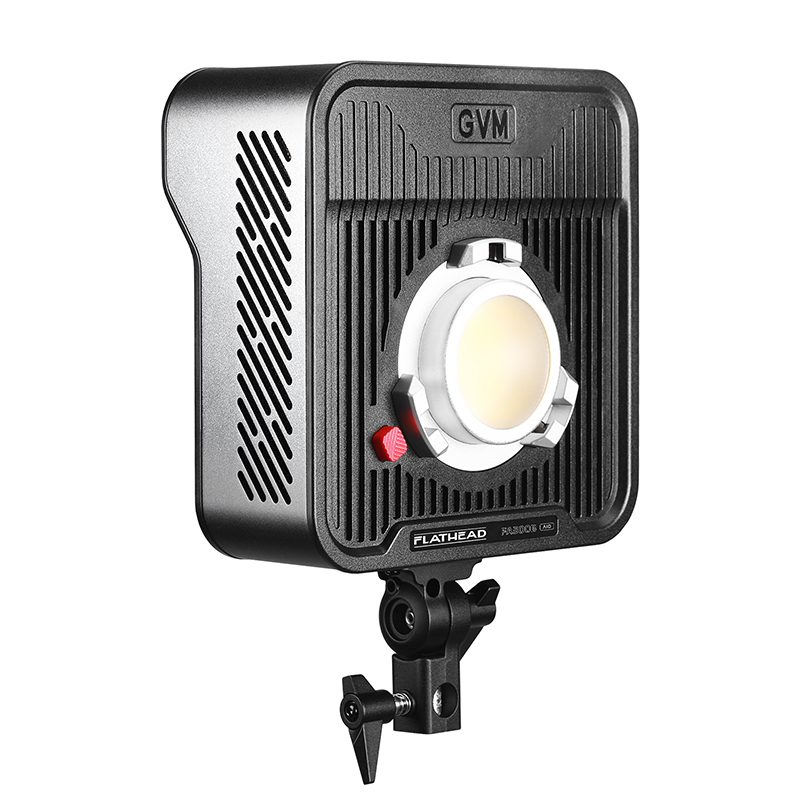
Monolights are built for maximum output in a compact housing, and the GVM FA500B AIO is a good example of a flathead monolight aimed at commercial and portrait work. It reaches an impressive 98,300 lux at 1 meter with an optional reflector, while keeping the same 2700K–6800K bi-color range and 12 FX modes found across GVM’s AIO line.
| Merkmal | Specification / Benefit |
|---|---|
| Produkttyp | Bi-Color LED Monolight |
| Gestaltung | Integrated flathead, all-in-one |
| Farbtemperatur | 2700K – 6800K |
| Beleuchtungsstärke | 98,300 lux @ 1m (with reflector) |
| Dimmen | Stepless, 0%–100% |
| Connectivity | Bluetooth mesh |
| Berg | Bowens |
| Kühlung | Intelligent quiet active cooling |
| Price | $499.00 |
The FA500B’s Bluetooth mesh networking makes it especially useful once a shoot scales past a single light, letting several fixtures stay synchronized without a separate DMX controller.
Choosing based on your needs
The right fixture ultimately depends on the job. A single 800D-II panel light is enough for a home streaming setup or a solo YouTube creator. Moving up to the SD700B AIO makes sense once you’re lighting full interview or film sets that need real reach and flicker-free consistency. For commercial, portrait, or multi-camera productions that demand maximum punch, the FA500B’s higher lux output and mesh control offer the most headroom without stepping into far more expensive studio strobe systems.
Schlussfolgerung
Building a kit of professional lighting equipment doesn’t require choosing the most expensive option available — it requires matching wattage, color accuracy, and control features to the actual production. Whether that’s a compact panel light like the 800D-II, an all-in-one spotlight like the SD700B AIO, or a high-output monolight like the FA500B, GVM’s lineup covers the budget-to-professional range without forcing a compromise on color accuracy or build quality.

FAQ
What wattage do I need for professional lighting?
40–60W panel lights suit close-range work like streaming or interviews, while 500–700W fixtures are better for larger rooms, group shots, or overpowering ambient light.
Is CRI more important than lux output?
Both matter, but CRI affects color accuracy in every shot, while lux affects how far and how brightly the light reaches — a high-lux, low-CRI light will still produce inaccurate colors.
Can budget lighting equipment still be used professionally?
Yes. Many budget-friendly LED fixtures now offer 95+ CRI, stepless dimming, and app control — the same core features found in far more expensive studio lighting systems.