A portable video light changes what’s possible for solo creators, streamers, and small production teams working outside a full studio. When a head video light is compact enough to travel but strong enough to fill a frame with clean, even light, it becomes the single most useful tool in a creator’s kit. This matters more now that talking head content, product photography, and livestream setups are being shot in bedrooms, offices, and rented spaces rather than dedicated studios.
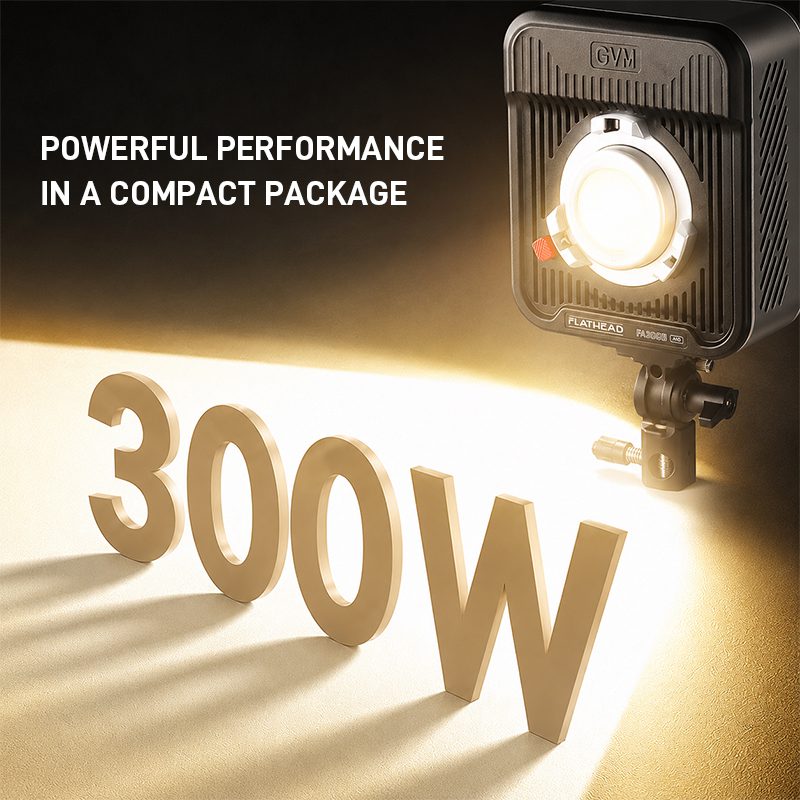
The demand for lights that pack small and perform big has pushed manufacturers toward panel-style, COB-based designs. These fixtures trade the bulky housings of older fixtures for flat, lightweight bodies without giving up brightness or color accuracy. Below is a practical breakdown of what to look for, organized around the features that actually matter when choosing a light for video work.
Inhaltsverzeichnis
Light Video Head Options Worth Knowing
Not every light video head fixture is built the same way. Some prioritize a slim housing for easy transport, others focus on raw output for larger rooms or outdoor fill work. A few things separate a genuinely useful head unit from one that looks good on paper:
- Form factor – flathead, panel-style designs distribute heat better and stack more easily in a bag than round or barrel-shaped housings.
- Mount compatibility – a standard mount (Bowens is the most common) opens up softboxes, grids, and reflectors down the line.
- Control access – onboard dials are fine, but app control through Bluetooth saves real time on multi-light setups.
Creators shooting interviews, YouTube videos, or product demos usually want a head unit that can sit close to the subject without overheating or creating a huge footprint on a small desk or tabletop tripod.
Portable COB Video Light Considerations
A portable COB video light works differently from traditional panel LEDs. COB (Chip-on-Board) technology concentrates many small diodes into a single point source, which produces a more focused, shadow-consistent beam — closer to how a traditional tungsten fixture behaves, but without the heat or power draw.
For anyone who moves locations often, portability isn’t just about weight. It’s also about setup time, cable management, and whether the unit needs a separate power brick or has an integrated power supply. Fixtures with built-in power supplies save a step every single setup, which adds up across a full shoot day.
Battery-friendly designs and lights under 5 lbs are the sweet spot for creators who travel between locations in a single day, whether that’s a rental studio, a client’s office, or an outdoor shoot.
COB Video Light Performance and Color Accuracy
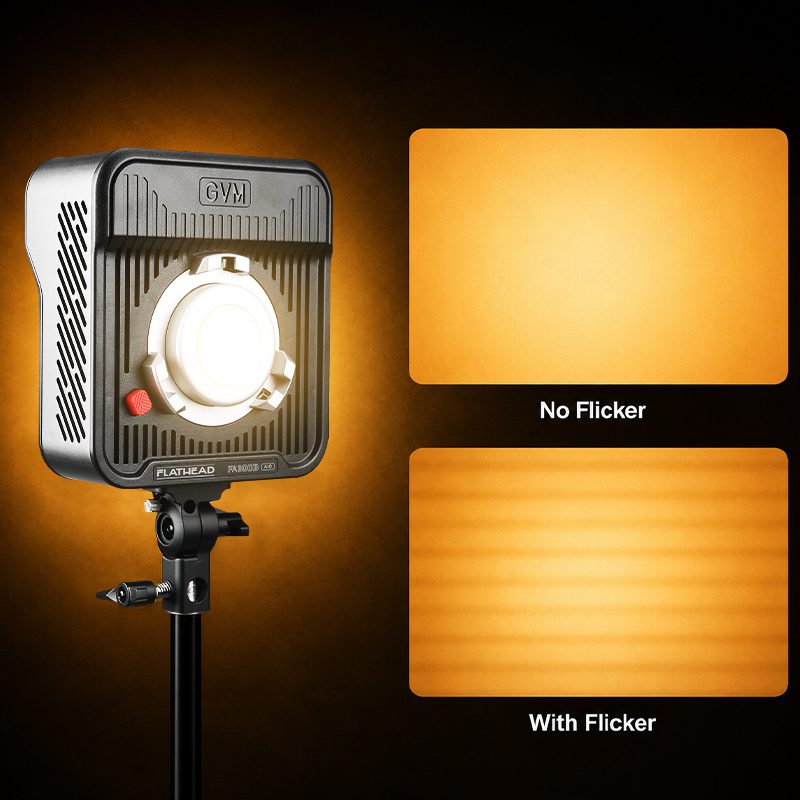
Beyond portability, a cob video light needs to deliver consistent color rendering across its full brightness range. Cheaper fixtures often shift color temperature or introduce flicker as brightness is dialed down — a serious problem for video, where inconsistency is visible frame by frame.
Look for:
- Wide, stepless dimming (0–100%) without visible flicker at any point in the range
- Adjustable CCT covering at least 2700K to 6500K, so the same light works for warm interviews and cooler daylight-matched scenes
- Built-in effects or presets that simulate real-world lighting conditions, useful for narrative or branded content without extra gear
These specs matter more than raw lumens for most video work, since a light that’s bright but color-inconsistent will need constant correction in post.
Powerful Video Light Output for Studio and On-Location Work
A powerful video light earns that label through consistent lux output at working distance, not just a headline number. Output measured with an optional reflector attached tends to be significantly higher than bare-bulb output, so it’s worth checking whether published specs include modifiers or not.
For studio and on-location production, output needs to hold up even when a light is bounced through a softbox or diffused through a scrim, since both cut usable brightness substantially. A fixture with strong baseline lux gives more room to shape the light without running out of power.
Active cooling systems also matter here — a light pushed to high output for hours needs a quiet, reliable cooling system that won’t introduce fan noise into on-camera audio, which is a common complaint with underpowered cooling in budget fixtures.
Best Lighting for Talking Head Video Setups
For creators specifically shooting talking head video — podcasts, YouTube commentary, interviews, corporate training content — the best lighting for talking head video setups usually combines two or three smaller heads rather than one large fixture. This gives more control over fill, key, and rim light without needing a large studio footprint.
A two-light kit with matched color temperature and dimming behavior removes the guesswork of pairing mismatched fixtures. Soft, diffused output from key and fill lights placed at 45-degree angles remains the standard for flattering, low-shadow talking head footage.
GVM FA300B: A Practical Option for Portable Video Lighting
For creators comparing options in this category, the GVM FA300B is worth a closer look. It’s built as an all-in-one, panel-style bi-color LED monolight, designed specifically around the portability and output balance covered above.
| Merkmal | Specification / Benefit |
|---|---|
| Gestaltung | All-in-one panel-style, lightweight and space-saving |
| Beleuchtungsstärke | Up to 71,400 lux @ 1m with optional reflector |
| Farbtemperatur | 2700K–6800K adjustable, warm-to-cool coverage |
| Dimmen | 0–100% stepless, flicker-free |
| Lichteffekte | 12 built-in effects for creative scene simulation |
| Preset Light Sources | 12 modes simulating real-world environments |
| Wireless Control | Mesh Bluetooth, multiple lights via one app |
| Berg | Standard Bowens mount for softboxes and modifiers |
| Kühlung | Active cooling, quiet operation on long shoots |
| Abmessungen | Approx. 7.76 × 4.8 × 3.82 in |
| Price | $299.00 USD |
Compared to fixtures from Godox or Aputure in a similar output class, the FA300B’s combination of high lux output, full CCT range, and mesh app control at this price point makes it a strong value pick. Two units set up as key and fill cover most talking head, livestream, and product photography setups without needing additional modifiers beyond a softbox or reflector.
For creators building a two-light setup for interviews or streaming, pairing two FA300B units gives matched color temperature and synchronized dimming through the app — solving the exact multi-light coordination problem raised earlier in this guide.
Schlussfolgerung
Choosing a portable head video light comes down to balancing output, color consistency, and how easily a fixture travels and sets up. Panel-style COB lights solve most of the tradeoffs that came with older LED and tungsten fixtures, and features like app-based mesh control make multi-light setups far simpler to manage.
Among the options available at this price and output range, the GVM FA300B stands out as the most cost-effective choice for creators who need reliable, portable lighting without paying for features they won’t use. As we explored in our guide to portable continuous lights for photography and video, a well-designed panel light can replace bulky tungsten kits while maintaining cinema-grade color accuracy. Whether the setup is a single-light interview rig or a two-light key-and-fill kit, it covers the core requirements of modern video production.