In the modern era of digital content creation, the barrier to entry for YouTube has never been lower, but the ceiling for quality has never been higher. Viewers are no longer satisfied with grainy, flat, or “home-movie” style visuals. They crave the “Hollywood look”—that polished, immersive, and professional aesthetic known as illuminazione cinematografica.
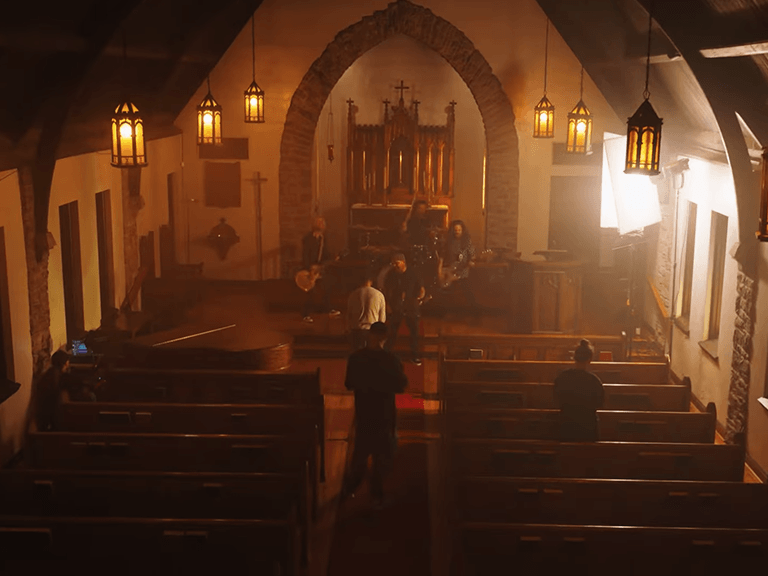
Whether you are a tech reviewer, a storyteller, or an educator, mastering the art of lighting is the single most effective way to elevate your production value. It is the difference between a video that looks like it was shot in a garage and one that looks like it belongs on a streaming platform. In this guide, we will break down everything from the fundamental definitions to a step-by-step easy cinematic lighting setup for YouTube videos.
What is Cinematic Lighting?
To understand how to achieve it, we must first answer the question: What is cinematic lighting? At its core, cinematic lighting is the strategic use of light and shadow to create depth, mood, and focus within a frame. It goes beyond the basic requirement of making a subject “visible.”
Unlike flat lighting—which aims to illuminate everything equally—cinematic lighting is intentional. it mimics the way light behaves in the real world while heightening the emotional impact of a scene. The key elements of cinematic lighting include:
- Depth and Dimension: Creating a 3D feel on a 2D screen by using shadows to define shapes.
- Focus: Guiding the viewer’s eye to the most important part of the frame (usually the subject’s face).
- Mood and Tone: Using color temperature and contrast ratios to evoke feelings, such as mystery, warmth, or tension.
- Separazione Ensuring the subject stands out from the background so the image doesn’t look “pasted” or flat.
In the context of YouTube, cinematic lighting means moving away from the harsh, overhead office lights and using dedicated fixtures to sculpt the light around you.
Types of Cinematic Lighting
To build a professional setup, you need to understand the different types of cinematic lighting techniques used by directors of photography (DPs). By mixing and matching these styles, you can create a unique “signature look” for your channel.
1. Three-Point Lighting
The foundation of all film lighting. It consists of:
- Luce chiave: La sorgente luminosa primaria e più forte.
- Luce di riempimento: A softer light that fills in the heavy shadows created by the key light.
- Back Light (Rim Light): Positioned behind the subject to create a “halo” effect, separating them from the background.
2. Rembrandt Lighting
Named after the famous painter, this technique is characterized by a small inverted triangle of light on the shadowed cheek of the subject. It is highly cinematic because it creates a sophisticated, moody look with plenty of depth.
3. Side Lighting (Chiaroscuro)
This involves lighting the subject from a 90-degree angle. It creates a high-contrast look where one half of the face is bright and the other is in deep shadow. This is often used in dramatic video essays or documentary-style YouTube content.
4. Backlighting and Silhouette
By placing the light directly behind the subject and turning off front lights, you create a silhouette. While not common for “talking head” videos, it is a powerful tool for cinematic b-roll or artistic transitions.
5. Practical Lighting
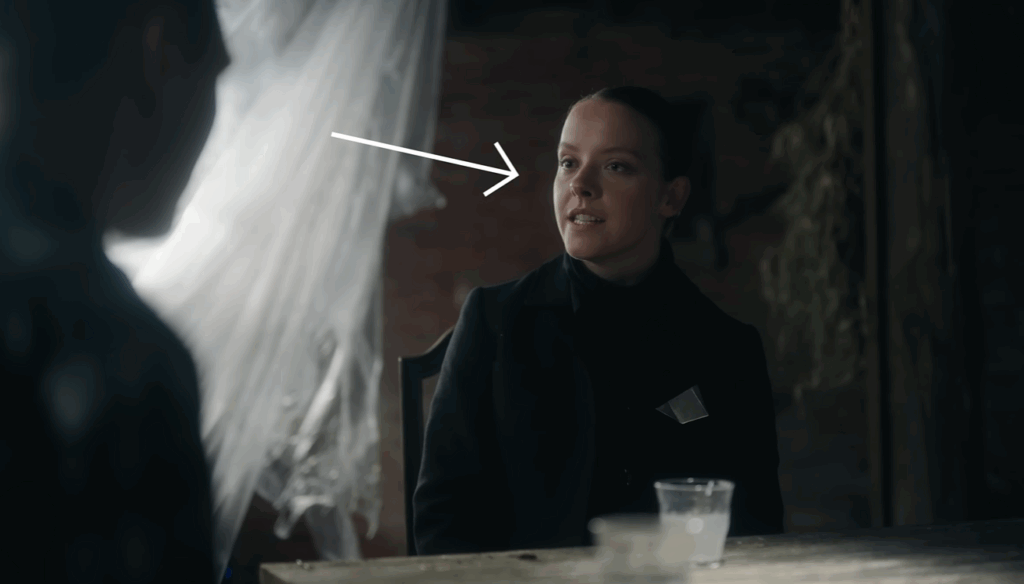
These are light sources that are actually visible within the frame—such as a desk lamp, a neon sign, or a candle. Practical lights add “texture” to the background and make the environment feel lived-in and realistic.
Best Lighting for Film Production
Quando si cerca il best lighting for film production, you need to look beyond the price tag and focus on technical specifications. Not all lights are created equal; some can actually make your footage look worse by causing flickering or unnatural skin tones.
Color Rendering Index (CRI) and TLCI
Professional film lights are rated by CRI and TLCI. For cinematic results, you should never use a light with a CRI lower than 95. A high CRI ensures that colors (especially skin tones) are rendered accurately. Cheap LED panels often have a “greenish” tint that makes people look sickly—avoid these at all costs.
Luce soffusa vs. Luce dura
- Luce solida creates sharp, distinct shadows. It is used for high-drama scenes.
- Luce soffusa is diffused. It wraps around the face, hides skin imperfections, and is generally the “go-to” for YouTube creators. To get soft light, you need large modifiers like softboxes or silk sheets.
Color Temperature (Kelvin)
The best lights offer adjustable color temperatures. 3200K (Tungsten) provides a warm, orange glow, while 5600K (Daylight) provides a crisp, blue-white light. Most cinematic setups use a mix of both to create “color contrast.”
Movie Production Lights: Choosing the Right Fixtures
The market is flooded with gear, but most movie production lights fall into three main categories. Understanding these will help you invest your budget wisely.
COB (Chip on Board) LEDs
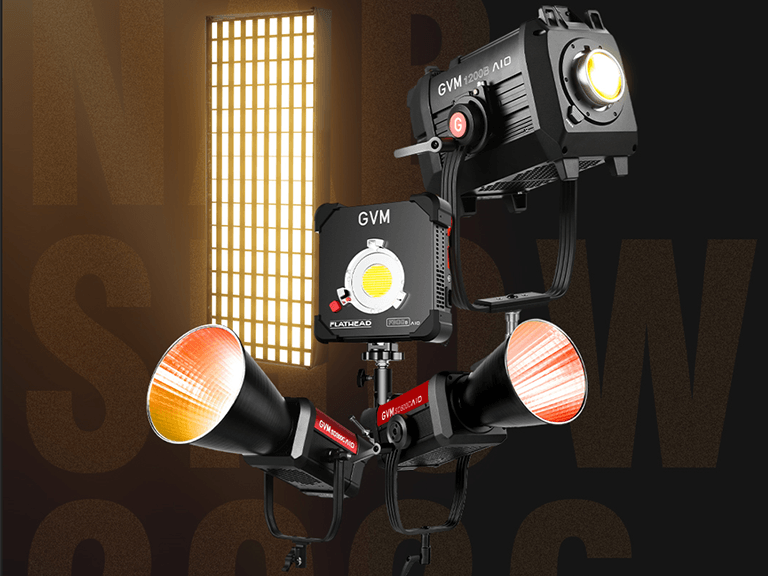
These are the current industry standard for independent filmmakers and high-end YouTubers. They are single-point light sources (like a giant lightbulb) that allow you to attach various modifiers like softboxes, Fresnel lenses, or “snoots.” Brands like Aputure, Godox, and Nanlite dominate this space.
Pannelli LED
LED panels are flat, portable, and often battery-powered. They are great for small rooms where you don’t have space for a large softbox. However, because the light source is many small dots, the shadows can sometimes look “messy” unless diffused properly.
Tube Lights (RGB)
Think of these as “cinematic wands.” RGB tube lights allow you to change to any color in the rainbow. They are perfect for adding “splashes” of color to your background or being used as practical lights within the shot.
Building Your Cinematic Lighting Kit
If you are serious about your visual quality, you shouldn’t just buy a single light. You should curate a cinematic lighting kit that offers versatility. Here is a recommended breakdown for different budget levels:
The Starter Kit (Under $300)
- Luce chiave: A 60W COB LED (e.g., Godox SL60W or Amaran 60d).
- Modificatore A 35-inch Octagon Softbox.
- Retroilluminazione: A small RGB pocket LED light.
- Stand: A basic aluminum light stand.
The Professional YouTuber Kit ($1,000+)
- Luce chiave: A 120W or 300W Bi-color COB LED.
- Modificatore A Light Dome with a honeycomb grid (to prevent light spill).
- Fill/Rim Light: A dedicated LED panel or a second COB light.
- Atmosphere: Two RGB Tube lights for background accents.
- Support: Heavy-duty C-Stands for safety and precision.
Easy Cinematic Lighting Setup for YouTube Videos: A Step-by-Step Guide
Now that you understand the theory and the gear, let’s put it into practice. Follow these steps for an easy cinematic lighting setup for YouTube videos that works in almost any room.
Step 1: Kill the Ambient Light
Before you turn on your professional lights, turn off the “big light” on your ceiling and close the curtains. You want a “black canvas.” Ambient light is unpredictable and usually has a poor color temperature. By controlling 100% of the light, you achieve the cinematic look.
Step 2: Position Your Key Light (The 45/45 Rule)
Place your main light about 45 degrees to the side of your camera and 45 degrees above your eye line, pointing down. This creates natural shadows on the far side of your face, giving you a slimming, three-dimensional look. If you see a small triangle of light on your “shadow” cheek, you’ve achieved Rembrandt lighting!
Step 3: Soften the Light
Never point a bare LED bulb at your face. Use a softbox or bounce the light off a white wall. The larger the light source relative to your face, the softer and more “expensive” the light will look. Soft light hides wrinkles and makes your skin look radiant.
Step 4: Add Background Separation (The Rim Light)
Place a small light behind you, out of the camera’s frame, pointing at the back of your head or shoulders. This creates a thin line of light that separates your dark hair or clothing from a dark background. This “pop” is a hallmark of professional cinematography.
Step 5: Incorporate Practical Lights and Color
Place a lamp or some LED strips in the background. If your key light is “Daylight” (blue/white), set your background lights to “Tungsten” (orange/warm). This “Teal and Orange” contrast is a classic movie technique that adds instant visual interest.
Step 6: Use a Grid
If you have a softbox, attach a “honeycomb grid.” This prevents light from hitting your background and keeps it focused only on your face. Dark backgrounds with a bright subject are the fastest way to look “cinematic.”
Conclusion: Why Lighting Matters More Than Your Camera
Many creators make the mistake of spending thousands of dollars on a 4K camera while using cheap, overhead room lights. The truth is, a $500 camera with a illuminazione cinematografica setup will always look better than a $5,000 camera in a poorly lit room.
Lighting is the language of film. By understanding the types of cinematic lighting, investing in a solid cinematic lighting kit, and following an easy cinematic lighting setup, you transform your YouTube channel from a hobby into a professional production.
Start small, focus on mastering shadows, and remember: it’s not just about how much light you have, but where you don’t have it. Happy filming!