When searching for the right video camera light, creators often face a trade-off between power and portability. In modern video production, lighting is no longer just about making a scene brighter. It shapes the mood, guides the viewer’s attention, and defines the visual style of a story.
Whether you are filming interviews, commercial videos, YouTube content, or independent films, choosing the right video camera light can greatly influence the final image quality.
Many creators focus heavily on cameras and lenses, but lighting often plays an equally important role. A high-end camera can capture detailed images, but without proper lighting, the footage may still look flat, inconsistent, or lack depth.
So what makes a good video light? The answer is not simply higher wattage. A practical lighting solution needs to balance output, portability, color accuracy, and ease of use.
Indice dei contenuti
Why Lighting Matters More Than Ever in Video Production?
The way people create videos has changed.
Professional studios are no longer the only place where high-quality production happens. Today, filmmakers, content creators, and small production teams often work in different environments — from indoor studios to outdoor locations.
Modern video production requires lighting tools that can adapt to different environments and shooting styles.
A good video camera light should provide reliable brightness, accurate colors, flexible adjustments, and a design that is easy to set up and carry.
The best light is not always the largest one. It is the tool that simplifies the workflow and allows creators to focus more on the story itself.
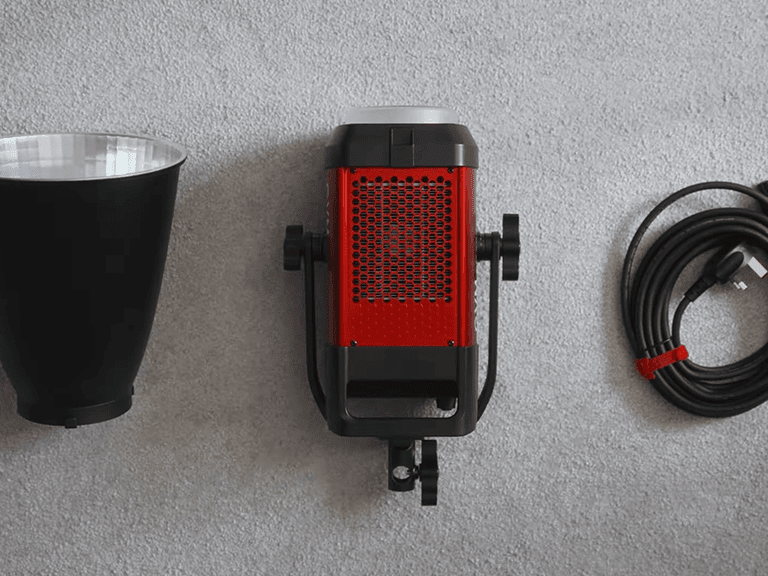
Understanding the Role of a Key Light
Among different lighting setups, the key light remains one of the most important elements.
It determines the main exposure of the subject and creates the foundation of the entire scene. A well-positioned key light can add depth, improve facial details, and create a more cinematic appearance.
However, traditional high-output lights often come with challenges. Large fixtures may require complicated installation, additional accessories, and more preparation time.
For creators working with limited crew members, efficiency becomes just as important as performance.
This is where all-in-one lighting systems are becoming increasingly popular.
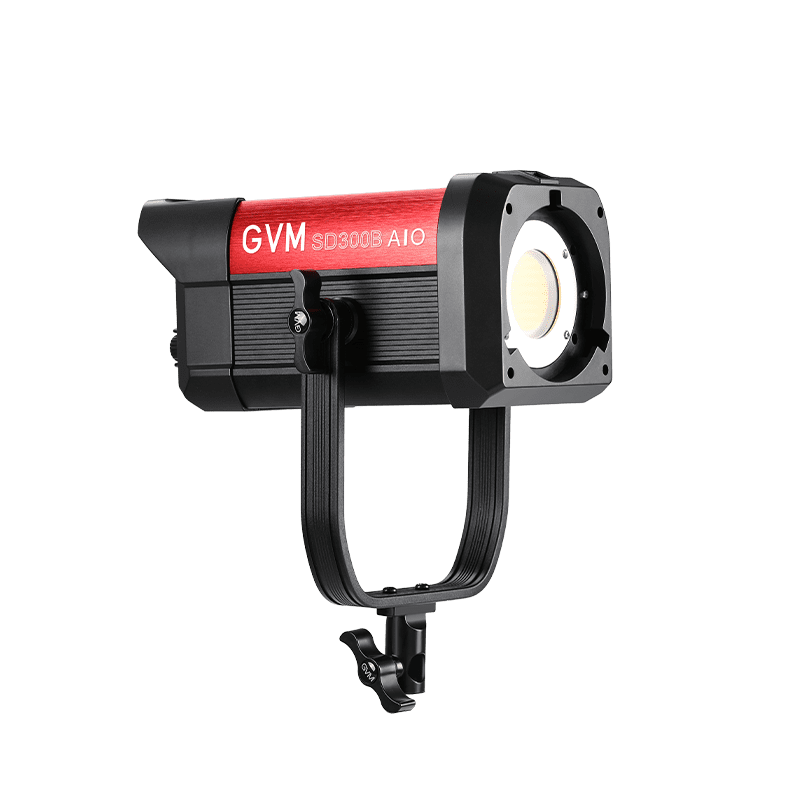
The Advantage of an All-in-One Lighting Design
An all-in-one LED light combines the lamp body, control system, and power solution into a more integrated design.
Compared with traditional lighting setups, this type of design reduces unnecessary preparation steps. Creators can move the light, adjust brightness, and complete lighting setups more quickly.
For location shooting, this flexibility can make a noticeable difference.
A scene may only need a small adjustment in position or intensity, but the ability to make that change instantly helps maintain the creative workflow.
Good lighting is often about responding quickly to the environment.
GVM SD300B AIO: A Practical 300W Solution for Video Creators
For creators looking for a powerful yet efficient lighting solution, the GVM SD300B AIO provides a balance between performance and convenience.
As a 300W bi-color LED monolight, the SD300B AIO delivers strong output while maintaining a compact all-in-one structure. It is designed for creators who need professional lighting performance without carrying a complicated setup.
One of its biggest advantages is its price-to-performance ratio.
Compared with many lights in the same wattage category, the GVM SD300B AIO offers a more affordable option, making high-output lighting more accessible for independent filmmakers, studios, and content creators.
Brightness is another key strength.
With powerful output and precise dimming control, it can handle a wide range of shooting environments, from studio portraits to commercial video production. The light also features high color accuracy with CRI and TLCI ratings of 97+, helping maintain realistic colors during recording.
More importantly, the all-in-one design makes setup much faster.
Instead of spending extra time connecting multiple components, creators can quickly position the light, adjust the settings, and begin shooting. For productions where every minute matters, this simplicity can improve the entire workflow.
| Caratteristica | GVM SD300B AIO (Bi-Color) |
| Il migliore per | Film Production, Interviews, Studio & Content Creation |
| Potenza in uscita | 300W High-Output COB LED |
| Temp. colore | 2,700K – 6,800K |
| Modalità di colore | CCT + Source Matching + Lighting Effects |
| CRI / TLCI | 97+ / 97+ |
| Effetti speciali | 12 Built-in Cinematic Effects |
| Portabilità | All-In-One Integrated Design with Built-in Controller |
| Control Type | On-Board Control + Bluetooth APP |
| Luminosità | Up to 221,950 Lux @1m (with Standard Reflector) |
| Oscuramento | 0–100% Flicker-Free Dimming |
| Tipo di montaggio | Attacco Bowens |
| Alimentazione | AC Power (100–240V) |
Final Thoughts: Choosing Equipment That Supports Creativity
A good lighting tool should not interrupt the creative process.
The purpose of professional equipment is not to make production more complicated. It is to remove unnecessary limitations and give creators more freedom.
From small studio projects to commercial productions, the right video camera light becomes more than an accessory. It becomes part of the storytelling process.
The future of video production is moving toward tools that combine professional performance with practical design. Equipment that is powerful enough for demanding scenes, yet simple enough to adapt quickly, will continue to become an important choice for modern creators.
Sometimes, the most effective lighting setup is not the one with the most equipment.
It is the one that helps the creator forget about the equipment and focus on the image.
Explore the full range of GVM professional lighting solutions(https://gvmled.com/)today