Smooth camera movement can change the way a scene feels. A slow slide across a table, a controlled push toward a subject, or a subtle movement through a landscape can add depth without distracting from the story.
But getting that movement right is not simply a matter of putting a camera on a slider. The right setup needs to balance stability, speed, noise, portability, and control—especially when shooting alone or working in a small production team.
For filmmakers, photographers, and content creators, understanding how to use a best camera slider effectively can make camera movement more intentional and repeatable.
So, what should you consider when building a camera movement setup? And how can a motorized slider make the process easier?
Indice dei contenuti
What Goes Into a Camera Slider Setup
Start with stable movement
The first job of a camera slider is simple: keep the camera moving smoothly.
Manual sliders can work well for controlled shots, but maintaining the same speed throughout a take takes practice. Even a small change in hand pressure can become visible when the camera is moving slowly.
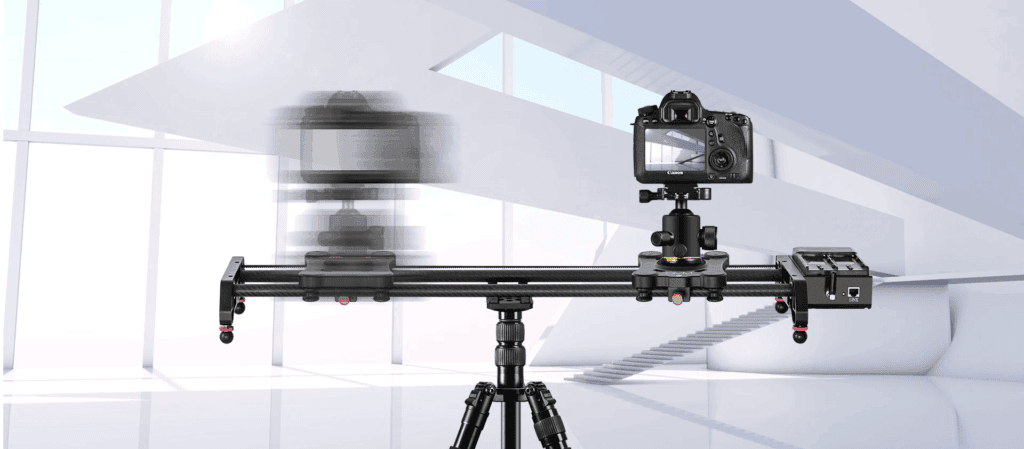
A motorized slider approaches the problem differently. The motor controls the movement, allowing the camera to travel along a predefined path at a consistent speed.
This is particularly useful for product videos, interviews, B-roll, and repeatable shots where consistency matters more than improvisation.
Think about the shooting environment
A slider does not exist in isolation. The surface, camera weight, available space, and shooting angle all affect the result.
Before setting up, check whether the slider is level and whether its support points are stable. Adjustable feet can help when working on uneven surfaces, while tripod mounting provides another option when the camera needs to move above the ground.
For outdoor work, portability becomes equally important. A slider that is difficult to carry may spend more time in the case than on the set.
Keep movement quiet
Camera movement is visual, but the equipment itself should ideally disappear from the soundtrack.
This becomes especially important for interviews, dialogue scenes, and documentary work. A motor that produces noticeable mechanical noise can quickly become a problem when the microphone is close to the camera.
A quiet motorized system allows movement to happen without adding another sound source to the scene.
How to Prepare for a Camera Movement?
Find the frame first
Before moving the camera, decide what the movement is supposed to reveal.
A slider shot works best when the movement has a reason. It might gradually reveal the subject, create separation between foreground and background, or simply add subtle motion to an otherwise static composition.
Start by finding the strongest frame. Then ask where the camera should begin and where it should finish.
The path comes second.
Set the movement
Once the composition is established, determine the start and end points.
For a simple product shot, a slow lateral movement can reveal details across the surface. For an interview, a short push-in can create a more intimate feeling without requiring a large change in framing.
Motorized sliders are particularly useful here because the movement can be programmed rather than manually repeated.
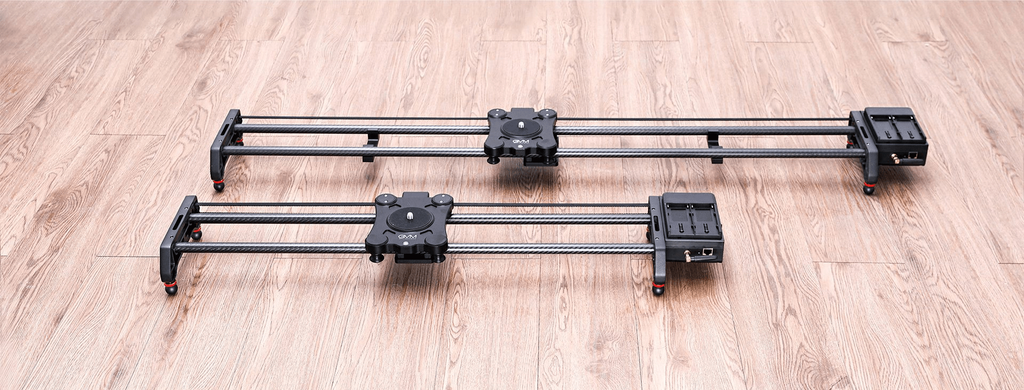
With the GVM GT-80WD, users can set start and end points, adjust movement speed and interval, and program multiple keyframes for more controlled camera motion.
Leave room for experimentation
Not every slider shot needs to be complicated.
Sometimes a movement of only a few inches is enough. Other times, a longer travel creates the visual change the scene needs.
The useful approach is to treat the slider as part of the composition rather than an effect added afterward. The camera should move because the frame benefits from moving.
| Caratteristica | GVM GT-80WD |
| Il migliore per | Film, Product Shooting & Time-Lapse |
| Track Length | 80cm / 32″ |
| Load Capacity | Up to 5.5 lbs / 2.5kg |
| Materiale | Carbon Fiber + Aluminum Alloy |
| Motor | Ultra-Silent Stepper Motor |
| Shooting Modes | Manual, Auto, Auto Loop & Time-Lapse |
| Control Type | Bluetooth Remote + APP Control |
| Keyframe Control | Multiple A-B Keyframe Positions |
| Portabilità | Lightweight & Portable Design |
| Alimentazione | NP-F750 Battery |
| Durata della batteria | Up to 10 Hours |
| Montaggio | 1/4″-20 & 3/8″-16 Threads |
Why Wireless Control Matters?
Operating a slider does not always mean standing beside it.
Wireless control allows the camera movement to be adjusted from a distance, which can be useful when the camera is positioned in a difficult-to-reach location or when the operator needs to remain near the subject.
Il GT-80WD supports both a Bluetooth wireless controller and app control. Manual and automatic modes are available, while the app can be used to adjust movement parameters remotely.
That small change in workflow can make a noticeable difference on a solo shoot. Instead of walking back and forth between the camera and slider, the operator can make adjustments from where they are working.
Why Carbon Fiber Makes Sense for a Slider?
A camera slider has to perform two jobs at once. It needs to remain rigid enough to support a camera, but it should not become another heavy piece of equipment to carry.
Carbon fiber helps balance these requirements.
Il GT-80WD combines a carbon-fiber rail system with aluminum components to create a structure designed to remain stable while keeping the overall system portable. It can be used on a tabletop, tripod, or light stand, depending on the setup.
For creators who move between locations frequently, this matters. A camera movement system is only useful when it is practical enough to bring along.
In Conclusion: Make Camera Movement Intentional
Good camera movement rarely calls attention to the equipment behind it.
The best slider shots feel natural because the movement supports the frame rather than competing with it. Stability creates consistency. Quiet operation protects the soundtrack. Wireless control reduces unnecessary steps. And programmable movement makes complex shots easier to repeat.
Il GVM GT-80WD brings these ideas together in a motorized camera slider built around wireless control, programmable movement, quiet operation, carbon-fiber construction, and time-lapse capabilities. Its 80 cm travel, adjustable feet, and support for horizontal or inclined setups give creators more flexibility when building a shot.
A slider does not need to make a shot look complicated. Sometimes its best work is almost invisible—the camera simply moves, the scene opens up, and the story has a little more room to breathe.