Finding the best cob monolight for video has become one of the most common questions among home-based creators. A growing number of Amazon sellers, product photographers, and small studio owners now run their entire operation out of a spare room or garage, and they need one light that can handle everything from stills to full video production.
That’s exactly the gap an all-in-one COB monolight fills, and it’s why so many creators are comparing options before they buy.
Indice dei contenuti
Photography Lighting at Home
More people than ever are turning a corner of their house into a working studio. Amazon sellers photographing products, side-hustle photographers building portfolios, and livestream hosts recording from a bedroom all share the same problem: limited space and a limited budget. A single COB monolight that handles portraits, product shots, and video work solves that problem without forcing anyone to buy three different light sources. That versatility is exactly why the category has grown so quickly among beginner and semi-pro creators alike.
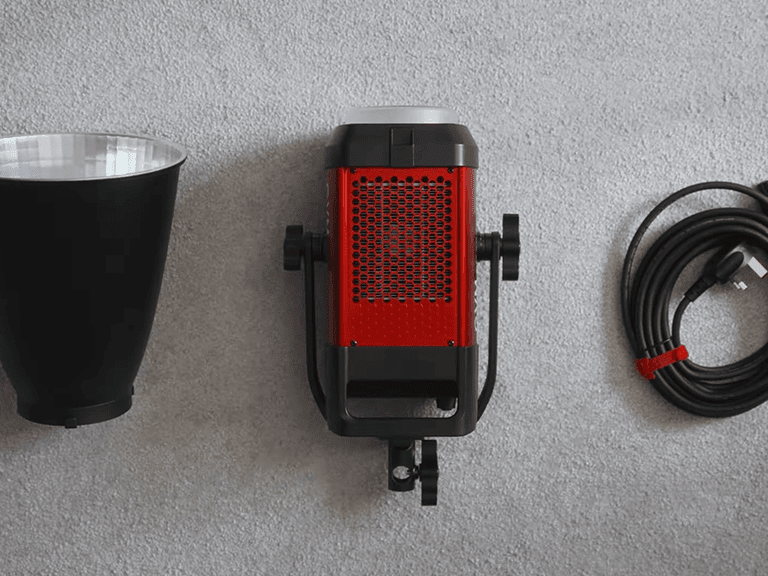
Continuous Light vs Flash Photography
Flash units have long been the default for studio photographers, but continuous lighting has been gaining ground fast, and for good reason. With a continuous light, what you see on the panel or through the viewfinder is exactly what ends up in the final image or video, with no guesswork about how a flash pop will fall. That makes continuous lights far friendlier for beginners, and it’s the only realistic option once video enters the picture, since flash simply doesn’t work for motion footage. As more creators split their time between photos and video, continuous COB lighting has become the practical default rather than the alternative.
Monolight Photography
A genuinely useful monolight needs to do double duty: strong enough output for photography, and smooth enough dimming and color control for video work. That means stepless brightness adjustment, a wide and accurate color temperature range, and a light engine that holds consistent color across sessions. Anything less forces creators to compromise on one format or the other, which defeats the purpose of buying an all-in-one fixture in the first place.
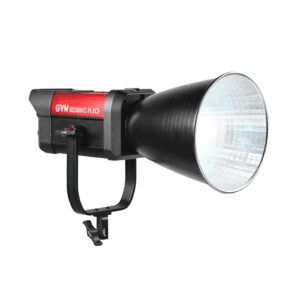
Bowens Monolight Mount
Mount compatibility matters more than most beginners realize when they first shop for a light. Choosing a monolight with a standard Bowens mount opens up access to the widest range of softboxes, umbrellas, and modifiers on the market, instead of locking a creator into a single brand’s proprietary accessory line. This one decision at purchase time affects everything a creator can add to their kit later, so it’s worth prioritizing over almost any other spec.
Best Continuous Light for Photography for Beginners
Two COB monolights consistently come up in this conversation right now: the GVM SD300B AIO and the Nanlite FS-300B. Both are bi-color, all-in-one fixtures built around a Bowens mount, aimed at creators who want one light that can cover photography and video without a steep learning curve. Laid side by side, the differences in output, price, and feature set become easy to see.
| Caratteristica | GVM SD300B AIO | Nanlite FS-300B |
|---|---|---|
| Potenza | 300W | 300W |
| Luminosità | 221,950 Lux @ 1m (standard reflector) | 38,720 Lux @ 3.3′ (with reflector) |
| Temperatura del colore | 2700K–6800K bicolore | 2700K–6500K bi-color |
| CRI / TLCI | ≥97 / ≥97 | 96 / 97 |
| Montaggio | Attacco Bowens | Bowens-S mount |
| Built-in Effects | 12 effects | 12 effects |
| Controllo | APP control, multi-light linking | Bluetooth NANLINK app, 2.4GHz wireless |
| Prezzo | Lower cost at equal wattage | $199.00 (after $50 discount) |
At the same 300W power draw, the price gap is the first thing beginners notice, and the GVM SD300B AIO consistently lands lower than the Nanlite FS-300B once accessories and modifiers are factored in. For a creator building a first studio kit on a tight budget, that price-to-wattage ratio matters just as much as the spec sheet.
Brightness output tells a similar story. The SD300B AIO is rated at 221,950 lux at one meter with its standard reflector, a figure that gives it substantially more usable light for the same power draw compared to the FS-300B. For anyone shooting in a small home studio where extra brightness translates directly into a wider aperture range and cleaner low-light footage, that gap is significant.
Deployment speed is the third factor worth weighing. As a true all-in-one monolight, the GVM SD300B AIO integrates the power control, dimming, and lamp head into a single compact unit, so there’s no separate ballast or control box to rig up before a shoot. For creators who need to set up and break down quickly between clients or content batches, that one-piece design directly translates into fewer minutes spent on gear and more time shooting.
Taken together, similar wattage, similar Bowens-mount compatibility, and similar built-in effects, but a noticeably higher brightness output and a lower price for the GVM SD300B AIO, make it the more cost-effective pick for beginners weighing these two lights.
Product Photography Lighting Setup
Real-world use makes the case even clearer. One creator working out of an old, dimly lit garage paired the GVM SD300B AIO with a quick-deploy softbox to build a simple two-purpose setup: portrait sessions for local clients during the day, and short-form video content in the evening. The softbox softened the 300W output enough to flatter skin tones for portraits, while the bi-color range let the same light shift from a warm, cozy tone for lifestyle video to a neutral daylight balance for product shots, all without swapping fixtures. That kind of flexibility is exactly what a home-based creator needs from a single cob monolight for video and stills alike.
Conclusione
Between the GVM SD300B AIO and the Nanlite FS-300B, both fixtures check the essential boxes: bi-color output, a Bowens mount, high CRI/TLCI ratings, and a set of built-in creative effects. But when price at equal wattage, raw brightness, and one-piece deployment speed are weighed together, the GVM SD300B AIO comes out ahead as the more budget-friendly, higher-output option for creators setting up a home studio. If you’re ready to build a lighting kit that handles both photography and video without juggling multiple fixtures, the SD300B AIO is worth putting at the top of your shortlist.