LED panel photography has become the default lighting solution for photographers, videographers, and content creators heading into 2026. Unlike older tungsten or fluorescent setups, a modern led light panel delivers consistent color temperature, near-instant power-up, and a form factor light enough to carry to any location. That combination of reliability, color accuracy, and portability is exactly why so many working photographers have switched their entire kit over to panel-style LEDs.
Whether you’re shooting portraits in a home studio, filming YouTube content, or covering a live event, the right photography light panel eliminates the guesswork of matching daylight or mixing awkward color casts. This guide breaks down what to look for, compares real specs, and shows you how to pick the best option for your workflow.
Indice dei contenuti
Why LED Light Panels Have Won Over Photographers
Traditional lighting gear runs hot, is bulky to transport, and often can’t hold a stable color temperature over long shoots. A well-built led light panel photography setup solves all three problems at once. Modern panels run cool enough to touch after hours of use, weigh a fraction of legacy fixtures, and hold their color output steady from the first frame to the last.
Beyond convenience, panels give photographers creative control that older lights simply can’t match. Adjustable color temperature, HSI full-color modes, and app-based dimming mean a single fixture can replace what used to require three or four different lights. That’s a major reason panels dominate gear bags in 2026.
LED Light Panel for Video: What Filmmakers Actually Need
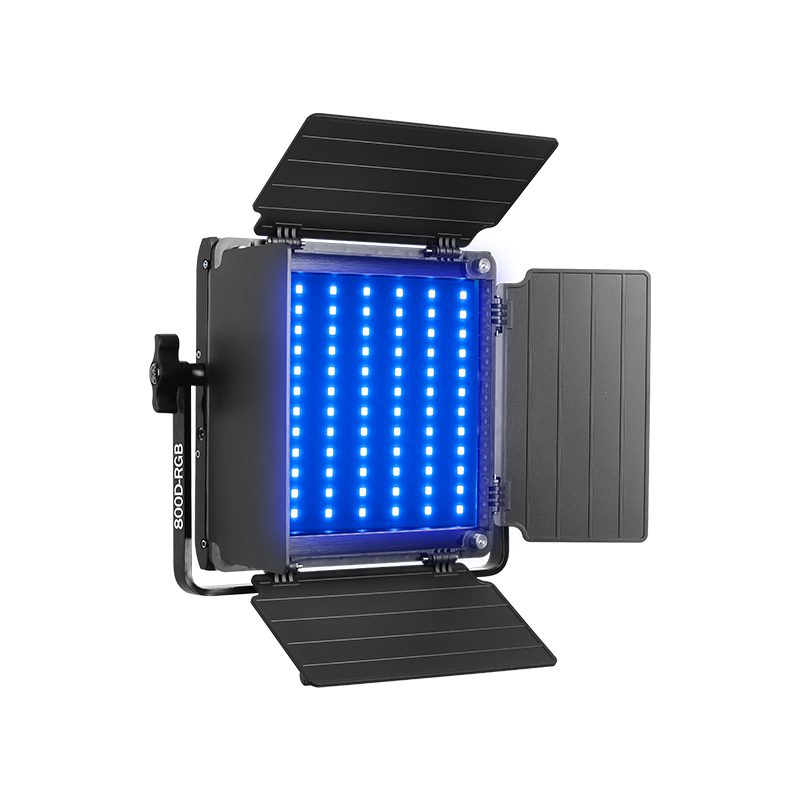
For video work, consistency matters more than anything else. A flickering or color-shifting light ruins footage in a way stills can sometimes forgive. This is where a dedicated led light panel for video earns its keep — high CRI and TLCI ratings (97+ is now the benchmark) ensure skin tones and color grading stay accurate across every clip.
Filmmakers also rely on features like built-in scene effects (lightning, fire, TV flicker, paparazzi flash) to save time on set instead of programming effects in post. Bi-color or full RGB output lets a single panel handle interviews, B-roll, and mood lighting without swapping gels or fixtures.
Case in point: during a recent on-location interview shoot, a two-person crew relied on a single compact panel clipped to a light stand in a hotel room. With no space for a full lighting kit, the panel’s app-controlled brightness and battery power let them match window light in under two minutes — a task that would have taken much longer with traditional fixtures and gels.
Panel Lights for Photography: Studio and On-Location Use
In still photography, pannelli luminosi per fotografia shine in both studio and location settings. Studio photographers appreciate precise HSI color control for creative portraits, product shots, and fashion work where mood lighting matters. On location, battery-powered panels mean photographers aren’t tied to an outlet, making outdoor portrait sessions or event coverage far more flexible.
Look for panels with:
- Stepless color temperature adjustment (typically 3200K–5600K)
- High CRI/TLCI (97+) for accurate skin tones and product color
- App or remote control for quick adjustments without touching the fixture
- Dual power options (AC adapter and battery) for maximum flexibility
Photography Light Panel Portability: Why It Matters
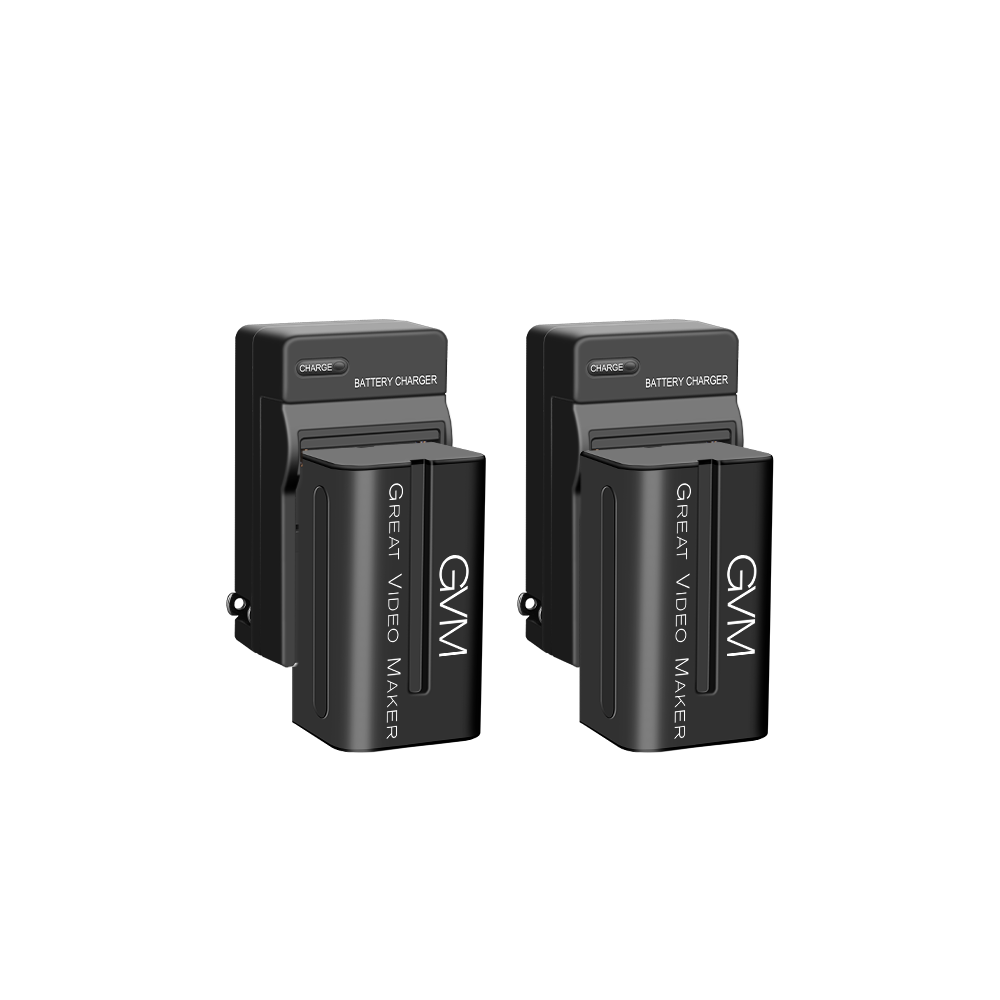
A photography light panel is only as useful as it is easy to bring along. Bulky, heavy lighting kills spontaneity — photographers miss shots while setting up gear instead of shooting. The best panels on the market in 2026 weigh under a few pounds, fold into a small footprint, and run on rechargeable batteries or standard camera battery mounts (like NP-F).
This portability advantage extends to run-and-gun video work, travel photography, and any scenario where space and time are limited. A lightweight panel that still delivers studio-level brightness gives creators the best of both worlds.
LED Photography Panel Features to Compare
When comparing any pannello fotografico a LED, focus on a few core specs rather than getting distracted by marketing claims:
- Brightness output (Lux at 1 meter) — higher lux means more flexibility in daylight or bounced lighting setups.
- Color accuracy (CRI/TLCI) — anything below 95+ risks visibly inaccurate skin tones.
- Control method — physical dials are fine, but app control adds speed for solo shooters.
- Built-in effects — useful for video creators who want in-camera looks without post-production work.
- Power flexibility — AC and battery options are essential for hybrid studio/location shooters.
Best LED Panel Photography: GVM 800D III
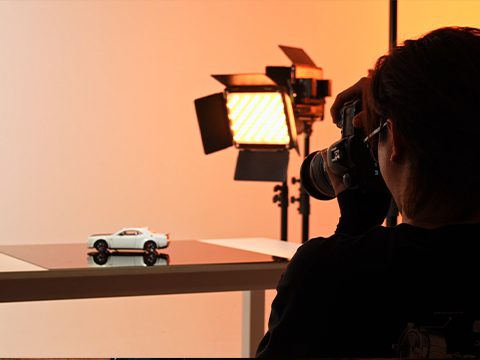
One panel that consistently checks these boxes is the GVM 800D III, a 40W bi-color and RGB panel designed for photographers and video creators who need a single, do-it-all fixture.
The 800D III combines CRI/TLCI 97+ color accuracy with 360° HSI color control and a bi-color range of 3200K–5600K. Brightness reaches up to roughly 2930 lux at 1 meter — a noticeable step up from earlier generations in the same size class. That extra output means the panel holds up in daylight or mixed-lighting environments where dimmer fixtures start to struggle.
For creators who move between studio and location work, the 800D III supports both DC adapter power and NP-F battery power, so a shoot doesn’t have to stop just because there’s no outlet nearby. App control and master-slave sync also make it easy to adjust brightness and color remotely, or coordinate multiple panels on a multi-light setup.
| Caratteristica | Specification / Benefit |
|---|---|
| Potenza | 40W bi-color + RGB LED panel |
| Temperatura del colore | 3200K–5600K, stepless adjustment |
| Precisione del colore | CRI 97+ / TLCI 97+ |
| Luminosità | Up to ~2930 Lux at 1m |
| Modalità di colore | 360° HSI, 20 built-in lighting effects |
| Controllo | App control, master-slave sync |
| Opzioni risparmio energia | DC adapter (15V/3A) or NP-F battery |
| Dimensioni | 10.6 × 10.3 × 1.5 inches |
| Il migliore per | Studio portraits, YouTube, interviews, live streaming |
For photographers and video creators who want one panel that handles color-accurate portraits, high-CRI product shots, and flexible on-location video work, the 800D III’s brightness and dual power support make it a practical all-around choice.
Domande frequenti
What is the main advantage of LED panel photography over traditional lighting?
LED panels run cooler, weigh less, and hold consistent color temperature far more reliably than older tungsten or fluorescent lights, making them easier to use in both studio and on-location settings.
Do I need a high CRI rating for photography lighting?
Yes. A CRI/TLCI rating of 95 or higher is recommended for accurate skin tones and true-to-life color reproduction, especially for portrait and product photography.
Can LED light panels be used outdoors?
Yes, as long as the panel offers sufficient brightness (measured in lux) to compete with or complement natural daylight, and ideally supports battery power for locations without outlets.
Is app control necessary for a photography light panel?
It’s not required, but app control significantly speeds up adjustments during solo shoots or multi-light setups, letting you change brightness and color without touching the fixture.
Conclusione
LED panel photography continues to lead the way in 2026 because it solves the three biggest pain points photographers and videographers face: portability, color consistency, and creative flexibility. Whether you’re choosing a panel for studio portraits, video interviews, or on-location event work, prioritizing brightness output, color accuracy, and power flexibility will steer you toward the right fixture. The GVM 800D III is a strong example of how these priorities come together in a single, practical panel — offering studio-grade color performance and battery-friendly portability for creators who need to work anywhere.