Lighting is one of the most important elements in video production. A great camera can capture details, but it is light that shapes the mood, defines the subject, and gives a scene its visual identity.
For many creators, choosing the right lighting equipment is not simply about finding the brightest fixture. A professional lighting setup needs to balance output, color accuracy, flexibility, and control. Whether you are filming interviews, commercials, documentaries, or cinematic projects, the right studio lights for videography can make the difference between a flat image and a visually engaging story.
As video production continues to evolve, creators are also expecting more from their lighting equipment. Modern filmmakers need lights that can adapt quickly to different environments, from controlled studio spaces to unpredictable locations.
So, what should you really look for when choosing a professional video light?
Output Power: More Than Just Brightness
Brightness is often the first specification people notice when comparing lights. However, high output is not only about making a scene brighter.
A powerful light gives creators more creative options.
With stronger output, filmmakers can shape light through modifiers such as softboxes, reflectors, and diffusion materials without losing too much intensity. This becomes especially important when working in larger spaces, shooting at higher frame rates, or balancing artificial lighting with natural daylight.
For professional productions, insufficient output can limit creativity. A light that looks acceptable in a small room may struggle when the environment changes.
This is why many filmmakers are moving toward higher-output COB LED fixtures. They provide the flexibility needed for different shooting conditions while maintaining a compact workflow.
Color Accuracy: The Foundation of Natural-Looking Images
Lighting is not only about how bright a subject appears. Color quality plays an equally important role.
When skin tones, products, or set designs are captured under inaccurate lighting, even excellent camera equipment may struggle to reproduce natural colors.
Professional lighting systems usually focus on two important factors: CRI and TLCI. These measurements help evaluate how accurately a light source reproduces colors compared with natural light.
For commercial videos, interviews, and cinematic productions, accurate color means less correction during post-production and a more consistent visual style.
A reliable lighting system should allow creators to focus on storytelling rather than spending extra time fixing unwanted color shifts.
Full-Color Lighting: Expanding Creative Possibilities
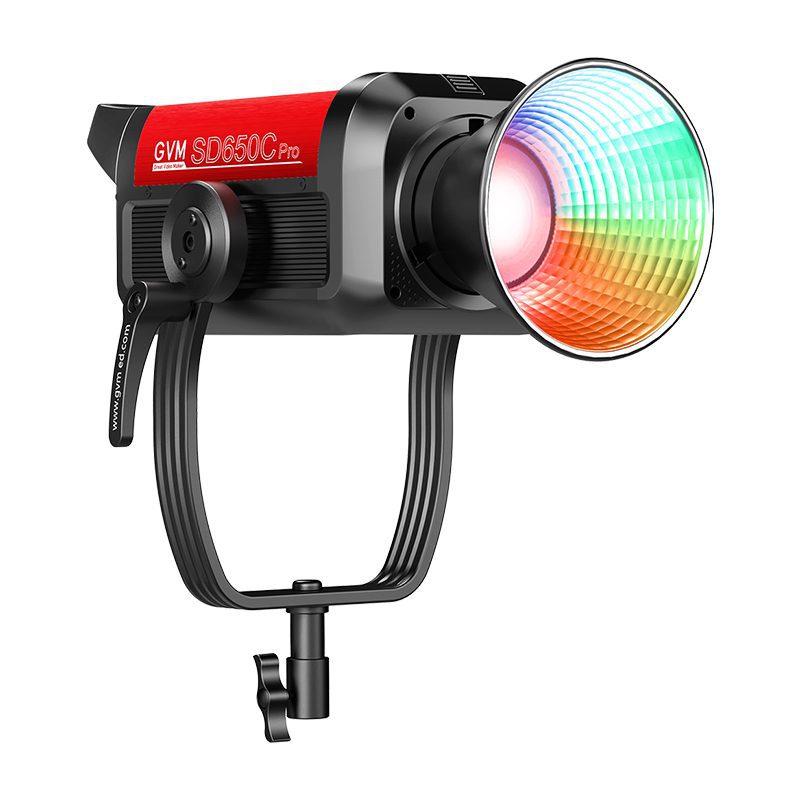
Traditional lighting setups often require additional gels or filters to create different colors. While this method is still used in many productions, modern RGB lighting technology provides a faster and more flexible solution.
RGB and full-color LED lights give creators more control over the mood and style of a scene. Instead of using different gels or filters, filmmakers can adjust hue, saturation, and brightness directly from the light or control system.
This is especially useful for music videos, product shoots, creative backgrounds, and scenes where color helps tell the story. A small change in tone can completely change the feeling of an image — warm colors can create a more intimate atmosphere, while cooler tones can bring a more dramatic or cinematic look.
Professional Control: Building a More Efficient Workflow
In professional production environments, lighting control becomes increasingly important.
A single light may work well for a simple project, but larger productions often require multiple fixtures working together. Wireless control, DMX compatibility, and network-based systems allow filmmakers to adjust lighting quickly without interrupting the shooting process.
Efficiency matters on set.
When the crew spends less time adjusting equipment, more attention can be given to camera movement, performances, and creative decisions.
A professional lighting system should not become another obstacle. Instead, it should quietly support the creative process.
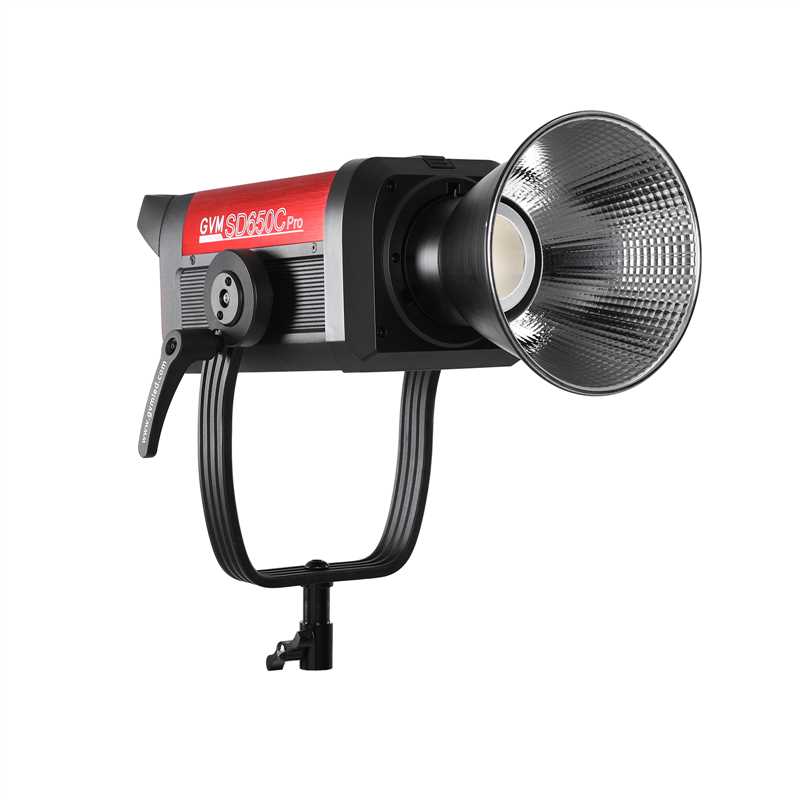
GVM PRO SD650C: A Professional Lighting Solution for Advanced Video Production
For creators looking for a powerful and flexible lighting solution, the GVM PRO SD650C combines high output performance with advanced color control. Designed for professional video production, it delivers the flexibility needed for studio shoots, commercial projects, and cinematic applications.
With a 650W LED engine, the SD650C provides strong illumination for demanding shooting environments. It delivers up to 95,530 lux at 1 meter with a standard reflector, giving filmmakers enough output for larger spaces and complex lighting setups.
Beyond brightness, the SD650C features RGBWW full-color technology with a wide 2000K–10000K color temperature range. Creators can adjust from natural daylight tones to creative colors without relying on additional filters.
For productions where color accuracy matters, the light offers 97+ CRI and 97 TLCI performance, helping maintain realistic skin tones and consistent color reproduction.
The SD650C also supports professional control options, including Bluetooth, RF wireless control, DMX IN/OUT, and RDM, allowing it to integrate into more advanced lighting environments.
Whether used as a key light for interviews, a powerful source for commercial production, or part of a multi-light cinematic setup, the SD650C is built for creators who need both performance and flexibility.
| Caratteristica | GVM PRO-SD650C (RGB & Bi-Color) |
| Il migliore per | Professional Film, Broadcast & Commercial Production |
| Potenza in uscita | 650W High-Output RGBWW COB LED |
| Temp. colore | 2,000K – 10,000K |
| Modalità di colore | RGB + CCT + HSI + Color Gel + Source Matching |
| CRI / TLCI | 97+ / 97+ |
| Effetti speciali | Cinematic FX Modes + 60 Built-in Gel Presets |
| Luminosità | Up to 95,530 Lux @1m (with Standard Reflector) |
| Portabilità | Separate Controller Design for Flexible Studio Setup |
| Control Type | APP + Bluetooth + DMX/RDM + RF Control |
| Alimentazione | AC Power / Professional Studio Power Setup |
Final Thoughts:Choosing the Right Studio Lights for Videography
There is no single lighting setup that works for every creator.
A YouTube studio, a documentary crew, and a commercial production team all have different requirements. However, the foundation remains the same: reliable output, accurate color, flexible control, and the ability to adapt.
The best lighting equipment does not simply illuminate a subject. It helps shape the visual language of a project.
When choosing studio lights for videography, think beyond specifications. Consider how the light fits into your workflow, how easily it adapts to different scenes, and whether it gives you more creative freedom.
Because in the end, lighting is not only about seeing the image.
It is about creating the feeling behind it.