A focusing LED light for photography has quickly become one of the most requested upgrades among photographers and videographers heading into 2026. Instead of settling for a fixed beam and stacking on external modifiers to shape it, more shooters are switching to lights with a built-in zoom function — one twist of a knob takes you from a tight spot to a wide flood. This shift is changing how people think about lighting kits altogether, replacing bulky accessory bags with a single, more capable fixture.
Continuous Lighting for Photography
By 2026, continuous lighting has matured well past the days of simple on/off panel lights. Photographers now expect a focusing led light for photography to combine strong output, accurate color, and real beam-shaping control in one body. This matters because continuous light lets you see your final result in real time, which is why so many stills photographers who also shoot video have moved away from flash-only setups. The best modern fixtures pair high CRI and TLCI ratings with bi-color temperature ranges, so a single light can move from warm tungsten-style scenes to cool daylight without a gel change. Add in stepless dimming and smooth dimming curves, and you get a tool that adapts to almost any shooting scenario rather than forcing the photographer to adapt around it.
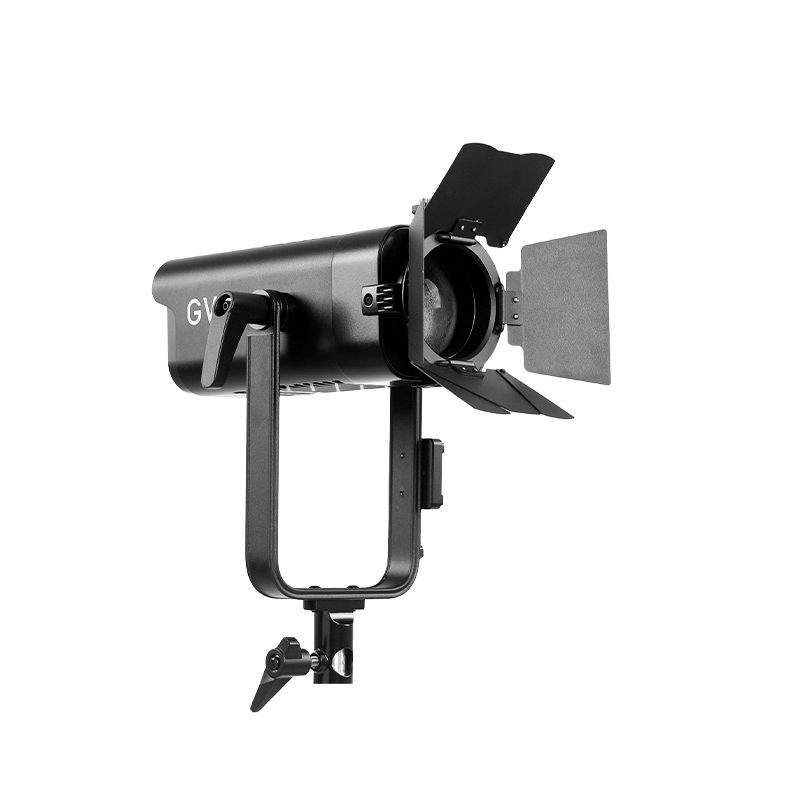
Best Lights for Photography
Not every LED panel deserves a spot in a serious photography kit. The best lights for photography share a handful of traits that separate them from entry-level gear. Color accuracy comes first — a CRI and TLCI rating of 95 or higher is quickly becoming the baseline for skin tones that hold up under scrutiny. Output efficiency matters just as much: a light that produces strong lux output per watt gives you more room to work at lower ISOs or add diffusion without losing exposure. Control is the third pillar, covering everything from dimming curves to app connectivity, since the ability to fine-tune brightness and color on the fly saves real time on set. Finally, build quality and portability round things out, especially for photographers who move between studio and location work rather than shooting from a single fixed setup. A light that checks these boxes tends to pay for itself by reducing how many separate tools you need to carry.
Photography Light Box
Before focusing LED fixtures became common, most photographers relied heavily on external modifiers just to control a light’s spread. A photography light box, softbox, or diffusion dome was almost mandatory to soften a harsh COB source or narrow its beam down to something usable. That approach worked, but it came with real costs — extra weight, longer setup times, and a growing pile of accessories that had to travel with the light itself. Switching from a tight spot to a soft flood mid-shoot meant physically swapping modifiers rather than making a quick adjustment, which slows down any solo shooter working without an assistant. This is precisely the gap that focusing LED lights were built to close, moving beam control into the fixture itself instead of leaving it entirely to add-on gear.
Focus Lights for Photography
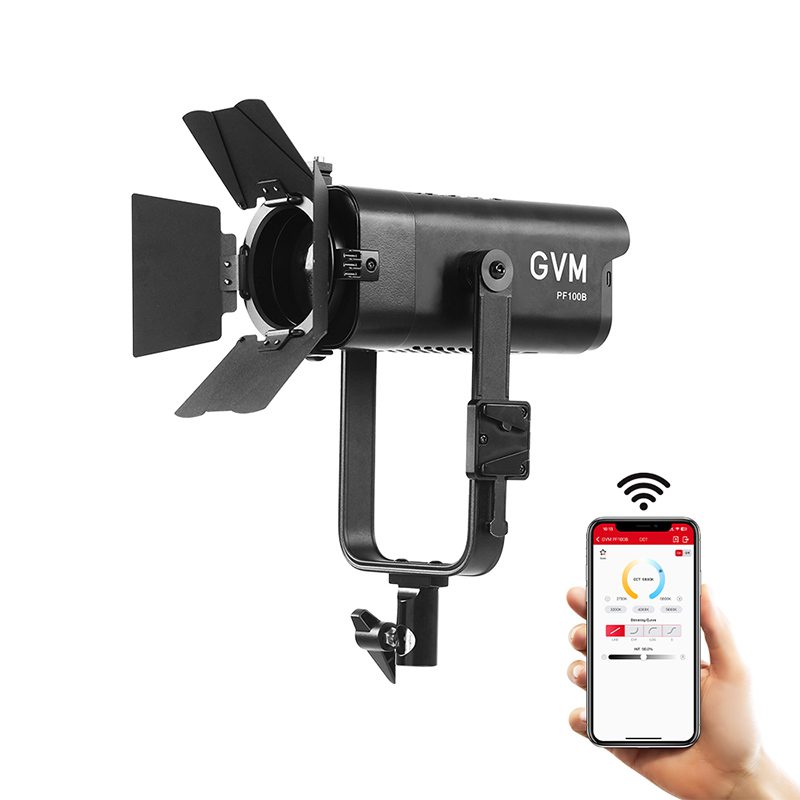
Qui dove GVM PF100B stands out. It’s a 100W bi-color focusing LED light built specifically around precise, in-fixture beam control, and it’s been getting real use in indoor portrait sessions and short commercial shoots lately — the kind of work where control over light quality matters more than raw wattage alone.
What sets the PF100B apart from a standard COB light is the TIR optical lens mounted at the front, which supports a 15° to 45° zoom range. On set, rotating the side focus knob is enough to move smoothly between a tight, far-reaching spot and a broad, even flood. Dialing in a hard rim light on a subject, or throwing a defined pool of light onto a background, becomes a simple twist rather than a full modifier swap — and in that 15° spot mode, the PF100B pushes out 30,200 lux at one meter, a level of punch and shaping power that a standard light with a clip-on reflector simply can’t match.
Color performance holds up just as well. The bi-color range spans 2700K to 6800K, and both CRI and TLCI sit at 97+, which shows up clearly in portrait work — skin texture and tone render naturally rather than looking flat or over-processed. Four built-in dimming curves (Linear, Log, Exponential, and S-Curve) mean that 0–100% brightness adjustments transition smoothly, without the abrupt jumps that can ruin a shot that leans on cinematic lighting changes.
The integrated design is another detail that photographers notice quickly. The controller is built directly into the light head, so there’s no separate, heavy power box hanging off the back of the stand — the whole rig sits cleaner and lighter on a stand. For power, it runs on standard AC indoors, and switches over to an optional V-mount battery for outdoor or nighttime location work. Paired with its Mini Bowens mount for modifier compatibility, the entire system stays light enough for one person to carry and operate solo without added strain.
Noise control matters just as much for video work, and the PF100B addresses it with four cooling modes, including a Silent Mode that fully stops the fan for completely clean on-camera audio. On top of that, it connects through GVM’s Mesh Bluetooth network, so a solo shooter can adjust brightness and color temperature straight from a phone app — along with switching between 12 built-in light-source simulations (like tungsten or candlelight) and 12 lighting effects — without ever touching the fixture itself.
| Caratteristica | Specification / Benefit |
|---|---|
| Potenza | 100W Bi-Color COB LED |
| Intervallo CCT | 2700K–6800K |
| CRI / TLCI | ≥97 / ≥97 — natural, accurate skin tones |
| Angolo del fascio | 15°–45° zoomable via TIR optical lens and focus knob |
| Illuminance (Spot) | 30,200 lux @ 1m — strong shaping power in a compact body |
| Oscuramento | 0–100% stepless, with 4 selectable curves |
| Modalità di illuminazione | CCT / Source Matching (12 sources) / Effects (12 FX) |
| Raffreddamento | 4 modes, including a fan-free Silent Mode |
| Controllo | On-board + GVM Mesh Bluetooth app (≤50m range) |
| Design | Fully integrated — controller built into the light head |
| Opzioni risparmio energia | AC 100–240V or optional V-mount battery |
| Montaggio | Mini Bowens for modifier compatibility |
| Peso | 1.53 kg |
Overall, the PF100B isn’t just a 100W light — it functions as a precision optical tool that happens to also be portable and easy to run solo. For anyone tired of diffused, hard-to-control light from a standard fixture, this kind of built-in focus control is worth the step up.

FAQ
What makes a light a “focusing” LED light?
A focusing LED light uses an internal lens system — often a TIR or aspheric lens — controlled by a zoom knob, letting you adjust the beam angle from a tight spot to a wide flood without external modifiers.
Does a focusing light replace the need for softboxes?
Not completely, but it reduces how often you need them. Built-in beam control handles many situations that previously required a dedicated modifier, making them an option rather than a requirement.
Is 100W enough output for professional photography?
Yes, when the design is efficient. With over 30,000 lux at one meter in spot mode, a light like the PF100B matches the usable output of many higher-wattage flood-only fixtures.
Can a focusing LED light like this work for both photos and video?
Yes. Continuous, dimmable, bi-color focusing lights are popular specifically because they perform well for both stills and motion without needing separate fixtures for each.
Conclusione
The move toward focusing LED lights reflects a real shift in how photographers think about their kits — trading a bag full of modifiers for a single fixture that shapes light on command. The GVM PF100B brings that idea together with accurate color, smooth dimming control, and a clean, integrated build suited to both studio and location work. If your current setup still depends on stacking accessories just to get the beam you want, a dedicated focusing light like this is worth trying next.