Good ins lighting is the single biggest difference between a feed that looks flat and one that looks like it belongs to a professional creator. Scroll through any top-performing Instagram account and you’ll notice the same thing: skin tones look natural, colors pop without looking fake, and there’s rarely a harsh shadow in sight. None of that happens by accident — it comes down to how the light is placed, what color temperature it uses, and whether it’s steady enough for both photos and video.
A lot of creators assume they need an expensive camera to level up their content. In reality, the camera on most phones today is already good enough. What holds people back is lighting that’s too dim, too yellow, or coming from the wrong angle. Fix that, and everything else — composition, editing, engagement — gets easier.
Indice dei contenuti
Ins Lighting Basics
Before buying anything, it helps to understand what makes lighting “Instagram-ready.” Three factors matter most:
- Color temperature – Daylight sits around 5600K, while indoor bulbs are often 2700K-3200K (warm/orange). Mixing the two without correction is why so many photos come out with an odd color cast. A light with adjustable bi-color output lets you match whatever environment you’re shooting in.
- Color rendering – Look for a CRI/TLCI rating of 95 or higher. This determines how accurately skin tones, fabric, and product colors are reproduced, which matters a lot for beauty, fashion, and product content.
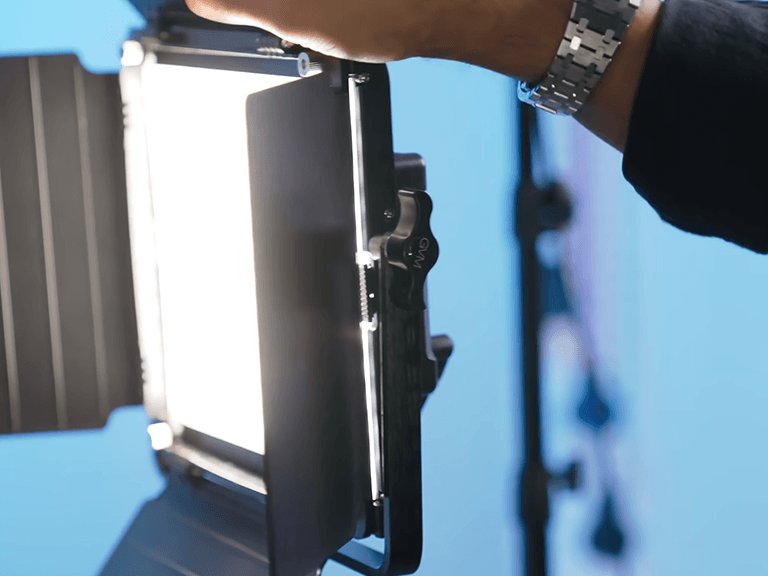
- Softness and direction – Direct, hard light creates harsh shadows under the eyes and nose. A diffused source placed slightly above and to the side of the face produces the soft, flattering look most Instagram content aims for.
Instagram Lighting Setup Options
There isn’t one single answer, since lighting needs shift depending on what’s being filmed:
- Natural window light – Free and often flattering, but inconsistent across the day and unusable after sunset or in a windowless room.
- Ring lights – Popular for close-up beauty and talking-head videos because they create even, shadow-free light, though they can produce a visible circular catchlight in the eyes.
- Softbox panels – Larger diffused sources that mimic studio lighting, ideal for full-body shots, fashion content, or product flat-lays.
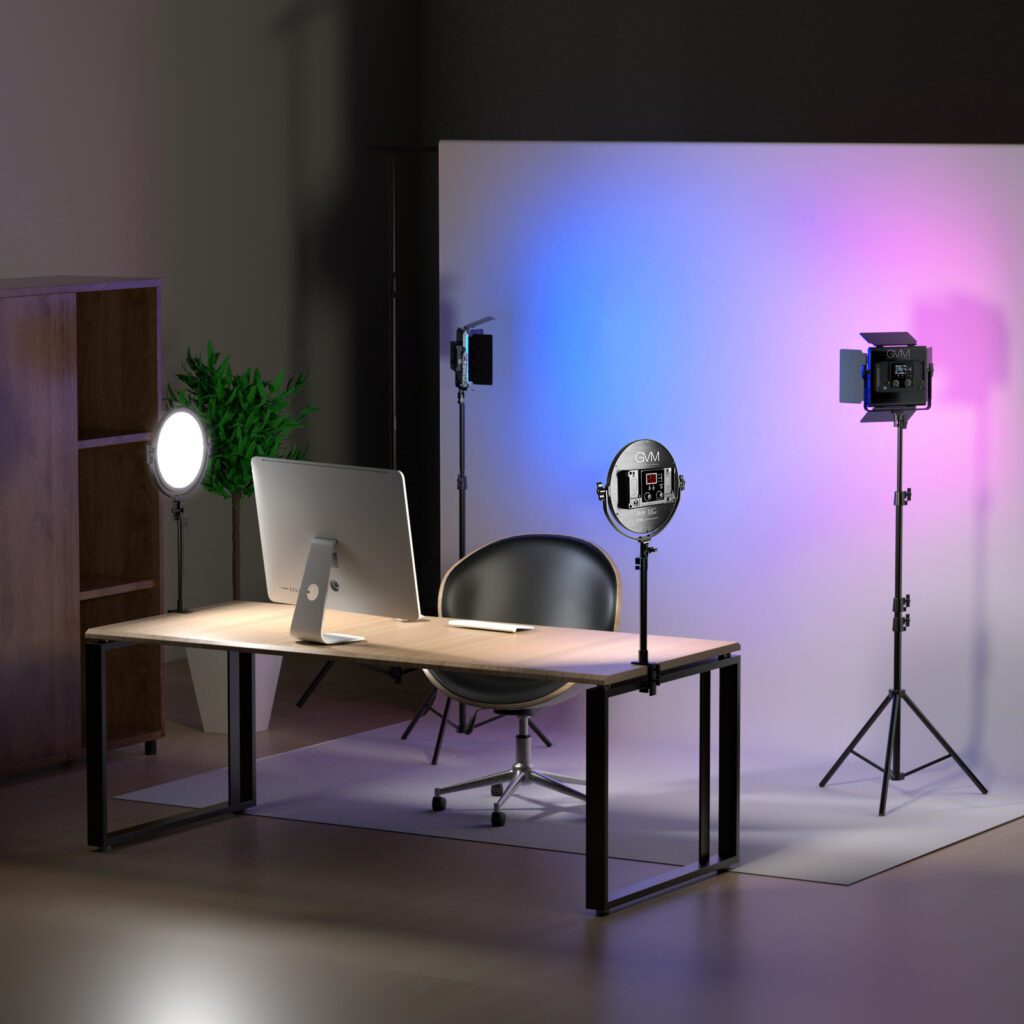
- Compact bi-color LED panels – Small, portable lights that clip onto a desk or stand, letting creators adjust brightness and color temperature to match any room instantly.
For most Instagram creators — especially anyone filming from a desk, a home studio corner, or a small apartment — compact bi-color panels tend to offer the best balance of quality, flexibility, and price.
How to Get Good Lighting for Instagram
Getting reliable results comes down to a repeatable setup rather than trial and error every time you film:
- Position the light in front of you, slightly above eye level, angled down at roughly 45 degrees to avoid shadows under the chin.
- Match the color temperature to your room. If you’re near a window during the day, set the light closer to 5600K; for evening indoor shoots, drop it toward 3200K-4000K so skin tones stay natural instead of blue or orange.
- Use two lights instead of one when possible. A single source often leaves one side of the face darker. A second light — even at lower brightness — fills in shadows and gives a more even, three-dimensional look.
- Keep brightness adjustable. Overhead room lighting changes throughout the day, so a light with stepless dimming lets you compensate without switching your whole setup.
- Add a diffuser if the light feels harsh. Built-in diffusion panels soften the beam so it flatters skin rather than exaggerating texture.
Streaming Light Considerations
Instagram content increasingly overlaps with live streaming — Reels, Lives, and long-form video all demand a light source that can run continuously without overheating or flickering on camera. This is where a dedicated streaming light differs from a basic desk lamp or ring light: it needs stable color output over hours of use, silent cooling (no fan noise picked up by the microphone), and app or remote control so brightness can be adjusted without stepping out of frame.
A light built with natural heat dissipation, a stable DC power input, and battery backup gives streamers the flexibility to go live from a desk one day and shoot outdoor content the next, without needing two separate lighting setups.
Instagram Video Light: What to Look For
Video adds one more requirement on top of photography: consistency. A light that flickers, shifts color, or can’t hold a stable brightness level under continuous use will show up as banding or color drift in a video, especially when livestreaming. The features worth prioritizing in an Instagram video light are:
- Bi-color range (ideally 3200K-5600K) to match both daylight and indoor scenes
- CRI/TLCI 97+ for accurate skin tone rendering
- Stepless brightness adjustment so exposure can be fine-tuned live
- App control, so brightness and color can be changed mid-recording without touching the light
- Dual power options (adapter plus battery) for both studio and outdoor flexibility
One setup that checks every one of these boxes is the GVM 30W Soft Light Bi-Color LED Key Light 2 Lights Kit (10″).
This kit pairs two GVM-Y30D160 panels, each with a 3200K-5600K stepless bi-color range and a 97+ CRI/TLCI rating, so skin tones and colors stay accurate whether you’re filming by a window at noon or streaming under indoor bulbs at night. With 160 LED beads per panel and built-in diffusion, the light output stays soft and even — exactly the flattering look Instagram content relies on.
| Caratteristica | Specification / Benefit |
|---|---|
| Temperatura del colore | 3200K-5600K, stepless bi-color adjustment |
| CRI/TLCI Rating | 97+, accurate skin tone and color reproduction |
| Luminosità | 2300lux at 0.5m / 800lux at 1m |
| Opzioni di controllo | LCD digital display + app control via smartphone |
| Multi-Light Sync | Host/slave mode for controlling both lights from one app |
| Alimentatore | DC adapter or dual Sony NP-F series batteries |
| Montaggio | Adjustable C-clamp stand, 14.7″-24.6″, 360° rotation |
| Peso | 2KG per panel, compact 328x328x40mm size |
| Kit Contents | 2 lights, 2 stands, power adapters, carrying cases |
Because the kit includes two lights instead of one, it solves the uneven-shadow problem that ring lights and single-panel setups run into — one light acts as the key, the other fills in the shadowed side, and both can be synced and adjusted together through the app without touching either physical unit. The C-clamp mount also means it sets up directly on a desk or shelf, which suits creators filming Reels, Lives, or talking-head content from a home setup rather than a full studio.
Compared to a basic ring light, this kit offers far more control over color accuracy and shadow fill, and compared to larger studio softbox panels, it’s a fraction of the size and price while still hitting professional CRI ratings. At $159 for a two-light kit with app control, dual power options, and a 2-year warranty, it lands as one of the more cost-effective ways to get consistent, flattering Instagram lighting for both photos and video.
Conclusione
Good ins lighting isn’t about buying the most expensive gear — it’s about matching color temperature, softness, and consistency to what you’re actually shooting. For creators who split their time between Instagram photos, Reels, and live streaming, a two-light bi-color kit like the GVM 30W Soft Light Key Light gives the flexibility to handle all three without switching setups, making it one of the best value picks for anyone serious about upgrading their Instagram content in 2026.