If you’ve ever looked at a portrait and thought, “Something’s off but I can’t place it,” the answer usually comes down to one thing: hard light vs soft light photography. Understanding the difference between these two lighting qualities is probably the fastest way to level up your images, whether you shoot portraits, products, or video.
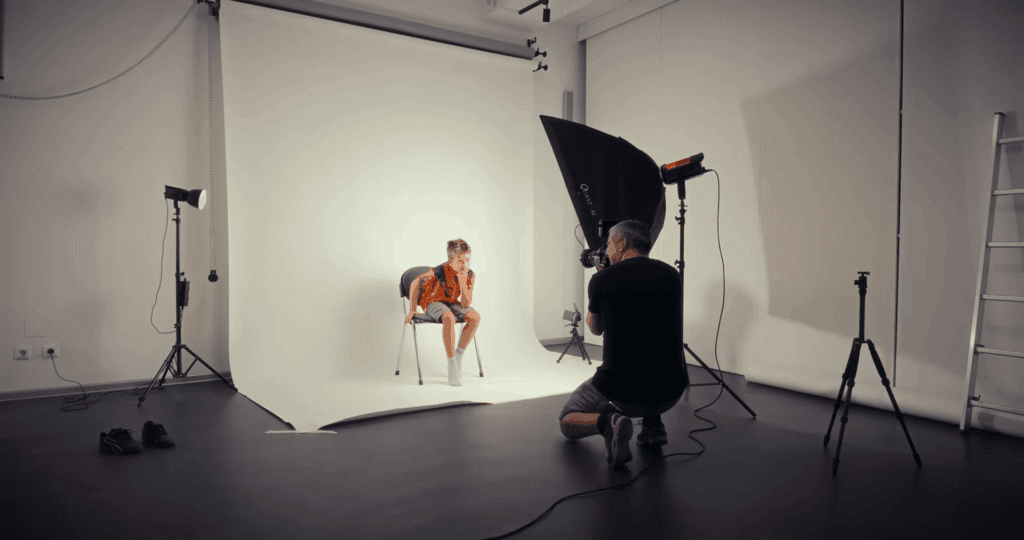
I spent my first year of photography bouncing between harsh on-camera flash and giant softboxes without really knowing why I was choosing one over the other. Once it clicked, everything changed. Let me save you that trial-and-error phase.
What Makes Light Hard or Soft?
Here’s the simple rule: the smaller the light source relative to your subject, the harder the light. The larger the source, the softer it becomes.
Think about the sun. It’s massive, but it’s 93 million miles away — so relative to your subject, it’s tiny. That’s why direct sunlight creates sharp, defined shadows. Now put a big softbox between that same sun and your subject, and the light wraps around them softly because the softbox has become a much larger source.
Hard light produces:
- Sharp, well-defined shadow edges
- High contrast between highlights and shadows
- More texture and surface detail visible
Soft light produces:
- Gradual, feathered shadow transitions
- Lower contrast, more even illumination
- Flattering, smoother appearance on skin
The key thing to remember: it’s not about brightness. A 100W panel right next to someone’s face can be softer than a 1000W spotlight across the room. Distance and modifier size are what matter.
Hard Light Photography Techniques & Best Uses
Hard light gets a bad reputation, but it’s incredibly powerful when used intentionally. Here’s where it shines:
Dramatic portraits. Fashion and editorial photographers use hard light to create bold, graphic shadows. Think split lighting where one half of the face falls into shadow — it’s punchy and unforgettable.
Product photography with texture. If you’re shooting leather goods, food with intricate detail, or anything where surface texture sells the product, hard light reveals what soft light would flatten out.
Film noir and cinematic moods. That classic detective-shadow-on-the-wall look? Hard light, every time. A focused beam with no diffusion creates that unmistakable mood.
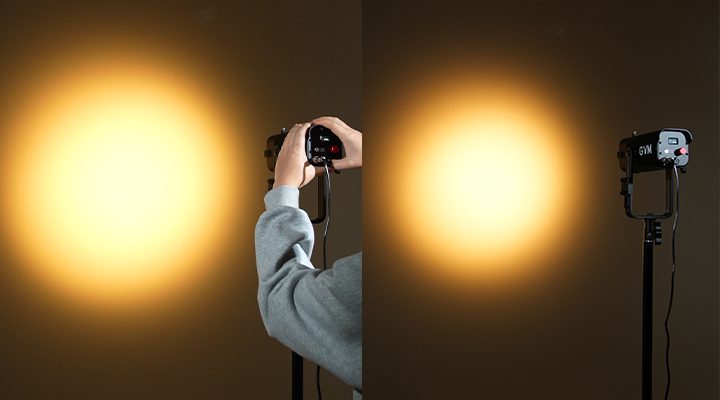
For hard light in the studio, I reach for a focusable spotlight. Il GVM PF100B is my go-to — its built-in Fresnel lens lets me dial the beam from 15° (tight, punchy spot) to 45° (wider but still focused). That adjustable beam angle means I can go from a razor-sharp slash of light to something slightly broader without swapping modifiers. It’s also noticeably softer in its fall-off compared to conventional COB spotlights, which gives me a bit more nuance even in hard light mode.
Soft Light Photography for Flattering Results
Soft light is the default choice for most portrait, beauty, and interview work — and for good reason. It minimizes skin blemishes, reduces unflattering shadows under eyes and noses, and creates a gentle, approachable feel.
Portrait and beauty work. Soft light wraps around the face, smoothing transitions and giving skin a natural, even look. It’s why beauty dishes and large softboxes are staples in every portrait studio.
Interviews and corporate video. Nobody wants to see every pore and wrinkle on their CEO in a company video. Soft light keeps things professional and polished.
Product photography for clean e-commerce. When you need even, shadow-free product shots for online stores, soft light is your best friend.
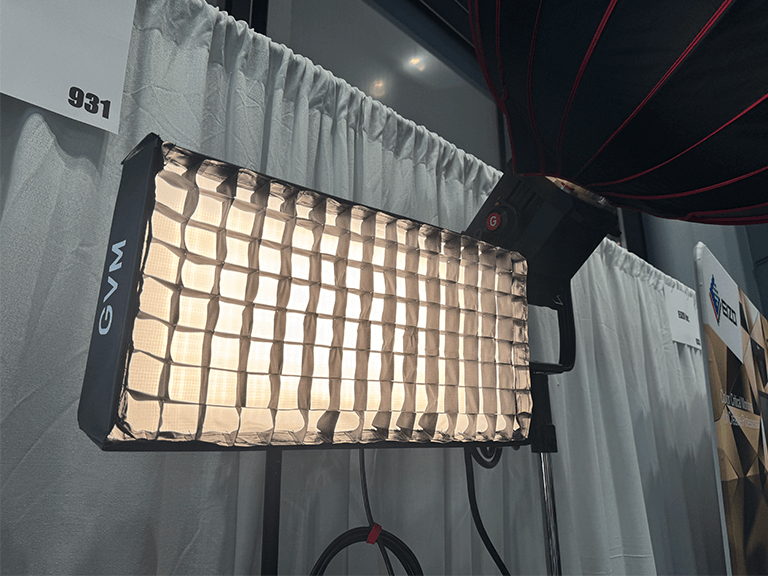
For soft light, I use a large-panel LED. Il GVM Z150B ZipTile is a 150W panel that produces broad, even illumination right out of the box. What makes it special is the zipper connection system — I can zip two or three panels together to create an even larger light source, instantly going from “soft” to “super soft” without rigging up a giant softbox frame. It’s the fastest way I’ve found to scale soft light on set.
How to Convert Hard Light to Soft Light
You don’t always need different lights — sometimes you just need the right modifier:
- Softboxes and diffusion panels. The most common approach. Attach a softbox to your COB light, and the front diffusion fabric turns that point source into a broad, soft surface.
- Umbrellas (shoot-through). A white shoot-through umbrella is the cheapest, fastest way to soften any strobe or LED. Quality isn’t as controlled as a softbox, but it works.
- Bounce off a wall or ceiling. Point your light at a white wall or ceiling, and the entire surface becomes your light source. Free and effective.
- Move the light closer. Remember the relative size rule? The same light placed closer to your subject becomes a larger source relative to them, producing softer shadows.
- Add fill. A reflector or a second low-power light on the shadow side won’t make the main light softer, but it will reduce the contrast ratio and create the appearance of softer overall lighting.
Mixing Hard and Soft Light in One Setup
This is where lighting gets fun. The most dynamic images rarely use just one quality of light — they combine hard and soft for depth and dimension.
Classic approach: Hard key, soft fill. Use a focused light like the PF100B as your key at a 45° angle, then place a large panel like the Z150B on the opposite side at reduced power. You get the sculpting and drama of hard light with the shadow detail preserved by soft fill.
Rim light combo. Soft key light on the face, hard light from behind as a rim or hair light. The hard edge creates separation from the background while the face stays flattering.
Environmental storytelling. I shot a short film where the character sat by a window (soft, diffused natural light) while a hard spotlight from behind suggested the harsh world outside. The contrast between the two light qualities became part of the story.
GVM LED Lights for Hard and Soft Light Setups
| Modello | Digitare | Potenza | Beam/Size | CRI | Il migliore per |
|---|---|---|---|---|---|
| GVM PF100B | Focusable Spot | 100W | 15°–45° Fresnel | 97+ | Hard light, dramatic portraits, cinematic spot |
| GVM Z150B | ZipTile Panel | 150W | Expandable (zipper) | 97+ | Soft light, beauty, interview, large-area fill |
FAQ
Q: Is soft light always better for portraits? A: Not at all. Soft light is flattering, but hard light creates drama and character. Fashion and editorial work often demands hard light. Choose based on the story you’re telling.
Q: Can I get hard light from a softbox? A: No — a softbox’s job is to diffuse. But you can remove the front baffle and inner diffusion to get a slightly harder quality, or use a gridded softbox for more directional (though still not truly hard) output.
Q: What’s the easiest way to soften an LED panel? A: Move it closer to your subject or add a layer of diffusion fabric in front. Even a white bedsheet clipped to a C-stand works in a pinch.
Q: Do I need two different lights for hard and soft? A: Not necessarily. One COB light with a Bowens mount can do both — bare for hard, softbox for soft. But having a dedicated focusable spot and a panel light gives you much more creative flexibility.
Q: Why does my soft light still look harsh? A: Your source is probably too small or too far away. Try moving the light closer or using a larger modifier. The relative size of the light to the subject is what determines softness.