Risposta rapida: La cinematografia con un unico punto luce è l'arte di plasmare una singola fonte di luce controllata per definire atmosfera, profondità e soggetto in un film. Nel 2026, le moderne luci cinematografiche a LED — come la GVM PRO SD300B — offrono ai cineasti fasci di luce focalizzabili, flessibilità bicolore e un funzionamento silenzioso che tungsteno e HMI non possono eguagliare. Questa guida analizza la tecnica, l'attrezzatura e gli schemi di configurazione che si trovano effettivamente sul set.
Indice dei contenuti
1. Che cos'è la cinematografia spotlight?
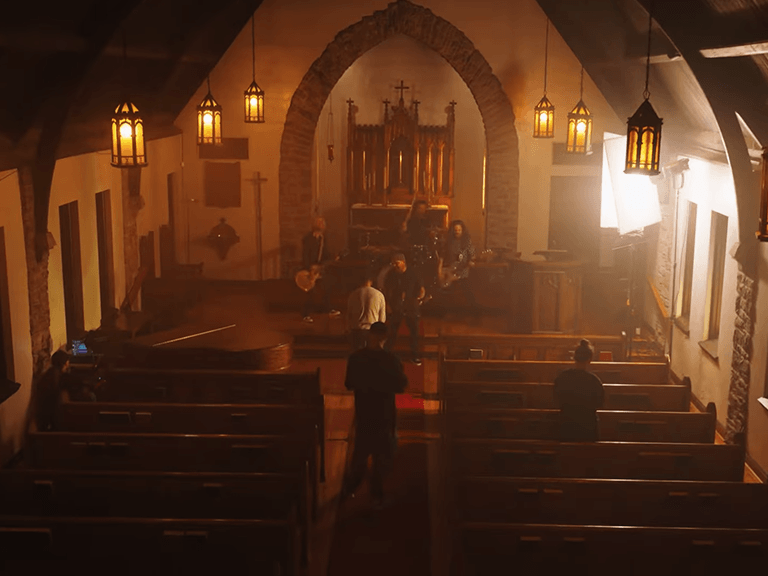
La cinematografia con proiettore (spotlight) si riferisce all'uso di un luce focalizzabile a fascio stretto per isolare ed enfatizzare un soggetto. A differenza delle fonti di luce morbida e diffusa (pannelli, softbox), uno spotlight proietta un fascio di luce controllato che:
- Intaglia il soggetto separandolo da uno sfondo scuro
- Crea ombre dure con bordi netti
- Evidenzia texture — pori della pelle, trama del tessuto, sudore sulla fronte
- Implica un focus narrativo (“guarda qui, non là”)
La tecnica risale agli anni '20 con i riflettori a lente di Fresnel e rimane un punto fermo della cinematografia noir, horror e drammatica moderna. Ciò che è cambiato nel 2026 è la sorgente: i LED hanno sostituito i tungsteni e gli HMI, offrendo ai cineasti lo stesso aspetto con temperature di funzionamento più fredde, dimmerazione integrata e raffreddamento silenzioso.
2. Perché le luci cinematografiche a LED hanno cambiato le regole del gioco
Tre ragioni per cui i LED hanno conquistato il mondo della cinematografia:
- Funzionamento silenzioso. Il tungsteno ronza; i ballast HMI vibrano. Le luci cinematografiche a LED come la GVM PRO SD300B utilizzano un sistema di raffreddamento silenzioso che non si insinua nelle tracce audio, nemmeno con il microfono a un metro dalla testa della lampada.
- Flessibilità bicolore. Un intervallo di 2700K-6800K ti consente di passare dal caldo candela allo scuro nuvoloso in pochi secondi, senza bisogno di gelatine. Abbina questo a un dimmer a 1/1000 di passo e puoi regolare l'esposizione durante una ripresa senza riavviare l'apparecchio.
- Controllo dell'ecosistema. DMX, mesh Bluetooth e controllo APP significano che il DP, il gaffer e l'operatore possono tutti regolare la stessa luce da posizioni diverse. Su un set indie con tempi stretti, questa è la differenza tra una giornata di 12 ore e una giornata di 16 ore.
3. L'anatomia di uno schema di illuminazione cinematografica
Un riflettore non è solo la testa della lampada. Una configurazione di illuminazione cinematografica funzionante include:
- Lampada — il LED COB + alloggiamento
- Riflettore o lente di Fresnel — controlla la dispersione del fascio (spot 15° ad ampio angolo 45°)
- Giogo + supporto — Supporto C-stand o da terra
- Porte a scorrimento o snoot — segnala la fuoriuscita, modella il bordo
- Diffusione (opzionale) — ammorbidisce il bordo per look ibridi rigidi/morbidi
- Potere + controllo — Batteria V-mount o alimentazione di rete, collegamento DMX o wireless
Per il lavoro documentaristico o "run-and-gun", un setup con batteria V-mount è irrinunciabile. Il GVM PRO SD300B funziona con V-mount, il che significa che puoi illuminare un'intervista a due persone in una camera d'albergo senza alcun problema di alimentazione.
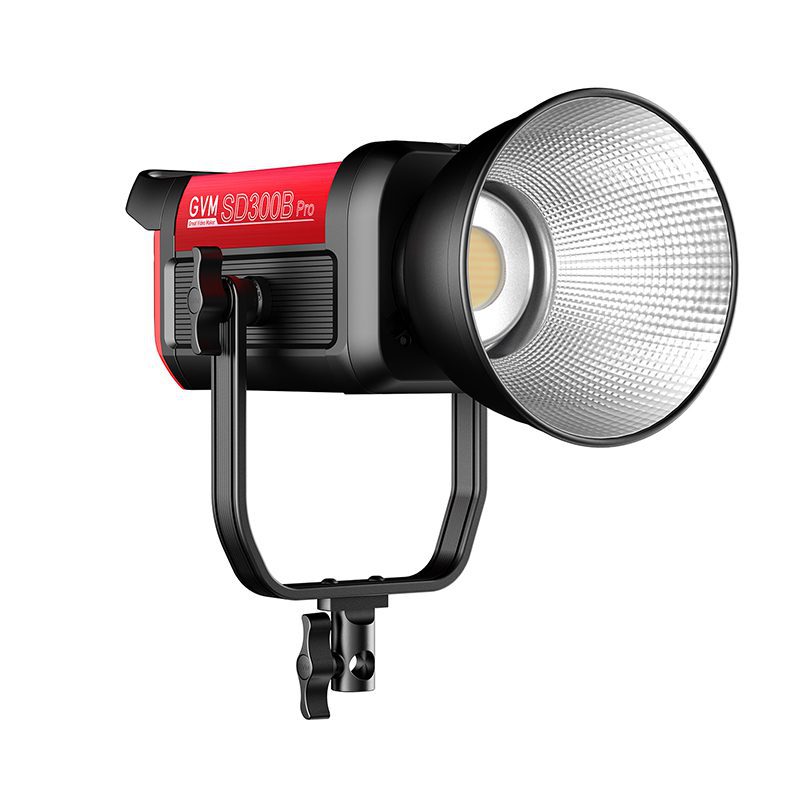
4. Scelta del redattore: GVM PRO SD300B per la cinematografia spotlight
Per i cineasti che necessitano di un'unica lampada che svolga la funzione di faretto con un assorbimento di 300W, la GVM PRO SD300B è il cavallo di battaglia che raccomanderemmo.
| Specchio | Valore |
|---|---|
| Uscita | 65.700 lux @ 1m (riflettore standard) |
| Temp. colore | 2700K–6800K bicolore |
| CRI / TLCI | 97+ |
| Oscuramento | 1/1000 passo, continuo |
| Controllo del raggio | Attacco Bowens + ottica zoomabile |
| Potenza | AC or V-mount battery |
| Controllo | APP, DMX, mesh Bluetooth |
| Raffreddamento | Silent fan, no hum on audio |
Why it fits spotlight cinematography:
- Focusable beam — narrow spot for tight character work, wide flood for scene coverage
- 97+ CRI/TLCI — skin tones stay natural even when you push the dimmer to 5%
- Mesh Bluetooth sync — coordinate three units as key, fill, and rim from one phone
- V-mount flexibility — go from studio AC to location battery in a minute
If you’re shooting a short film, music video, or narrative commercial, the PRO SD300B gives you the same photometric headroom as a 1.2K tungsten — at a fraction of the wattage and heat.
👉 Browse the GVM PRO SD series collection for the full wattage range (200W, 300W, 500W, 650W).
5. Schemi di illuminazione cinematografica: 3 look che ogni direttore della fotografia dovrebbe conoscere
5.1 La “Chiave Nera”
A single hard spotlight, 45° camera-left, 30° above eye line. Background falls to black. Subject is half-lit, half in shadow. Classic chiaroscuro — perfect for interrogation scenes or dramatic monologues.
5.2 L“”alone di retroilluminazione"
Spotlight behind the subject, 60° above, no fill. Subject becomes a silhouette with a rim of light defining hair and shoulders. Used in horror openings, dream sequences, and title cards.
5.3 La “Spinta Pratica”
A spotlight aimed at a practical lamp (desk light, bedside lamp, neon sign) inside the frame. The light becomes a story element, not just a source. Common in indie drama and music videos.
All three can be built with one 300W spotlight and a single V-mount battery. The PRO SD300B handles all three with no gels, no relight, no waiting for the lamp to cool.
6. Luci di una stanza per film versus luci di produzione (non confonderle)
A common search query is “movie room lights” — but that’s the home-theater ambient lighting category (LED strips behind a screen, bias lights, ceiling stars). It’s a different industry.
- Movie room lights = consumer home cinema aesthetic, not professional cinematography
- Movie production lights = the LED spotlights, panels, and COBs used on set
If you’re shopping for cinematography work, ignore the home-theater results. Focus on fixtures with Bowens mount, DMX support, and V-mount battery options.
7. Controllo Intelligente: Perché DMX e Mesh sono importanti nel 2026
In 2026, the difference between amateur and pro LED movie lights is the control layer. The PRO SD300B ships with three control paths:
- APP control — adjust CCT, intensity, and effects from your phone
- DMX in/out — link into a console for live show or multi-light sync
- Mesh Bluetooth — coordinate up to dozens of fixtures without a router
For narrative work, mesh Bluetooth is the killer feature. The gaffer programs the key, fill, and rim into a “scene,” then the DP triggers it from the camera position. No running back to the light, no resetting between takes.
8. Effetti di illuminazione e preset per look cinematografici
Modern movie lights ship with built-in effects: paparazzi, lightning, TV flicker, candle, fire, explosion, club. These used to require separate flicker boxes or DMX programming.
The PRO SD300B includes 12 lighting effects that can be triggered via the APP or DMX. For narrative cinematography, the most useful are:
- Lightning — quick, hard flashes for storm scenes
- TV flicker — soft, irregular pulse for “screen in background” looks
- Candle — slow, organic warm flicker for period pieces
These are not gimmicks. On a 12-day shoot, they replace thousands of dollars in external gear and hours of reset time.
9. Impostare le luci di Movie Studio per il successo
A few rules of thumb for first-time setup:
- Start with the key. Place the spotlight 45° camera-left at subject height, then walk it up to 30° above eye line. That position works for 80% of dramatic scenes.
- Flag the spill. Use barn doors or a black flag to keep the light off the background, even when the background is dark. A flagged edge looks intentional; an unflagged edge looks accidental.
- Meter the subject, not the room. A 1° spot meter on the cheek reads 400 ISO / f/2.8 / 1/50 — that’s your baseline. Anything else is a creative choice, not an accident.
- Test at the dim level you’ll shoot at. LED color shifts slightly at extreme low dim. Check your 5–10% range before committing to a look.
For a full studio setup, the GVM panel lights collection handles the soft fill and background work, while the PRO series owns the spotlight duty. Pairing them gives you a complete key-fill-rim rig.
10. Conclusione: la cinematografia con illuminazione d'accento è un'arte, non un elenco di attrezzature
The technique is older than cinema. The fixtures changed; the math didn’t. A focusable beam, a 45° angle, a flagged edge, and a meter reading on the cheek will give you a cinematic frame in 2026 the same way it did in 1962.
If you’re building a movie light kit, start with one 300W bi-color spotlight. The GVM PRO SD300B is the workhorse we’d recommend: focusable, silent, V-mount, mesh Bluetooth, 97+ CRI. It handles 80% of narrative cinematography on its own.