Lighting is the “secret sauce” of visual storytelling. Whether you are a YouTuber, a budding cinematographer, or a professional photographer, the way you manipulate light determines whether your subject looks flat and dull or professional and three-dimensional. Among all the techniques used in the industry, one stands as the undisputed foundation: Three-Point Lighting.
In this guide, we will break down the mechanics, the purpose, and the execution of the best three-point lighting setup, ensuring you can achieve high-quality results regardless of your budget.
3灯ライティングとは何ですか?
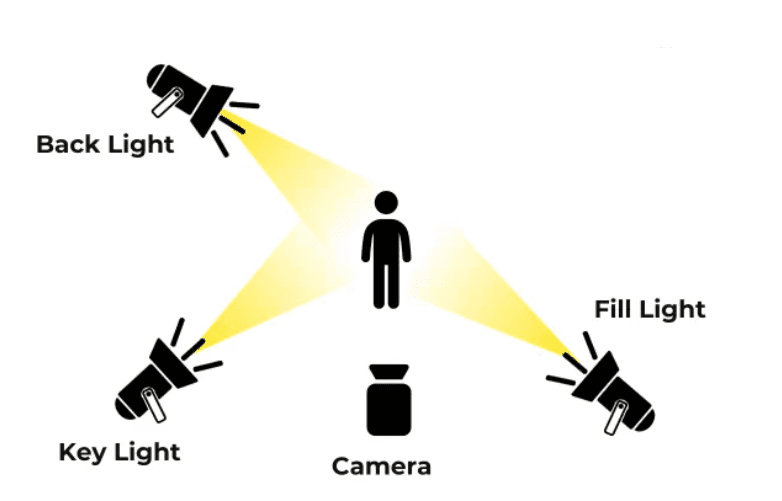
Three-point lighting is a standard method used in visual media such as video, film, and still photography. As the name suggests, it utilizes three distinct light sources positioned at different angles to illuminate a subject. By using three lights instead of one, the creator has total control over the shadows, highlights, and the perceived depth of the subject.
The three lights involved are:
- The Key Light: 主要で最も強力な光源.
- The Fill Light: A secondary, softer light used to cancel out harsh shadows.
- The Backlight: A light placed behind the subject to create separation from the background.
By balancing these three sources, you create a sense of volume and texture that a single light source simply cannot provide.
3点照明の目的は何ですか?
The primary purpose of three-point lighting is to create a sense of three-dimensionality on a two-dimensional screen.
When we see people in real life, our eyes perceive depth naturally. However, a camera flattens the world. If you use a single light—or worse, just the overhead lights in a room—the subject often looks “muddy” or “flat.”
Specifically, three-point lighting achieves the following:
- Modeling and Texture: By placing the key light at an angle, you create highlights and shadows that define the shape of the face and body.
- Shadow Control: The fill light ensures that the shadows created by the key light don’t become “black holes” where detail is lost.
- 分離 Without a backlight, a subject with dark hair or dark clothing might blend into a dark background. The backlight creates a “halo” or “rim” effect that makes the subject pop.
- Professionalism: It eliminates the “amateur look” caused by harsh, unpredictable shadows or washed-out skin tones.
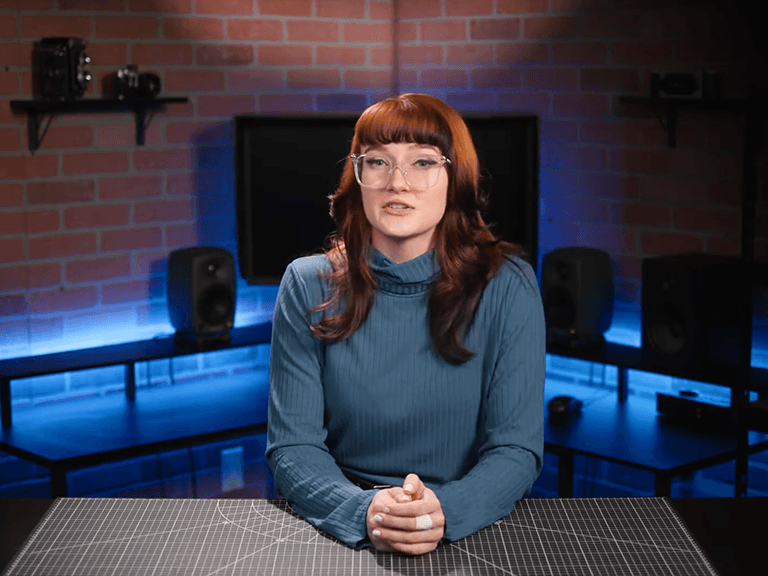
Best Three-Point Lighting Setup: The Standard Configuration
To achieve the best results, you need to understand the geometry of the setup. Imagine your subject is at the center of a clock face, facing 12 o’clock (the camera).
1. The Key Light (The Foundation)
- Position: Usually placed at 4 o’clock or 8 o’clock (roughly 45 degrees to the side of the camera). It should also be angled down at about 45 degrees.
- Function: This is your “Main” light. It establishes the overall exposure and creates the primary shadows on the face.
- プロのヒント For a classic look, aim for “Rembrandt Lighting,” where the key light creates a small triangle of light on the cheek opposite the light source.
2. The Fill Light (The Balancer)
- Position: Placed on the opposite side of the camera from the key light (e.g., if the Key is at 4 o’clock, the Fill is at 8 o’clock).
- Function: Its job is to “fill” the shadows created by the Key. It should be softer and less intense than the Key light.
- プロのヒント Use a “Lighting Ratio.” A common ratio is 2:1, meaning the Key light is twice as bright as the Fill. This maintains some shadow for depth without looking too dramatic.
3. The Backlight (The Separator)
- Position: Placed behind the subject, usually high up and angled down at the back of the head and shoulders. It should be out of the camera’s frame.
- Function: It creates a thin line of light (rim light) around the subject’s silhouette. This separates the subject from the background, adding a professional “layering” effect to the image.
- プロのヒント Be careful not to make the backlight too bright, or it will look unnatural and “glowy.”
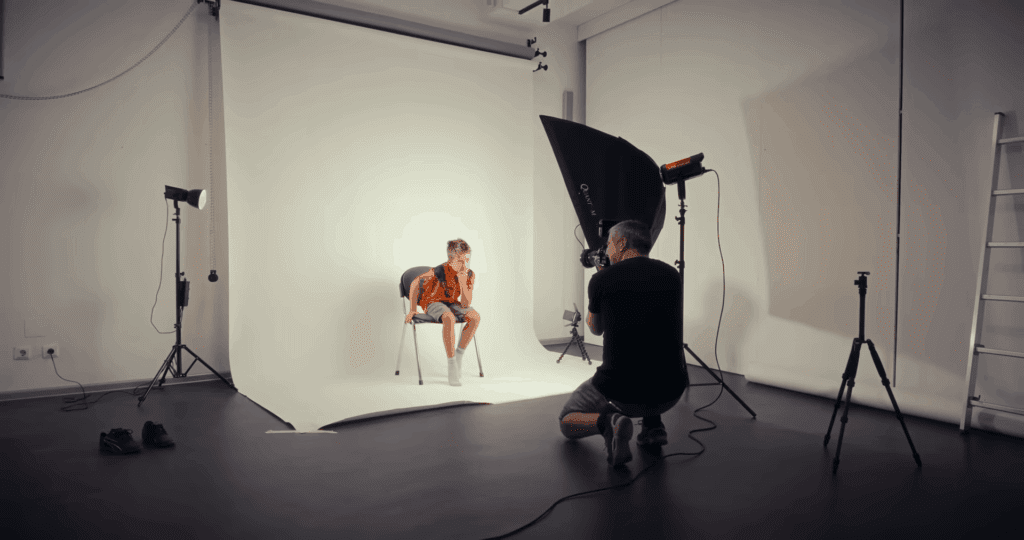
Three-Point Lighting at Home
You don’t need a professional studio to execute this setup. Most home environments can be transformed into a high-quality set with a little bit of planning.
1. Use Natural Light as Your Key:
If you have a large window, that is your best Key Light. Position yourself at a 45-degree angle to the window during the day. The light is soft, flattering, and free.
2. Use White Walls as a Fill:
If you don’t have a second light, you can use a “bounce.” If you have a white wall opposite your light source, it will naturally reflect light back onto the shadowed side of your face. Alternatively, you can use a white foam board or even a white bedsheet.
3. Clear the Background:
At home, backgrounds can be cluttered. By using a Backlight (even a small desk lamp hidden behind you), you can create enough separation so that the viewer’s eye stays on you, not the bookshelf behind you.
4. Control the Ambient Light:
The biggest challenge at home is “mixed lighting.” Turn off your overhead ceiling lights, which usually have a yellowish tint and create “raccoon eyes” (dark shadows in the eye sockets). Rely solely on your three points of light.
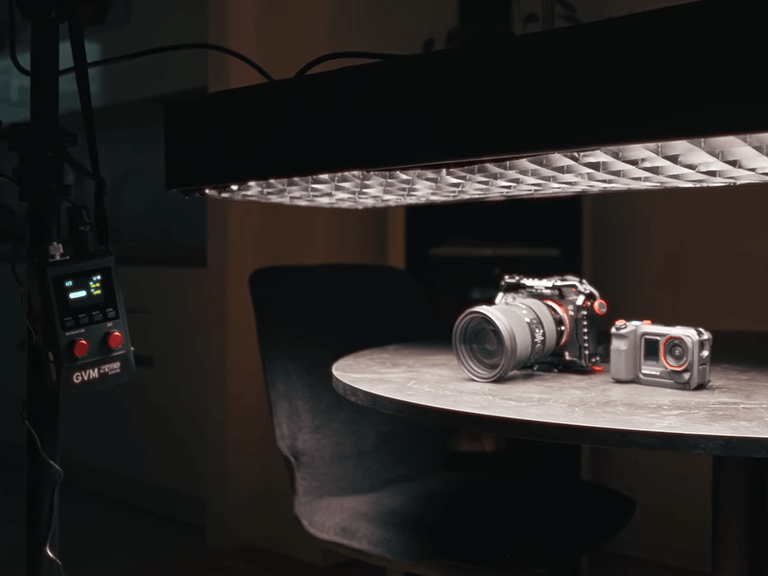
Cheap Three-Point Lighting: Budget Solutions
Creating a cinematic look doesn’t require a $2,000 LED kit. If you are on a tight budget, here is how you can build a three-point setup for under $50:
- The Key Light: Work Lights or “Clamp” Lights.
Go to a hardware store and buy a basic aluminum clamp light. Use a high-CRI (Color Rendering Index) LED bulb. To soften the light (which is crucial), clip a piece of white parchment paper or a thin white shower curtain over the front. Never use flammable materials near hot bulbs. - The Fill Light: A Simple Reflector.
You don’t even need a light bulb for the fill. A piece of white cardboard or a car sunshade (the silver kind) can reflect the “spill” from your Key light back onto your face. - The Backlight: A Desk Lamp.
An adjustable desk lamp or even a smartphone flashlight (if placed carefully) can serve as a backlight. Since the backlight doesn’t need to illuminate the whole face, it can be a much smaller, weaker light source. - Diffusion is Key:
Cheap lights are often “harsh.” The difference between a cheap look and a professional look is diffusion. Anything that makes the light source larger (like a white sheet or a softbox) will make the shadows softer and the skin look better.
結論
The best three-point lighting setup is more about placement and balance than it is about the price tag of your equipment. By mastering the Key, Fill, and Backlight, you gain the ability to direct the viewer’s attention, evoke emotion through shadows, and create a professional-grade image in any environment.
Start by practicing with whatever lights you have in your house. Pay attention to how the shadows move as you change the angles. Once you understand the “why” behind three-point lighting, your visual content will instantly stand out from the crowd.