Whether you are shooting on a $50,000 ARRI Alexa or a high-end smartphone, the quality of your フィルムライト is the single most important factor in determining the visual impact of your work. Lighting isn’t just about making a scene visible; it is about crafting mood, directing the audience’s eye, and giving your images a professional, three-dimensional look.
In this guide, we will explore the fundamentals of film lighting, from technical definitions and color science to a curated list of the best equipment and practical setups for your next project.
Film Lighting Definition
Film lighting is the strategic manipulation of light and shadow within a motion picture or video production to achieve specific aesthetic, narrative, or technical goals. Unlike “available light” or standard household illumination, professional film lighting is intentional and controlled.
At its core, film lighting serves three primary functions:
- Narrative Storytelling: Light communicates the time of day, the emotional state of a character, and even the genre of the film. A bright, evenly lit room suggests a comedy or a safe environment, while heavy shadows and high contrast suggest a thriller or noir.
- Creating Depth: Cameras see in 2D, but we live in a 3D world. Film lights use highlights and shadows to wrap around subjects, creating “modeling” that gives the image volume and depth.
- Visual Guidance: The human eye is naturally drawn to the brightest part of a frame. Filmmakers use light to guide the viewer’s attention to the most important element—usually the actor’s eyes or a key plot device.
What Color Light is Best for Filming?
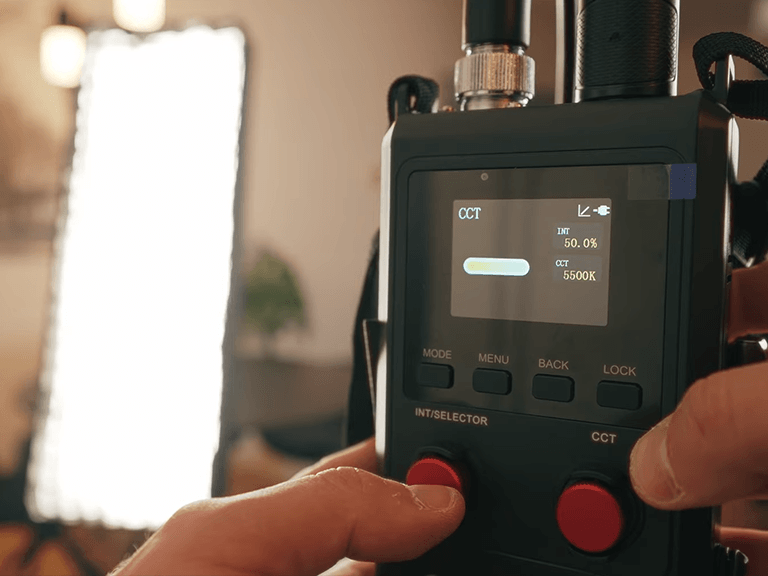
One of the most critical technical aspects of filmmaking is 色温度, measured in Kelvins (K). Choosing the “best” color light depends entirely on your environment and the mood you want to evoke.
1. The Two Industry Standards
- Daylight (5600K): This is the color of the sun at noon. It is a cool, crisp white light. Most modern productions use Daylight-balanced lights because they blend seamlessly with natural light coming through windows.
- Tungsten (3200K): This is a warm, orange-toned light, similar to traditional indoor light bulbs or the sun during “golden hour.” It is often used to create a cozy, intimate, or nostalgic atmosphere.
2. Bi-Color and RGB Lights
Modern LED technology has introduced バイカラー lights, which allow you to adjust the temperature anywhere between 2700K and 6500K. Furthermore, RGBWW lights can produce millions of colors, making them perfect for stylized music videos or sci-fi aesthetics where you might need a splash of neon pink or deep blue.
3. Color Accuracy (CRI and TLCI)
For filmmaking, the quality of the light is more important than the brightness. Always look for lights with a 演色評価数 そして TLCI(テレビジョン・ライティング・コンシステンシー・インデックス) of 95 or higher. Low-quality lights often have a green or magenta tint that makes skin tones look “muddy” or sickly, which is extremely difficult to fix in post-production.
Film Lighting Equipment List
To build a professional lighting kit, you need more than just a lamp. You need a system that allows you to shape and control the light. Here is a basic equipment list for any serious filmmaker:
- COB LED Lights (Point Source): Chip-on-Board LEDs (like the Aputure LS series) are the industry standard. They are powerful, compact, and allow you to attach various modifiers.
- LEDパネル These are great for soft, even illumination and are often used in corporate interviews or tight spaces where you don’t have room for large modifiers.
- Tube Lights: Long, thin lights (like the Nanlite PavoTube) that can be hidden in corners or used as “practicals” (lights that appear on-screen).
- ライティングモディファイア
- ソフトボックス Large tents that go over the light to soften the shadows.
- Fresnel Lens: A glass lens that focuses the beam into a tight, intense spotlight.
- 納屋のドア Metal flaps used to “cut” the light and prevent it from spilling onto the background.
- Grip Gear:
- C-Stands: Heavy-duty steel stands designed to hold lights and heavy modifiers safely.
- Sandbags: Essential for safety to prevent stands from tipping over.
- Flags and Scrims: Used to block or reduce light intensity in specific areas of the frame.
Best Lights for Filmmaking
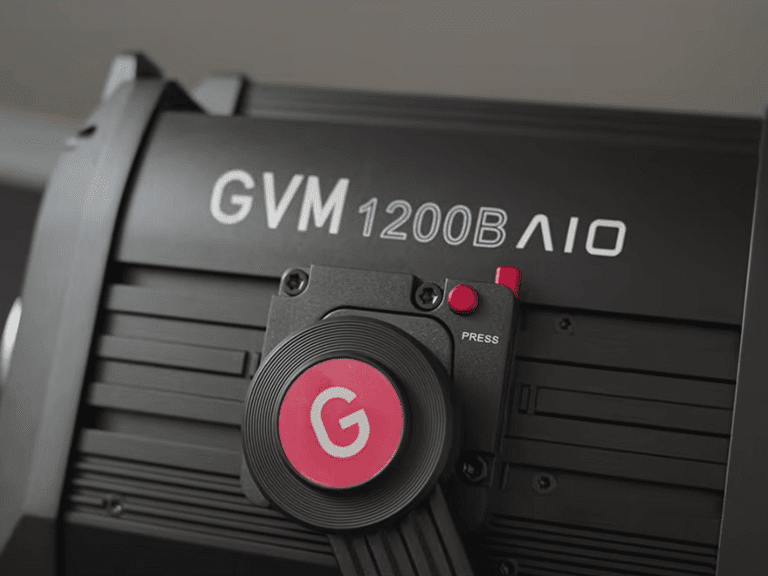
For professional filmmakers and studio creators seeking the ultimate balance of massive power and operational efficiency, the GVM 1200B AIO is a professional-grade 1200W bi-color LED designed for elite cinematography. It combines ultra-high output (42,800 Lux @ 3m) with a streamlined All-In-One design for a clutter-free workspace. Featuring a 60-second rapid setup, 97+ CRI color accuracy, and an innovative 3x focusing lens, it stands as the premier high-performance solution for professional film and broadcast productions.
GVM 1200B AIO | Product Specifications
| 機能 | 仕様 |
| モデル | GVM 1200B AIO |
| 出力 | 1200W |
| Luminance | 42,800 Lux @ 3m (with standard reflector) |
| 色温度 | 2700K – 6800K (Bi-color) |
| 色の精度 | CRI 97+ / TLCI 97+ |
| デザインタイプ | All-In-One (Integrated Controller & Power Supply) |
| セットアップ時間 | < 60 Seconds |
| Focusing Lens | 3x Optical Focusing (Eliminates hotspots, triples intensity) |
| マウントタイプ | Industry-Standard Bowens Mount |
| 照明効果 | 12 Built-in Cinematic Effects (Lightning, TV, Candle, etc.) |
| 冷却システム | Professional-grade active cooling for sustained output |
| アプリケーション | Professional Film, TV Broadcast, High-end Studio Work |
Film Light Guide (Practical Application)
Buying the gear is only half the battle; knowing how to use it is what makes a cinematographer. Follow these steps to achieve a cinematic look:
1. Find the “Motivation”
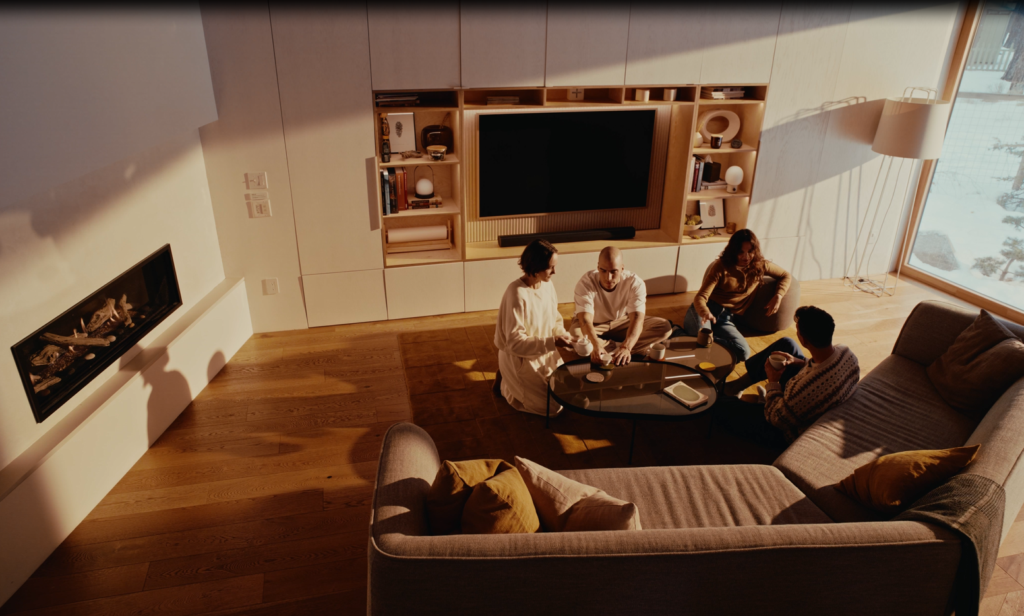
Every light in your scene should have a reason for existing. If your character is sitting near a window, your フィルムライト should come from the direction of the window. This is called “Motivated Lighting.” It makes the scene feel grounded and realistic.
2. Control the Quality: Hard vs. Soft
- ハードライト A small light source (like the sun or a bare bulb) creates sharp, defined shadows. It is used for high-drama, gritty, or intense scenes.
- 柔らかな光 A large light source (created by using a softbox or bouncing light off a white wall) creates gentle, flattering shadows. This is the standard for most interviews and beauty shots.
3. Use “Negative Fill”
In professional filmmaking, what you いや light is just as important as what you do. If your scene looks too flat, place a black flag or a piece of black foam board on the side of the actor opposite the light. This “absorbs” light and deepens the shadows, instantly adding a cinematic “mood.”
4. Separate the Subject from the Background
Always place a light behind your subject (a backlight or rim light). This creates a thin sliver of light on their hair and shoulders, which separates them from the background and prevents the image from looking flat and muddy.
結論
マスターリング フィルムライト is a journey of constant experimentation. While the best lights for filmmaking will certainly make your job easier, the true art lies in understanding how light behaves in the real world and recreating that magic on screen.
Start with a single high-quality LED light and a softbox. Practice moving it around your subject, observe how the shadows fall, and learn to control the spill. Once you understand the relationship between light and shadow, you won’t just be recording video—you’ll be making cinema.