Photography lighting is the single biggest variable between an amateur shot and a professional one — get the light wrong, and no amount of editing rescues it. The good news in 2026 is that LED technology has made good lighting cheaper and easier than ever. Below, we’ll walk through the four main categories every beginner needs to know, plus the exact gear I recommend in each.
目次
Best Photography Lighting Kit for Beginners: Where Most People Start
If you’re brand new to photography lighting, the most common mistake is buying too much, too fast. A beginner kit should cover three jobs:
- キーライト — the main illuminator, usually 45° to the subject
- フィルライト — softens shadows on the other side of the face
- Backlight (or hair light) — separates the subject from the background
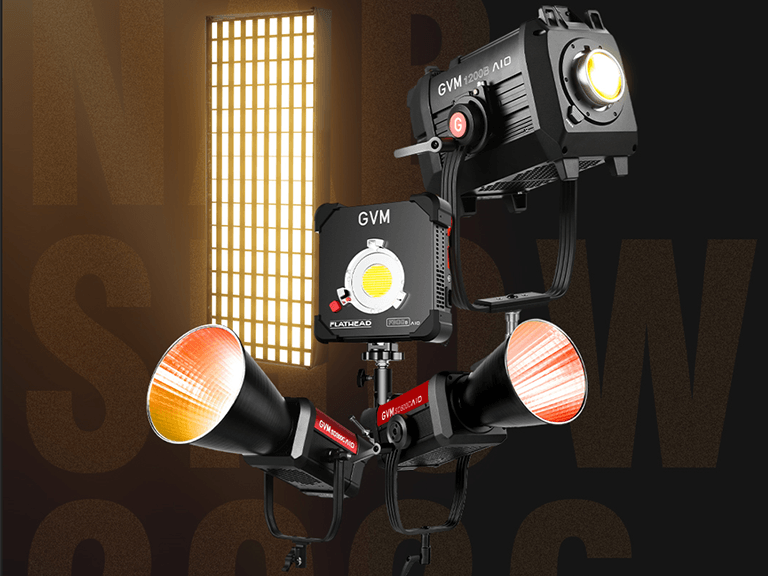
For most people in 2026, a 2-light kit is enough. A 3-light kit is “nice to have” once you start doing commercial work. The two setups I’d consider first are 2× SD200B for indoors, or 2× SD80D for travel. Both stay under $500.
Photography Lighting at Home: The 8×8 ft Setup
A home studio doesn’t need a spare bedroom — an 8×8 ft corner of any room works. Control the existing window light with blackout curtains, then build the rest with two LEDs:
- Window-side panel for soft fill (a magnetic PF100B on a north wall works perfectly)
- Opposite-side COB for the key (an SD200B on a C-stand at 45°)
- White foam board on the floor for a cheap bounce fill
Total cost: under $600 for the lights. Setup takes about 15 minutes.
Types of Photography Lighting: The 4 Categories That Matter
Every lighting setup in 2026 falls into one of four buckets:
| カテゴリ | What It Does | When to Use | Trade-Off |
|---|---|---|---|
| Continuous LED | Stays on; you see the result in real time | Video, product, beginners | Less powerful than flash |
| Speedlight (Flash) | Bursts for 1/1000s | Stills, freezing action | Invisible until you shoot; steep learning curve |
| Studio Strobe | Big flash, big power | Commercial, large sets | Heavy, expensive, AC-powered |
| Natural / Ambient | Window light, room light | Documentary, lifestyle | Uncontrollable; weather-dependent |
For 90% of content creators in 2026, continuous LED is the default. What you see is what you record, and bi-color panels like the SD200B eliminate the need to swap gels.
Product Photography Lighting: The 2-Light Setup That Just Works
Product photography lighting is the easiest to master, because the subject doesn’t move. A 2-light setup covers 90% of small product work:
- キーライト (left, 45°): A COB monolight with a 24″ softbox — the SD200B with a Bowens-mount softbox is the industry default
- フィルライト (right, lower): A bare panel or a bounced PF100B on a white card
- Background: A sweep of white paper or a magnetic PF100B behind the subject
For reflective products (jewelry, glass, electronics), swap the softbox for a strip light. Both lights must be identical in color temperature — set them to 5600K and lock them.
Photography Lighting Setup: The 3 GVM Lights I’d Actually Buy
If I were building a kit today, these are the three GVM lights I’d put in the bag — one panel, one COB, one handheld:
| モデル | タイプ | 力 | 最大出力 | 色温度 | CRI/TLCI | 重さ | 制御 | 最高 |
|---|---|---|---|---|---|---|---|---|
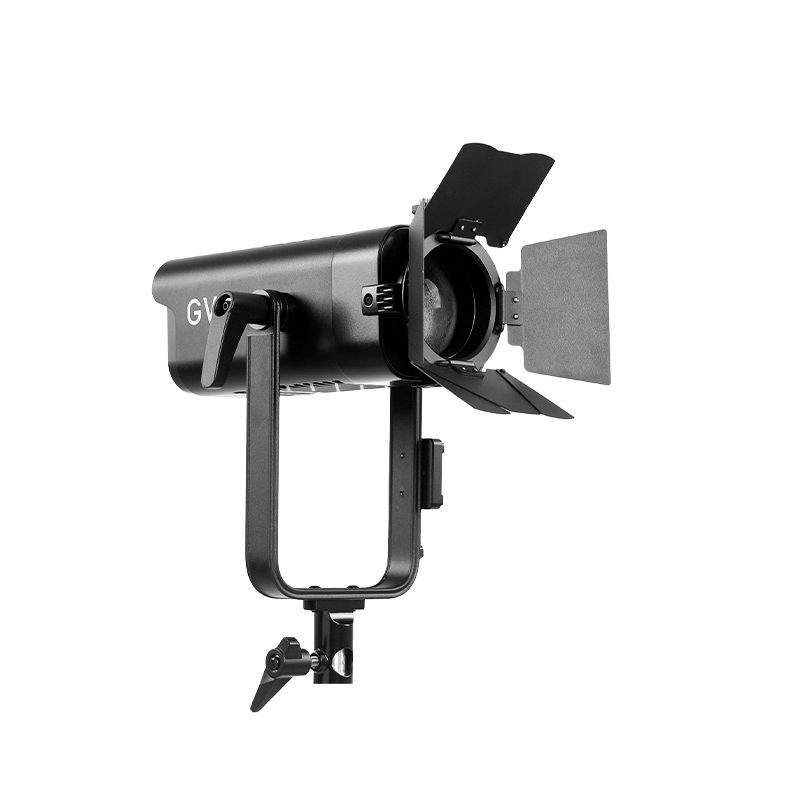
| GVM PF100B | Magnetic panel | 24W | 2,300 lux @ 1m | 3200K–5600K | 97+ | 1.1 lbs | On-board, APP | Travel fill, home studios, magnetic mounting |
| GVM PRO SD200B | COB monolight | 200W | 45,400ルクス @ 1m | 2700K–6800K | 97+ | 5.5 lbs | On-board, APP, DMX | Studio key light, commercial, YouTube |
| GVM PRO SD80D | Handheld COB | 80W | 18,500 lux @ 1m | 2700K–6800K | 97+ | 2.8 lbs | On-board, APP | Run-and-gun, location, vlogging |
GVM PF100B — The Magnetic Panel (Pros & Cons)
長所 Genuinely 1.1 lbs — lighter than a 13″ MacBook. The magnetic back sticks to any ferrous surface (light stands, refrigerators, car hoods). 97+ CRI means skin tones are accurate. Built-in battery lasts about 90 minutes at full power.
デメリット 24W is いいえ a key light — don’t expect to overpower a window. The 3200K–5600K range is narrower than the COB lights.
GVM PRO SD200B — The Studio COB (Pros & Cons)
長所 45,400 lux @ 1 meter is enough to overpower almost any indoor situation. The Bowens mount is the universal standard — every softbox, beauty dish, and reflector you own will fit. CRI and TLCI both hit 97+ across the full 2700K–6800K range.
デメリット At 5.5 lbs it’s not a “grab and go” light — you need a C-stand. The fan is audible in a quiet room (a problem for ASMR). The Bowens mount also means you’ll accumulate modifier gear.
GVM PRO SD80D — The Handheld COB (Pros & Cons)
長所 At 2.8 lbs it’s the lightest Bowens-mount COB in the SD lineup. 80W is enough for a key light in a small room or a fill light in a medium room. The handheld form factor is genuinely useful — you can boom it overhead, hand it to a model, or pop it on a tabletop stand.
デメリット 18,500 lux @ 1 meter is half what the SD200B delivers — you cannot overpower bright window light. The smaller form factor means it doesn’t dissipate heat as efficiently, so the fan ramps up under heavy use.

FAQ: Types of Photography Lighting
What is the most important photography lighting for beginners?
A single bi-color COB with a 24″–36″ softbox. The COB gives you the brightness, the softbox gives you the quality. Start there before adding a second light.
Can I use LED lights for portraits?
Yes. Continuous LEDs work great for portraits, especially with CRI 97+ panels. The only downside is they’re less powerful than strobes for freezing fast motion, but for headshots and most lifestyle work they’re ideal.
How many watts do I need for a home studio?
A 200W COB is enough for a 12×12 ft room. If your room is bigger or has lots of window light, step up to a 300W (the F300B AIO) or stack two 200W units.
What’s the difference between a panel and a COB light?
A panel spreads light softly and evenly (great for fill, travel). A COB is a single point source (great as a key light with a softbox). For a complete kit, you want one of each.
Do I need a softbox?
If you’re using a bare COB, yes — a 24″–36″ softbox is the single biggest quality upgrade. If you’re using a panel, the diffusion is already built in.
What color temperature should I use?
5600K for daylight/product. 3200K for warm cinematic. Bi-color LEDs (like the SD200B and SD80D) let you dial in anywhere between 2700K and 6800K without swapping gels.
Build a complete setup: Start with the GVM PRO SD200B kit for your key light, add a GVM PF100B for fill, and grab a GVM PRO SD80D for handheld work. For more on building a complete studio, see our studio lighting setup guide, 、 video light filmmaking guide, 、そして best cheap film lights roundup for budget picks.