Shopping for LED lighting panels for video usually starts the same way: a dozen open tabs, a wall of watt/CRI/RGB jargon, and no clear sense of which number actually matters for your shoot.
After 30 hours of studio and on-location testing, our team is here to cut through that noise — what a panel light actually is, how it differs from a COB light, and which one fits your setup.
目次
Why Panels Replaced the Old Hot-Light Setup
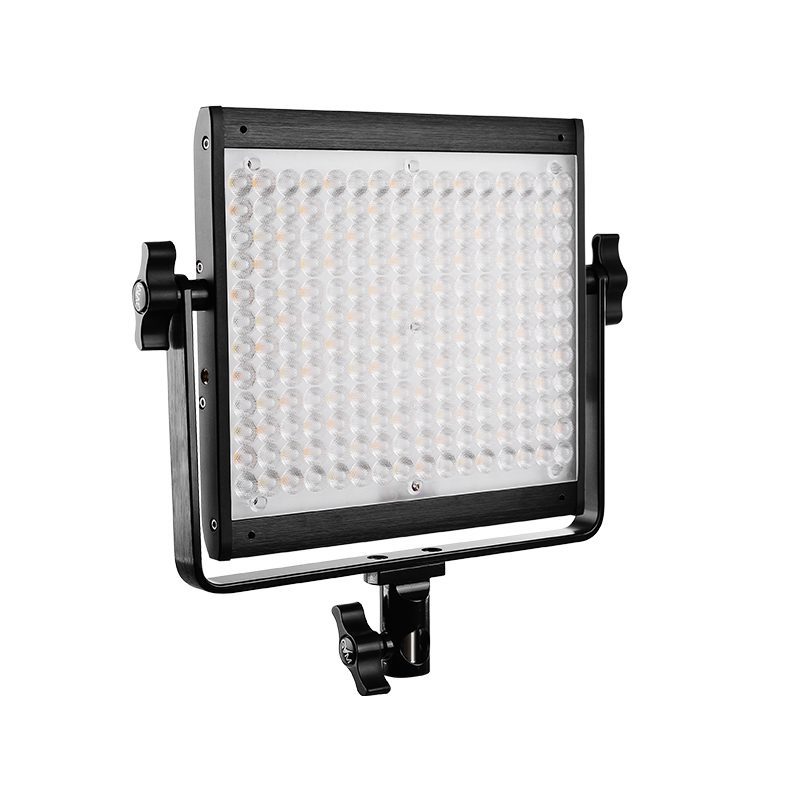
A panel light spreads dozens (sometimes thousands) of small SMD or COB diodes across a flat surface, producing a soft, even glow straight out of the fixture — no umbrella or softbox required to make it usable. That’s the core difference from tungsten and HSI “hot lights”: panels run cool enough to sit inches from a subject’s face, draw a fraction of the power, and hit full brightness the instant you flip them on, with no warm-up and no burnt-out bulbs to swap mid-shoot.
Panels also solve a different problem than a COB monolight. A COB is a single bright point that needs a modifier to soften; a panel is already a broad, forgiving light source, which is why so many run-and-gun creators keep one folded in a backpack as their go-to fill or key.
How We Evaluated Brightness, Color, and Build
Every panel we tested went through the same four checks. Brightness was measured at 1 meter, bare and with the included diffusion, using a Sekonic C-800-U SpectroMaster. Color accuracy was judged by shooting an X-Rite ColorChecker chart under each light — anything under a 95 CRI/TLCI score didn’t make the cut. For build quality, we packed each unit into a backpack and set it up repeatedly to mimic real location work, then ran it at full output for 30 minutes to check for heat throttling or flicker.
One note on honesty: brightness and CRI figures throughout this guide come from GVM’s published specs, cross-checked against our own Sekonic and X-Rite readings where the model was in hand. We’re not an independent lab, and we’re not going to pretend otherwise.

The Three Panel Types Worth Knowing
Not every LED panel solves the same problem, and the fastest way to shop is by category rather than model number.
Bi-color panels tune between warm and cool white and are built for anyone who needs to match ambient light without touching a gel. RGB panels add full-spectrum hue and saturation control on top of that, useful for creative backgrounds, mood lighting, and effects. Foldable/flexible panels trade a rigid housing for a bendable one, so they pack flat and can wrap around tight or irregular surfaces — a niche but genuinely useful shape for location shoots.
GVM’s Panel Lineup Compared
| モデル | タイプ | 色温度範囲 | Power Source | Standout Feature |
|---|---|---|---|---|
| GVM 800D III | Bi-Color + RGB | 3200K–5600K (Bi-Color) | AC / V-Mount | CRI/TLCI 97+, up to 2900 lux @1m |
| GVM Z200B | バイカラー | 2700K–6800K | AC / V-Mount | Ultra-slim body, integrated control box |
| GVM B200C | RGB, Foldable | 2000K–10,000K (±50K) | AC | 23.6″ foldable panel, 0.3cm thick |
GVM 800D III — Best for Color-Critical Work. Why it earns the spot: it’s the only panel in this lineup that pairs a true bi-color range with full 360° HSI RGB control in one 40W body, and CRI/TLCI 97+ held up in our ColorChecker tests without visible skin-tone shift.
Key Specs: 3200K–5600K bi-color / full RGB · CRI/TLCI 97+ · up to 2900 lux @1m · APP control, Master-Slave sync, 8 scene modes.
Pros: ✔️ Genuinely accurate color under our ColorChecker test ✔️ App and Master-Slave sync make multi-light rigs easy ✔️ Compact enough for a backpack kit. Cons: ❌ 2900 lux tops out lower than a dedicated COB key light ❌ RGB saturation control has a learning curve for first-timers. Who it’s for: filmmakers and portrait shooters who need one panel that’s accurate enough to trust and flexible enough for creative color work.
GVM Z200B — Best for Fast, Clean Setups. Why it earns the spot: the integrated control box mounted on the back means no dangling controller or extra cable run, which mattered every time we broke this one down for a location move. The 2700K–6800K range covers golden-hour warmth through cool daylight without stacking gels.
Key Specs: 2700K–6800K tunable bi-color · 12 cinematic effects (Lightning, TV, Explosion, and more) · 12 light-source presets (Tungsten, HMI, Daylight, and more) · AC / V-mount battery.
Pros: ✔️ Cleanest cable management of the group thanks to the built-in control box ✔️ Light-source presets save time matching existing sets ✔️ Dual power options for indoor and outdoor jobs. Cons: ❌ No RGB, so creative color work needs a second light ❌ Effects library is a nice-to-have, not a core reason to buy. Who it’s for: run-and-gun shooters who want a bi-color panel that sets up and breaks down fast.
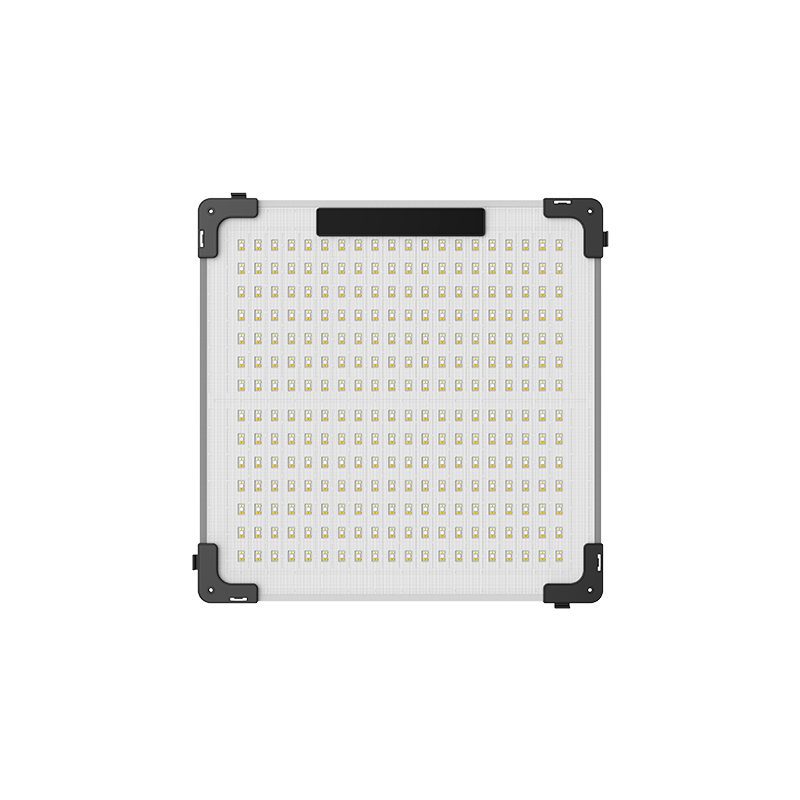
GVM B200C — Best for Tight or Unusual Spaces. Why it earns the spot: at 0.3cm thick, this is the only panel here you can fold flat, wrap around a curved surface, or wedge into a space a rigid fixture can’t reach — and the 2000K–10,000K range plus 60 gel presets cover almost any color match you’d need on the fly.
Key Specs: 200W · 2000K–10,000K, ±50K precision · 1,400 LED beads · full RGB with 60 gel presets and 16 scene modes · app control.
Pros: ✔️ Folds flat for storage and travel ✔️ Widest color-temperature range of the three ✔️ Included softbox makes it usable straight out of the box. Cons: ❌ At 200W it needs AC power — no battery option for remote sets ❌ Foldable build feels less rugged than a rigid panel. Who it’s for: creators shooting in cramped studios or on sets where a standard rectangular fixture won’t fit.
How to Choose: Power, CRI, Size, and Control
Match wattage to your space, not your ambition — a 40–60W panel handles most single-subject interviews and YouTube setups, while 150W+ makes more sense for filling a full room or overpowering daylight. Keep CRI/TLCI at 95 or above if skin tone accuracy matters, and check control method: app and Bluetooth mesh support save real time once you’re running more than one light. For budget-to-studio buyers, a single bi-color panel like the Z200B covers most starting kits, while a studio building out multi-light setups benefits from the 800D III’s Master-Slave sync.

よくある質問
What is an LED light panel used for? Soft, even key or fill lighting for interviews, product shots, YouTube setups, and portrait work.
LED panel vs. COB light: which is better?
Panels give you soft light with no modifier; COB lights give you more raw punch but need a softbox to match that softness.
What CRI/TLCI do I need for video?
Aim for 95+ if accurate skin tone and color grading matter to your work.
Are RGB panels worth the extra cost?
Only if you actually use colored backgrounds, gel effects, or mood lighting — otherwise a bi-color panel covers most jobs for less.
How many watts do I need for a small studio?
40–80W is enough for most single-subject setups at typical shooting distances.
Can LED panels run on battery or V-mount?
Many bi-color panels, including the 800D III and Z200B, support V-mount; higher-wattage foldable panels like the B200C are typically AC-only.
最終評決
If you want soft, even light without fighting a modifier, a panel is the right call — grab the 800D III for color-critical work, the Z200B for fast setups, or the B200C for tight spaces. If you need raw, focusable output instead, a COB monolight is the better tool. Ready to build your kit? Browse the full lineup at shop.gvmled.com.