A compact camera light has become one of the most searched accessories among photographers who shoot after dark. You have spent good money on a fast lens and a capable body, but the moment the sun goes down, everything falls apart: faces turn into shadowy blobs, backgrounds swallow detail, and autofocus starts hunting in the dark.
It is a familiar and frustrating scene — a photographer standing in a dim alley or a neon-lit street, camera ready, but the light simply is not there to work with. No amount of sensor performance or lens speed fully solves this problem. What actually closes the gap is a small, portable light source built to travel with the camera itself.
目次
How Should You Choose a Fill Light?
Picking the right fill light is not just about brightness. A few factors matter far more once you are actually shooting:
- Size and weight — if it does not fit in your bag or on top of your camera without throwing off balance, you will leave it at home.
- Color accuracy — a high CRI/TLCI rating (ideally 95 or above) keeps skin tones and product colors looking natural instead of washed out or greenish.
- Color temperature flexibility — bi-color output lets you match ambient light, whether that is warm streetlamps or cool blue hour skies.
- Power source options — battery, AC, or USB-C power bank support determines how long you can shoot away from an outlet.
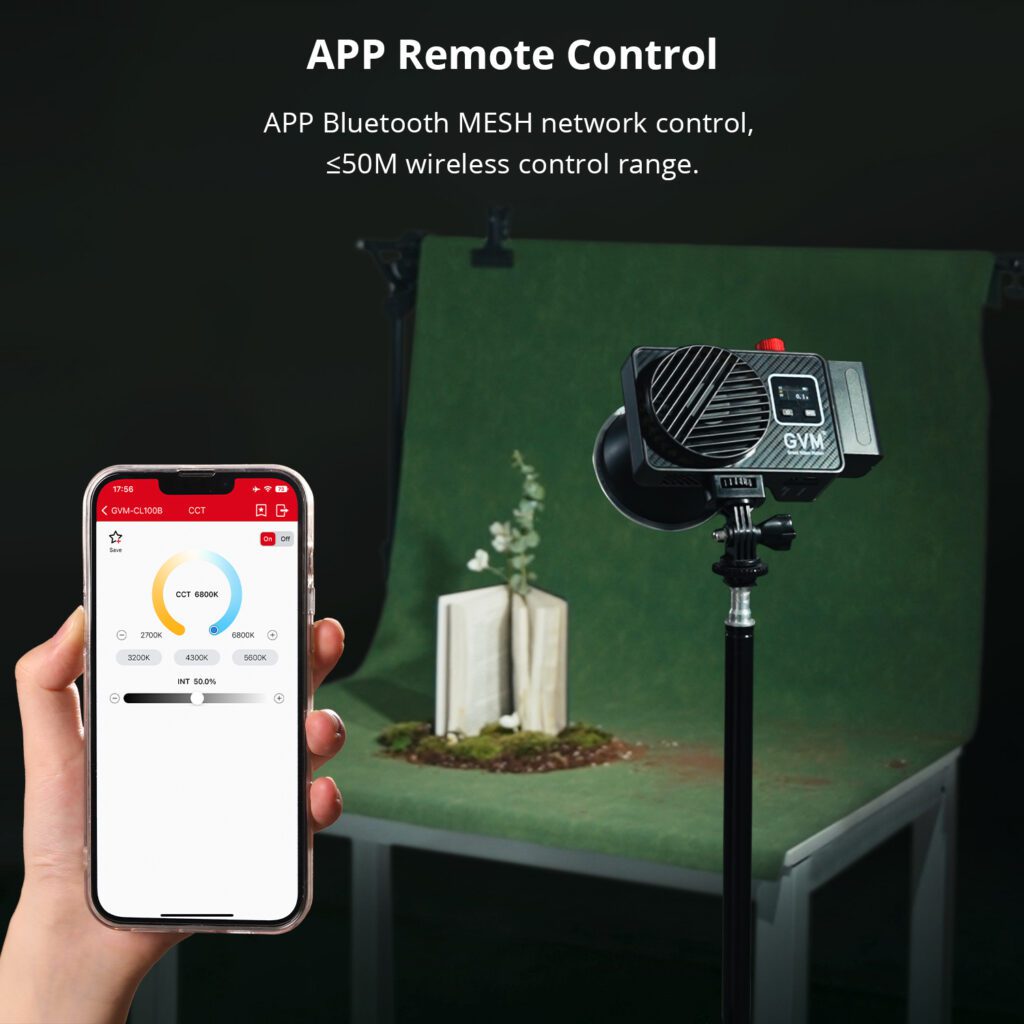
- Control method — onboard dials are fine for quick adjustments, but app control becomes essential once you are working solo and need to tweak brightness from behind the camera.
None of these matter in isolation. A light that is bright but color-inaccurate will still leave your footage looking artificial, and a light with great color science but poor battery life will die halfway through a shoot.
Why This Matters Even More Outdoors
Indoor shooting at least gives you some control — you can turn on room lights or bounce a flash off a ceiling. Outdoor shooting removes that safety net entirely. Ambient light is inconsistent, backgrounds are often far brighter or darker than your subject, and there is no wall to bounce light from. A compact, weatherproof-leaning light that clips onto a camera, sits on a small tripod, or mounts to a gimbal becomes the only reliable way to keep your subject properly exposed while the environment behind them does its own thing. This is exactly where a dedicated compact camera light earns its place in a travel or run-and-gun kit, rather than staying in a studio bag.
Meet the GVM-CL100B: A Compact Camera Light Built for Mobility
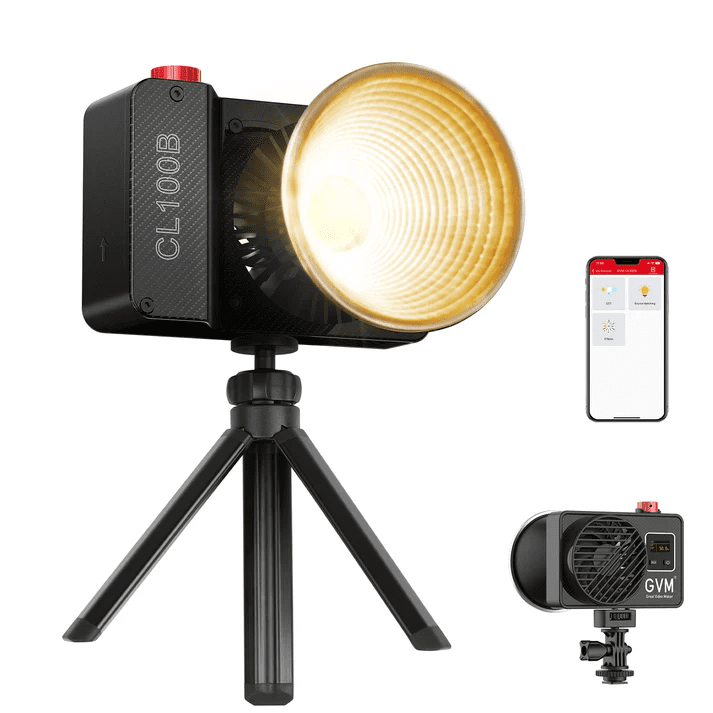
This is where a purpose-built compact camera light like the GVM-CL100B comes in. It is designed around the exact problem described above: a light small enough to travel everywhere, but powerful enough to actually fix a dark scene.
| 機能 | 説明 |
|---|---|
| Palm-Sized & Lightweight | Weighs only 357g (0.78 lbs), roughly the size of a mirrorless camera body |
| Powerful 100W Output | Delivers 18,500 Lux @ 1m for genuinely usable brightness, not a token glow |
| Bi-Color Flexibility | Adjustable color temperature to match streetlights, dusk skies, or indoor tungsten |
| True Color Science | CRI 97+ / TLCI 97+ for accurate, lifelike skin tones and colors |
| Triple Power Supply | AC adapter, NP-F batteries, or USB-C PD power bank |
| Dual Control | Onboard knobs plus GVM App with Bluetooth Mesh (50m range) |
The included light-shaping kit — a silicone dome for soft portraits, a small reflector for punchier product shots, and a tabletop tripod — means it is ready to shoot straight out of the bag, with no separate modifier purchase required.
Continuous Light vs. Flash: Which One Do You Actually Need?
This is a question every photographer eventually runs into once they start looking at compact lights, and the honest answer is: it depends on what you are shooting.
Continuous LED lights, like the CL100B, stay on the whole time. You see exactly how the light falls on your subject before you press the shutter — no guesswork, no test shots. This makes them ideal for video, livestreaming, and any photographer who wants what-you-see-is-what-you-get results. They are also far friendlier for beginners, since there is no flash sync speed or power ratio to learn.
Flash units produce a single powerful burst, which lets them freeze motion and overpower bright daylight in ways continuous light generally cannot. They are the better choice for high-speed action, studio strobist work, or shooting in full sun where you need to punch through ambient light.
For most creators working with a compact camera light — vloggers, product shooters, portrait photographers, and anyone shooting hybrid photo/video content — continuous LED wins on convenience and versatility. Flash still has its place, but it solves a narrower set of problems.
Real-World Use Cases
City night portraits: This is one of the most common requests on platforms like Xiaohongshu and TikTok — a bright neon skyline behind the subject, but their face reads as a dark silhouette. A continuous LED with a softbox, or an on-camera/off-camera flash with a diffuser, solves this by separating the exposure of the background from the exposure of the subject’s face.
Travel vlogging: A light this size slips into a jacket pocket, making it easy to add fill light to handheld run-and-gun footage without slowing down.
ライブ配信 Desktop tripod compatibility turns it into a professional-grade webcam light for creators working from a desk.
Product and food photography: High CRI output keeps colors and textures accurate, which matters enormously for anything meant to look appetizing or true-to-life.

よくある質問
Is a compact camera light strong enough for outdoor use?
At 18,500 Lux @ 1m, a light like the CL100B provides enough output for close-to-mid-range fill work outdoors, especially at dusk or night. For full daylight overpowering, a flash is usually a better tool.
Do I need both continuous light and flash?
Not necessarily. Most video-first and hybrid creators are well served by continuous LED alone. Flash becomes worth adding once you shoot fast action or need to fight strong daylight.
How long does battery power last?
Runtime depends on brightness level and the NP-F battery capacity used, but the CL100B’s triple power options (AC, battery, USB-C PD) mean you are rarely limited to one power source on location.
Can one light control multiple units?
Yes — Bluetooth Mesh networking allows multiple CL100B units to be synced and adjusted together, which is useful for solo creators building a multi-light setup without extra hands.
結論
A dark scene no longer has to mean a wasted shot. Whether you are shooting city portraits, travel vlogs, or live streams, a genuinely compact camera light closes the gap between what your camera can capture and what the available light allows. The GVM-CL100B packs studio-grade color accuracy and real output into a body barely bigger than your hand, making it one of the easiest upgrades to add to a lightweight kit heading into 2026.