COB video light photography has moved from a niche studio trick to a mainstream choice for filmmakers, photographers, and streamers alike. The shift isn’t accidental — COB (Chip-on-Board) fixtures pack more usable output into a smaller footprint than most creators expect, and that changes what’s possible on a one-person set.
As budgets tighten and production schedules shrink, more shooters are asking whether a single COB head can replace the two or three panel lights they used to carry.
目次
The Rise of COB Video Light Photography
A few years ago, COB fixtures were mostly a cinema-rental item — heavy, expensive, and overkill for anything short of a feature shoot. That’s changed. Compact COB monolights now sit at price points close to mid-range panels, while still delivering the punchy, controllable beam that panels struggle to match at distance.
For content creators shooting product videos, portraits, or interviews, this matters because COB light throws harder and shapes more precisely with modifiers. A single COB head with a softbox can key a subject the way it used to take a panel-and-reflector combo to achieve. That’s fewer stands, less cable, and a faster setup — which is exactly why COB video light photography has picked up so much momentum among solo and small-crew creators.
Inside COB Technology: How It Differs From Traditional Panel Lights
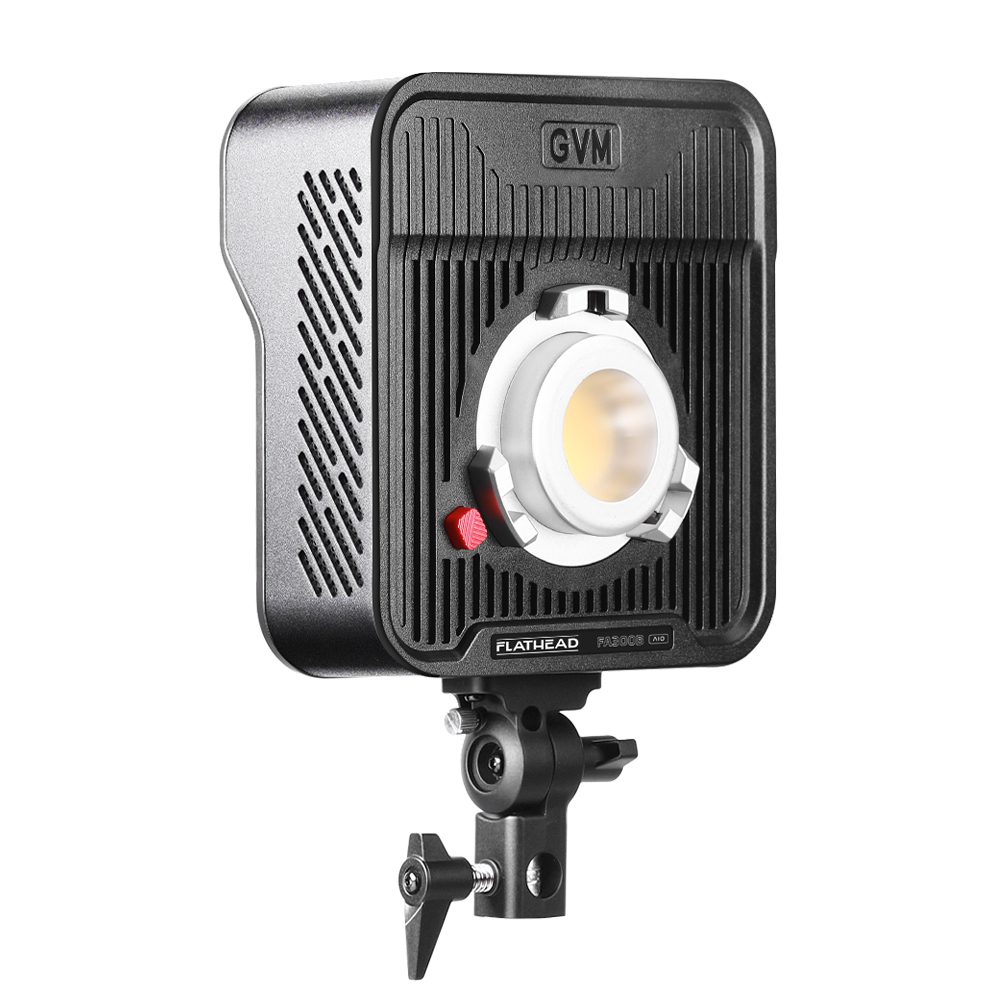
The core difference comes down to the light source itself. A COB fixture uses a single, densely packed LED chip cluster behind a reflector dish, producing a point-source beam similar to a traditional tungsten fresnel. Panel lights, by contrast, spread dozens or hundreds of smaller LEDs across a flat surface, giving a broader, softer spread of light straight out of the box.
That structural difference shows up in three practical ways:
- Output at distance. COB’s concentrated source throws light further before it falls off, which is why COB fixtures post such high lux figures when paired with a reflector or Fresnel attachment.
- Shaping control. Because the light originates from one point, COB heads work naturally with Bowens-mount modifiers — softboxes, barn doors, grids, and projection attachments — giving far more precise shadow control than a flat panel.
- Form factor trade-offs. Panels are thinner and easier to mount close to a subject in tight spaces; COB heads need a bit more clearance but reward that space with harder, more directional light.
Neither format is strictly “better.” The right pick depends on whether a shoot calls for soft, even fill or a punchy, shapeable key light — which is exactly the decision most creators run into once they start comparing COB and panel options side by side.
Real-World COB Lighting: The GVM FA300B in Action
An all-in-one COB monolight like the GVM FA300B is a good illustration of where this category has landed. It’s built around a flathead panel-style COB design, so it keeps the compact, easy-to-carry form of a panel while behaving like a true COB source once a modifier goes on. With a reflector attached, it reaches up to 71,400 lux at one meter — enough headroom to key a subject from across a room or punch through a softbox without losing intensity.
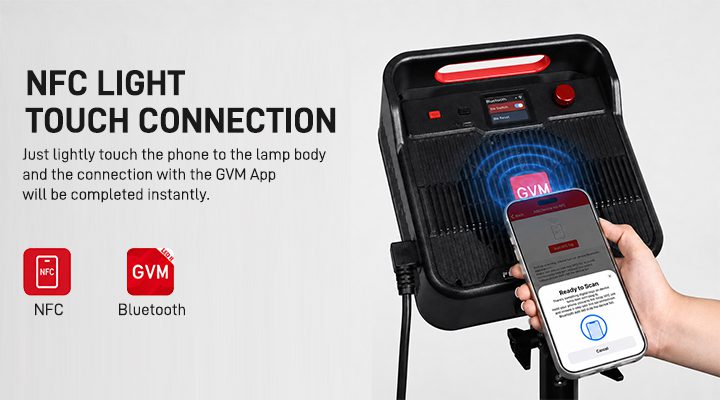
Picture a small studio shooting a product demo video. One FA300B, bounced through a softbox, becomes the key light; its 2700K–6800K adjustable color temperature matches it to the scene’s ambient tone without swapping gels. Twelve built-in lighting effects add subtle motion or atmosphere for B-roll, and mesh Bluetooth app control lets the operator ride brightness from behind the camera instead of walking back to the stand. That’s the practical case for COB video light photography: fewer fixtures doing more of the work.
| 機能 | Specification / Benefit |
|---|---|
| Design | All-in-one panel-style COB monolight |
| 照度 | 71,400 Lux @ 1m with reflector (optional) |
| 色温度 | 2700K–6800K adjustable, warm-to-cool in one fixture |
| 調光 | 0–100% stepless, flicker-free |
| 照明効果 | 12 built-in creative and simulation modes |
| 制御 | Mesh Bluetooth app control across multiple lights |
| 山 | Bowens mount, compatible with standard modifiers |
| 冷却 | Quiet active cooling for long sessions |
| 価格 | $299.00 USD |
COB Light vs Panel Light: Which One Fits Your Setup
The honest answer is that most working setups benefit from having access to both. A COB head like the FA300B earns its place as the key light — the one doing the heavy lifting on output and shaping. A bi-color RGB panel, such as the GVM 800D III, fills the softer, closer-range roles: fill light, background color washes, or quick full-color creative looks where CRI/TLCI accuracy above 97 matters more than raw throw distance.
Choosing between them comes down to the shot, not brand loyalty to one format. Interview and portrait work leans toward COB for its shapeable key light; flat-lay product shots or close-quarters vlogging setups often lean toward a panel’s even spread. Creators building a lighting kit from scratch usually get the most flexibility by pairing one COB monolight with one or two panels, rather than committing entirely to either format.
結論
COB video light photography isn’t replacing panel lighting outright — it’s giving creators a sharper, more shapeable tool that panels were never designed to be. A single COB fixture like the FA300B can anchor a one-person setup with studio-level output, while a panel like the 800D III rounds out the kit for softer, closer work. If a current lighting setup is struggling to key subjects from a distance or losing intensity through modifiers, a COB monolight is worth testing on the next shoot.