If you’ve been exploring studio lighting options, you’ve probably encountered the term モノライト — and wondered exactly what it means, how it differs from other flash systems, and whether it’s the right choice for your work. A monolight is one of the most practical and versatile lighting tools available to photographers at every level, from beginners building their first home studio to working professionals shooting on location. This guide breaks down everything you need to know.
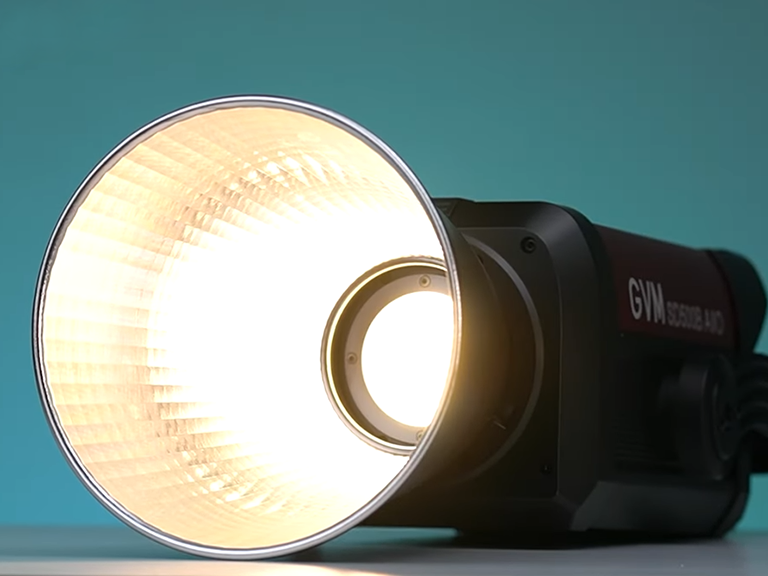
A monolight — also called a monoblock — is a self-contained studio flash unit where the power supply, flash tube, modelling lamp, and all controls are built into a single head. Unlike traditional pack-and-head studio systems that require a separate floor-standing power pack connected to flash heads via cables, a monolight is entirely self-sufficient. You plug it into a wall outlet, mount it on a light stand, attach your softbox or reflector, and shoot. Everything you need is in one unit — hence the name “mono.”
Monolights output light measured in watt-seconds (Ws) or joules. Entry-level units start around 200Ws, while professional monolights reach 1200Ws and beyond. They sync with your camera via a radio trigger or sync cable and recycle within one to two seconds between flashes. Key features to look for include adjustable power output across a wide range of stops, a modelling lamp for previewing shadow direction, built-in optical slave triggering, and a standard Bowens mount for broad modifier compatibility.
For portrait photographers, content creators, e-commerce shooters, and studio owners, the monolight is often the most sensible first serious lighting investment — and for many, the only studio lighting system they will ever need.
Monolight vs Strobe: Understanding the Difference
The terms monolight and strobe are frequently used interchangeably, which creates genuine confusion for photographers researching their first studio lighting purchase. Here is the clear distinction.
Strobe is the broad category. Any light that produces a short, powerful burst of flash is technically a strobe — this includes on-camera speedlights, pack-and-head studio systems, and monolights. All monolights are strobes, but not all strobes are monolights.
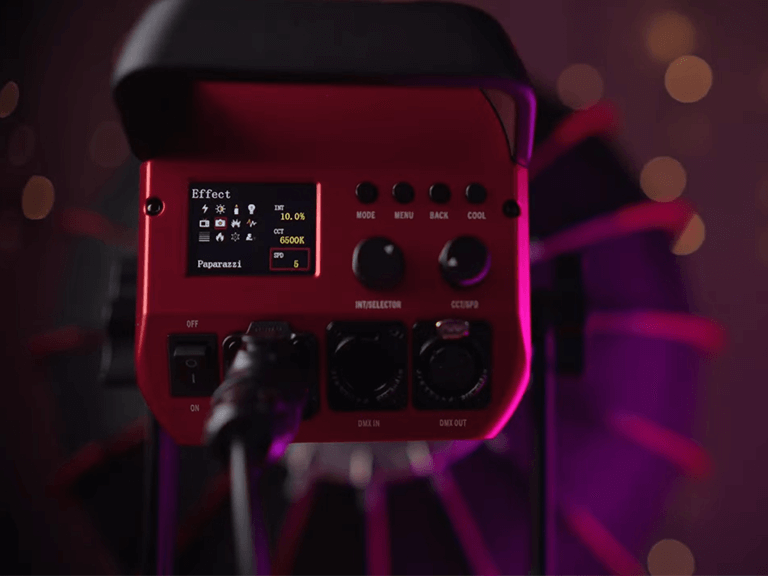
In practical photography conversation, when people say “strobe” they typically mean a pack-and-head system: a separate power pack unit that sits on the floor and connects via heavy cables to one or more compact flash heads. The heads are lightweight because they contain no power circuitry — all the electronics live in the pack. These systems offer extremely fast recycle times, the ability to power multiple heads from one pack, and excellent colour consistency, which is why they remain preferred on large commercial productions.
A monolight, by contrast, puts everything in the head itself. This makes setup simpler, eliminates cable management between pack and head, and makes the whole system more portable and accessible. The trade-off is that each head is heavier than a pack-and-head equivalent, and powering several monolights simultaneously means several separate power connections.
The verdict for most photographers: monolights win on practicality. Unless you are running a high-volume commercial studio with multiple heads firing simultaneously at maximum power, a quality set of monolights will serve you better, cost less, and be significantly easier to work with than a pack-and-head system.
Monolight Reviews: Top Options Worth Considering
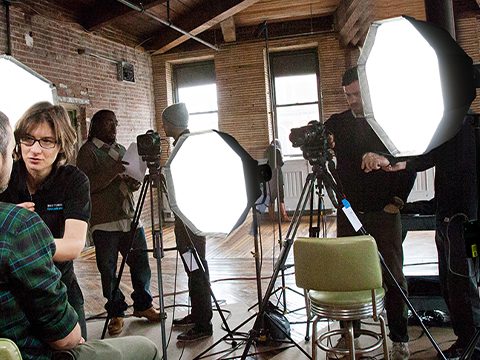
When searching for a monolight that perfectly balances raw power with all-in-one convenience, the GVM SD500B AIO emerges as a standout choice for professional creators.
Unlike traditional setups that require lugging around separate ballast boxes and tangled cables, the SD500B AIO integrates everything into a single, compact body. This design philosophy ensures you spend less time rigging and more time shooting, without sacrificing performance.
Boasting a true 500W Bi-color output, this monolight punches out an impressive 238,000 Lux at 1 meter. It is engineered for precision, featuring a high CRI/TLCI of 97+ for true-to-life color reproduction and a vast 2700K–6800K range to match any ambient condition. What truly sets it apart for video production is its ultra-quiet cooling system and flicker-free operation, ensuring zero distractions on set.
Furthermore, the SD500B AIO offers granular control with 0.1% increment dimming (1000 steps) and 12 built-in cinematic lighting effects accessible via Bluetooth APP. It is a powerful, portable, and intelligent solution that streamlines the workflow for filmmakers and photographers alike.
Best Monolight for Photography: How to Choose
Selecting the best monolight for your photography comes down to four factors: power output, modifier system, wireless integration, and budget.
For power, controlled studio portraits with reflective modifiers need 300–400Ws. For shooting in bright ambient light, large groups, or with heavy diffusion like large octaboxes, look at 600Ws and above. For modifier compatibility, Bowens mount is the industry standard — it gives you the broadest selection of softboxes, beauty dishes, grids, and reflectors at every price point.
Battery Powered Monolight: Shoot Anywhere, Any Time
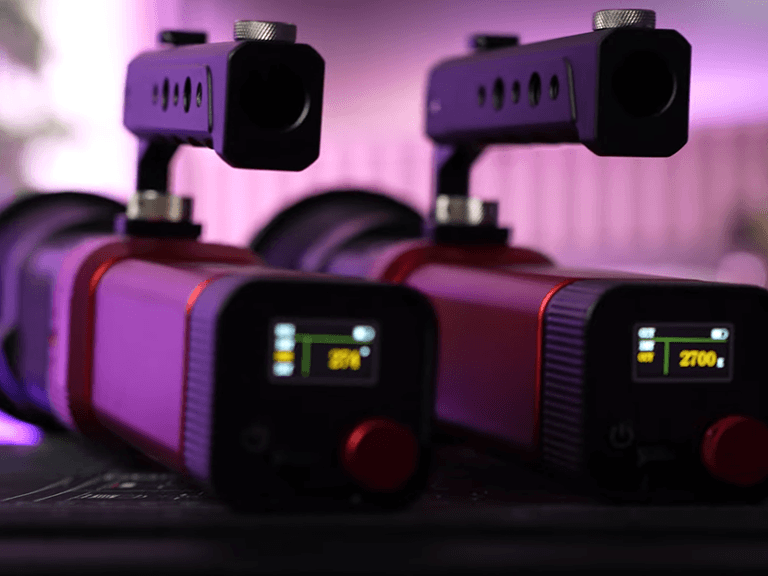
For photographers and videographers who work outside the studio — on-location portraits, destination weddings, outdoor fashion editorials, or film productions — the GVM-PD60B battery-powered LED monolight removes the single biggest constraint of traditional studio lighting: the need for a wall outlet.
The GVM-PD60B is a definitive portable lighting solution for content creators. Featuring a high-capacity 6000mAh built-in battery with fast charging, it delivers professional, consistent illumination anywhere you can carry it. With an adjustable CCT range from 2700K to 6800K, high color accuracy (CRI/TLCI ≥97), and 12 built-in cinematic lighting effects, it adapts seamlessly to different shooting environments. Its compact design, combined with compatibility for Bowens mount accessories (via adapter) and versatile mounting options, makes it the benchmark for creators needing reliable performance both in the studio and on location.
When comparing battery-powered monolights for video and photo work, focus on color accuracy (CRI/TLCI), the flexibility of color temperature range, battery life per charge, and the ecosystem of light modifiers it supports.
最終的なご意見
A monolight is the most practical path to professional studio lighting for the overwhelming majority of photographers. Self-contained, portable, modifier-compatible, and available at every budget level, monolights have earned their place as the default studio lighting tool for portraiture, commercial, e-commerce, and content creation work worldwide. Start with a solid entry-level unit, learn to use it well, and upgrade intentionally as your work demands — the fundamentals you build on your first monolight will carry you through every system you use for the rest of your career.