Cinematic lighting is the invisible language of film—it shapes emotion, defines space, and separates amateur footage from professional productions. As we move through 2026, movie production lights have reached a new level of precision, portability, and creative versatility. Whether you’re setting up a studio interview, shooting a music video, or building out a full cinematic lighting kit for a feature film, understanding the tools and techniques behind great light is non-negotiable. This guide covers everything from the fundamentals of artificial light photography to the best cinematic lighting kits available today.
What Is Artificial Light Photography?
Artificial light photography is the practice of using man-made light sources—LEDs, tungsten fixtures, fluorescent panels, or strobes—to illuminate a scene rather than relying on natural sunlight. In film and video production, artificial lighting gives the cinematographer full control over direction, intensity, color temperature, and shadow.
Unlike natural light, which changes with time of day and weather, artificial light is consistent and repeatable. This makes it essential for professional productions where continuity between shots is critical. From a single LED panel used in a YouTube home studio to a multi-fixture rig on a Hollywood set, artificial light photography is the backbone of controlled visual storytelling.
The rise of high-CRI LED technology has been a game-changer. Modern artificial lights now reproduce color with extraordinary accuracy, making post-production color grading faster and more predictable.
What Is Cinematic Lighting?
Cinematic lighting goes beyond simply illuminating a subject—it’s a deliberate, artistic approach to how light and shadow interact within the frame. Great cinematic lighting creates depth, mood, and visual narrative that guides the audience’s eye and emotional response.
At its core, cinematic lighting is defined by intentionality. Every light source has a purpose: the key light defines the primary illumination, the fill light controls shadow depth, and the backlight or rim light separates the subject from the background. This classic three-point lighting framework forms the foundation of most film and television lighting setups.
Beyond technique, cinematic lighting involves color—using warm or cool tones to evoke specific emotions—and contrast, which determines the overall “hardness” or “softness” of the image. High contrast lighting creates drama and tension; low contrast, diffused light produces a clean, approachable aesthetic perfect for interviews and commercial work.
Best Lighting for Film Production
Choosing the best lighting for film production depends on your production type, budget, and shooting environment. In 2026, the top-performing lights share a few common qualities: high CRI (95+), flicker-free output, wide color temperature range, and reliable wireless control.
LED Fresnel lights are a staple on professional film sets. They offer focused, adjustable beam angles and work well as key lights or spotlights for dramatic effect. Bi-color LED panels are the go-to for interview setups and documentary work, offering the flexibility to match any ambient light condition without physical gels. For large productions, high-output COB LEDs deliver the raw power needed to fill large spaces or shoot in bright outdoor conditions.
Regardless of the fixture type, flicker-free performance is non-negotiable for film production. Any light that flickers under high-speed or slow-motion camera settings will ruin footage. Always verify a fixture’s PWM frequency before bringing it to set.
Movie Production Lights: Key Features to Prioritize
When selecting movie production lights in 2026, the market offers more choices than ever—but not all fixtures are created equal. Here’s what matters most for professional results:
- Output (Lux): Higher lux output at greater distances gives you more creative flexibility—especially for large sets or outdoor shoots.
- Color Accuracy (CRI/TLCI): A CRI and TLCI rating of 95+ ensures colors are rendered accurately in-camera, reducing correction time in post.
- Dimming Range: Smooth, stepless dimming from 0.1% to 100% allows precise exposure control without color shift.
- Opções de Controle: DMX and CRMX compatibility is essential for larger productions; Bluetooth app control is a major advantage for solo operators and small crews.
- Modifier Compatibility: A Bowens mount opens up a vast ecosystem of softboxes, reflectors, Fresnel lenses, and barn doors.
For productions that demand both power and portability, the trend in 2026 is clearly toward all-in-one (AIO) designs—compact, powerful fixtures that eliminate the need for separate ballasts or external control boxes.
Types of Cinematic Lighting
Understanding the different types of cinematic lighting helps you build a versatile kit and approach any scene with confidence.
Luz Dura comes from a small, focused source and produces sharp, defined shadows. It’s often used to convey intensity, drama, or harsh environments—think noir thrillers or interrogation scenes.
Luz suave is produced by large light sources or diffused fixtures. It wraps around the subject, minimizes shadows, and creates a flattering, approachable look—ideal for interviews, beauty work, and commercial productions.
Practical Lights are actual light sources visible within the frame—lamps, screens, candles, or neon signs. Skilled cinematographers use practicals to establish atmosphere and motivate the direction of their artificial lighting.
Colored and Effects Lighting has expanded dramatically with LED technology. RGB lights and built-in effects like TV flicker, lightning, candlelight, and explosion simulate real-world environments without physical props or set dressing—saving time and budget on set.
Backlighting and Rim Lighting add depth and dimension to a scene by separating the subject from the background. Without backlight, even well-lit subjects can appear flat against a similar-toned background.
Spotlight: GVM SD700B AIO — A Complete Movie Production Light for 2026
For productions that demand professional-grade cinematic lighting in a compact, all-in-one package, the GVM SD700B AIO stands out as one of the most capable fixtures in its class. Delivering 700W of bi-color output with a 97+ CRI/TLCI rating, it’s built for film sets, interview setups, and creative productions where color accuracy and output reliability are non-negotiable.
What sets the SD700B AIO apart is its combination of cinema-grade dimming, 12 built-in lighting effects, and dual control via Bluetooth app, 5-pin DMX, and wireless CRMX—giving operators full flexibility whether they’re running a wired studio rig or a fast-moving location shoot.
| Recurso | Specification / Benefit |
|---|---|
| Potência de Saída | 700W Bi-Color LED |
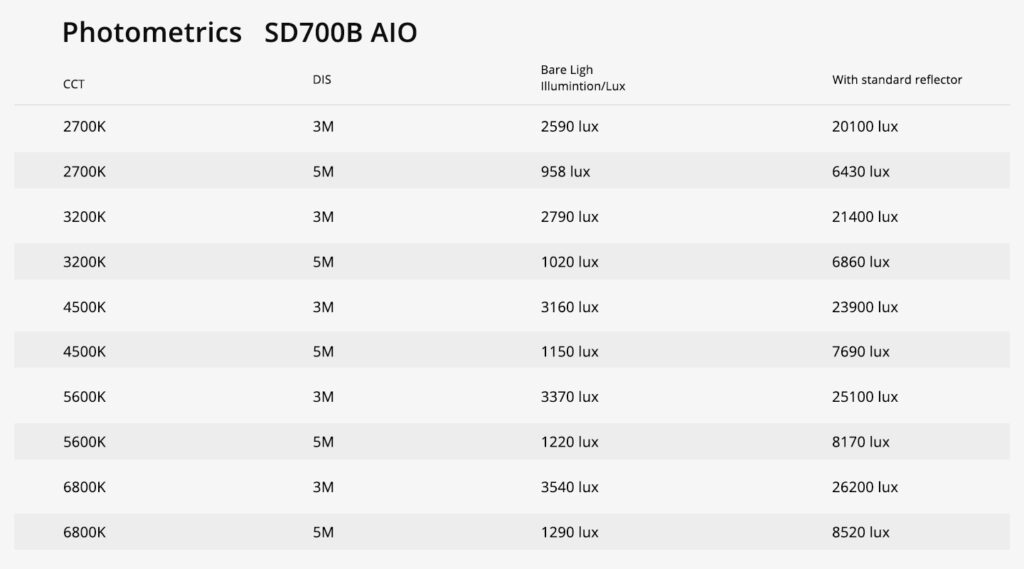
| Iluminância Máxima | 26,200 lux at 3 meters (standard reflector) |
| Faixa de Temperatura de Cor | 2700K – 6800K |
| CRI / TLCI Rating | 97+ — true-to-life color for film and photography |
| Faixa de dimerização | 0.1% – 100% stepless, flicker-free |
| Efeitos Integrados | 12 cinematic effects (Lightning, TV Flicker, Candlelight, Explosion, Welding, Paparazzi, and more) |
| Opções de Controle | Bluetooth App + 5-pin DMX + Wireless CRMX |
| Mount Compatibility | Montagem Universal Bowens |
| Projeto | Compact AIO with built-in carry handle |
| Melhor para | Film sets, interviews, music videos, commercials |
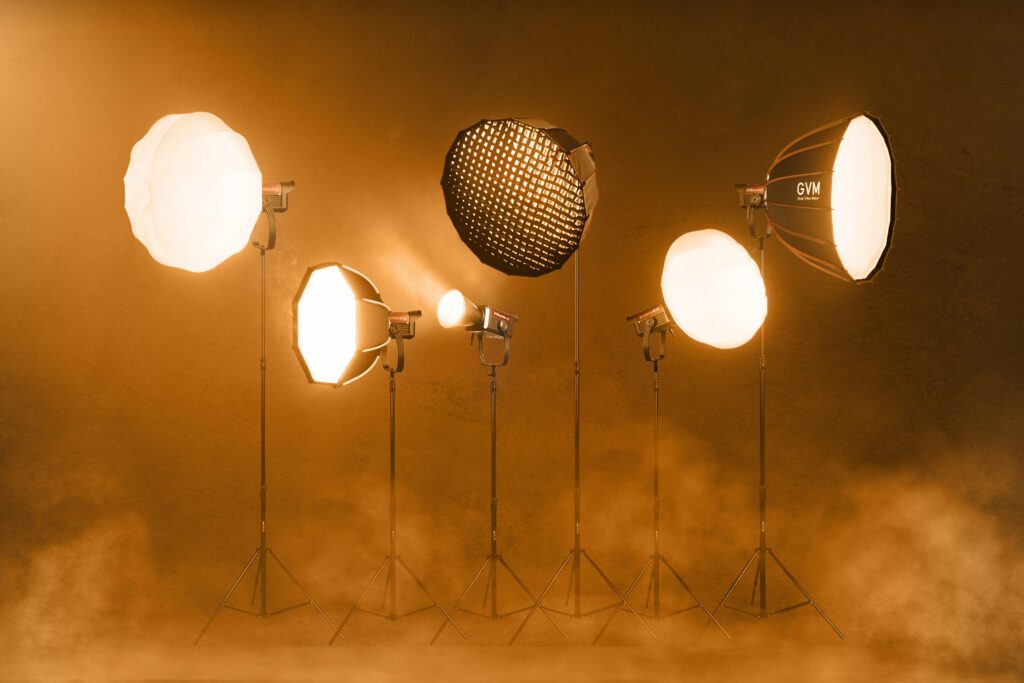
The wide 2700K–6800K color range makes it equally effective matching warm interior tungsten or cool daylight exteriors. The universal Bowens mount expands its creative reach with compatible accessories including Fresnel lenses, parabolic softboxes, reflectors, and barn doors.
Cinematic Lighting Kit: What to Include for a Professional Setup
Building a professional cinematic lighting kit in 2026 requires thinking beyond individual fixtures. A complete kit should cover key lighting, fill, backlight, and modifiers—while remaining manageable for your team and shooting environment.
A recommended starter cinematic lighting kit for interviews and small productions:
- 1x High-output bi-color LED (700W class) — key light with softbox modifier
- 1x Medium LED panel (100–200W) — fill light or background accent
- 1x Compact LED (60–100W) — hair/rim light or practical effect light
- Light stands + boom arm — flexible positioning for all three lights
- Softboxes (octa or rectangular) — for soft, flattering key and fill light
- Reflectors and barn doors — for shaping and controlling spill
For larger productions, adding a Fresnel attachment to your key light gives you a focused, adjustable beam that works beautifully for dramatic scenes and product showcases. DMX-compatible fixtures allow all lights to be managed from a single controller—an essential time-saver on set.
Perguntas Frequentes (FAQ)
Q: What’s the difference between CRI and TLCI? CRI (Color Rendering Index) measures how accurately a light renders colors compared to natural sunlight, on a scale of 0–100. TLCI (Television Lighting Consistency Index) is a similar standard specifically designed for camera and video applications. For film production, look for lights with both CRI and TLCI ratings of 95 or higher.
Q: Do I need DMX control for a small production? Not necessarily. For small crews and solo operators, Bluetooth app control offers more than enough flexibility. DMX becomes important when you’re integrating multiple lights into a unified system, especially on larger sets or live events where real-time adjustments are needed.
Q: What color temperature should I use for interviews? Most interview setups use a color temperature between 5000K and 5600K to match a clean, neutral daylight look. If you’re shooting in a warmer interior environment, drop to 3200K–4000K to match existing ambient light and avoid mixed color casts.
Q: Are built-in lighting effects worth using on a professional set? Absolutely. Built-in effects like TV flicker, lightning, and candlelight save significant time compared to setting up and programming separate practical fixtures. For music videos, commercials, and stylized narrative shoots, these effects add production value with zero extra gear.
Q: What modifiers work best with a Bowens mount LED? The Bowens mount is the industry’s most widely compatible standard. Compatible modifiers include octa softboxes, rectangular softboxes, Fresnel lenses, standard reflectors, parabolic umbrellas, and barn doors—giving you virtually unlimited light-shaping options.
Conclusão
Domínio cinematic lighting is one of the highest-leverage skills a filmmaker or content creator can develop in 2026. From understanding the fundamentals of artificial light photography to selecting the right movie production lights and building a complete cinematic lighting kit, every decision shapes the visual quality and emotional impact of your work.
The GVM SD700B AIO represents exactly where professional lighting is headed—powerful, precise, portable, and packed with creative features that serve both seasoned cinematographers and ambitious creators pushing their production value forward.
Ready to elevate your next production? Start with the right light, shape it with the right modifiers, and let your cinematic vision come to life.