If you have set foot in a modern content studio in the past two years, you already know the answer to a question that was hotly debated a decade ago: studio LED lights have replaced traditional strobes as the default lighting tool for creators. They run cool, they draw less power, they let you see exactly what you are getting in real time, and they double as both photo and video lights. In 2026, the category has matured to the point where the hardest decision is not whether to go LED, but which one.
Welcome to our photography review studio to learn all the key factors you need to consider when shopping for studio LED lights in 2026.— the technical features, the form factors, the use-case pairings, and the new All-in-One (AIO) designs that are quietly reshaping the category. By the end, you will know exactly which fixture belongs in your studio, and why the GVM FA500B AIO deserves a serious look. If you want a deeper dive into the wider monolight market, see our 2026 best monolight roundup.
1. What Are Studio LED Lights?
Studio LED lights are continuous-light fixtures purpose-built for indoor production environments. Unlike flash strobes, they emit a steady beam of light that you can preview, meter, and shape before pressing record or pulling the trigger. In a fixed studio, that real-time feedback is invaluable.
1.1 Studio LED Lights vs Traditional Studio Strobes
The two technologies solve the same problem, but in opposite ways. Strobe lights dump a very short, very bright burst of light, which freezes motion and gives photographers beautiful ambient separation. Studio LED lights, by contrast, output a continuous stream that the camera or your eye can read as a normal lit scene.
For most modern creators who shoot a mix of stills and video, the LED path is now the obvious one. You can record an interview, then pivot to a portrait session, then stream a podcast — all with the same lights, no recycle times, no color temperature shifts, and no extra radio triggers.
1.2 Why LED Has Become the Studio Standard
Three forces pushed studio LED lights to the front of the pack between 2020 and 2026: high-output COB emitters became affordable, color science (CRI/TLCI scores above 95) became standard even on mid-tier fixtures, and wireless control matured enough to run an entire studio from a phone. The result is a category where a 300lighttodayoutperfoumsa2,000 strobe setup from 2015 — at least for the kind of hybrid work most studios now do.
2. Key Features to Look for in Studio LED Lights
Once you decide to go LED, the next question is what to look for. The features below separate a professional studio LED light from a glorified desk lamp.
2.1 Color Temperature: Bi-Color vs Daylight vs RGB
- Luz do dia (5600K) fixtures are the simplest and the cheapest. They output a fixed color temperature close to noon sun.
- Bi-color studio LED lights let you slide between roughly 2700K and 6500K (and in 2026, often 6800K), which is critical when you need to match tungsten room lights or warm-window afternoon sun.
- RGB / RGBWW fixtures add full hue, saturation, and gel simulation. They are wonderful for creative work, but the extra emitters push the price up and slightly reduce maximum output.
If you shoot people, you almost certainly want bi-color at minimum. RGB is a “nice to have” for YouTubers and filmmakers, not a “must have” for the average portrait studio.
2.2 Wattage and Output: Matching Power to Your Studio
Wattage tells you how much power the fixture draws; lux at one meter tells you how much light actually arrives at the subject. In a small home studio, a 100–200W LED is usually plenty. In a 30 m² commercial studio, you will want 300–500W units, and in larger spaces you may need 1kW-class heads.
Always check the spec sheet for the exact lux @ 1m figure, ideally with a standard reflector attached, before comparing two fixtures.
2.3 Mount Type: Bowens, Panel, and Proprietary
The Bowens mount is the de facto standard for studio LED lights because it accepts the huge ecosystem of softboxes, reflectors, beauty dishes, and projection attachments. Most professional fixtures — including the GVM PRO-SD series and the new AIO line — use Bowens. If you already own Bowens modifiers, do not buy a light with a proprietary mount.
Panel-style mounts are great for soft, even light from the start, but they limit your modifier choices. For traditional studio work, Bowens wins.
2.4 Control: Onboard, App, DMX, and Bluetooth Mesh
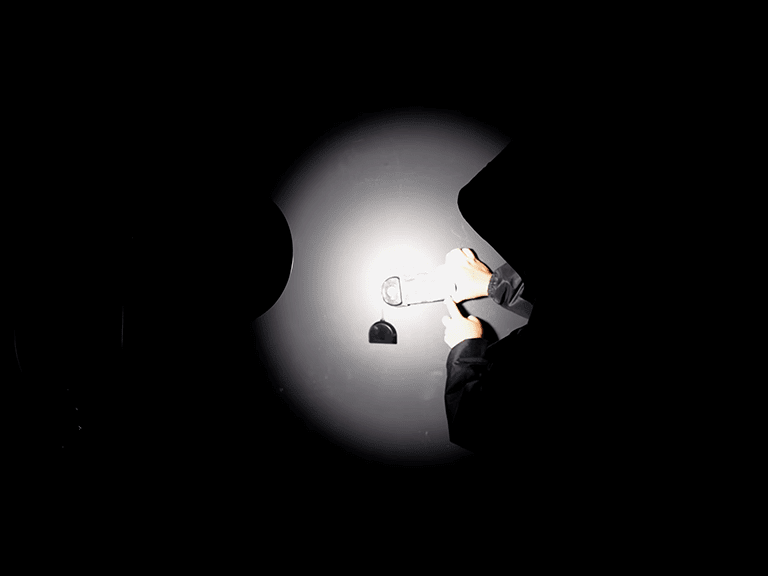
Modern studio LED lights should be controllable in three ways: physical buttons or a screen on the back, a phone app over Bluetooth or Wi-Fi, and ideally DMX for integration into larger studio rigs. Bluetooth Mesh, in particular, has become the wireless standard in 2026 because it lets dozens of fixtures stay in sync without a router. If you are outfitting a multi-light studio, look for Mesh or DMX support — it will save you hours of cable management. The GVM app is one example of a Mesh-based control surface for modern studio LED lights.
3. Best Studio LED Lights by Use Case
The right fixture depends on what you shoot. Here is how to think about the category by scenario.
3.1 For Video Production
Video work calls for high continuous output, silent or near-silent cooling, and accurate color. A 300W+ bi-color Bowens-mount head is the sweet spot. Pair it with a large softbox for interviews, and add a second unit with a grid for backlight or hair light. The GVM PRO-SD series is a popular choice at this tier.
3.2 For Portrait Photography
Portraits reward soft, controllable light. A 200W bi-color monolight with a Bowens-mount octa softbox will cover most headshot and beauty work. Look for high CRI (95+) so skin tones render naturally, and a quiet fan so the model does not feel like they are sitting next to a vacuum cleaner.
3.3 For Live Streaming and Podcasts
For streaming, you typically need 100–200W per key light, a soft source, and clean app control so you can tweak the look while live. RGB or bi-color options give you flexibility to match the streamer’s brand color. The studio LED lights for streaming segment is one of the fastest-growing niches of 2026.
3.4 For Hybrid Creators
If you shoot a bit of everything — interviews, portraits, product, social clips — the cleanest answer in 2026 is an All-in-One studio LED light. These are monolights that integrate the controller, the power supply, and the cooling system into the head itself. The result is a single piece of hardware that you can clamp onto a C-stand, point at your subject, and forget about.
4. Spotlight: GVM FA500B AIO — The All-in-One Studio LED
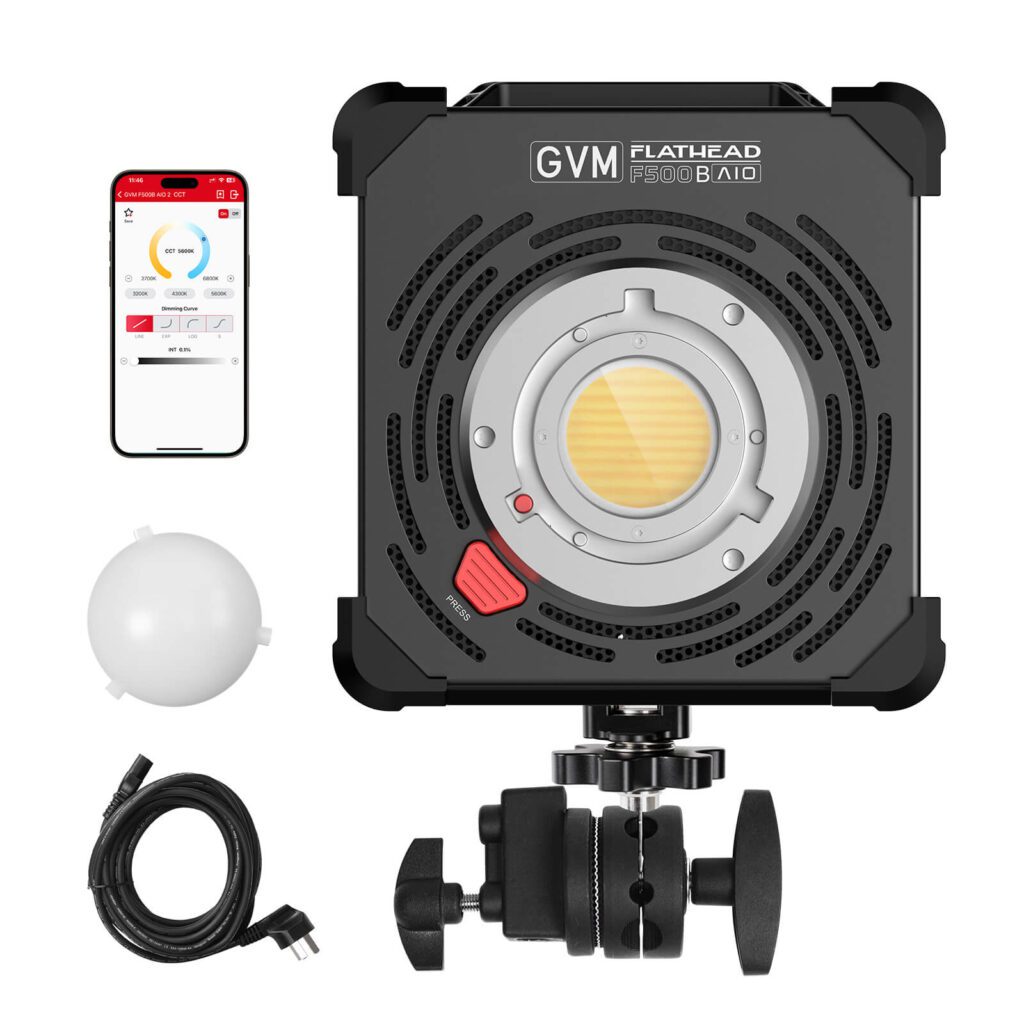
The GVM FA500B AIO is the new flagship in GVM’s All-in-One series, and it is a strong case study in why the AIO form factor is winning studios over.
4.1 What “All-in-One” Really Means
Traditional monolights separate the LED head, the control box, and the power supply into three cables and three components. The FA500B AIO folds all of that into a single flat panel-style housing. You mount it on a stand, plug in an AC cable, and you are done. There is no control box dangling from the yoke, no separate brick, and no third cable to trip over in a dark studio.
That simplicity sounds small until you set up a three-light interview kit in fifteen minutes instead of forty-five. It is a real workflow change for working studios.
4.2 Key Specs at a Glance
| Recurso | GVM FA500B AIO |
|---|---|
| Fator de Forma | All-in-One panel-style monolight |
| Temperatura de Cor | 2700K – 6800K (bi-color) |
| Escurecimento | 0 – 100% stepless |
| Max Output (with reflector) | 98,300 lux @ 1 m |
| Wireless Control | Bluetooth Mesh + GVM App |
| Montanha | Bowens (universal) |
| Special FX | 12 creative FX + 12 source simulations |
| Arrefecimento | Smart active cooling, near-silent |
| Melhor para | Studio video, portraits, interviews, live streaming |
The 98,300 lux @ 1 m figure places the FA500B AIO firmly in the professional 500W class, and the Bowens mount means it accepts every modifier you already own.
4.3 Real-World Studio Use Cases
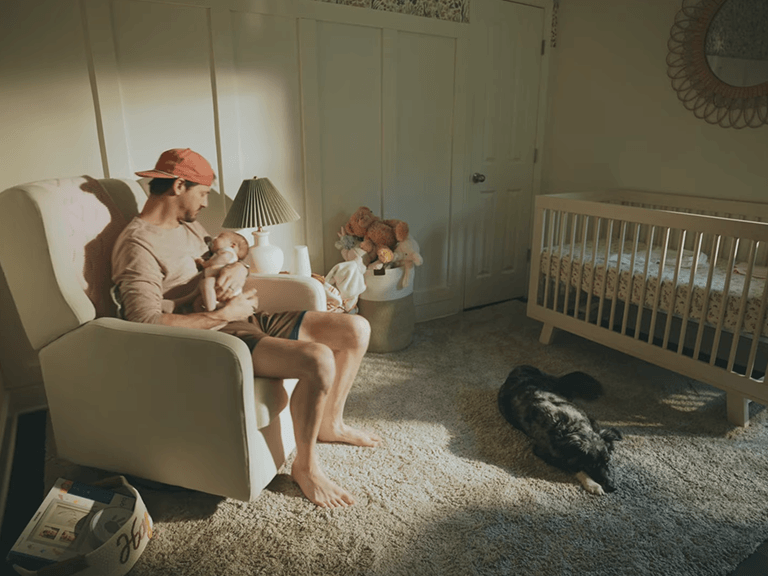
In a one-person interview studio, the FA500B AIO acts as your key light: mount it on a C-stand, throw a 36-inch octa on the front, and you have a clean, soft source that flatters skin and runs cool enough to keep the talent comfortable.
For product photography, the bi-color range lets you switch from a 5500K neutral clean look to a 3200K warm “sunset shelf” mood in seconds, no gels required. The 12 built-in source simulations (candles, lightning, faulty bulbs, paparazzi flashes) also save you from buying dedicated FX lights.
In a multi-camera streaming setup, two FA500B AIOs on either side of the talent give a wraparound key that is flattering on camera and quiet enough not to bleed into the microphone. Because they communicate over Bluetooth Mesh, you can adjust both fixtures from the same GVM app screen without leaving the streaming chair.
4.4 How It Compares to Other Studio LED Lights
Here is how the FA500B AIO lines up against the most-talked-about 500W-to-600W class point-source fixtures on the market. Competitor specs come from each brand’s own product page; GVM figures come from the official product brief. Always confirm the exact spec on the manufacturer’s product page before buying, because lux output varies widely with the reflector, CCT, and beam angle used.
| Studio LED Light | Output @ 1 m | Output @ 3 m | Wattage | CTC | Weight (head) | Montanha | Controle | Bateria | Effects | MSRP |
|---|---|---|---|---|---|---|---|---|---|---|
| GVM FA500B AIO | 98,300 lux (with reflector, per GVM brief) | Not separately listed in product brief | 500 W | 2700K–6800K Bi-Color | Not listed in product brief | Bowens | A bordo + APP | Yes (voltage not in brief) | 12 + 12 | $499 |
| Aputure LS 600d Pro | 98,500 lux (with Hyper-Reflector, 5600K) | 8,500 lux (Hyper-Reflector) / 29,300 lux (F10 Fresnel 15 deg spot) | 600 W nominal, 720 W max | 5600K +/- 200 K (Daylight) | 4.64 kg | Bowens | On-board, 2.4 GHz, DMX512 5-Pin, Art-Net, LumenRadio CRMX, Sidus Link app (up to 400 m mesh) | V-Mount / Gold-Mount, 14.4 V / 26 V / 28.8 V; charges batteries when on AC | 8 (expandable via SidusPro FX) | ~$2,199 (market reference) |
| Nanlite Forza 500B II | 67,320 lux (with 55 deg reflector, 5600K) | 6,180 lux (55 deg reflector) / 17,400 lux (FL-20G Fresnel spot) | 580 W | 2700K–6500K Bi-Color, +/- 80 G/M | 4.34 kg | Bowens | On-board, Bluetooth NANLINK app, DMX/RDM, 2.4 GHz | V-Mount, 14.4 V / 26 V (side-mounted) | 12 | $1,499 (official MSRP) |
A few things stand out from the spec sheet:
- Output per dollar is where the FA500B AIO has the clearest story. GVM publishes 98,300 lux @ 1 m on the 500 W AIO, putting it in the same numerical bracket as the Aputure LS 600d Pro (98,500 lux @ 1 m with the Hyper-Reflector) and ahead of the Nanlite Forza 500B II (67,320 lux @ 1 m with the 55 deg reflector) — at a published MSRP that is roughly one-fifth of the Aputure and one-third of the Nanlite. Always re-check the exact reflector and CCT used, because that is where most apples-to-oranges errors happen in this category.
- CCT range is the cleanest feature comparison. The FA500B AIO spans 2700K–6800K Bi-Color, which beats the Aputure LS 600d Pro’s daylight-only 5600K +/- 200 K and is comparable to the Nanlite Forza 500B II’s 2700K–6500K with +/- 80 G/M shift. If you regularly mix warm interiors with cool daylight, the Aputure simply cannot do that without gels.
- Control protocols differ by tier. The Aputure LS 600d Pro leads on professional control: it is the only one of the three with Art-Net, LumenRadio CRMX, and a 400 m Sidus Mesh range. The Nanlite Forza 500B II gives you Bluetooth, DMX/RDM, and 2.4 GHz. The FA500B AIO is app-driven and is positioned for creators who want a fast phone-based workflow rather than a DMX-heavy rig.
- Battery behavior is split. The Aputure LS 600d Pro runs on V-Mount or Gold-Mount batteries AND reverse-charges them when plugged into AC — a real run-and-gun plus. The Nanlite Forza 500B II runs on V-Mount batteries but does not charge them. The FA500B AIO supports battery power per the product brief; check the official spec page for exact voltage and charging behavior before you spec a battery kit.
- Build weight is in the same ballpark. Aputure’s lamp head is 4.64 kg and Nanlite’s is 4.34 kg. Both are traditional head-plus-control-box designs. GVM’s official product brief does not list a head weight for the FA500B AIO, so check the spec page for the exact figure.
The takeaway: the FA500B AIO’s published 98,300 lux @ 1 m puts it firmly in the 500W-class bracket, and it removes the cable clutter of traditional monolights. If you are starting a new studio in 2026, the AIO form factor is the one to bet on.

5. Studio LED Lights FAQ
How many studio LED lights do I need?
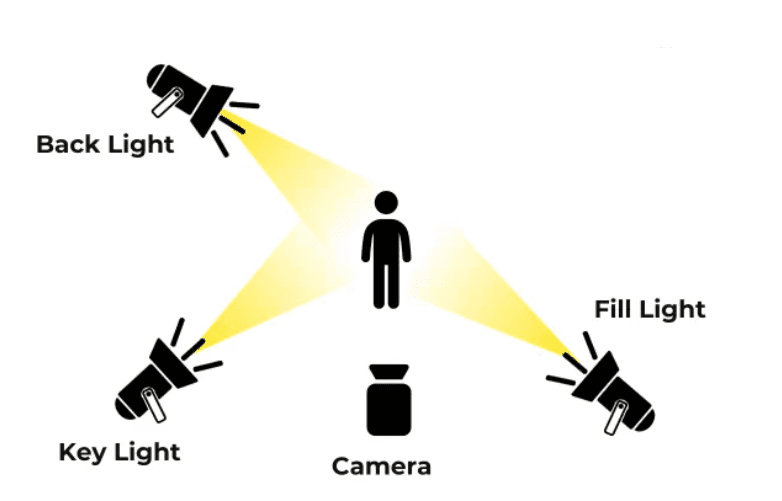
A basic three-point setup uses one key light, one fill light, and one back or hair light. For a single creator, one or two high-output fixtures (like the GVM FA500B AIO) are often enough. For interviews and product work, three is the comfortable minimum.
Are bi-color studio LED lights better than daylight?
For most studios, yes. Bi-color lets you match existing room light and shift mood quickly, while daylight-only fixtures are cheaper but limit you to a single color temperature. If you can stretch the budget, bi-color is the better long-term investment.
What is the difference between a monolight and a panel light?
A monolight is a single, focused source (usually with a Bowens mount) that you shape with modifiers like softboxes. A panel light is a flat array of smaller LEDs that already produces soft light but is harder to focus or harden. In 2026, AIO designs like the FA500B blur the line by combining a panel-style housing with a Bowens mount.
Can I use studio LED lights for both photo and video?
Yes. Continuous LED is by definition usable for both. The only caveat is that very high-power strobes still beat LEDs on freezing fast action — but for typical studio work, modern studio LED lights handle hybrid shooting beautifully.
How do I choose the right wattage for my studio?
Measure your room. A small 3 m × 3 m home studio rarely needs more than 200W per fixture; a 5 m × 6 m commercial studio wants 300–500W per fixture; anything larger typically needs 1kW-class heads. When in doubt, buy slightly more power than you think you need — it is easier to dim a bright light than to amplify a weak one.
6. Final Verdict: Which Studio LED Light Should You Buy?
If you want one fixture that handles interview lighting, portrait sessions, product photography, and streaming without breaking a sweat, the GVM FA500B AIO is the easiest recommendation in the 2026 studio LED lights category. It delivers true 500W-class output, the bi-color range and Bowens mount you actually use, and the All-in-One form factor that genuinely speeds up setup.
For larger established studios already running a multi-light rig, the GVM PRO-SD series still makes sense as a workhorse. But for a new studio, a small team, or a creator who values speed and simplicity, the AIO path is the one to take this year.
Whichever fixture you pick, the rule of thumb is the same: prioritize high CRI, real-world lux output, Bowens mount compatibility, and quiet cooling. The rest is style.