Video lighting is the single biggest factor separating footage that looks “fine” from footage that looks cinematic. Two creators can shoot the same subject on the same camera and get completely different results, and the gap almost always comes down to how light is shaped, not which camera captured it.
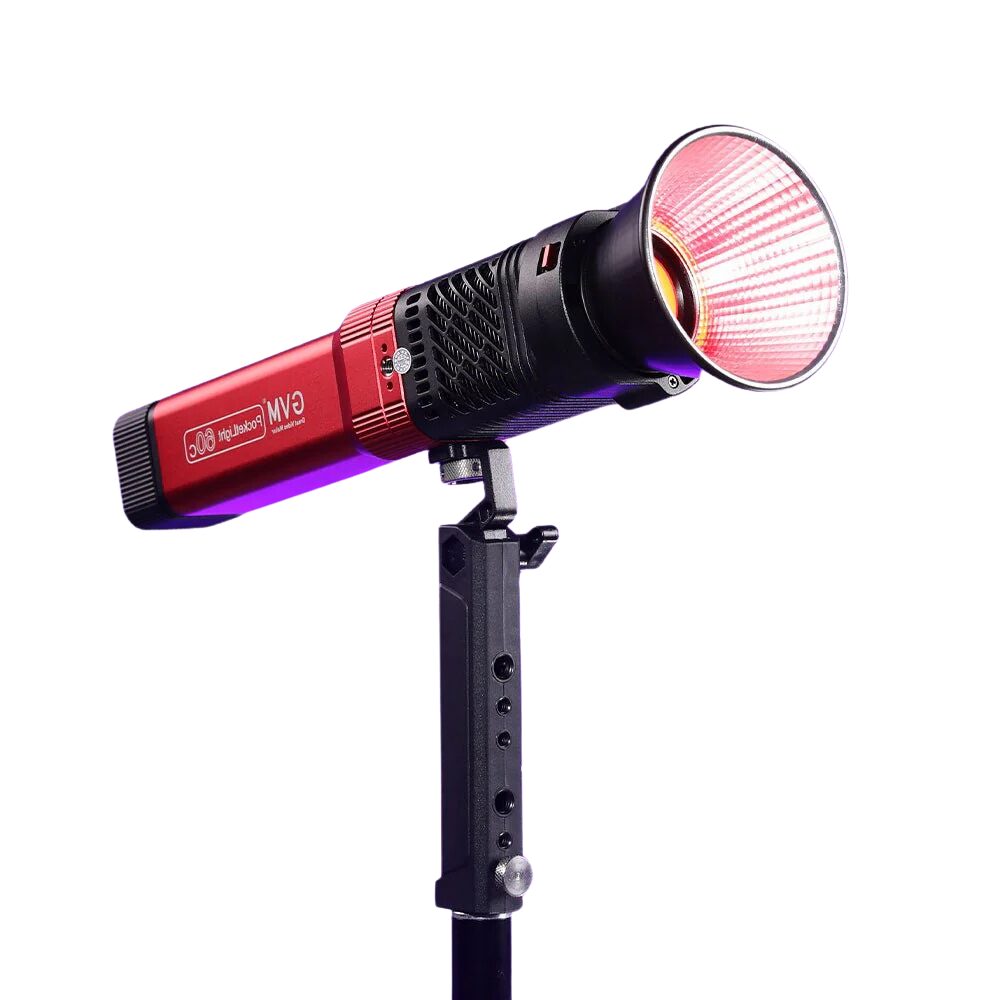
This guide walks through the fundamentals of video lighting, how to choose gear without overspending, and a hands-on look at the GVM-PL60C, a 60W RGB pocket light built for creators who need studio-grade control in a compact, battery-ready body.
Índice
Why Light Determines Footage Quality
Footage feels “advanced” the moment light stops looking flat and starts having direction, texture, color temperature, and controlled intensity — the four properties that define every setup. A human eye adapts instantly to mixed lighting and wide brightness ranges; a camera sensor doesn’t, which is why a scene that looks fine to the naked eye can show blown highlights, crushed shadows, or visible noise on camera.
This is also where a common misconception trips up beginners: more lumens does not mean better quality, and a perfectly flat, shadowless frame is not the same as a “clean” one. Skilled lighting adds shape through contrast, not just brightness.
Building a Lighting Toolkit Without Overspending
Video lighting sources generally fall into a few categories: LED panels for broad, even fill; COB monolights for punchy, directional output; ring lights for beauty and talking-head content; tube lights for wraparound ambiance; and natural window light for zero-cost softness.
Modifiers shape how that light behaves. Softboxes diffuse and soften, reflector (radar) dishes concentrate output, honeycomb grids narrow the spread to avoid spill, four-leaf barndoors and flags block light from hitting unwanted areas. Round out the kit with a reflector board, adjustable light stands, a light meter, and colored gels.
The real selection logic isn’t “buy the most powerful light” — it’s matching gear to the shoot type. A solo talking-head creator needs different tools than someone shooting narrative scenes or running a live stream.
Classic Lighting Setups, From Three-Point to Stylized Looks
Three-point lighting — key, fill, and rim — remains the foundation, with the key-to-fill ratio controlling how dramatic or soft a face looks. From there, portrait styles branch out: butterfly lighting flatters symmetrical faces, Rembrandt lighting adds moody depth, and ring lighting produces the flat, even look common in beauty content.
Product and food videography needs a different approach entirely — controlling reflections, building texture through side lighting, and layering light to separate the subject from its background. In small spaces, filmmakers can still achieve a cinematic look by bouncing light off walls and ceilings rather than firing it directly at the subject. Stylized looks like neon, retro, or suspense-driven scenes typically come down to formulas: strong color contrast, hard shadow edges, and selective negative fill.
Best Portable Filming Light: Why the GVM-PL60C Leads This Category
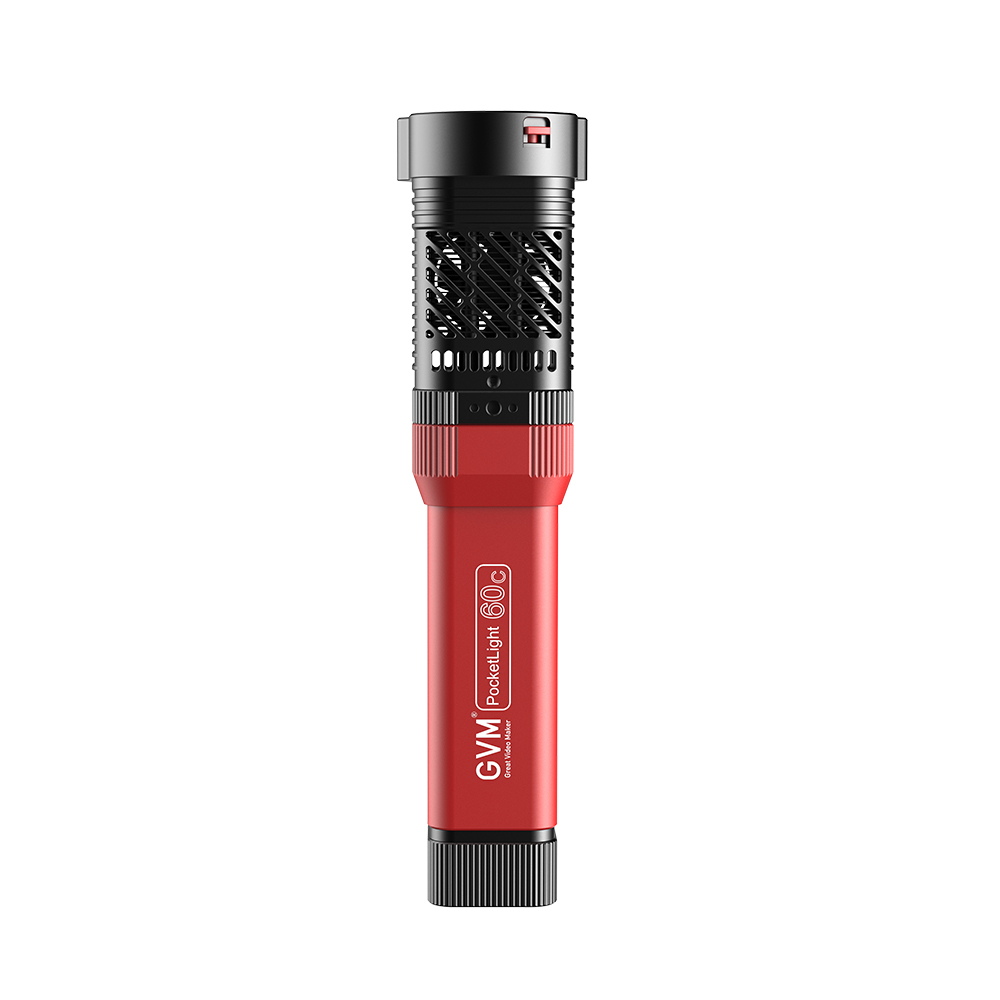
For creators who move between locations — vlogging, run-and-gun interviews, or reception coverage at events — battery independence is the deciding factor most lights ignore. The GVM-PL60C is built specifically around that gap: a dual AC/battery-powered 60W RGB pocket monolight that doesn’t force a trade-off between output and portability.
| Recurso | Specification / Benefit |
|---|---|
| Color Rendering | CRI ≥97, TLCI ≥98 for accurate, camera-ready color |
| Temperatura de Cor | 2700K–6800K with G/M shift for precise white balance |
| Lighting Modes | CCT, HSI, RGB, GEL (60 presets), Source Simulation, FX |
| Brightness Output | 34,100 Lux @ 0.5m with reflector attached |
| Poder | Dual AC/battery (7.4V 4400mAh), NP-F750 input |
| Controle | On-board knob, GVM APP, Bluetooth Mesh multi-light sync |
| Build | 0.8kg, aluminum alloy, rainproof for on-location use |
Compared with other 60W bi-color focusing lights on the market, the PL60C’s built-in gel and source-simulation library replaces a bag of physical filters, and its lighter 0.8kg body makes it easier to mount handheld or on a small stand without extra counterweight. For creators pricing out a full kit, the PL60C’s all-in-one feature set at its price point delivers more usable output per dollar than fixtures that charge a premium for similar CRI and wattage specs.
Thinking in Light: Building Narrative and Depth
High-key lighting (bright, low-contrast) reads as trustworthy and upbeat; low-key lighting (dark, high-contrast) reads as tense or dramatic — the same subject can tell two different emotional stories depending on which one is used. Color temperature contrast and complementary color pairing (warm key against a cool background, for example) create visual tension without needing dialogue to explain it.
Depth comes from light ratio across foreground, midground, and background — each layer slightly different in brightness or color keeps a flat frame from feeling two-dimensional. Adding visible light through haze, dust, or a defined beam makes that depth tangible on camera. Finally, a small catchlight in the eyes and a thin rim of edge light are often the difference between a subject that blends into the background and one that visually separates from it.
Common Mistakes and a Faster Workflow
The most frequent beginner errors are mixing color temperatures across sources, lighting a subject flat from the front, letting the background blow out, and running cables without securing them. A faster fix is sequencing: light the background first, then the subject, marking light positions with tape so a setup can be rebuilt in minutes.
Smart lights speed this up further — app control, saved scene presets, and one-tap recall of a previous setup all cut turnaround time between shots. When budget or gear is limited, a desk lamp behind diffusion cloth, kitchen foil as a makeshift reflector, or even a phone flashlight can hold a scene together in an emergency.
Where Video Lighting Is Headed
Smart LED fixtures with DMX and app control now support music-synced effects and automated scene switching, reducing manual adjustment during live shoots. On virtual production sets, LED volume walls increasingly need lighting matched in real time to the footage displayed behind the subject, blurring the line between practical and digital lighting.
Green and blue screen work still demands close attention to spill control and even, flicker-free illumination across the entire screen. Looking ahead, AI-assisted lighting tools that analyze a frame and suggest light position or intensity are moving from novelty to practical production aid.
Conclusão
Strong video lighting starts with understanding what light actually does to a camera sensor, then choosing gear that matches the shoot rather than chasing specs. For creators who need one light to handle interviews, b-roll, and location work, the GVM-PL60C’s combination of high CRI/TLCI, dual power, and built-in creative modes makes it a practical, cost-effective anchor for a 2026 lighting kit.