
Choosing the right lighting equipment can make a noticeable difference in photography and video production. While brightness matters, the ability to control where light falls is just as important. A well-directed beam can bring out product details, shape facial features, and add depth to an otherwise flat image.
Not every shoot requires a large cinema light or an elaborate lighting setup. For tabletop photography, interviews, and small studio productions, a compact focusable LED light can provide the control needed to achieve professional results without taking up valuable space.
Modern LED spotlights offer more than basic illumination. Adjustable beam angles, variable color temperature, and fine brightness control allow creators to shape light according to the subject and shooting environment.
Whether you are filming product demonstrations, recording interviews, or building a home studio, understanding how to control light will help you get more from your equipment.
Índice
Focusable LED Light vs. Standard LED Lighting: Why Beam Control Matters
A standard LED light can illuminate a subject, but the way that light spreads determines how useful it is for a particular shot.
Wide illumination works well when you need to cover a larger area. However, it can also spill onto the background, reduce contrast, or illuminate parts of a scene that should remain in shadow. In a small studio, where the subject and background are often close together, controlling this spill becomes especially important.
A focusable LED light offers a more direct solution. By adjusting the beam angle, creators can change the coverage from a concentrated spot to a wider flood without repositioning the entire fixture.
For product photography, a narrower beam can emphasize a specific feature or create a controlled highlight on glass, metal, and other reflective surfaces. During interviews, a carefully directed beam helps separate the subject from the background.
This flexibility also reduces the need to change lighting equipment between shots. Instead of switching fixtures every time the composition changes, you can adjust the beam to suit the scene.
What Is a Focusable LED Light?
A focusable LED light is a lighting fixture that allows users to adjust the spread of its beam. Depending on the optical design, the light can move between a narrow, concentrated output and a wider area of illumination.
Many professional fixtures use a Fresnel optical system to achieve this adjustment. By changing the beam angle, users can control the size and concentration of the illuminated area while keeping the light in position.
Focusable lights are particularly useful in video production, portrait photography, tabletop shoots, and small commercial studios. They can function as a key light, an accent light, or a background light, depending on the setup.
Unlike a conventional floodlight with a fixed beam, a focusable fixture gives the creator greater control over light placement. That control becomes valuable when working in confined spaces or trying to maintain a consistent look across multiple shots.
1. Best Focusable LED Light for Precise Beam Control
For creators who need accurate light placement without carrying a large lighting system, the GVM PF100B is a practical option. This 100W bi-color LED spotlight combines a built-in optical Fresnel with a compact body, allowing users to adjust the beam without changing the fixture.
Its main advantage is straightforward: you can control where the light goes before changing the rest of your setup.
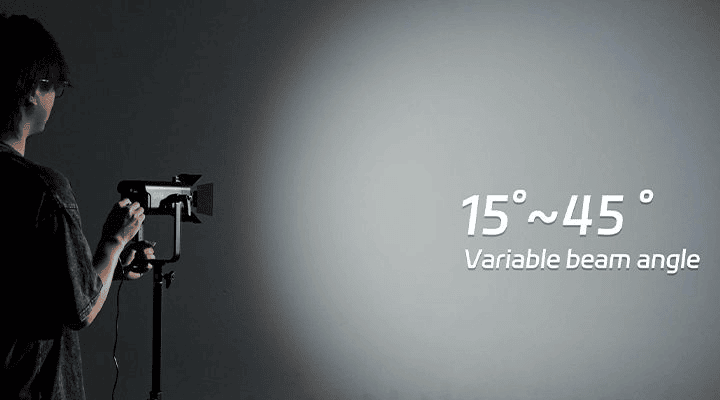
Adjustable 15°–45° Beam for Different Shooting Needs
A GVM PF100B features an adjustable beam angle from 15° to 45°. At the narrower end, the concentrated beam is useful for highlighting a product detail, adding a controlled accent to a portrait, or illuminating a small section of the background.
Widen the beam, and the light covers a larger area. This is useful when filming a person at a desk, illuminating a tabletop arrangement, or creating broader illumination in a compact studio.
Because the beam can be adjusted directly on the fixture, there is less need to interrupt a shoot to replace accessories or reposition the light stand. You can refine the coverage while keeping the camera and subject in place.
For creators who regularly switch between close-up product shots and wider compositions, this flexibility can make a noticeable difference to the workflow.
Compact Design for Small Studios and Tabletop Photography
The PF100B weighs approximately 1.53 kg, making it suitable for setups where space and equipment weight matter.
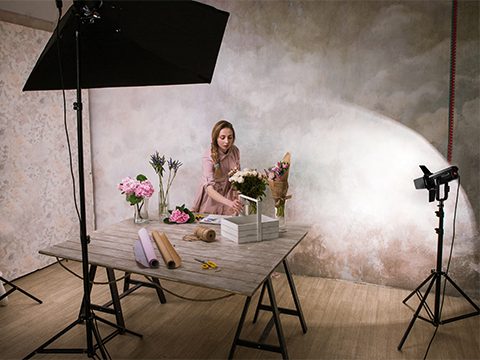
Consider a typical product shoot: a camera sits on one side of a desk, the product occupies the center, and a reflector or background fills the remaining space. A large fixture can make positioning difficult, especially when you need to direct light at a specific angle.
A compact spotlight is easier to place around these obstacles. It can serve as a key light for a small product, provide an accent on packaging, or add separation between a subject and the background.
The same principle applies to home studios and interview setups. When working in a spare room or a small office, the ability to position a light precisely is often more useful than simply adding more equipment.
Fine Lighting Adjustments for Consistent Results
The PF100B offers a 2700K–6800K color temperature range, covering warm indoor tones through cooler daylight-style settings. This makes it easier to match the fixture to the surrounding environment or establish a consistent color balance across multiple shots.
Its brightness control supports 0%–100% adjustment, with 0.1% increments for fine control. This level of adjustment is useful when a small change in output can affect a product’s surface highlights or the balance between a subject and the background.
For example, when photographing a glossy product, excessive brightness can create distracting reflections. Rather than moving the light repeatedly, you can fine-tune its output and beam angle to achieve a more controlled result.
The PF100B also offers high color accuracy, with a CRI rating of 97 or higher. Together, its color temperature range and precise dimming make it a versatile tool for photography and video production.
GVM PF100B Specifications
| Recurso | Specification / Benefit |
| Tipo de Luz | 100W bi-color LED spotlight |
| Ângulo do Feixe | Adjustable 15°–45° |
| Temperatura de Cor | 2700K–6800K |
| Escurecimento | 0%–100%, with 0.1% adjustment increments |
| Color Rendering | CRI ≥97 |
| Peso | Approximately 1.53 kg |
| Controle | On-board controls and GVM Bluetooth app |
| Melhor para | Product photography, interviews, small studios, and video production |
2. How to Use a Focusable LED Light in a Small Studio
Choosing the right light is only part of the process. Its placement, beam angle, and output determine the final result. A few simple techniques can help you get more from a compact spotlight.
Start With the Beam Angle
Before adjusting brightness, decide how much of the scene needs to be illuminated.
For a small product detail, begin with a narrower beam and direct it toward the feature you want to emphasize. For an interview or a larger tabletop arrangement, gradually widen the beam until the subject receives enough coverage.
This approach helps reduce unwanted spill and makes it easier to control the background.
Position the Light to Shape the Subject
Light direction influences texture and depth. Placing a light directly in front of a subject tends to produce flatter illumination, while moving it to one side can reveal more shape and dimension.
For product photography, try positioning the light at an angle that reveals the object’s contours. Reflective materials may require additional adjustments because the camera can capture the light source itself as a bright reflection.
Small changes in angle often produce better results than simply increasing brightness.
Match Color Temperature to the Scene
If the room contains warm practical lights, a warmer setting may help maintain visual consistency. For daylight-balanced scenes, a cooler setting may be more appropriate.
When mixing different light sources, check the subject’s appearance on your camera display rather than relying entirely on the numbers. The goal is to create a coherent image, not simply to match a particular color temperature.
Conclusão
A good focusable LED light gives photographers and filmmakers more control over the shape, direction, and intensity of their lighting. These capabilities are particularly valuable in small studios, where limited space makes every adjustment important.
The GVM PF100B brings together a 15°–45° adjustable beam, a compact 1.53 kg design, and precise color temperature and brightness controls. It is well suited to creators who need flexible lighting for tabletop photography, interviews, product videos, and other small-scale productions.
Rather than relying on additional fixtures to solve every lighting problem, start by learning to control the light you already have. A narrower beam, a slight change in position, or a small adjustment in brightness can transform an ordinary shot into a more deliberate image.
Explore o GVM PF100B to learn more about its focusing capabilities and how it can fit into your lighting setup.