A continuous light vs flash photography debate comes up constantly among photographers deciding how to build their lighting kit. Both approaches can produce professional results, but they work in fundamentally different ways, and choosing the wrong one for your workflow can slow you down or limit what you’re able to shoot.
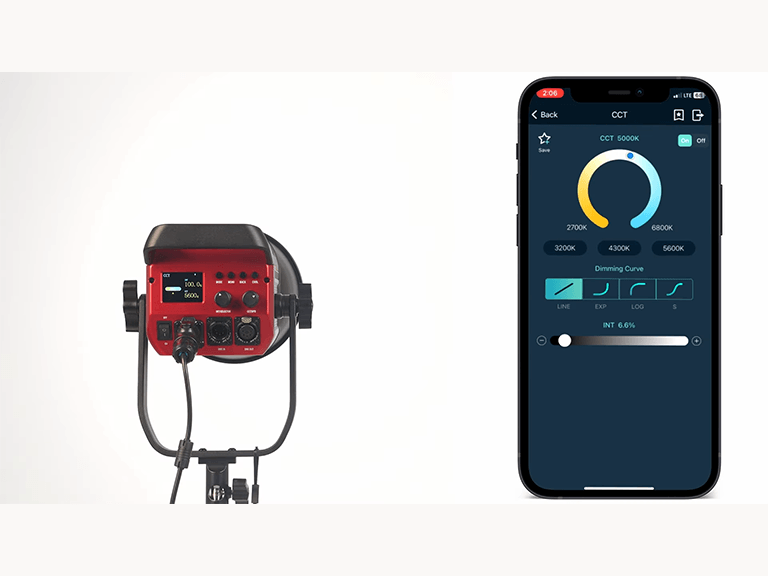
This guide breaks down what continuous lighting actually is, how it stacks up against flash, and which continuous lights are worth buying in 2026 — including options suited for delicate work like newborn photography, where flash isn’t always the safest or most practical choice.
Best Continuous Light for Photography
Continuous lights stay on the entire time you’re shooting, which means what you see is exactly what you get. This is a major reason so many photographers and video creators have shifted toward continuous LED lighting over the past few years, especially as LED technology has improved brightness output while shrinking size and price.
When shopping for the best continuous light for photography, a few specs matter more than anything else:
- Lux output at 1 meter — the standardized way to compare true brightness across brands
- CRI and TLCI ratings — scores of 95+ indicate accurate, natural color rendering for skin tones and products
- Bi-color or full-color range — the ability to shift color temperature (or full RGB) without gels
- Control options — onboard dials, app control, and DMX support for larger productions
- Cooling system — fanless or silent cooling matters for video and livestream work where noise gets picked up by microphones
A high-quality continuous light doubles as both a photography tool and a video light, which makes it a more flexible investment than a flash unit that only fires for stills.
What Is a Continuous Light in Photography?
A continuous light is exactly what it sounds like: a light source that stays illuminated continuously, rather than firing a single burst like a flash or strobe. Continuous lights include LED panels, COB (chip-on-board) monolights, fluorescent banks, and tungsten fixtures, though modern setups are almost entirely LED-based now due to efficiency and heat management.
Because the light is always on, photographers can see shadows, highlights, and color balance in real time through the viewfinder or on a monitor, with no need to guess at exposure or fire test shots. This makes continuous lighting especially popular for:
- Beginners who are still learning how light falls across a subject
- Video and hybrid shooters who need the same light source for stills and motion
- Product and food photographers who rely on precise, repeatable setups
- Livestreamers and content creators who need consistent lighting for extended sessions
The trade-off is that continuous lights generally require more power to match the peak brightness of a flash, since a flash concentrates all its energy into a fraction of a second rather than spreading it across the entire shot.
Best Continuous Light for Newborn Photography
Newborn photography is one of the clearest cases where continuous light has a real advantage over flash. Newborns have highly sensitive eyes, and the sudden burst of a flash can startle a sleeping baby or cause visible discomfort — something most newborn photographers actively try to avoid.
A good continuous light for newborn photography should offer:
- Soft, diffused output through domes, softboxes, or built-in diffusion
- Dimmable brightness, often well below full power, since newborn setups usually use low, gentle light
- Warm color temperature options, since warmer tones flatter newborn skin and create a cozy mood
- Silent operation, since any fan noise can wake a sleeping baby mid-session
Because newborn sessions often involve slow, careful posing and long exposure setups rather than fast-paced shooting, the “always-on” nature of continuous light also makes it easier to fine-tune shadows around delicate features before ever pressing the shutter.
Continuous Light vs Flash Photography
This is the core comparison most photographers eventually have to make. Here’s how the two approaches differ in practice.
Continuous Light Advantages:
- What-you-see-is-what-you-get exposure and shadow preview
- Works for both photography and video without switching gear
- Easier for beginners to learn lighting principles
- Silent, non-startling operation — ideal for pets, kids, and newborns
- No recycle time between shots
Flash Advantages:
- Much higher peak output, useful for freezing motion or overpowering bright sunlight
- More energy-efficient per shot for high-volume studio work
- Typically smaller and lighter for the same peak brightness
- Better suited for large group or wedding photography needing fast bursts
Continuous Light Limitations:
- Generally lower peak brightness than flash at the same size/price
- Can generate more heat during long sessions
- May struggle to overpower very bright ambient/outdoor light without high-wattage units
Flash Limitations:
- No real-time preview — requires test shots or experience to judge exposure
- Not usable for continuous video work
- Sudden light burst isn’t ideal for sensitive subjects like newborns or animals
For photographers who split time between stills and video, or who want an easier learning curve, continuous light is usually the more practical long-term investment. For studios shooting high volumes of stills that need to freeze fast motion, flash still holds an edge.
Best Continuous Lighting Kit: GVM PRO SD300B
For photographers leaning toward continuous lighting, output and control quality vary enormously between brands. One standout option in 2026 is the GVM PRO SD300B, a 300W bi-color monolight built for both studio and on-location production.
The SD300B is designed to solve the biggest weakness continuous lights typically face — limited brightness — by delivering 65,700 lux at 1 meter, putting it firmly in flash-competitive territory while retaining every advantage of continuous light.
| Recurso | Specification / Benefit |
|---|---|
| Poder | 300W |
| Light Output | 65,700 lux @ 1m (standard reflector) |
| Temperatura de Cor | 2700K–6800K bi-color |
| CRI / TLCI | 97+ — accurate skin tones and color |
| Escurecimento | 0–100% stepless, flicker-free |
| LED Technology | Advanced COB LED |
| Efeitos de Iluminação | 12 built-in cinematic effects (Fireworks, Lightning, TV, etc.) |
| Light Source Presets | 12 presets including Candlelight, Sunset/Sunrise, HMI, Daylight |
| Opções de Controle | Onboard ballast, GVM App, 5-pin DMX, Bluetooth Mesh |
| Montanha | Bowens Mount (compatible with softboxes, Fresnels, projection attachments) |
| Battery Mount | V-mount |
| Arrefecimento | Silent cooling system |
How It Compares
Many competing 300W-class continuous lights fall short in one of two areas: either the CRI/TLCI rating dips below 95, producing less accurate color, or the control system is limited to onboard dials only, without app or DMX support for multi-light setups.
The SD300B avoids both compromises. Its Bowens mount also opens up compatibility with a wide range of modifiers — softboxes, Fresnels, and projection attachments — without needing brand-specific adapters, which keeps long-term accessory costs down compared to closed-mount systems from other brands.
Combining high lux output, 97+ CRI/TLCI accuracy, flexible control (App, DMX, Bluetooth Mesh), and an open Bowens mount ecosystem, GVM delivers the strongest value-per-dollar among comparable continuous lighting kits, making it a smart pick whether you’re building a first studio setup or expanding an existing one.
Conclusão
Choosing between continuous light and flash ultimately comes down to your workflow. If you shoot video, livestream, or want real-time control over your lighting — including delicate work like newborn photography — continuous light is the more versatile choice. If you need maximum peak output for freezing motion or shooting in bright ambient conditions, flash still has its place.
For photographers ready to invest in a high-output, flexible continuous lighting kit, the GVM PRO SD300B offers professional-grade brightness and color accuracy at a price that beats most comparable options on the market. It’s a strong starting point for anyone building — or upgrading — a modern lighting setup in 2026.