Let’s get real: shooting in a controlled studio is like gardening in a greenhouse. Everything is predictable, the floors are level, and the wind doesn’t exist. But the moment you step onto a real-world location—a windswept desert, a cracked warehouse parking lot, or a crowded city street—the rules change. In these environments, your lighting isn’t just about art; it’s about risk management.
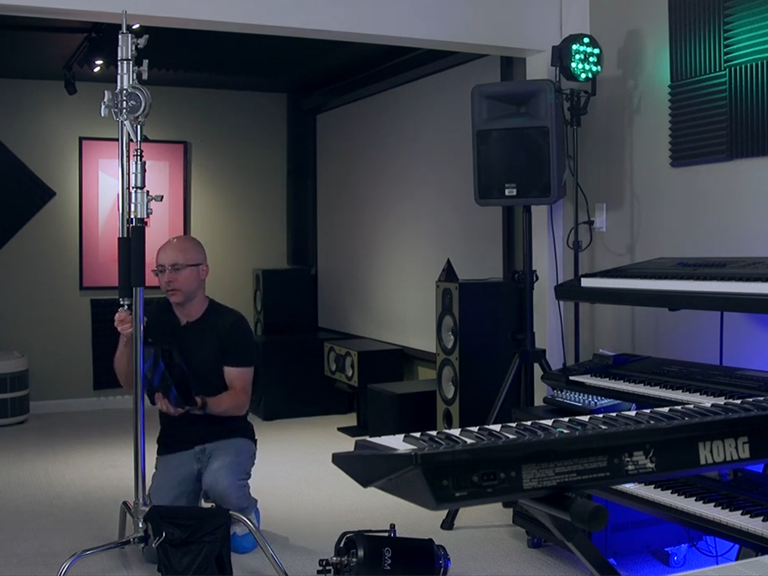
The most terrifying sound on a film set isn’t a director yelling “Cut!”—it’s the sickening crash of a high-end LED hitting the pavement because your support system failed. Today, we aren’t talking about camera sensors or bitrates. We are talking about the foundation of your entire production: the light stand.
The Evolution of Support: From Hobbies to Hollywood
In the early stages of a creator’s journey, the choice of gear is often dictated by portability and price. Many start with a ring lighting stand. While these are perfectly fine for a static TikTok setup in a bedroom, they are a liability on a professional set. A ring lighting stand is typically made of thin, lightweight aluminum tubing designed to hold a light that weighs almost nothing. Try putting a professional COB light and a 36-inch softbox on one of those outdoors, and you’ve essentially built a very expensive kite.
As you move into professional photography, you likely upgrade to a standard aluminum photography light stand. These are the workhorses of the indoor world—light enough to carry in a shoulder bag and stable enough for basic strobes. However, “lightweight” is your enemy on location. Aluminum has a low fatigue limit, and standard light stands can vibrate or even buckle when caught in a 20-knot gust.
When you transition to high-stakes cinematography, you need to move past simple “stands” and invest in a professional c stand lighting system. On an LA set, we call lightweight stands “ticking time bombs.” When you want to protect your gear and your reputation, you reach for stainless steel.
Material Matters: Why Stainless Steel is Non-Negotiable
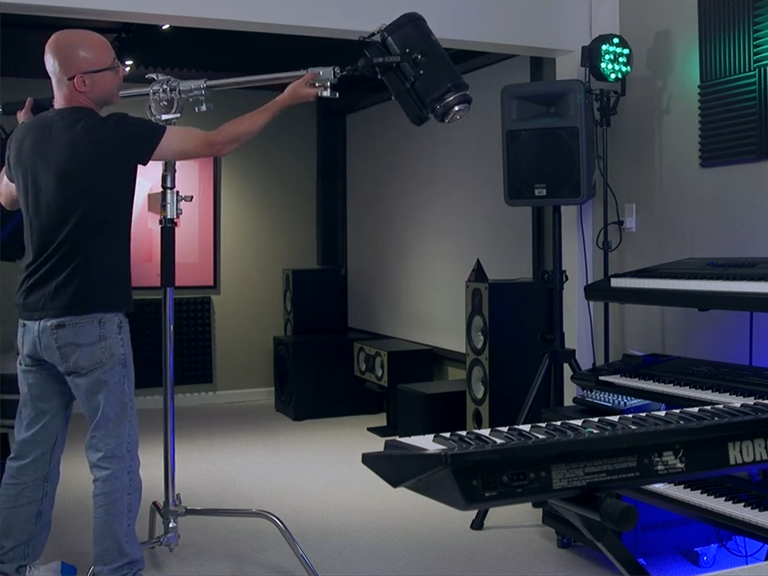
On a location shoot, durability is the only metric that matters. This is where the GVM C360 Turtle Base C-Stand proves its worth. It wasn’t designed to be “light”; it was designed to survive.
- Industrial Strength: The riser sections and the base of the C360 are constructed from durable stainless steel.
- Superior Rigidity: This stainless steel design is several times stronger than traditional aluminum light stands, allowing it to sustain the heavyweight of professional cinema gear.
- Built to Last: In harsh environments like salty coastlines or dusty construction sites, gear takes a beating. The C360’s riser sections and head grips are chrome-coated to prevent damage and maintain longevity.
Investing in c stand lighting is essentially buying an insurance policy for your lights. It provides a level of rigidity that ensures your “Far Side Key” stays exactly where you set it, regardless of the environment.
Engineering for High Stakes: Load Capacity and Height
As a DP, I’m often chasing “God rays”—that high-angle light that mimics the sun. To get that look outdoors, you have to crane your lights high into the air. The higher the light goes, the more unstable the light stand becomes.
The GVM C360 handles these high-stakes setups with industrial precision:
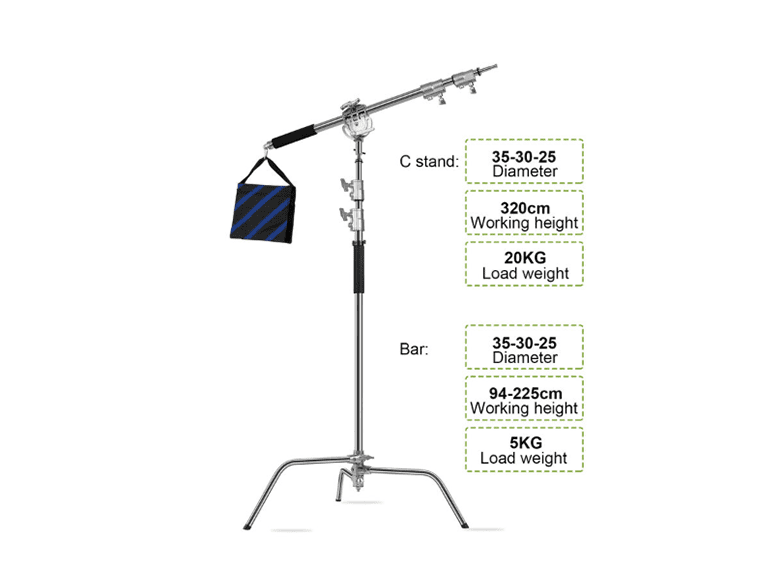
- Massive Payload: The main rod is rated for a load weight of 20KG. This gives you the freedom to mount heavy high-output LEDs without the fear of the stand bowing.
- Reaching the Sky: With a three-stage telescopic structure, the main rod reaches a maximum working height of 320cm (roughly 10.5 feet).
- Stable Geometry: To maintain balance at those heights, the main rod utilizes a thick diameter of 35-30-25mm.
When you have a heavy softbox catching the wind 10 feet in the air, you don’t want to be “hoping” your stand holds. You want to know it will.
Conquering the Terrain: The Turtle Base Advantage
The “Wild West” of location shooting often involves uneven concrete, curbs, and cramped alleys. A standard photography light stand with a fixed tripod base often struggles to find a level footprint.
The C360 utilizes a “Turtle Base” design that solves these logistical nightmares:
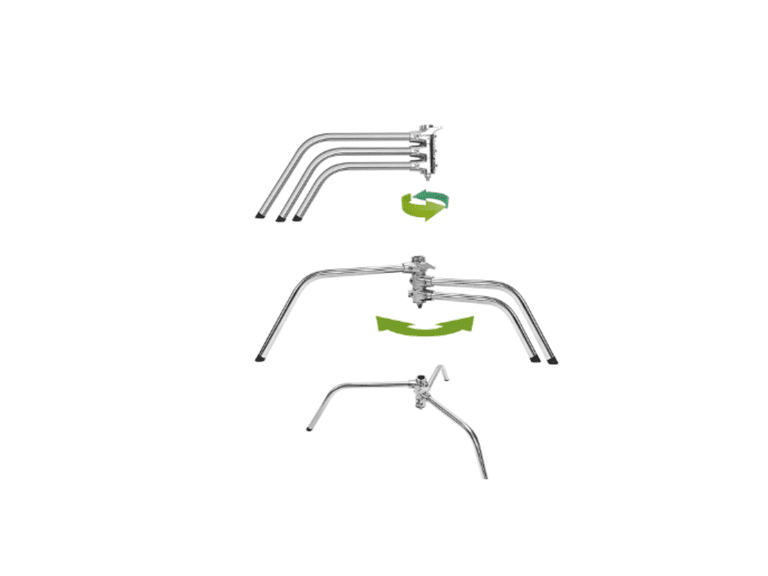
- Staggered 3-Leg Construction: Each leg is set at a different height. This unique geometry allows the stand to find stability on uneven ground where a flat tripod would wobble.
- The Nesting Trick: Because the legs are staggered, you can “nest” multiple light stands extremely close to one another. This is vital when you’re cramming a multi-light setup into a narrow urban corridor.
- Detachable Versatility: The turtle base is detachable from the riser section. This makes it easier to transport and allows you to mount a light directly to the base for dramatic, low-angle “ground-up” lighting.
Creative Rigging: The Grip Arm as Your Extra Set of Hands
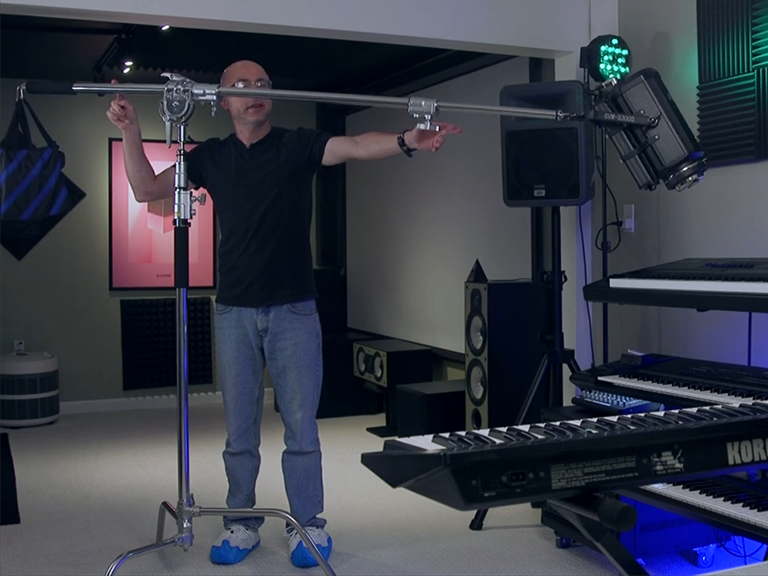
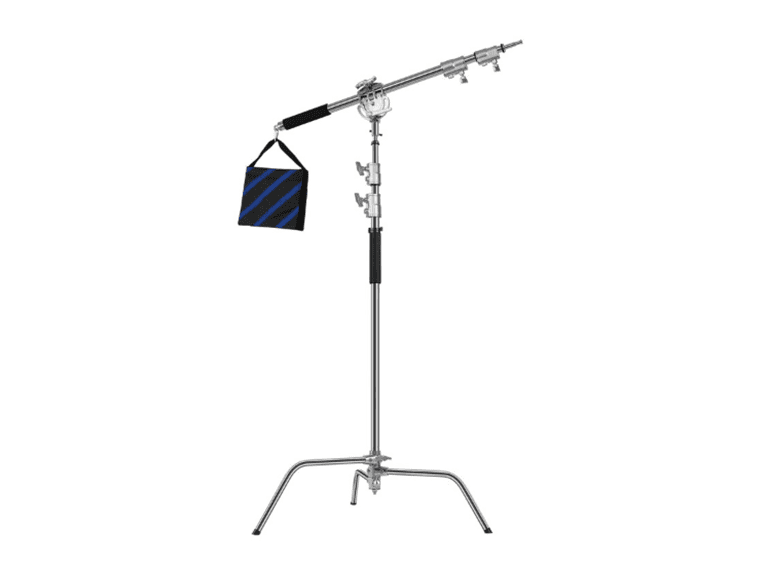
A professional c stand lighting kit isn’t complete without a grip arm. The C360 Kit includes a cross-bar that acts as a three-stage telescopic extension.
- Variable Reach: The arm adjusts from 94cm to 225cm, giving you massive reach over obstacles.
- Precision Placement: With a 5KG load weight on the cross-bar, you can cantilever your light or a flag over the subject while keeping the stand itself out of the frame.
- Lock-Tight Security: The connectors are chrome-coated aluminum, ensuring that once you dial in your angle and lock it down, it stays locked.
Conclusion: Investing in Your Professional Foundation
In LA, we have a saying: “You can tell the quality of a Gaffer by the stands they use.” Using a flimsy photography light stand for an outdoor shoot is a gamble that eventually ends in broken glass and lost time.
Professional video recording lighting isn’t just about the beam of light; it’s about the absolute control of your environment. Choosing a heavy-duty tool like the GVM C360 gives you the freedom to create in the wind, the sand, and the chaos of the real world.
So, are you going to keep gambling with your gear, or are you ready to build your set on a stainless steel foundation?
Turn off those overheads, grab your C-Stands, and I’ll see you on set.