LED video panels in 2026 have officially reached a performance peak, redefining professional production standards across the industry. The era of “entry-level” lights plagued by flicker or inconsistent color shifts is over. Today, a high-quality led video panel is expected to deliver cinematic color science, rugged build quality, and seamless wireless integration—all while maintaining a competitive price point.
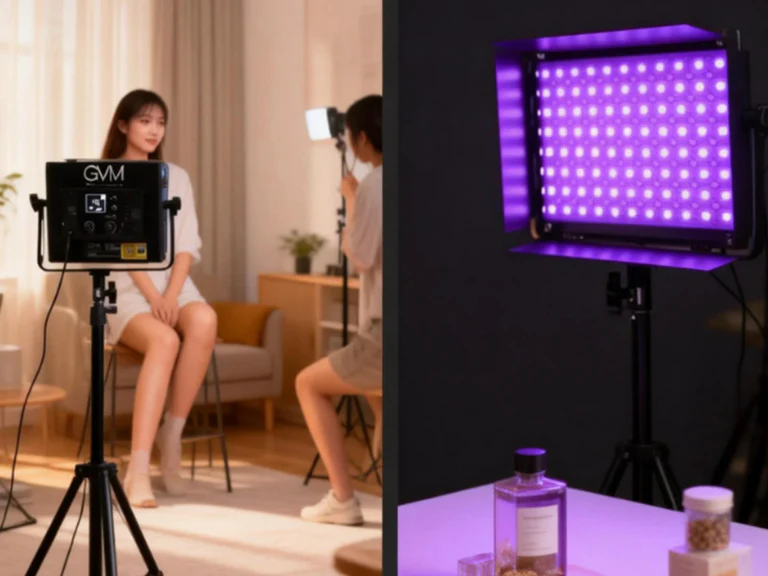
This definitive guide explores the top 10 LED panel lights for video that have earned their place in professional production kits this year. From high-output studio fixtures to versatile portable solutions, these are the essential tools required for modern visual storytelling, whether you are rigging a high-end studio or managing a demanding commercial shoot.
The Gold Standard of Color Accuracy: Mastering CRI and TLCI
Before we dive into the rankings, we need to speak the same language. In 2026, “bright enough” isn’t a metric. If you want your work to look professional, you need to understand three core pillars of LED panel studio lighting:
1. The Gold Standard of Color Accuracy (CRI and TLCI)
In the professional production landscape of 2026, color purity is the ultimate metric for success. For years, the industry has relied on two critical benchmarks: CRI (Color Rendering Index) and TLCI (Television Lighting Consistency Index). These metrics remain the most vital indicators of how your subject will appear to both the naked eye and the digital camera sensor.
CRI measures how accurately a light source reveals true colors compared to natural sunlight. For professionals today, a CRI of 90 is no longer sufficient. High-end monolights now push for a CRI of 95, with a specific focus on the R9 value (saturated reds). This ensures that skin tones look healthy and vibrant, rather than desaturated.
While CRI is based on human vision, TLCI is designed specifically for digital sensors. It predicts how much color correction will be needed in post-production. A professional monolight in 2026 must achieve a TLCI score of 97+. By prioritizing elite CRI and TLCI ratings, you ensure an in-camera look that is near perfection, eliminating muddy shadows and saving hours of expensive color grading.
2. Softness vs. Throw: Panel vs. COB
LED panels are inherently “soft” because of their large surface area. However, not all panels are created equal. Some use Edge-lit technology (ultra-thin, ultra-soft), while others use Direct-lit with a diffusion layer (higher output, more “throw”). Understanding which one you need for your studio space is the difference between a flat, boring image and a cinematic one.
3. Wireless Ecosystems (DMX, CRMX, and Apps)
If you are still walking over to your light to turn a knob, you are losing money. Professional workflows in 2026 rely on Sidus Link, NANLINK, or GVM’s App. For high-end sets, built-in LumenRadio CRMX is no longer a luxury—it’s a requirement for DMX console integration.
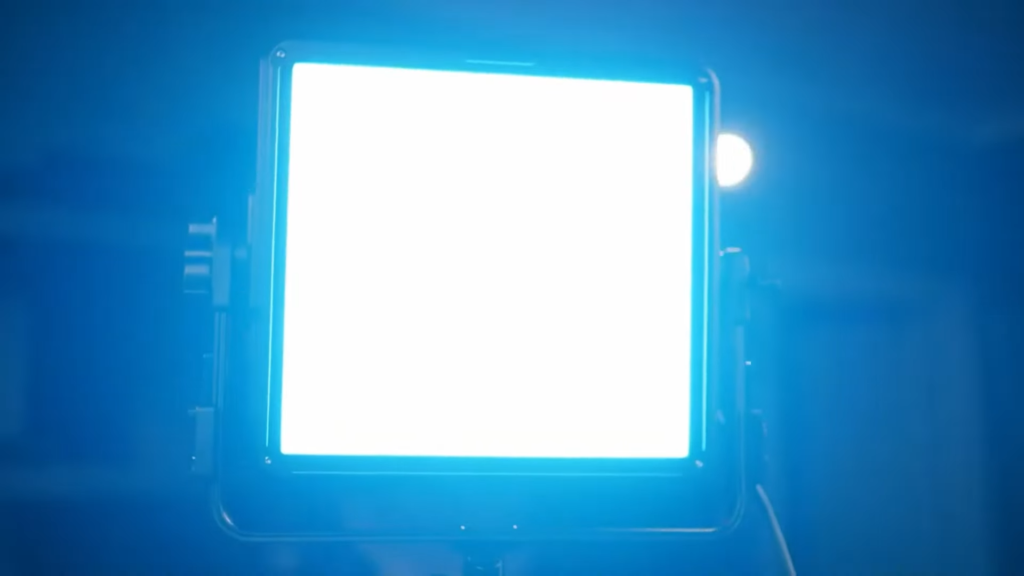
Can LED lights be used for product photography?
The short answer: Absolutely. In fact, many high-end commercial photographers are ditching traditional strobes for high-output LED video panels.
Why the shift? What you see is what you get.
When shooting high-end products—like jewelry, watches, or tech—the placement of reflections (specular highlights) is everything. With a led video panel, you can micro-adjust the angle of the light and immediately see how the reflection “wraps” around the product.
Key advantages for product work:
- 0.1% Dimming Precision: Essential for macro photography where a 1% jump is too bright.
- Bi-Color Flexibility: You can instantly warm up a wood-textured product or cool down a metallic one without using gels.
- No Recycle Time: You can fire off 20 frames per second in a burst without waiting for a flash to recharge.
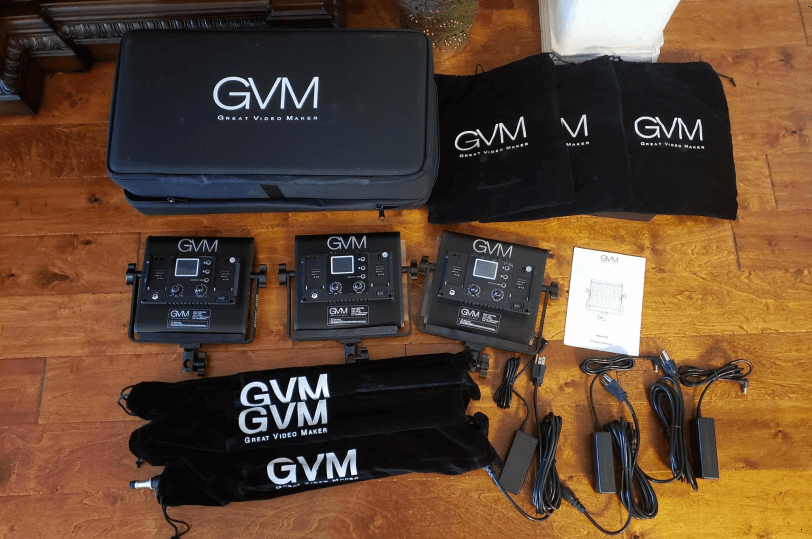
LED Video Panel Outdoor: Fighting the Sun
One of the biggest challenges for any gaffer is taking the “studio” look outside. To use a led video panel outdoor, you need to consider two things: Power Density and Weather Resistance.
In 2026, the best outdoor panels utilize V-Mount battery integration with high-efficiency draws. If your panel can’t output at least 15,000 lux at 1 meter, it will be “eaten” by the sun. Furthermore, “Professional” now means IP54 or IP65 ratings. If a sudden drizzle ruins your $1,000 panel, it wasn’t a professional tool to begin with.
The Best LED Light Panels for Photography & Video: The Top 10
LED video panels in 2026 have redefined professional production standards, offering an essential balance of cinematic color science and thousand-step dimming precision. To curate our definitive Top 10 ranking of the best LED light panels for photography & video, we looked beyond simple CRI ratings toward advanced SSI scores and flicker-free performance—the true benchmarks for consistent results in high-end studio product shoots and cinematic narratives. Whether used as a soft key light for natural skin tones or a high-output source for high-speed cinematography, a professional led video panel provides the real-time visual feedback and “what you see is what you get” efficiency that modern visual storytellers demand.
GVM LED Panel: The New Professional Standard?
For creators requiring rugged reliability and massive output, the gvm led panel series has become a cornerstone of modern production kits, particularly for high-intensity led video panel outdoor applications. Utilizing remastered 3rd-generation LED technology, these fixtures deliver immense brightness—reaching nearly 3,000 Lux—while maintaining a clean, cable-free workspace through advanced internal power circuitry and aluminum alloy heat dissipation. To explore the full technical specifications and find the specific model tailored to your studio or location workflow, visit the official GVM LED Panel Series Page.
Final Verdict: Which LED Video Panel Should You Buy?
Choosing the best LED light panels for photography and video comes down to your “Day Job.”
- If you are a Professional Gaffer working on high-end commercials, the ARRI SkyPanel or Aputure Nova are your tools of trade. The reliability and ecosystem are worth the investment.
- If you are a Studio Owner looking for the best performance-to-cost ratio, the GVM SD-series AIO is the smart money. The aluminum build and massive power output mean you won’t need to upgrade for years.
- If you are a Solo Content Creator, look no further than the Nanlite PavoSlim or the GVM 800D. They are light enough to carry alone but accurate enough to produce “Pro” results.
Regardless of the brand, remember that in 2026, light quality is non-negotiable. Don’t settle for anything less than 96 CRI. Your sensor—and your clients—will thank you.